• 文献检索
  • 文档翻译
  • 深度研究
  • 学术资讯
  • Suppr Zotero 插件Zotero 插件
  • 邀请有礼
  • 套餐&价格
  • 历史记录
应用&插件
Suppr Zotero 插件Zotero 插件浏览器插件Mac 客户端Windows 客户端微信小程序
定价
高级版会员购买积分包购买API积分包
服务
文献检索文档翻译深度研究API 文档MCP 服务
关于我们
关于 Suppr公司介绍联系我们用户协议隐私条款
关注我们

Suppr 超能文献

核心技术专利:CN118964589B侵权必究
粤ICP备2023148730 号-1Suppr @ 2026

文献检索

告别复杂PubMed语法,用中文像聊天一样搜索,搜遍4000万医学文献。AI智能推荐,让科研检索更轻松。

立即免费搜索

文件翻译

保留排版,准确专业,支持PDF/Word/PPT等文件格式,支持 12+语言互译。

免费翻译文档

深度研究

AI帮你快速写综述,25分钟生成高质量综述,智能提取关键信息,辅助科研写作。

立即免费体验

标准实验室饲养的小鼠限制了它们将空间分隔为清洁区和脏污区的能力。

Standard laboratory housing for mice restricts their ability to segregate space into clean and dirty areas.

机构信息

Animal Welfare Program, University of British Columbia, 2357 Main Mall, Vancouver, BC, V6T 1Z4, Canada.

Department of Environmental Studies, New York University, 285 Mercer St, New York City, NY, 10003, USA.

出版信息

Sci Rep. 2019 Apr 16;9(1):6179. doi: 10.1038/s41598-019-42512-3.

DOI:10.1038/s41598-019-42512-3
PMID:30992464
原文链接:https://pmc.ncbi.nlm.nih.gov/articles/PMC6467917/
Abstract

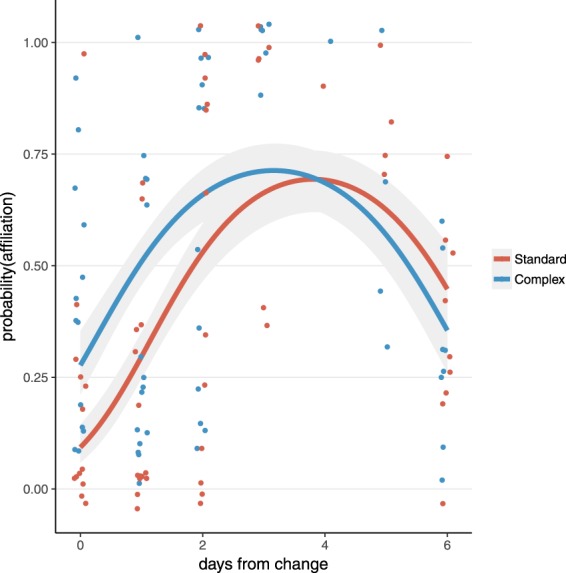
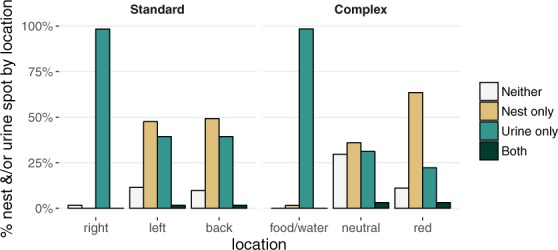
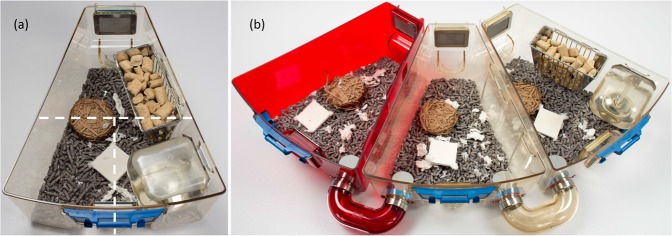
Laboratory mice (Mus musculus) are typically housed in simple cages consisting of one open space. These standard cages may thwart mouse ability to segregate resting areas from areas where they eliminate, a behaviour that is prevalent across the animal kingdom. No scientific work has directly tested whether mice engage in such segregation behaviour, or whether the ability to do so may have welfare consequences. Here we show that mice, whether housed in standard cages or a complex housing system consisting of three interconnected standard cages, kept nesting and elimination sites highly segregated, with nest and urine co-occurring in the same location only 2% of the time. However, mice in the complex system established these clean and dirty sites in separate cages instead of separate locations within one cage, and carried bedding materials (cellulose pellets) from their nesting cages to their latrine cage. Moreover, mice in the complex system displayed more behaviours associated with positive welfare and were less disturbed by weekly husbandry procedures. We conclude that mice find waste products aversive, and that housing mice in a way that facilitates spatial segregation provides a simple way of allowing the expression of natural behaviours and improving welfare.

摘要

实验小鼠(Mus musculus)通常被安置在简单的笼子中,这些笼子只有一个开放空间。这些标准笼子可能会阻碍老鼠将休息区与排泄区分隔开来,而这种行为在动物王国中非常普遍。没有科学研究直接测试老鼠是否会进行这种隔离行为,或者这种行为能力是否会对其福利产生影响。在这里,我们发现无论将小鼠饲养在标准笼子中还是由三个相互连接的标准笼子组成的复杂饲养系统中,它们都会将巢穴和排泄区分开,巢和尿液同时出现在同一个位置的概率仅为 2%。然而,在复杂系统中的小鼠会将干净和肮脏的地方分别安置在不同的笼子里,而不是一个笼子的不同位置,并且会将床上用品(纤维素颗粒)从巢穴笼子带到厕所笼子。此外,在复杂系统中的小鼠表现出更多与积极福利相关的行为,并且对每周的饲养程序的干扰较小。我们的结论是,小鼠会将废物视为厌恶物,而通过促进空间隔离来饲养小鼠,可以为表达自然行为和提高福利提供一种简单的方法。
https://cdn.ncbi.nlm.nih.gov/pmc/blobs/846d/6467917/5b1f114a46c9/41598_2019_42512_Fig4_HTML.jpg
https://cdn.ncbi.nlm.nih.gov/pmc/blobs/846d/6467917/2af663dbc17f/41598_2019_42512_Fig1_HTML.jpg
https://cdn.ncbi.nlm.nih.gov/pmc/blobs/846d/6467917/909b3550a825/41598_2019_42512_Fig2_HTML.jpg
https://cdn.ncbi.nlm.nih.gov/pmc/blobs/846d/6467917/62fca2476aa2/41598_2019_42512_Fig3_HTML.jpg
https://cdn.ncbi.nlm.nih.gov/pmc/blobs/846d/6467917/5b1f114a46c9/41598_2019_42512_Fig4_HTML.jpg
https://cdn.ncbi.nlm.nih.gov/pmc/blobs/846d/6467917/2af663dbc17f/41598_2019_42512_Fig1_HTML.jpg
https://cdn.ncbi.nlm.nih.gov/pmc/blobs/846d/6467917/909b3550a825/41598_2019_42512_Fig2_HTML.jpg
https://cdn.ncbi.nlm.nih.gov/pmc/blobs/846d/6467917/62fca2476aa2/41598_2019_42512_Fig3_HTML.jpg
https://cdn.ncbi.nlm.nih.gov/pmc/blobs/846d/6467917/5b1f114a46c9/41598_2019_42512_Fig4_HTML.jpg

相似文献

1
Standard laboratory housing for mice restricts their ability to segregate space into clean and dirty areas.标准实验室饲养的小鼠限制了它们将空间分隔为清洁区和脏污区的能力。
Sci Rep. 2019 Apr 16;9(1):6179. doi: 10.1038/s41598-019-42512-3.
2
The effect of preweaning and postweaning housing on the behaviour of the laboratory mouse (Mus musculus).断奶前和断奶后的饲养环境对实验小鼠(小家鼠)行为的影响。
Lab Anim. 2007 Jan;41(1):92-102. doi: 10.1258/002367707779399482.
3
Behaviour of laboratory mice in different housing conditions when allowed to self-administer an anxiolytic.当允许实验室小鼠自行服用抗焦虑药物时,它们在不同饲养条件下的行为表现。
Lab Anim. 2006 Oct;40(4):392-9. doi: 10.1258/002367706778476389.
4
Development of furnished cages for laying hens.蛋鸡产蛋笼具的开发。
Br Poult Sci. 2002 Sep;43(4):489-500. doi: 10.1080/0007166022000004390.
5
The epidemiology of fighting in group-housed laboratory mice.群居饲养实验鼠的争斗行为的流行病学研究。
Sci Rep. 2020 Oct 6;10(1):16649. doi: 10.1038/s41598-020-73620-0.
6
Evaluation of the effects of cage height and stocking density on the behaviour of laying hens in furnished cages.评估笼具高度和饲养密度对配备栖架蛋鸡行为的影响。
Br Poult Sci. 2007 Feb;48(1):1-11. doi: 10.1080/00071660601156479.
7
Using Paper Nest Pucks to Prevent Barbering in C57BL/6 Mice.使用纸巢垫预防 C57BL/6 小鼠的 Barbering。
J Am Assoc Lab Anim Sci. 2021 Mar 1;60(2):133-138. doi: 10.30802/AALAS-JAALAS-20-000047. Epub 2020 Dec 22.
8
Availability of feces-free areas in rodent shoebox cages.鼠盒中无粪便区的可用性。
Lab Anim (NY). 2013 Apr;42(4):135-41. doi: 10.1038/laban.187.
9
The amount of cage bedding preferred by female BALB/c and C57BL/6 mice.雌性BALB/c和C57BL/6小鼠偏好的笼内垫料量。
Lab Anim (NY). 2015 Jan;44(1):17-22. doi: 10.1038/laban.659.
10
Performance and welfare of laying hens in conventional and enriched cages.传统笼养和富集笼养蛋鸡的生产性能与福利状况
Poult Sci. 2009 Apr;88(4):698-707. doi: 10.3382/ps.2008-00369.

引用本文的文献

1
Diurnal Regulation of Urinary Behavior and Gene Expression in Aged Mice.老年小鼠排尿行为和基因表达的昼夜调节
bioRxiv. 2025 Mar 26:2025.03.16.642675. doi: 10.1101/2025.03.16.642675.
2
Effects of Nesting Material and Housing Parameters on Feed Wastage Behavior in Female Swiss Webster Mice.筑巢材料和饲养参数对雌性瑞士韦伯斯特小鼠饲料浪费行为的影响。
J Am Assoc Lab Anim Sci. 2024 Aug 20;63(5):495-503. doi: 10.30802/AALAS-JAALAS-24-000010.
3
IntelliCage: the development and perspectives of a mouse- and user-friendly automated behavioral test system.

本文引用的文献

1
Impact of bedding volume on physiological and behavioural parameters in laboratory mice.垫料量对实验室小鼠生理和行为参数的影响。
Lab Anim. 2017 Dec;51(6):601-612. doi: 10.1177/0023677217694400. Epub 2017 Mar 1.
2
Aggression in group-housed laboratory mice: why can't we solve the problem?群体饲养实验小鼠的攻击行为:我们为何无法解决这个问题?
Lab Anim (NY). 2017 Mar 22;46(4):157-161. doi: 10.1038/laban.1219.
3
Mouse Social Network Dynamics and Community Structure are Associated with Plasticity-Related Brain Gene Expression.小鼠社交网络动态与群落结构与可塑性相关脑基因表达有关。
智能鼠笼:一种对小鼠和用户友好的自动化行为测试系统的开发与前景
Front Behav Neurosci. 2024 Jan 3;17:1270538. doi: 10.3389/fnbeh.2023.1270538. eCollection 2023.
4
Data repurposing from digital home cage monitoring enlightens new perspectives on mouse motor behaviour and reduction principle.从数字家笼监测中重新利用数据,为小鼠运动行为和简约原则提供了新的视角。
Sci Rep. 2023 Jul 5;13(1):10851. doi: 10.1038/s41598-023-37464-8.
5
Chronic corticosterone deteriorates latrine and nesting behaviours in mice.长期使用皮质酮会使小鼠的排便和筑巢行为恶化。
R Soc Open Sci. 2023 Feb 1;10(2):220718. doi: 10.1098/rsos.220718. eCollection 2023 Feb.
6
Identification of Rodent Husbandry Refinement Opportunities through Benchmarking and Collaboration.通过基准测试和协作确定啮齿动物饲养优化机会。
J Am Assoc Lab Anim Sci. 2022 Nov 1;61(6):624-633. doi: 10.30802/AALAS-JAALAS-21-000099. Epub 2022 Oct 17.
7
Rats move nesting materials to create different functional areas: Short report.大鼠搬运筑巢材料以创建不同的功能区域:简短报告。
Lab Anim. 2023 Feb;57(1):75-78. doi: 10.1177/00236772221122132. Epub 2022 Sep 29.
8
Animal Care in Radiation Medical Countermeasures Studies.动物在辐射医学应对措施研究中的护理。
Radiat Res. 2022 Nov 1;198(5):514-535. doi: 10.1667/RADE-21-00211.1.
9
Validation of Sanitization Practices in Single-use Individually Ventilated Mouse Cages at Standard and Thermoneutral Temperatures.验证标准和热中性温度下一次性独立通风鼠笼的消毒实践。
J Am Assoc Lab Anim Sci. 2022 Jul 1;61(4):353-360. doi: 10.30802/AALAS-JAALAS-22-000036. Epub 2022 Jul 15.
10
Environmental Enrichment for Rats and Mice Housed in Laboratories: A Metareview.实验室饲养大鼠和小鼠的环境丰富化:一项元综述。
Animals (Basel). 2022 Feb 9;12(4):414. doi: 10.3390/ani12040414.
Front Behav Neurosci. 2016 Aug 4;10:152. doi: 10.3389/fnbeh.2016.00152. eCollection 2016.
4
A Social Network Approach Reveals Associations between Mouse Social Dominance and Brain Gene Expression.一种社交网络方法揭示了小鼠社会优势与大脑基因表达之间的关联。
PLoS One. 2015 Jul 30;10(7):e0134509. doi: 10.1371/journal.pone.0134509. eCollection 2015.
5
Nest building as an indicator of health and welfare in laboratory mice.筑巢行为作为实验室小鼠健康和福利状况的一个指标
J Vis Exp. 2013 Dec 24(82):51012. doi: 10.3791/51012.
6
Effects of a 28-day cage-change interval on intracage ammonia levels, nasal histology, and perceived welfare of CD1 mice.28天换笼间隔对CD1小鼠笼内氨水平、鼻腔组织学及感知福利的影响。
J Am Assoc Lab Anim Sci. 2011 Nov;50(6):868-78.
7
Cage-change interval preference in mice.鼠类的笼舍更换间隔偏好。
Lab Anim (NY). 2011 Jun 21;40(7):225-30. doi: 10.1038/laban0711-225.
8
"Control" laboratory rodents are metabolically morbid: why it matters.“对照”实验动物代谢病态化:为何这很重要。
Proc Natl Acad Sci U S A. 2010 Apr 6;107(14):6127-33. doi: 10.1073/pnas.0912955107. Epub 2010 Mar 1.
9
Home improvement: C57BL/6J mice given more naturalistic nesting materials build better nests.家居改善:给予C57BL/6J小鼠更接近自然的筑巢材料,它们能筑出更好的巢穴。
J Am Assoc Lab Anim Sci. 2008 Nov;47(6):25-31.
10
Assessment of positive emotions in animals to improve their welfare.评估动物的积极情绪以改善其福利。
Physiol Behav. 2007 Oct 22;92(3):375-97. doi: 10.1016/j.physbeh.2007.02.003. Epub 2007 Feb 24.