Department of Occupational and Environmental Health Sciences, School of Public Health, West Virginia University, PO Box 9190, 3302 Health Sciences Center, HSC South, 64 Medical Center Drive, Morgantown, WV, 26506, USA.
Arch Toxicol. 2019 Jun;93(6):1555-1571. doi: 10.1007/s00204-019-02453-2. Epub 2019 Apr 16.
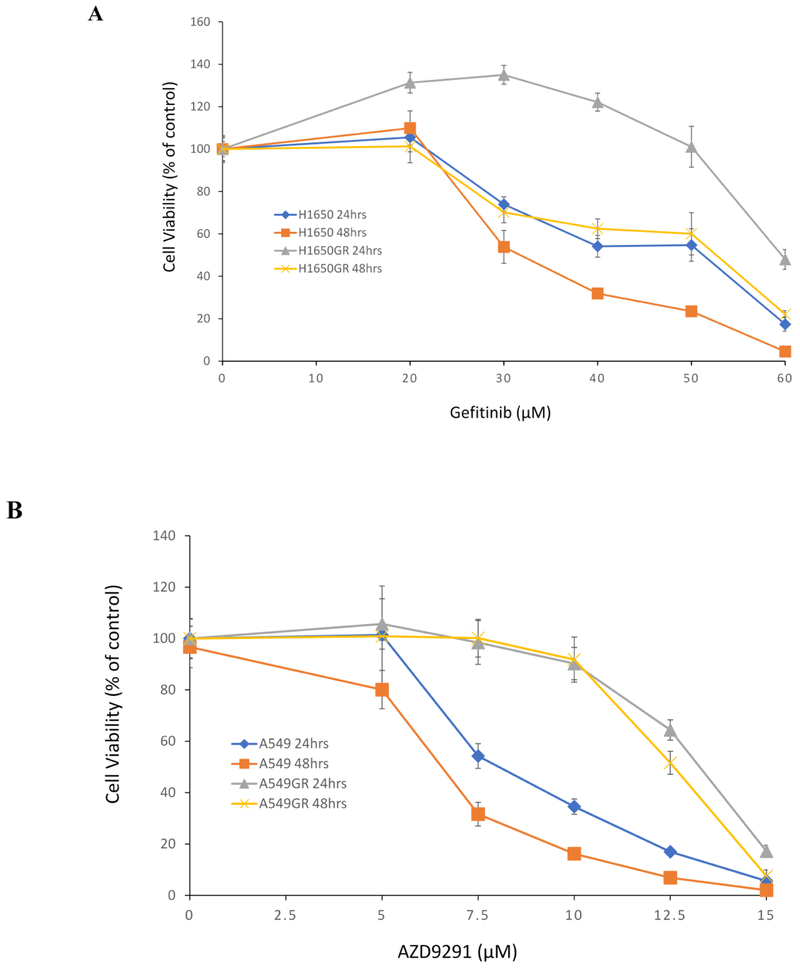
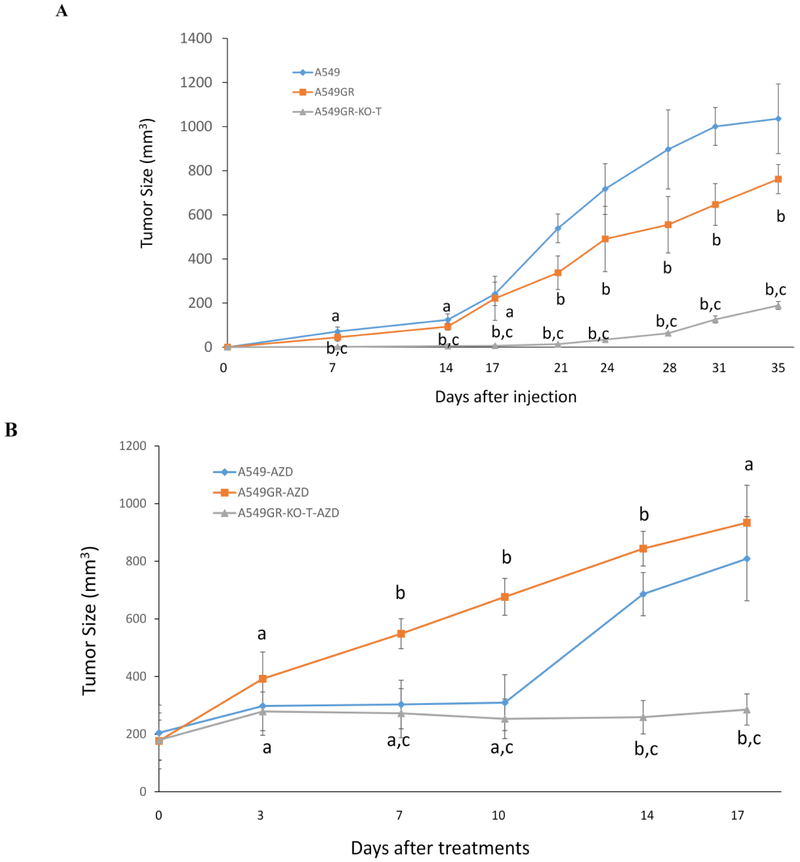
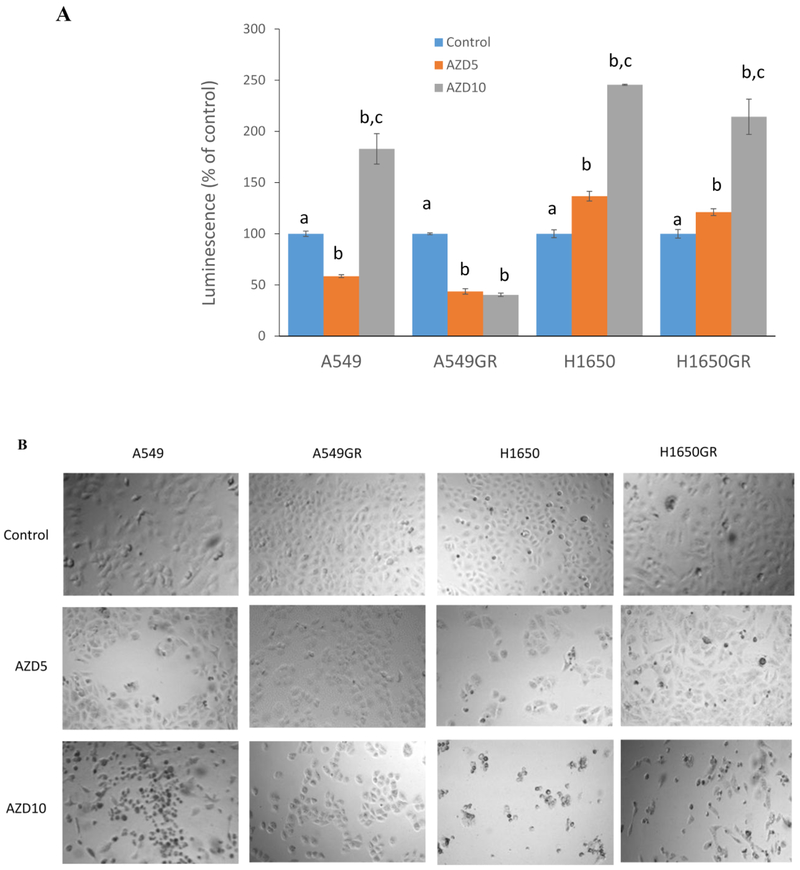
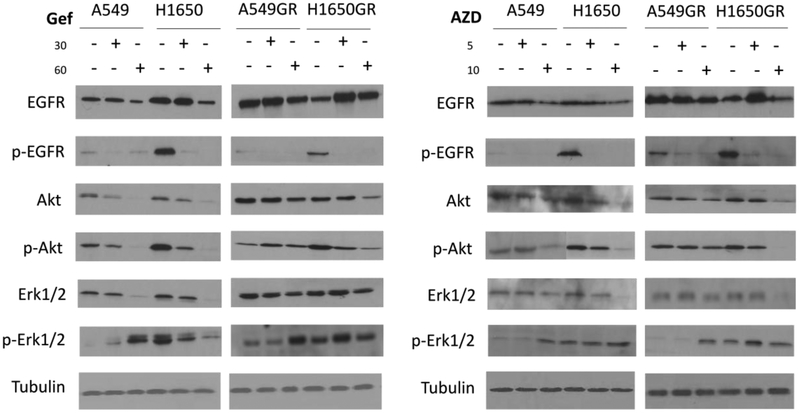
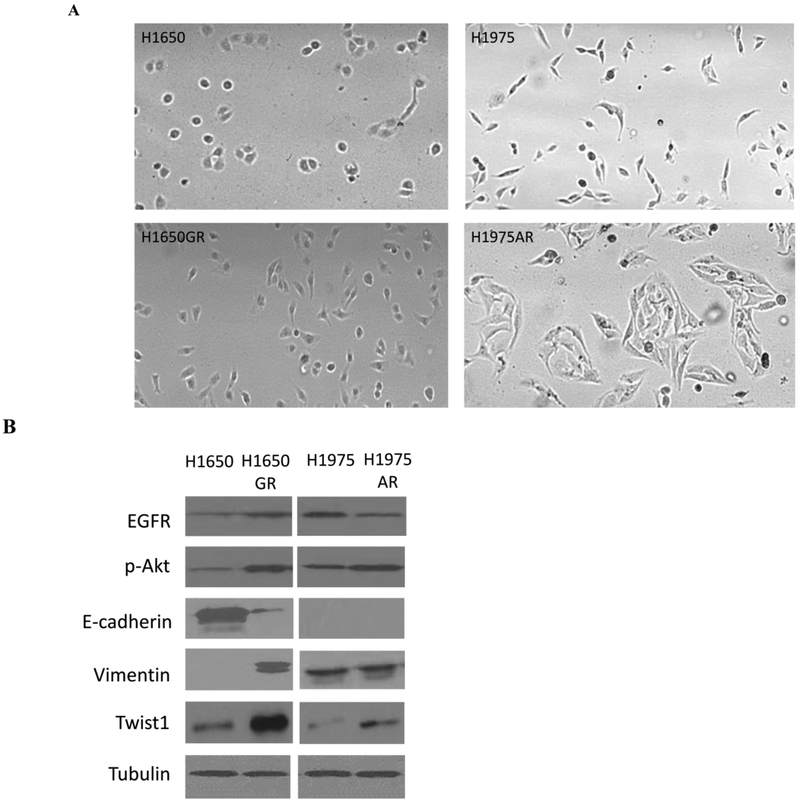
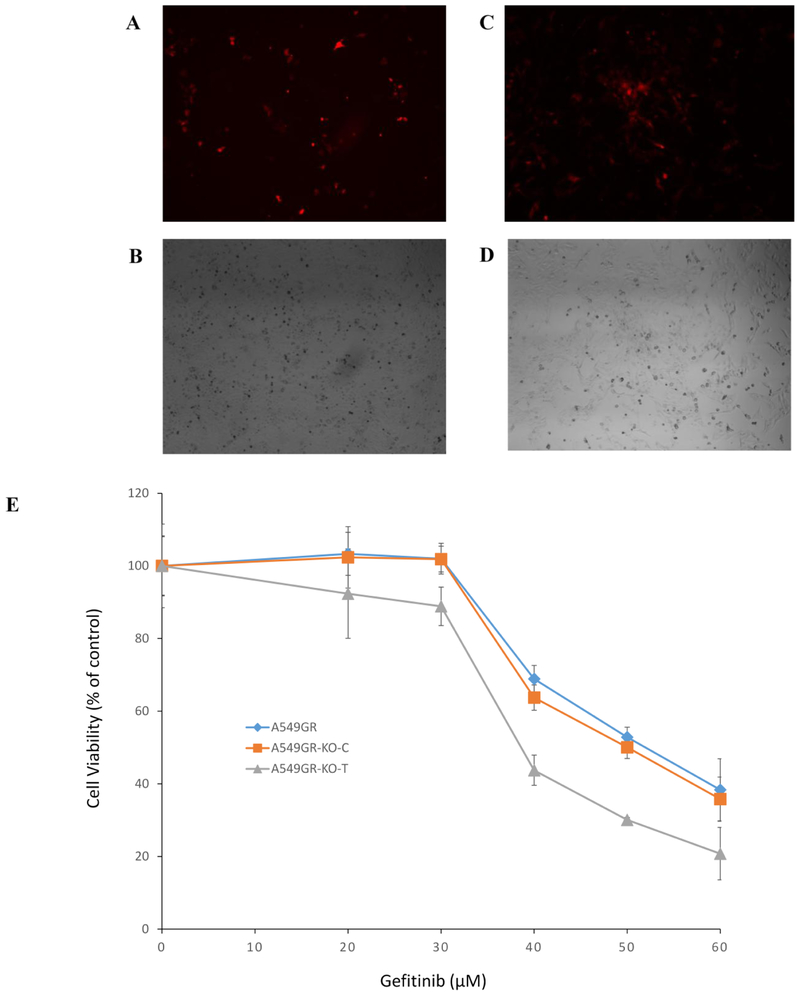
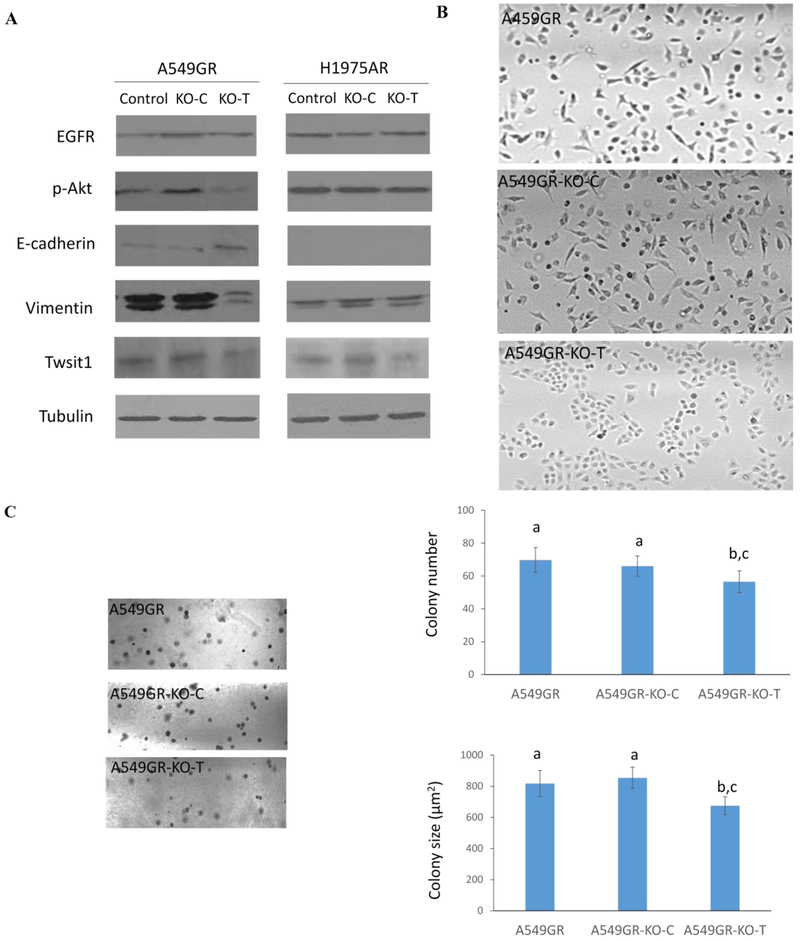
The T790M mutation is recognized as a typical mechanism of acquired resistance to first generation of epithermal growth factor receptor-tyrosine kinase inhibitors (EGFR-TKIs) such as gefitinib in non-small cell lung cancer (NSCLC) patients who are commonly treated by third generation of EGFR-TKI AZD9291 (osimertinib). However, the therapeutic strategy for overcoming acquired resistance to EGFR-TKIs in NSCLC patients without T790M remains to be definitively determined. In the present study, gefitinib-resistant H1650 (H1650GR) or AZD9291-resistant H1975 (H1975AR) was generated by exposing NSCLC cell line H1650 or H1975 to progressively increased concentrations of gefitinib or AZD9291 over 11 months. The cytotoxic effects of gefitinib or AZD9291 in vitro were evaluated via the half maximal inhibitory concentrations (IC50s) determined by the MTT assay. IC50 of gefitinib in H1650GR (50.0 ± 3.0 µM) significantly increased compared with H1650 (31.0 ± 1.0 µM) (p < 0.05). Similarly, the IC50 of AZD9291 in H1975AR (10.3 ± 0.9 µM) significantly increased compared with H1975 (5.5 ± 0.6 µM) (p < 0.05). However, IC50 of AZD9291 on H1650GR (8.5 ± 0.5 µM) did not increase compared with H1650 (9.7 ± 0.7 µM). On the other hand, IC50 of AZD9291 on gefitinib-resistant A549 (A549GR established in our previous study) (12.7 ± 0.8 µM) was significantly increased compared with A549 (7.0 ± 1.0 µM) (p < 0.05). AZD9291 induced caspase 3/7 activation in A549, H1650, and H1650GR, but not in A549GR. Western blot analyses showed that p-Akt played a key role in determining the sensitivities of A549, A549GR, H1650, and H1650GR to gefitinib or AZD9291. Additionally, increased expression of Twist1 was observed in all cells with acquired EGFR-TKI resistance and knockdown of Twist1 by shRNA was found to significantly enhance the sensitivity of A549GR to gefitinib or AZD9291 via reversing epithelial-mesenchymal transition and downregulating p-Akt, but not of H1975AR to AZD9291. The enhanced cytotoxic effect of AZD9291 on A549GR by Twist1 knockdown in vitro was further validated by in vivo studies which showed that Twist1 knockdown could lead to significantly delayed tumor growth of A549GR xenograft with increased sensitivity to AZD9291 treatment in nude mice without any observed side toxic effects. In summary, our study demonstrated that the mechanisms of acquired resistance in different NSCLC cell lines treated by even the same EGFR-TKI might be quite different, which provide a rationale for adopting different therapeutic strategies for those NSCLC patients with acquired EGFR-TKI resistance based on different status of heterogeneous mutations.
T790M 突变被认为是表皮生长因子受体酪氨酸激酶抑制剂(EGFR-TKI)第一代药物(如吉非替尼)获得性耐药的典型机制,非小细胞肺癌(NSCLC)患者常用第三代 EGFR-TKI AZD9291(奥希替尼)治疗。然而,克服 NSCLC 患者获得性 EGFR-TKI 耐药的治疗策略仍有待明确。在本研究中,通过将 NSCLC 细胞系 H1650 或 H1975 暴露于逐渐增加的吉非替尼或 AZD9291 浓度中,超过 11 个月生成了对吉非替尼耐药的 H1650(H1650GR)或对 AZD9291 耐药的 H1975(H1975AR)。通过 MTT 测定法确定的半最大抑制浓度(IC50)评估吉非替尼或 AZD9291 在体外的细胞毒性作用。H1650GR(50.0±3.0μM)中吉非替尼的 IC50 与 H1650(31.0±1.0μM)相比显著增加(p<0.05)。类似地,H1975AR(10.3±0.9μM)中 AZD9291 的 IC50 与 H1975(5.5±0.6μM)相比显著增加(p<0.05)。然而,H1650GR(8.5±0.5μM)中 AZD9291 的 IC50 与 H1650(9.7±0.7μM)相比没有增加。另一方面,在我们之前的研究中建立的对吉非替尼耐药的 A549(A549GR)中,AZD9291 的 IC50(12.7±0.8μM)与 A549(7.0±1.0μM)相比显著增加(p<0.05)。AZD9291 诱导 A549、H1650 和 H1650GR 中的 caspase 3/7 活化,但在 A549GR 中没有。Western blot 分析表明,p-Akt 在决定 A549、A549GR、H1650 和 H1650GR 对吉非替尼或 AZD9291 的敏感性方面起着关键作用。此外,在所有获得性 EGFR-TKI 耐药的细胞中观察到 Twist1 的表达增加,通过 shRNA 敲低 Twist1 发现可通过逆转上皮-间充质转化和下调 p-Akt,显著增强 A549GR 对吉非替尼或 AZD9291 的敏感性,但对 H1975AR 对 AZD9291 的敏感性没有影响。体外通过 Twist1 敲低增强 AZD9291 对 A549GR 的细胞毒性作用在体内研究中得到进一步验证,结果表明,敲低 Twist1 可导致 A549GR 异种移植瘤的肿瘤生长明显延迟,同时增加了对 AZD9291 治疗的敏感性,而在裸鼠中没有观察到任何观察到的副作用。总之,我们的研究表明,即使使用相同的 EGFR-TKI 治疗,不同 NSCLC 细胞系获得性耐药的机制也可能有很大不同,这为基于不同异质性突变状态的获得性 EGFR-TKI 耐药的 NSCLC 患者采用不同的治疗策略提供了依据。