Division of Gastroenterology and Hepatology, Department of Internal Medicine, Tokai University School of Medicine, 143 Shimokasuya, Isehara, Kanagawa, 259-1193, Japan.
Division of Gastroenterology and Hepatology, Tokai University Oiso Hospital, Nakagun, Kanagawa, Japan.
Clin Drug Investig. 2019 Jul;39(7):631-641. doi: 10.1007/s40261-019-00785-6.
Sodium glucose co-transporter 2 inhibitors increase urinary glucose excretion and reduce visceral adiposity and body weight, but their efficacy on patients with nonalcoholic fatty liver disease has not been sufficiently investigated. The aim of this study was to assess the effect of sodium glucose co-transporter 2 inhibitors on liver fat mass and body composition in patients with nonalcoholic fatty liver disease and type 2 diabetes mellitus.
We retrospectively analyzed 17 patients with nonalcoholic fatty liver disease and type 2 diabetes who received sodium glucose co-transporter 2 inhibitors between November 2016 and July 2017. Changes in liver fat, subcutaneous and visceral fat, body composition, and liver function-related parameters were assessed after 24 weeks of sodium glucose co-transporter 2 inhibitor treatment and compared to baseline values.
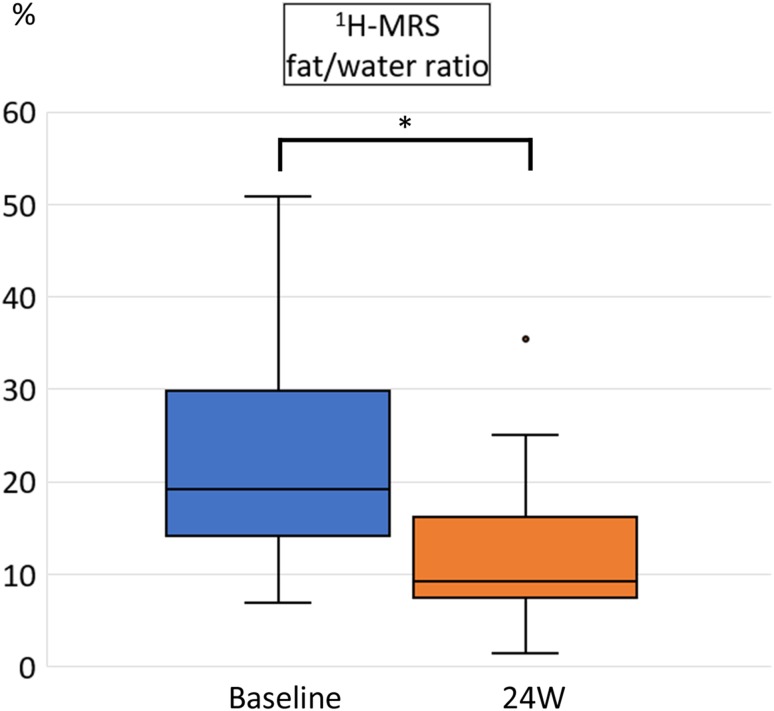
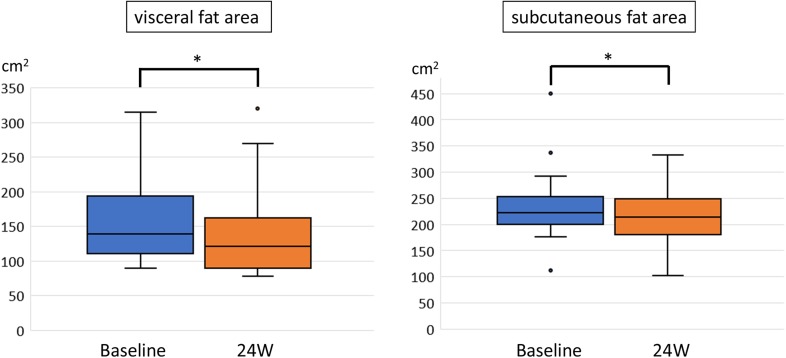
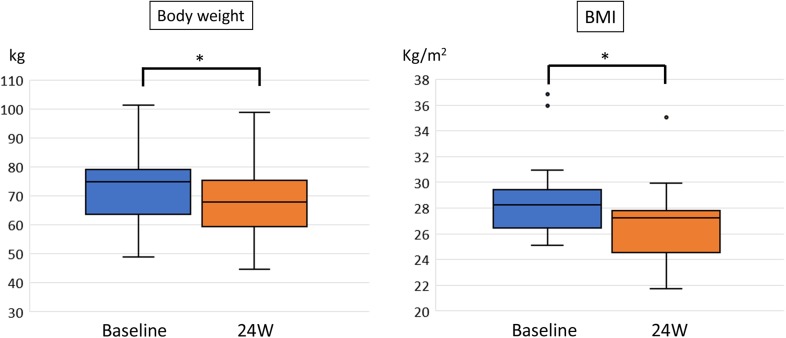
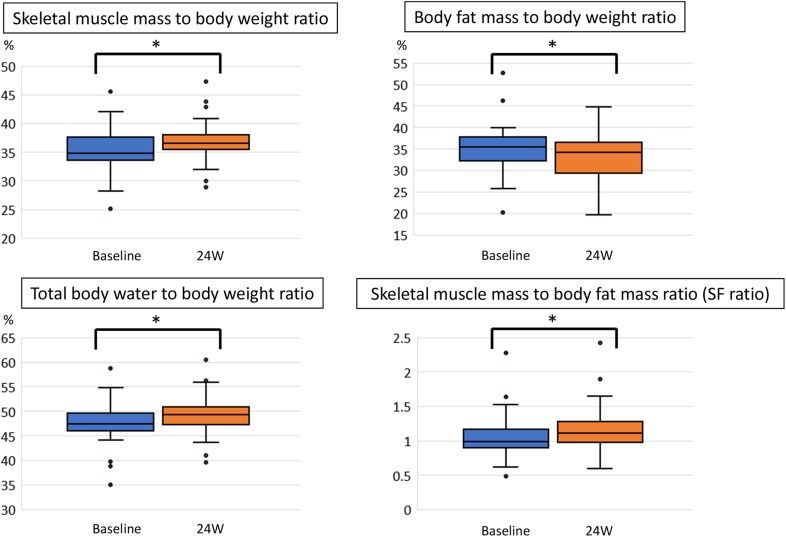
Ten patients received dapagliflozin at 5 mg/day and seven patients received canagliflozin at 100 mg/day for 24 weeks. All patients completed the study without any serious adverse effects and achieved body weight loss and improved glycated hemoglobin levels. Liver fat mass evaluated by proton magnetic resonance spectroscopy was significantly reduced (19.1% vs. 9.2%, p < 0.01), and so were both subcutaneous and visceral fat mass. The body fat/body weight ratio decreased, whereas the skeletal muscle mass/body weight ratio increased. Liver function (aspartate aminotransferase, alanine aminotransferase, and γ-glutamyl transpeptidase) improved significantly.
Sodium glucose co-transporter 2 inhibitor treatment not only improved glycemic control but also reduced liver fat mass in patients with nonalcoholic fatty liver disease and type 2 diabetes. Body weight loss was primarily attributable to a reduction in fat mass, especially visceral fat. Thus, sodium glucose co-transporter 2 inhibitors could potentially serve as a therapeutic agent for patients with nonalcoholic fatty liver disease and type 2 diabetes.
钠-葡萄糖共转运蛋白 2 抑制剂可增加尿糖排泄,减少内脏脂肪和体重,但它们在非酒精性脂肪性肝病患者中的疗效尚未得到充分研究。本研究旨在评估钠-葡萄糖共转运蛋白 2 抑制剂对非酒精性脂肪性肝病和 2 型糖尿病患者肝脂肪量和身体成分的影响。
我们回顾性分析了 2016 年 11 月至 2017 年 7 月期间接受钠-葡萄糖共转运蛋白 2 抑制剂治疗的 17 例非酒精性脂肪性肝病和 2 型糖尿病患者。在接受钠-葡萄糖共转运蛋白 2 抑制剂治疗 24 周后,评估肝脂肪、皮下和内脏脂肪、身体成分和肝功能相关参数的变化,并与基线值进行比较。
10 例患者接受达格列净 5mg/天治疗,7 例患者接受卡格列净 100mg/天治疗,疗程 24 周。所有患者均完成了研究,没有任何严重的不良反应,并且体重减轻,糖化血红蛋白水平得到改善。质子磁共振波谱评估的肝脂肪量显著减少(19.1%比 9.2%,p<0.01),皮下和内脏脂肪量也减少。体脂/体重比下降,而骨骼肌/体重比增加。肝功能(天冬氨酸氨基转移酶、丙氨酸氨基转移酶和γ-谷氨酰转肽酶)显著改善。
钠-葡萄糖共转运蛋白 2 抑制剂治疗不仅改善了血糖控制,而且减少了非酒精性脂肪性肝病和 2 型糖尿病患者的肝脂肪量。体重减轻主要归因于脂肪量的减少,尤其是内脏脂肪。因此,钠-葡萄糖共转运蛋白 2 抑制剂可能成为非酒精性脂肪性肝病和 2 型糖尿病患者的治疗药物。