Department of Biological Sciences, University of Texas at El Paso, El Paso, Texas, United States of America.
Florida Museum of Natural History, University of Florida, Gainesville, Florida, United States of America.
PLoS One. 2019 Apr 17;14(4):e0214889. doi: 10.1371/journal.pone.0214889. eCollection 2019.
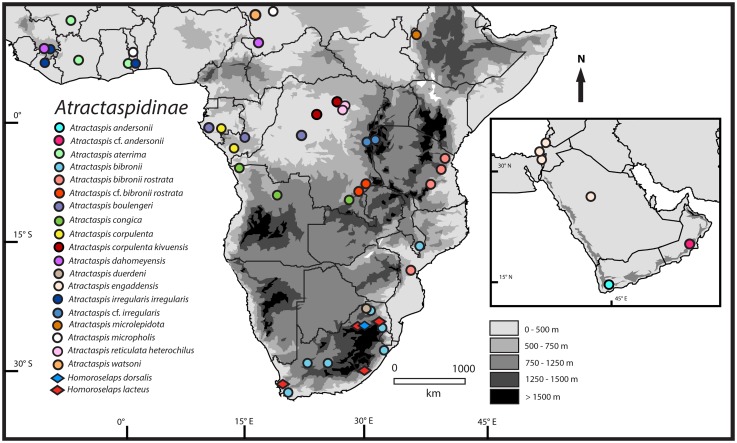
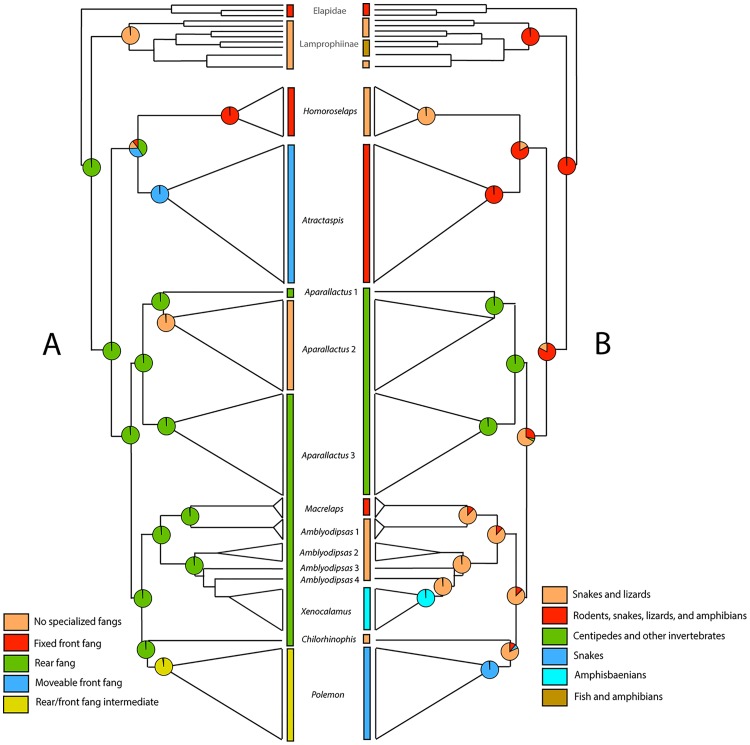
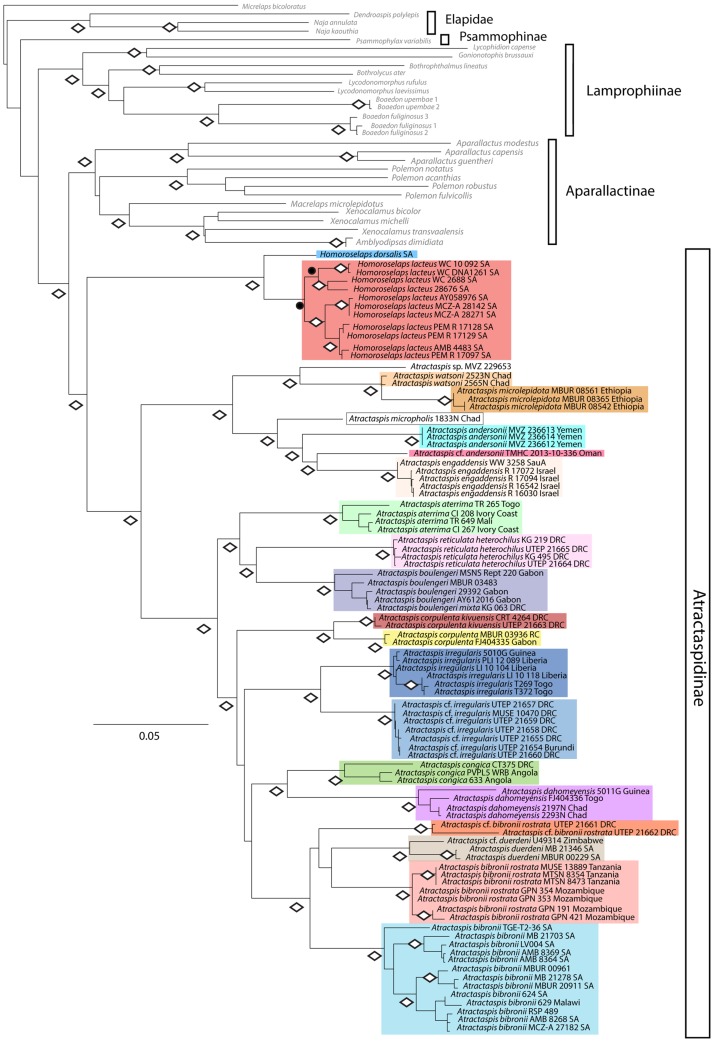
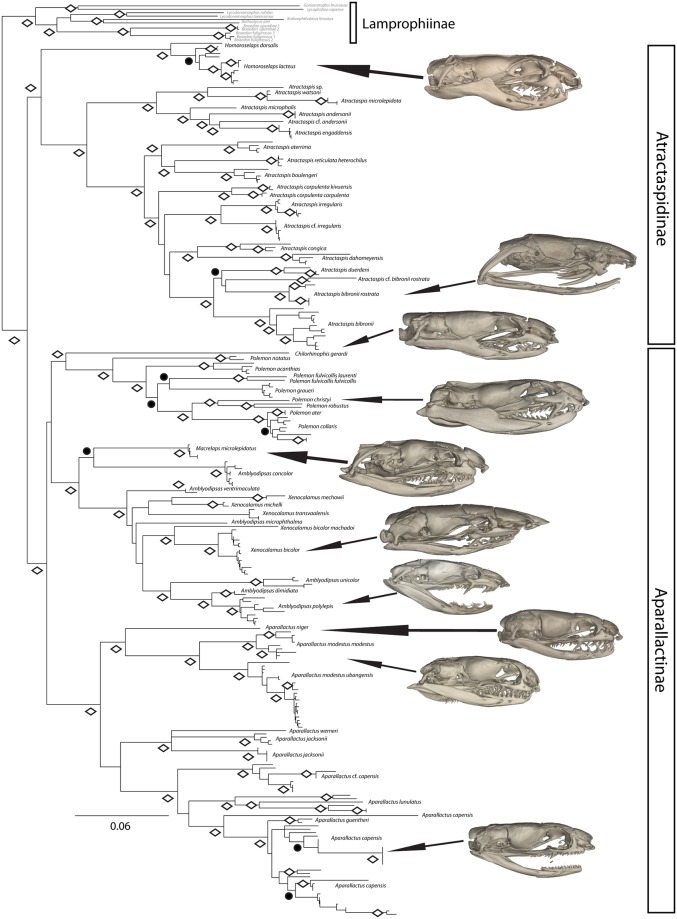
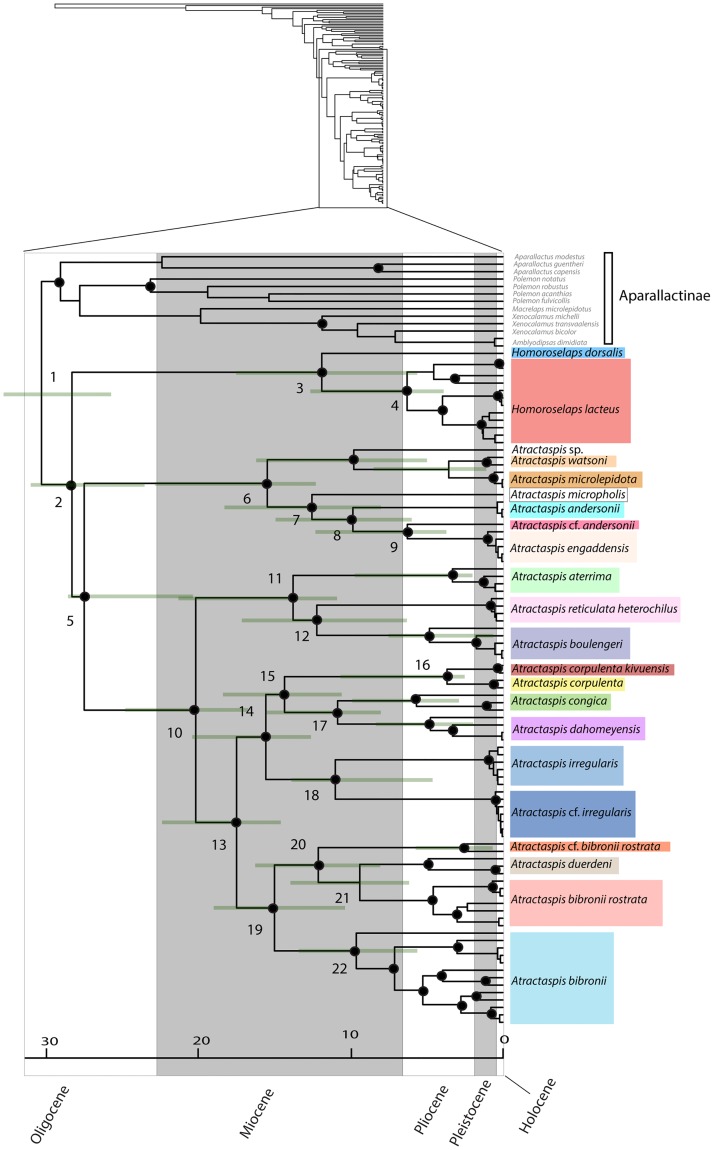
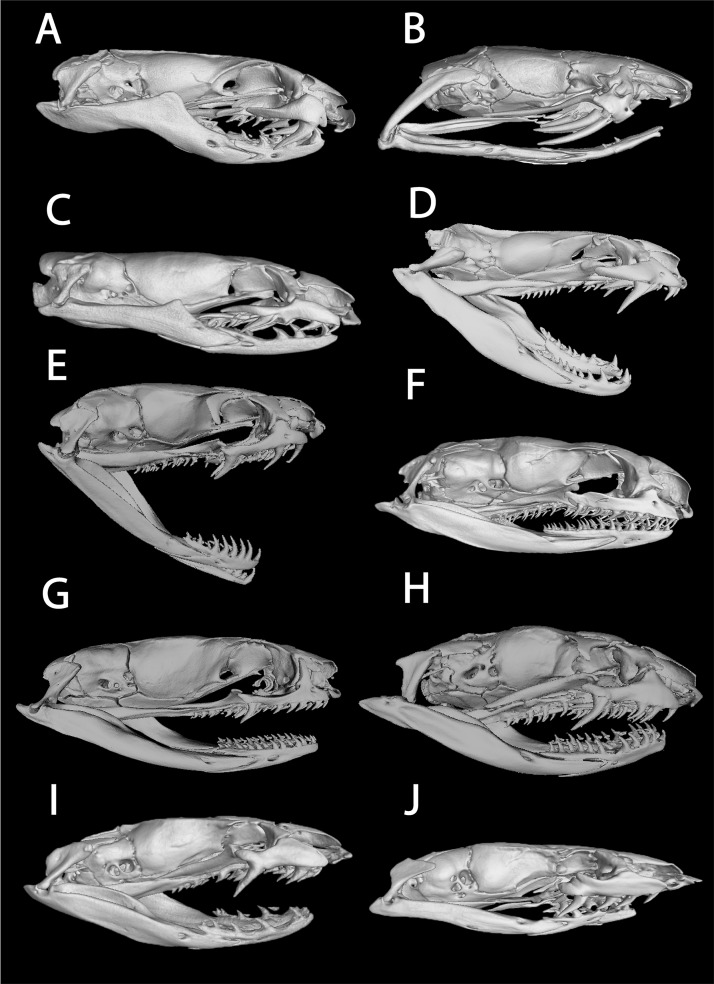
Atractaspidines are poorly studied, fossorial snakes that are found throughout Africa and western Asia, including the Middle East. We employed concatenated gene-tree analyses and divergence dating approaches to investigate evolutionary relationships and biogeographic patterns of atractaspidines with a multi-locus data set consisting of three mitochondrial (16S, cyt b, and ND4) and two nuclear genes (c-mos and RAG1). We sampled 91 individuals from both atractaspidine genera (Atractaspis and Homoroselaps). Additionally, we used ancestral-state reconstructions to investigate fang and diet evolution within Atractaspidinae and its sister lineage (Aparallactinae). Our results indicated that current classification of atractaspidines underestimates diversity within the group. Diversification occurred predominantly between the Miocene and Pliocene. Ancestral-state reconstructions suggest that snake dentition in these taxa might be highly plastic within relatively short periods of time to facilitate adaptations to dynamic foraging and life-history strategies.
蚓蜥是研究较少的穴居蛇类,分布于非洲和西亚,包括中东。我们采用基因树联合分析和分歧时间推断方法,利用包含三个线粒体基因(16S、细胞色素 b 和 ND4)和两个核基因(c-mos 和 RAG1)的多基因数据集,研究蚓蜥的进化关系和生物地理格局。我们从蚓蜥属(Atractaspis 和 Homoroselaps)的 91 个个体中取样。此外,我们还使用祖先状态重建来研究蚓蜥科及其姊妹类群(Aparallactinae)的毒牙和食性进化。研究结果表明,目前蚓蜥的分类低估了该类群的多样性。多样性主要发生在中新世和上新世之间。祖先状态重建表明,这些类群的蛇类牙齿在相对较短的时间内可能具有高度的可塑性,以促进对动态觅食和生活史策略的适应。