The John A. Moran Eye Center, University of Utah, Salt Lake City, Utah, United States.
Department of Ophthalmology, The Fourth Affiliated Hospital of China Medical University, Shenyang, China.
Invest Ophthalmol Vis Sci. 2019 Apr 1;60(5):1604-1613. doi: 10.1167/iovs.19-26553.
We address the hypothesis that uncoupling protein 2 (UCP2), a cellular glucose regulator, delays physiologic retinal vascular development (PRVD) by interfering with glucose uptake through glucose transporter 1 (Glut1).
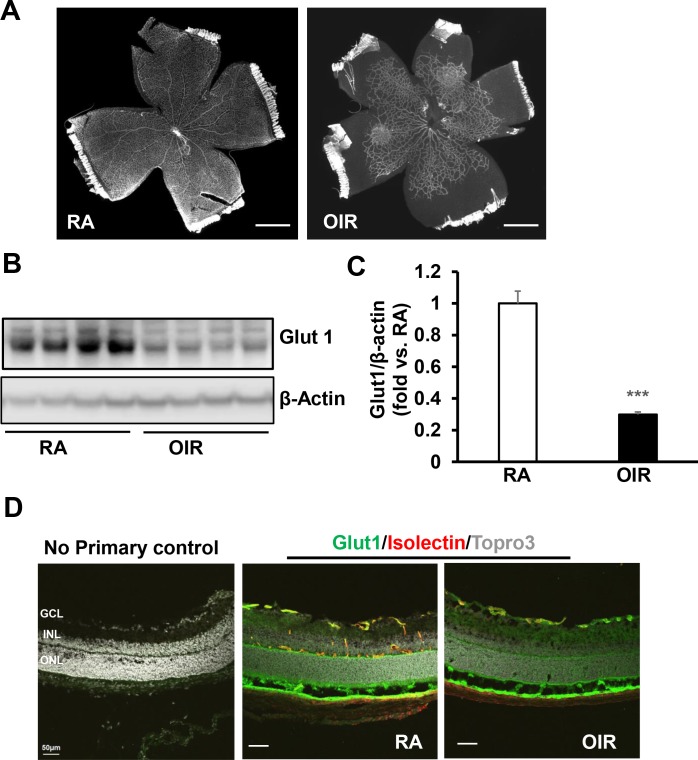
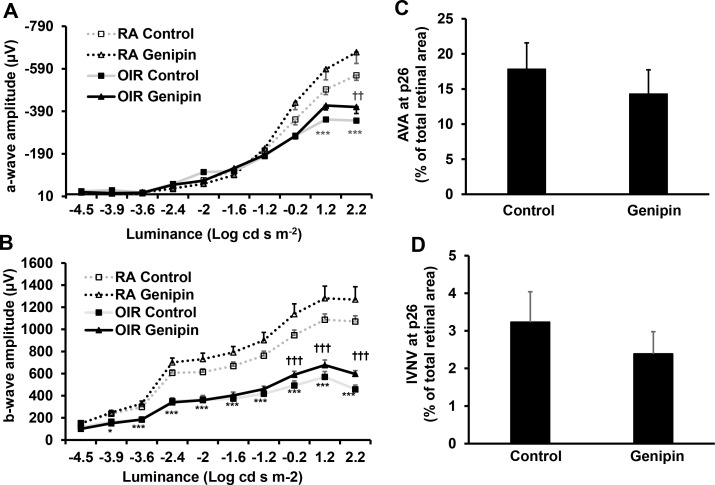
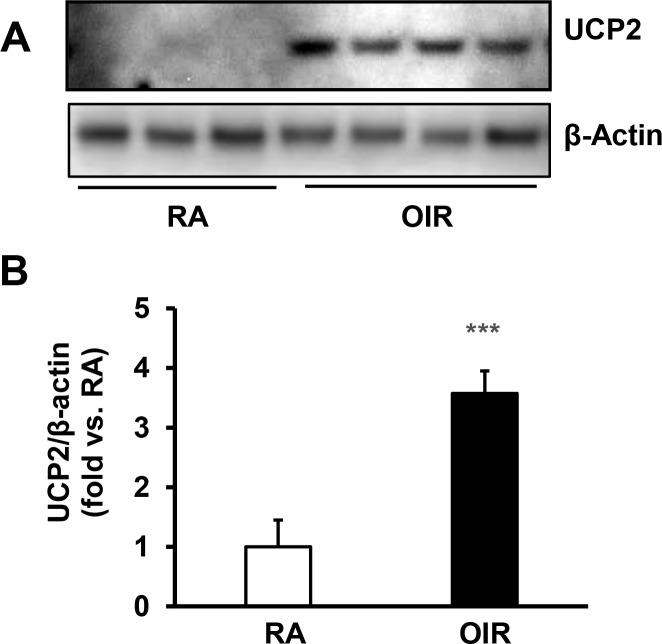
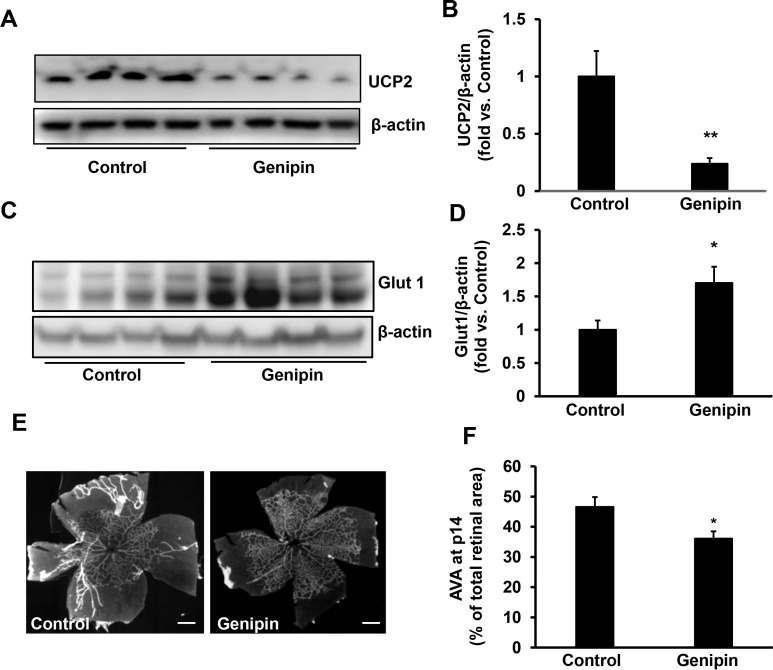
In the rat 50/10 oxygen-induced retinopathy (OIR) model, retinal Glut1 and UCP2 were measured and compared to room air (RA)-raised pups at postnatal day 14 (p14). Pups in OIR and RA received intraperitoneal genipin, an UCP2 inhibitor, or control every other day from p3 until p13. Analyses at p14 included avascular/total retinal area (AVA), Western blots of retinal UCP2 and Glut1, and immunostaining of Glut1 in retinal cryosections. Intravitreal neovascular/total retinal area (IVNV) was analyzed at p18, and electroretinograms were performed at p26. Glut1 and phosphorylated VEGFR2 (p-VEGFR2), glucose uptake, adenosine triphosphate (ATP) production, and cell proliferation were measured in human retinal microvascular endothelial cells (hRMVECs) pretreated with genipin or transfected with UCP2siRNA, Glut1siRNA, or control siRNA when incubated with VEGF or PBS.
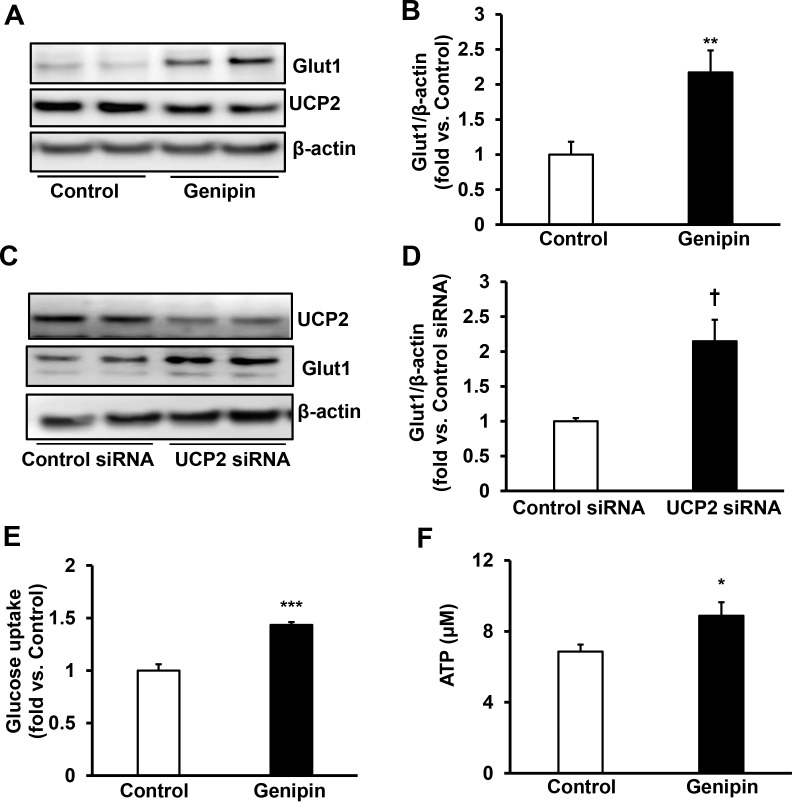
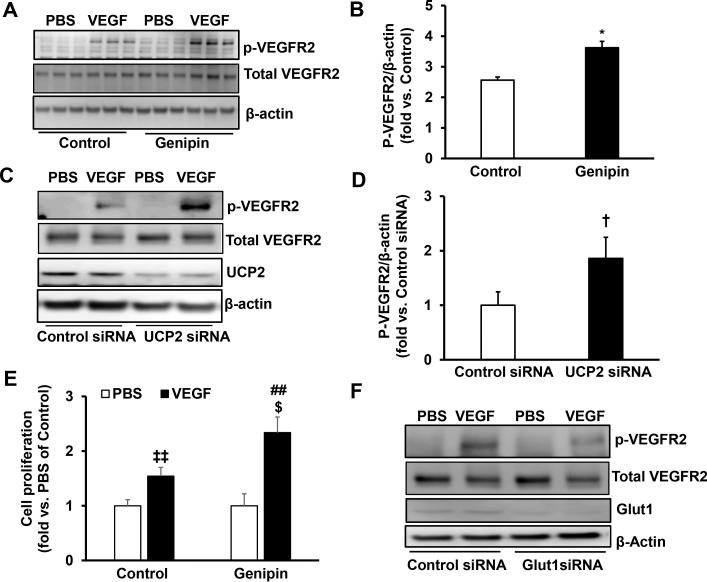
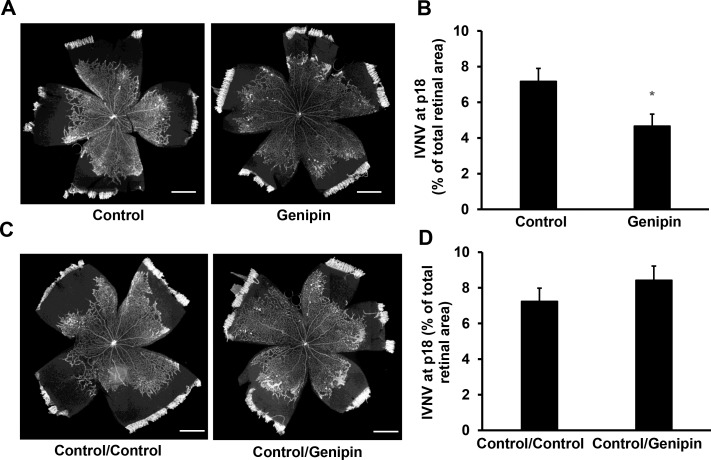
At p14, OIR pups had increased AVA with decreased Glut1 and increased UCP2 in the retina compared to RA retinas. Intraperitoneal genipin increased retinal Glut1 and reduced AVA. Compared to control, treatment with genipin or knockdown of UCP2 significantly increased Glut1, glucose uptake, ATP production, VEGF-induced p-VEGFR2 and cell proliferation in hRMVECs. Knockdown of Glut1 inhibited VEGF-induced p-VEGFR2. Genipin-treated OIR pups with decreased AVA at p14 had reduced IVNV at p18 and increased amplitudes in a- and b-waves at p26.
Extending PRVD by increasing retinal endothelial glucose uptake may represent a strategy to prevent severe retinopathy of prematurity and vision loss.
我们提出假设,解偶联蛋白 2(UCP2)是一种细胞葡萄糖调节剂,通过干扰葡萄糖转运蛋白 1(Glut1)的葡萄糖摄取来延迟生理视网膜血管发育(PRVD)。
在大鼠 50/10 氧诱导的视网膜病变(OIR)模型中,测量视网膜 Glut1 和 UCP2,并与出生后第 14 天(p14)的常氧(RA)饲养的幼鼠进行比较。OIR 和 RA 组的幼鼠从 p3 开始每两天腹腔内注射一次 Genipin,这是一种 UCP2 抑制剂,直至 p13。p14 时的分析包括无血管/总视网膜面积(AVA)、视网膜 UCP2 和 Glut1 的 Western blot 以及视网膜冷冻切片中 Glut1 的免疫染色。p18 时分析了玻璃体内新生血管/总视网膜面积(IVNV),p26 时进行了视网膜电图检查。在 Genipin 预处理或 UCP2siRNA、Glut1siRNA 或对照 siRNA 转染的人视网膜微血管内皮细胞(hRMVECs)中孵育 VEGF 或 PBS 时,测量葡萄糖摄取、三磷酸腺苷(ATP)产生和细胞增殖。
在 p14 时,与 RA 视网膜相比,OIR 幼鼠的视网膜中 AVA 增加,Glut1 减少,UCP2 增加。腹腔内 Genipin 增加了视网膜 Glut1 并减少了 AVA。与对照相比,Genipin 或 UCP2 敲低处理显著增加了 hRMVECs 中的 Glut1、葡萄糖摄取、ATP 产生、VEGF 诱导的 p-VEGFR2 和细胞增殖。Glut1 敲低抑制了 VEGF 诱导的 p-VEGFR2。p14 时 AVA 减少的 Genipin 处理的 OIR 幼鼠在 p18 时 IVNV 减少,p26 时 a-和 b-波的幅度增加。
通过增加视网膜内皮细胞的葡萄糖摄取来延长 PRVD,可能是预防早产儿视网膜病变和视力丧失的一种策略。