Laboratory of Oncology, Pangaea Oncology, Quiron Dexeus University Hospital, 08028, Barcelona, Spain.
Institut de Recherches Internationales Servier, 92284, Suresnes, France.
Nat Commun. 2019 Apr 18;10(1):1812. doi: 10.1038/s41467-019-09734-5.
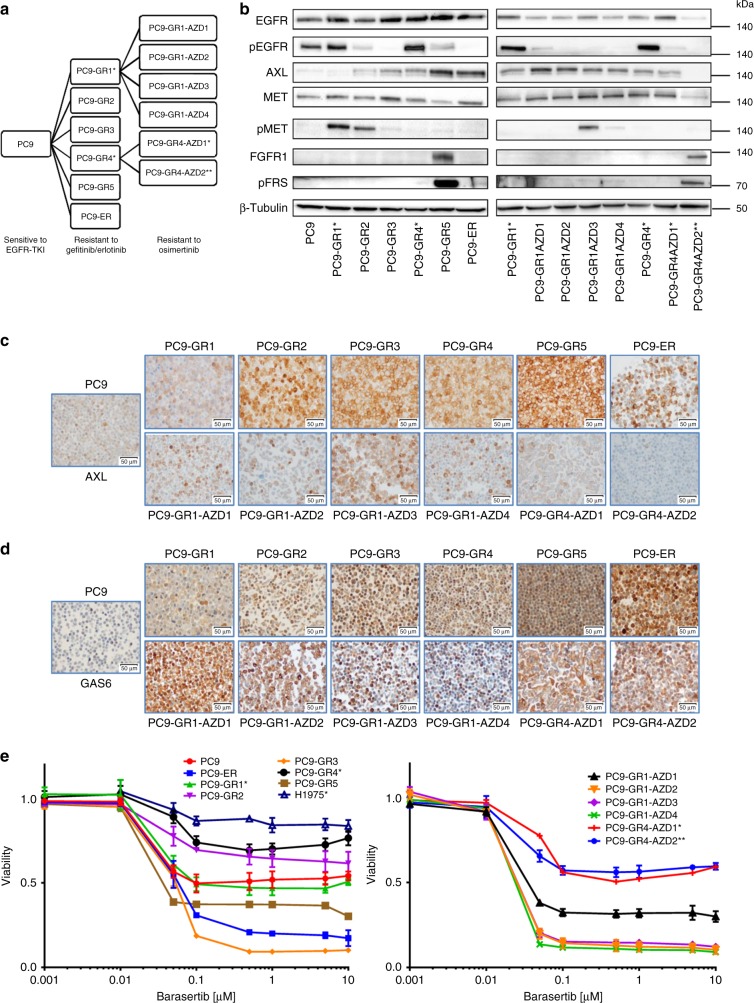
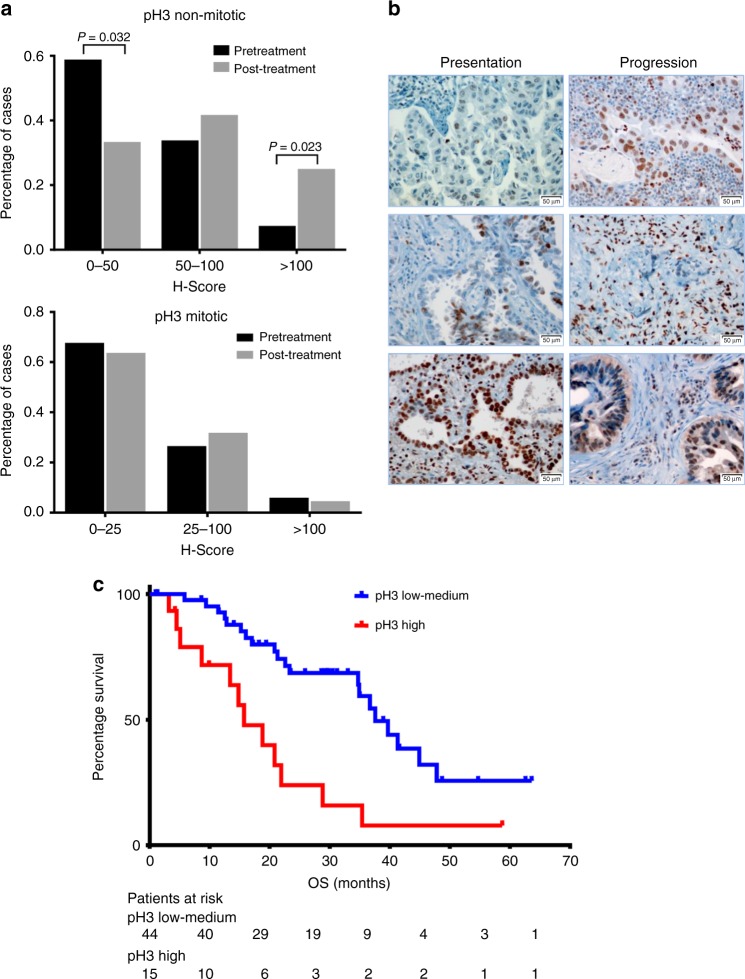
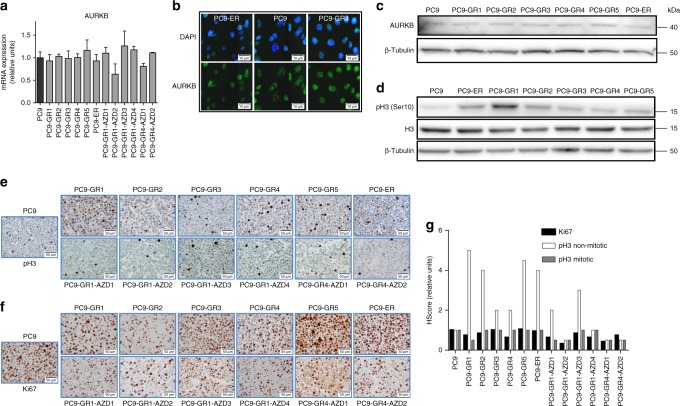
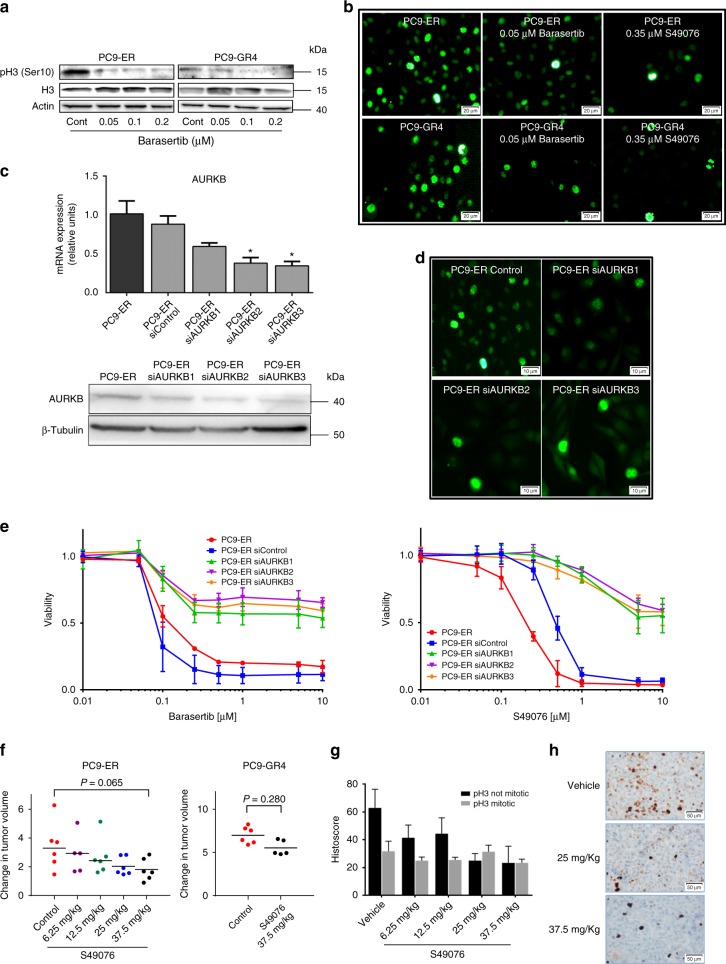
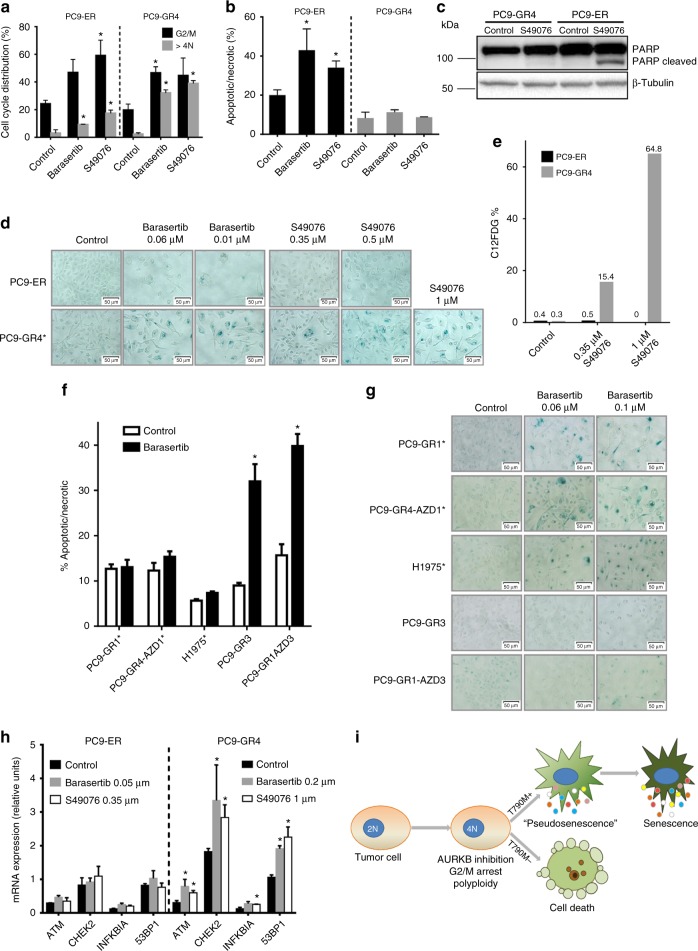
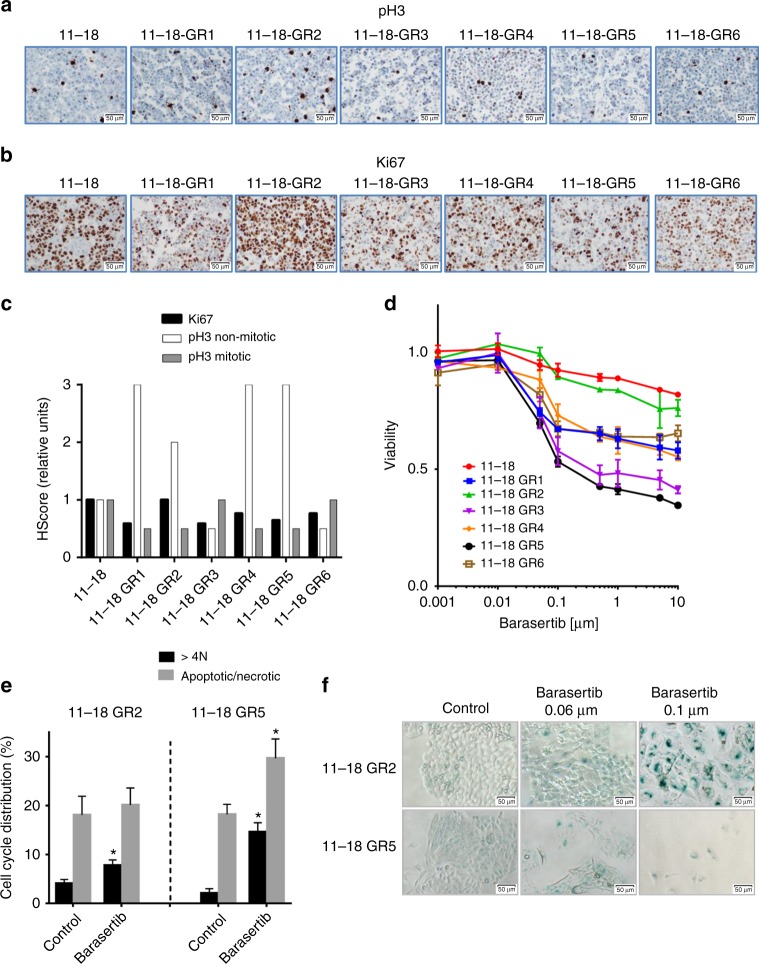
Non-small cell lung cancer (NSCLC) tumors harboring mutations in EGFR ultimately relapse to therapy with EGFR tyrosine kinase inhibitors (EGFR TKIs). Here, we show that resistant cells without the p.T790M or other acquired mutations are sensitive to the Aurora B (AURKB) inhibitors barasertib and S49076. Phospho-histone H3 (pH3), a major product of AURKB, is increased in most resistant cells and treatment with AURKB inhibitors reduces the levels of pH3, triggering G1/S arrest and polyploidy. Senescence is subsequently induced in cells with acquired mutations while, in their absence, polyploidy is followed by cell death. Finally, in NSCLC patients, pH3 levels are increased after progression on EGFR TKIs and high pH3 baseline correlates with shorter survival. Our results reveal that AURKB activation is associated with acquired resistance to EGFR TKIs, and that AURKB constitutes a potential target in NSCLC progressing to anti-EGFR therapy and not carrying resistance mutations.
非小细胞肺癌(NSCLC)肿瘤中存在 EGFR 突变的最终会对 EGFR 酪氨酸激酶抑制剂(EGFR TKIs)的治疗产生耐药。在这里,我们表明没有 p.T790M 或其他获得性突变的耐药细胞对 Aurora B(AURKB)抑制剂 barasertib 和 S49076 敏感。AURKB 的主要产物磷酸化组蛋白 H3(pH3)在大多数耐药细胞中增加,AURKB 抑制剂的治疗降低 pH3 水平,触发 G1/S 期阻滞和多倍体形成。随后在具有获得性突变的细胞中诱导衰老,而在没有突变的情况下,多倍体之后是细胞死亡。最后,在 NSCLC 患者中,在 EGFR TKI 进展后 pH3 水平增加,高 pH3 基线与较短的生存期相关。我们的研究结果表明,AURKB 的激活与对 EGFR TKIs 的获得性耐药有关,并且 AURKB 构成了进展为抗 EGFR 治疗且不携带耐药突变的 NSCLC 的潜在靶点。