Department of Internal Medicine, Division of Hematology-Oncology, University of Nebraska Medical Center, Omaha, NE, United States; Fred and Pamela Buffett Cancer Center, University of Nebraska Medical Center, Omaha, NE, United States.
Cancer Treat Rev. 2019 May;75:52-61. doi: 10.1016/j.ctrv.2019.04.001. Epub 2019 Apr 11.
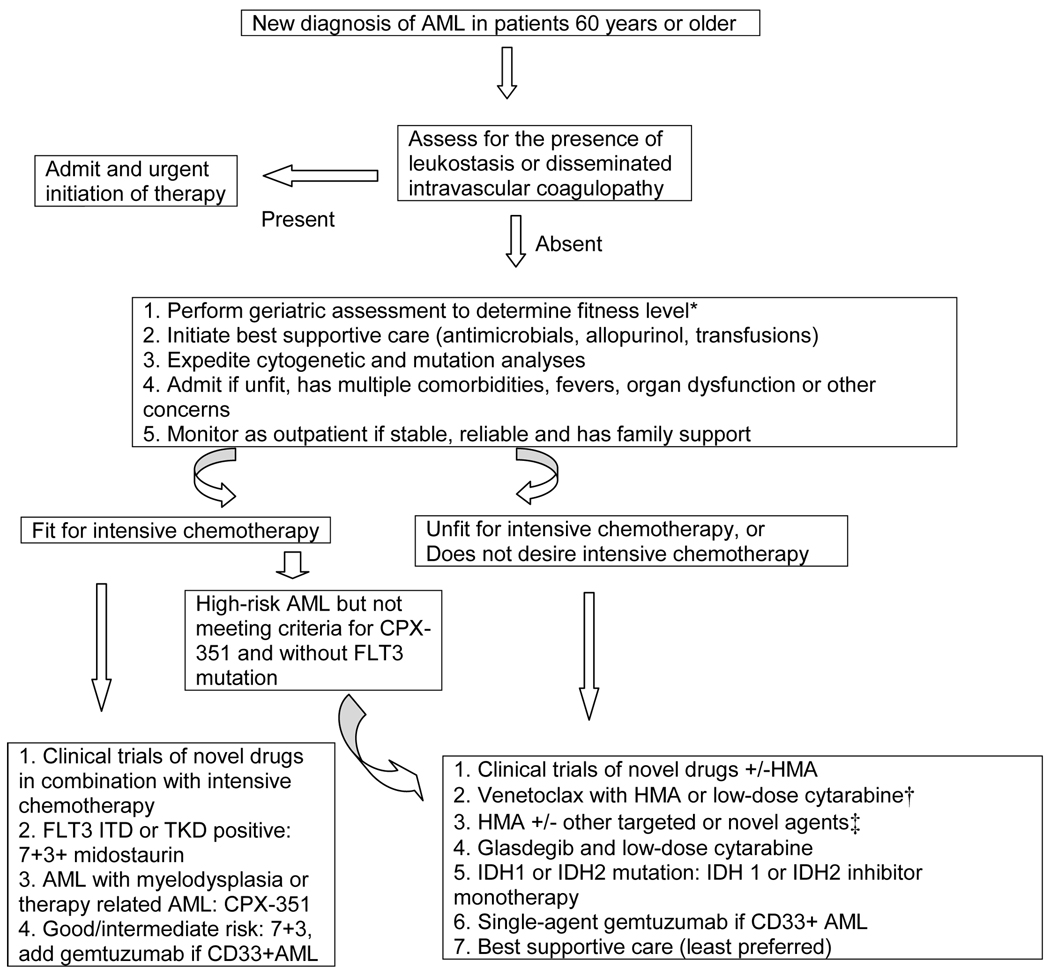
Acute myeloid leukemia (AML) presents therapeutic challenges in older adults because of high-risk leukemia biology conferring chemoresistance, and poor functional status resulting in increased therapy-related toxicities. Recent FDA approval of 8 new drugs for AML has increased therapeutic armamentarium and also provides effective low-intensity treatment options. Rational therapy selection strategies that consider individual's risk of therapy-related toxicities and probability of disease control can maximize benefits of available treatments. Studies have demonstrated that fitness level, measured by geriatric assessment can predict therapy-related toxicities, whereas cytogenetic and mutation results correlate with the probability of responses to standard chemotherapy. We are approaching an era when we move from "one size fits all" approach to personalized therapy selection based on geriatric assessment, genetic and molecular profiling.
急性髓系白血病(AML)在老年患者中存在治疗挑战,这是由于高风险的白血病生物学导致化疗耐药,以及较差的功能状态导致治疗相关毒性增加。最近 FDA 批准了 8 种用于 AML 的新药,这增加了治疗手段,并提供了有效的低强度治疗选择。合理的治疗选择策略考虑了个体治疗相关毒性的风险和疾病控制的可能性,可以最大限度地利用现有治疗方法的益处。研究表明,通过老年评估测量的体能状态可以预测治疗相关毒性,而细胞遗传学和突变结果与对标准化疗的反应概率相关。我们正在走向一个基于老年评估、遗传和分子谱分析的个体化治疗选择的时代,而不是“一刀切”的方法。