Host-Pathogen Interactions Group, School of Biochemistry and Immunology, Trinity Biomedical Sciences Institute, Trinity College Dublin, Dublin, Ireland.
Department of Microbiology, Moyne Institute of Preventive Medicine, School of Genetics and Microbiology, Trinity College Dublin, Dublin, Ireland.
PLoS Pathog. 2019 Apr 22;15(4):e1007713. doi: 10.1371/journal.ppat.1007713. eCollection 2019 Apr.
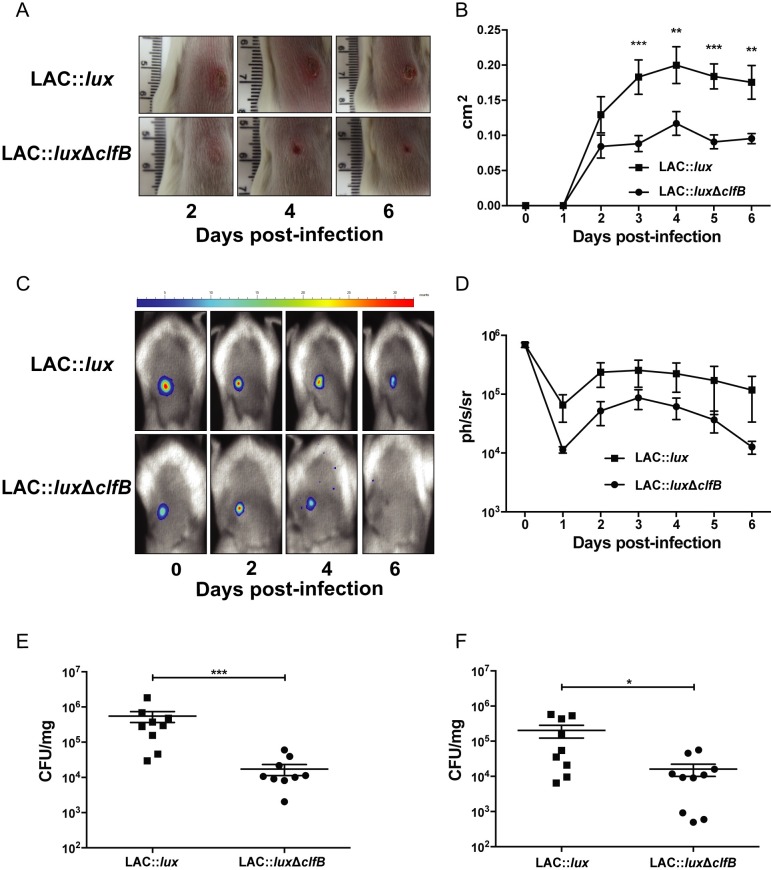
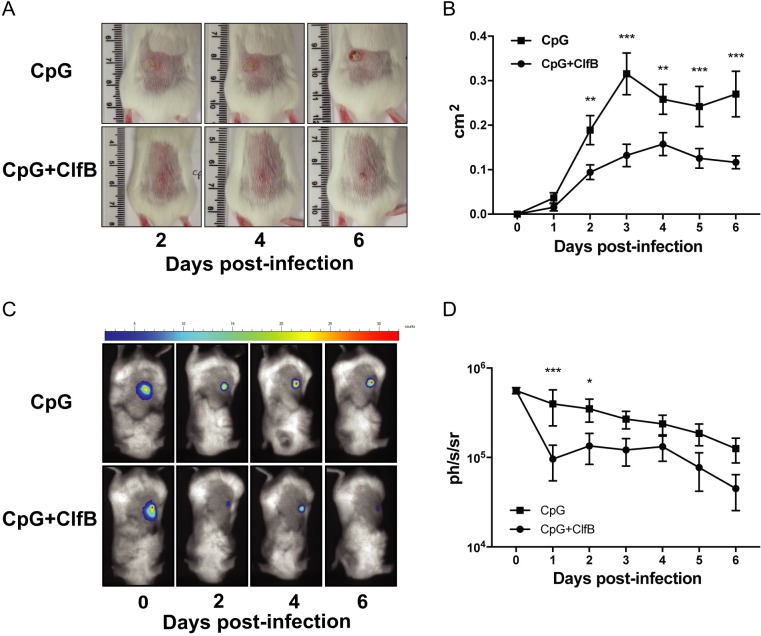
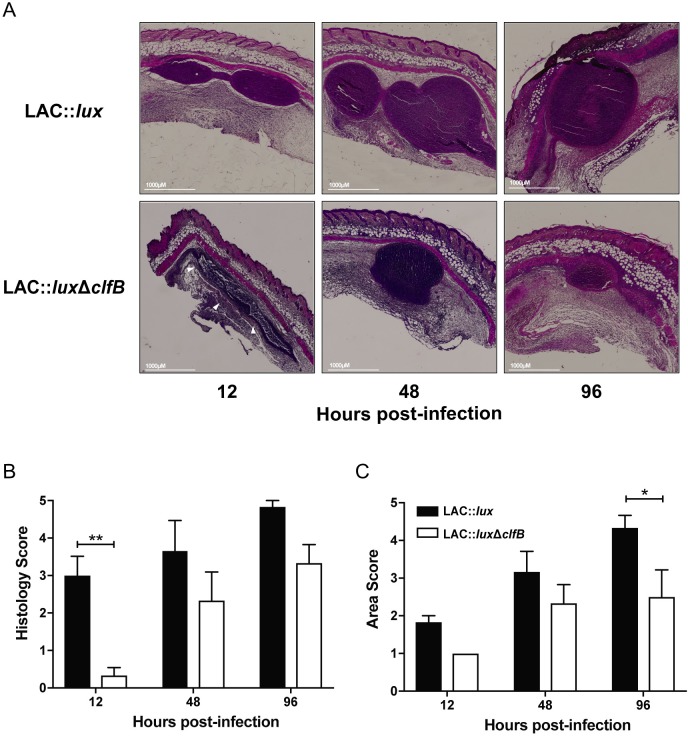
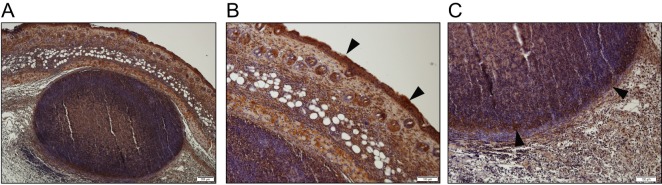
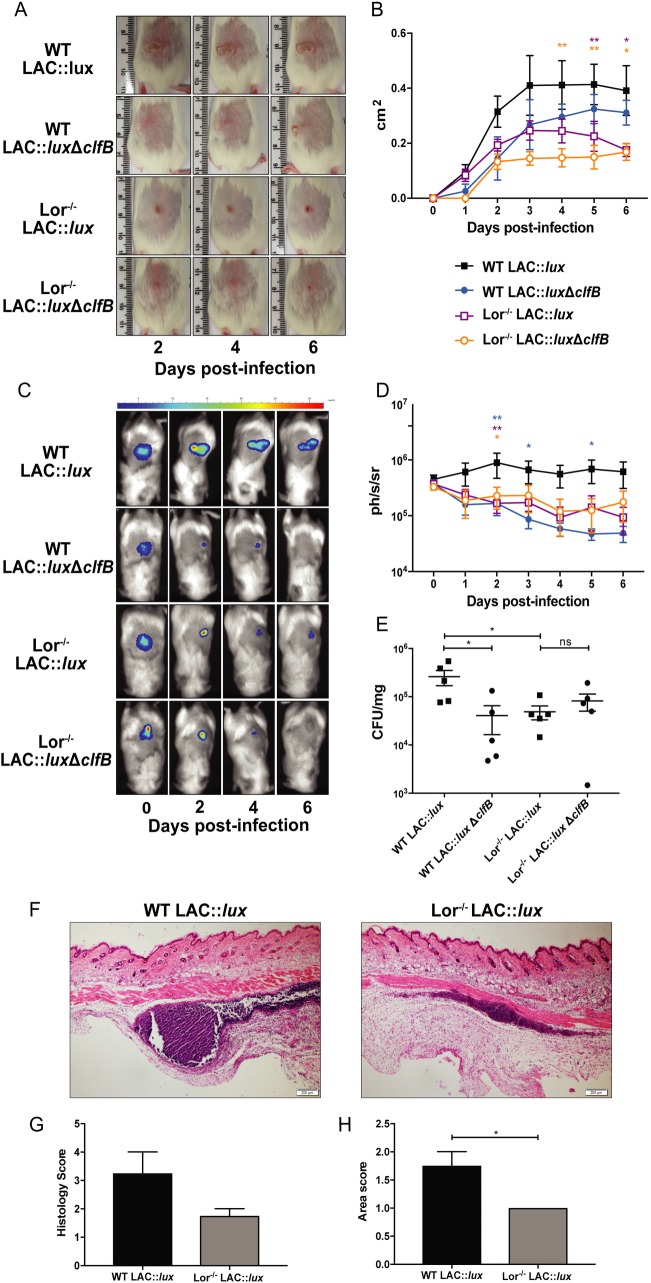
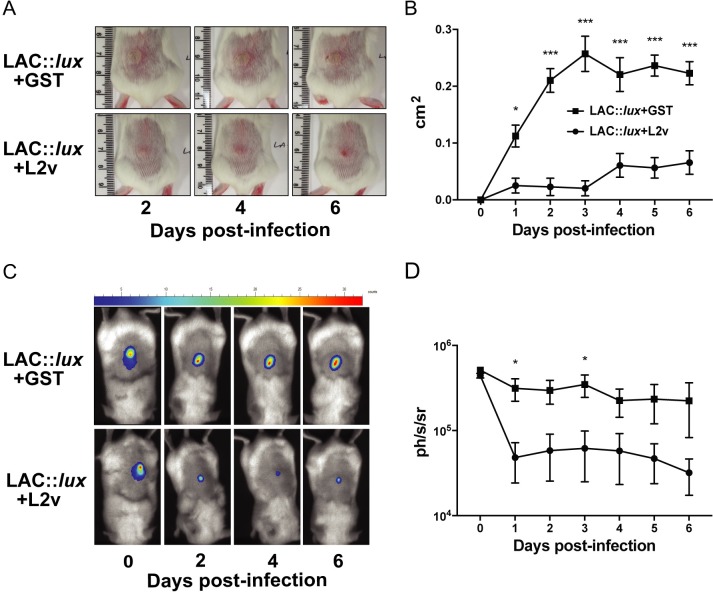
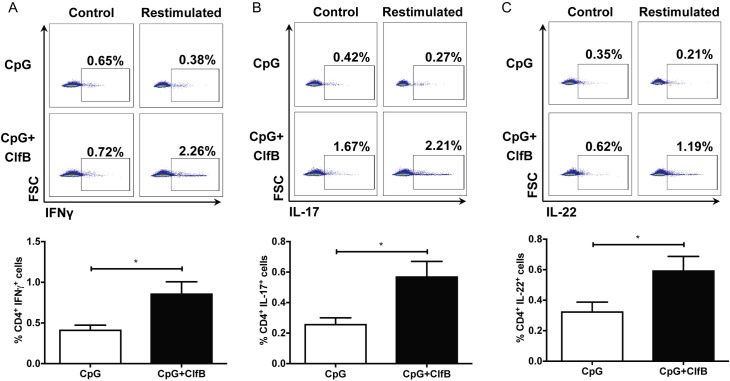
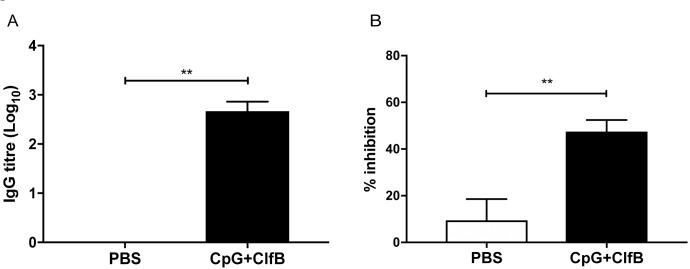
Staphylococcus aureus expresses a number of cell wall-anchored proteins that mediate adhesion and invasion of host cells and tissues and promote immune evasion, consequently contributing to the virulence of this organism. The cell wall-anchored protein clumping factor B (ClfB) has previously been shown to facilitate S. aureus nasal colonization through high affinity interactions with the cornified envelope in the anterior nares. However, the role of ClfB during skin and soft tissue infection (SSTI) has never been investigated. This study reveals a novel role for ClfB during SSTIs. ClfB is crucial in determining the abscess structure and bacterial burden early in infection and this is dependent upon a specific interaction with the ligand loricrin which is expressed within the abscess tissue. Targeting ClfB using a model vaccine that induced both protective humoral and cellular responses, leads to protection during S. aureus skin infection. This study therefore identifies ClfB as an important antigen for future SSTI vaccines.
金黄色葡萄球菌表达多种细胞壁锚定蛋白,介导与宿主细胞和组织的黏附与入侵,并促进免疫逃逸,从而有助于该病原体的毒力。细胞壁锚定蛋白凝聚因子 B(ClfB)先前已被证明通过与前鼻腔的角蛋白包膜的高亲和力相互作用,促进金黄色葡萄球菌的鼻腔定植。然而,ClfB 在皮肤和软组织感染(SSTI)中的作用从未被研究过。本研究揭示了 ClfB 在 SSTI 中的一个新作用。ClfB 在感染早期确定脓肿结构和细菌负荷方面至关重要,这依赖于与在脓肿组织中表达的配体层粘连蛋白的特异性相互作用。使用一种诱导保护性体液和细胞应答的模型疫苗靶向 ClfB,可在金黄色葡萄球菌皮肤感染期间提供保护。因此,本研究将 ClfB 确定为未来 SSTI 疫苗的重要抗原。