Centre for Microbial Diseases and Immunity Research, Department of Microbiology and Immunology, University of British Columbia, Vancouver, British Columbia V6T 1Z4, Canada.
Pathogen Molecular Genetics Section, Laboratory of Bacteriology, National Institute of Allergy and Infectious Diseases, National Institutes of Health, Bethesda, MD 20814, United States.
EBioMedicine. 2016 Oct;12:219-226. doi: 10.1016/j.ebiom.2016.09.015. Epub 2016 Sep 17.
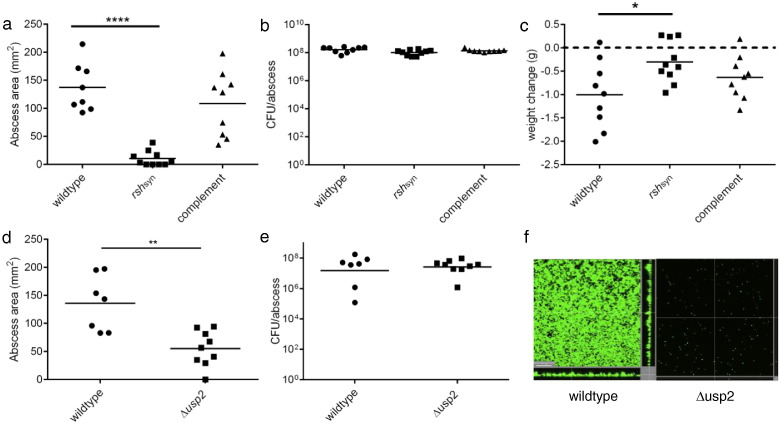
Cutaneous abscess infections are difficult to treat with current therapies and alternatives to conventional antibiotics are needed. Understanding the regulatory mechanisms that govern abscess pathology should reveal therapeutic interventions for these recalcitrant infections. Here we demonstrated that the stringent stress response employed by bacteria to cope and adapt to environmental stressors was essential for the formation of lesions, but not bacterial growth, in a methicillin resistant Staphylococcus aureus (MRSA) cutaneous abscess mouse model. To pharmacologically confirm the role of the stringent response in abscess formation, a cationic peptide that causes rapid degradation of the stringent response mediator, guanosine tetraphosphate (ppGpp), was employed. The therapeutic application of this peptide strongly inhibited lesion formation in mice infected with Gram-positive MRSA and Gram-negative Pseudomonas aeruginosa. Overall, we provide insights into the mechanisms governing abscess formation and a paradigm for treating multidrug resistant cutaneous abscesses.
皮肤脓肿感染难以用当前疗法治疗,因此需要替代传统抗生素的方法。了解控制脓肿病理的调控机制,应该可以为这些难治性感染找到治疗干预措施。在这里,我们证明了细菌用来应对和适应环境胁迫的严格应激反应,对于耐甲氧西林金黄色葡萄球菌(MRSA)皮肤脓肿小鼠模型中病变的形成是必不可少的,但对细菌生长则并非如此。为了通过药理学确认严格反应在脓肿形成中的作用,使用了一种阳离子肽,该肽可导致严格反应调节剂鸟苷四磷酸(ppGpp)的快速降解。该肽的治疗应用强烈抑制了革兰氏阳性的 MRSA 和革兰氏阴性的铜绿假单胞菌感染小鼠的病变形成。总的来说,我们深入了解了控制脓肿形成的机制,并为治疗多药耐药性皮肤脓肿提供了范例。