Department of Biochemistry and Molecular Biology, Center for Structural Biology, The McKnight Brain Institute, University of Florida, Gainesville, FL 32610, USA.
Viruses. 2019 Apr 20;11(4):362. doi: 10.3390/v11040362.
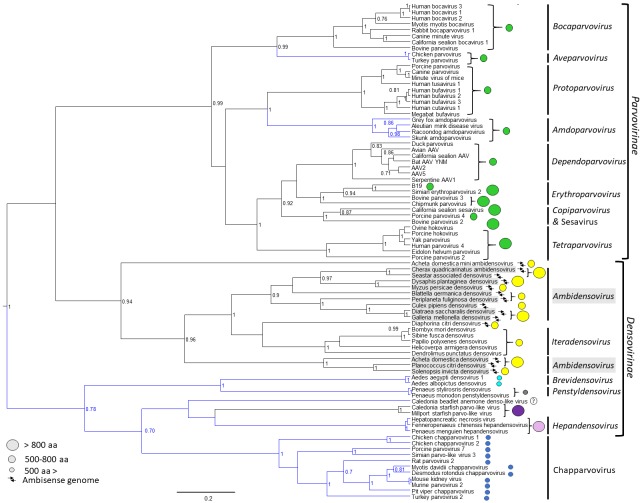
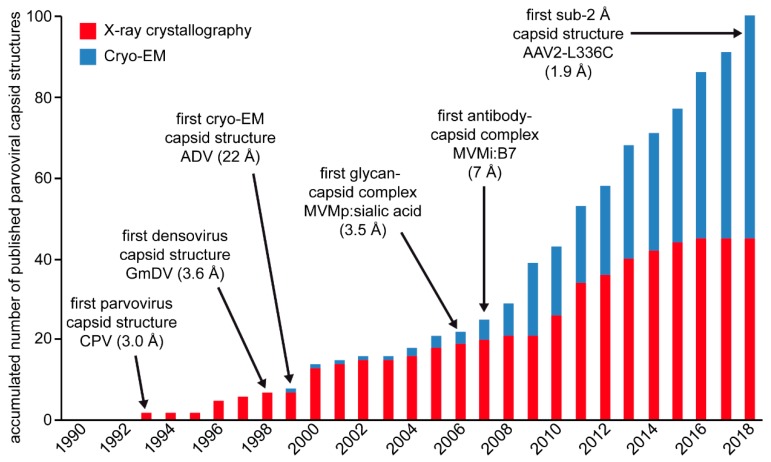
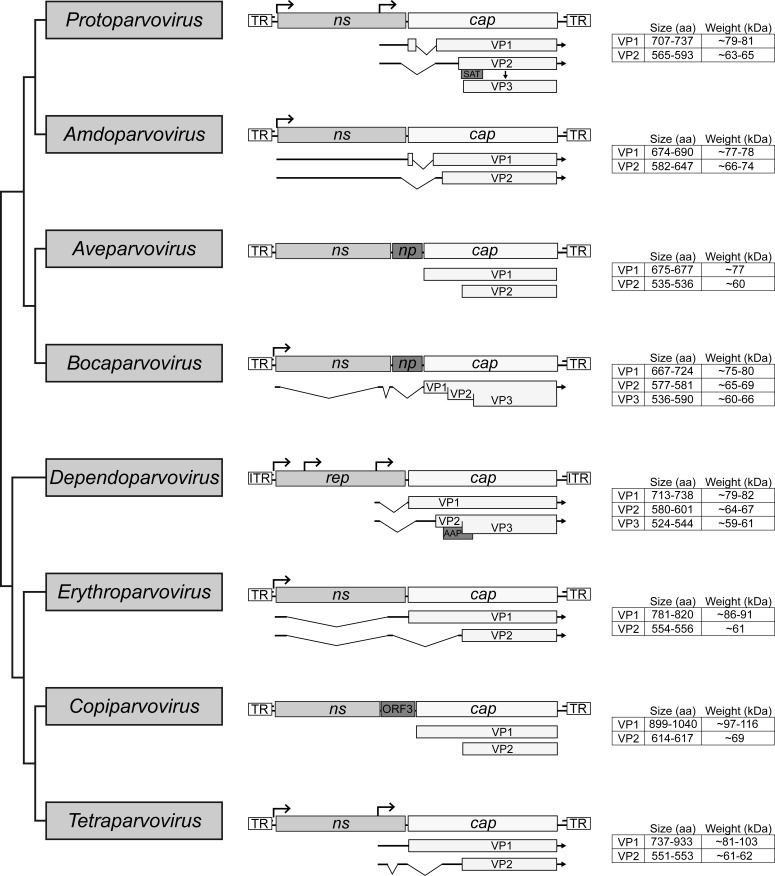
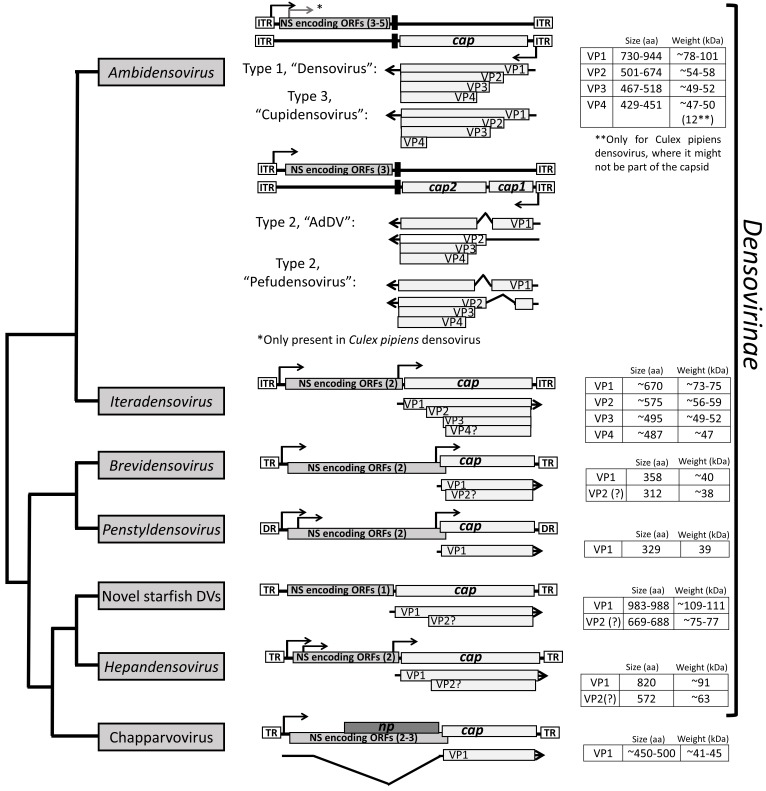
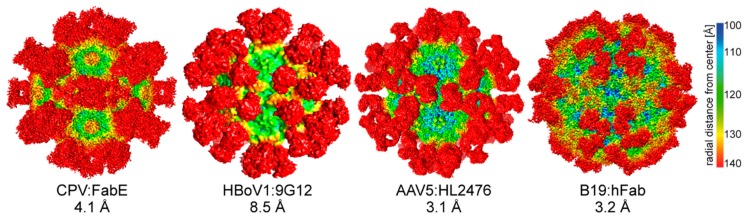
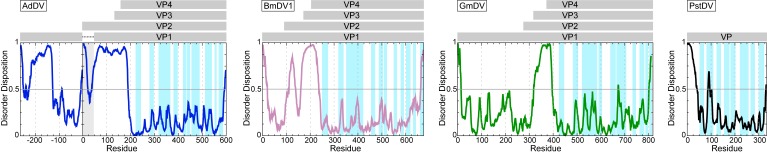
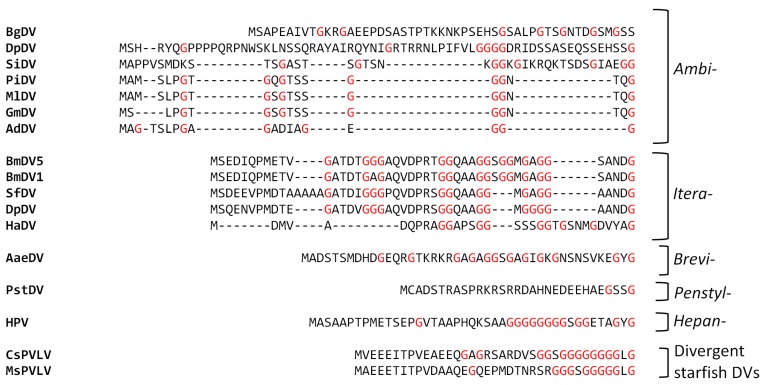
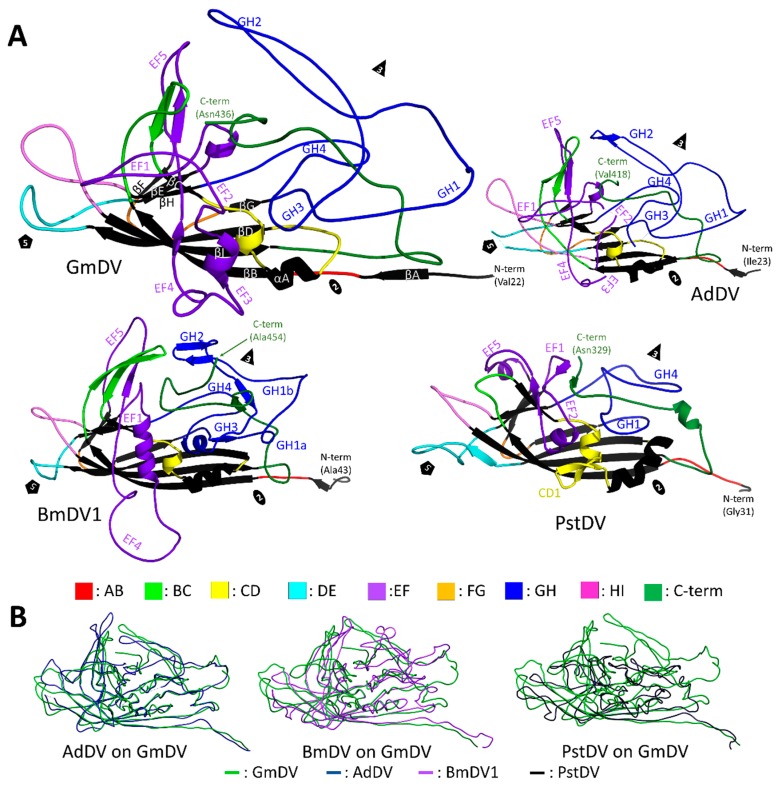
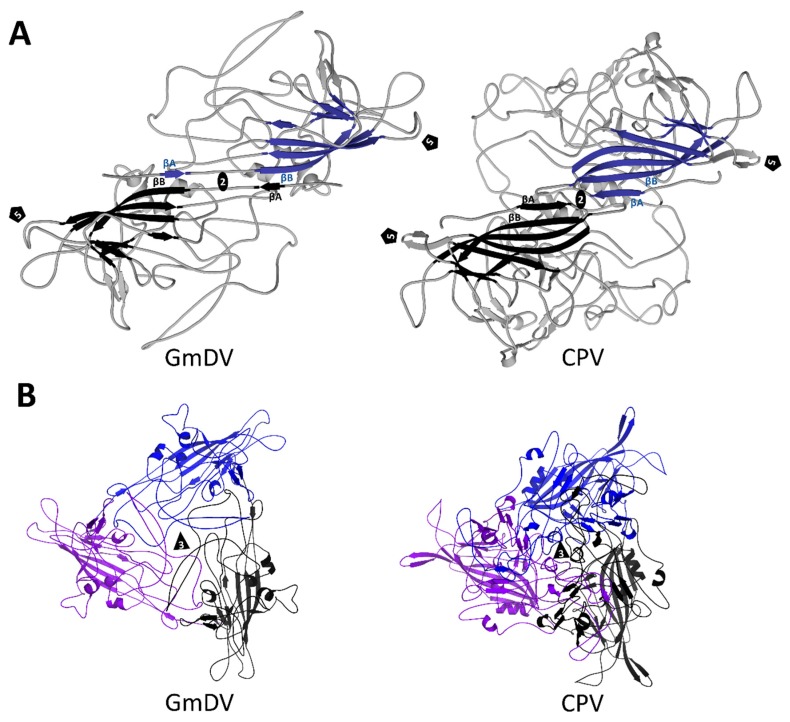
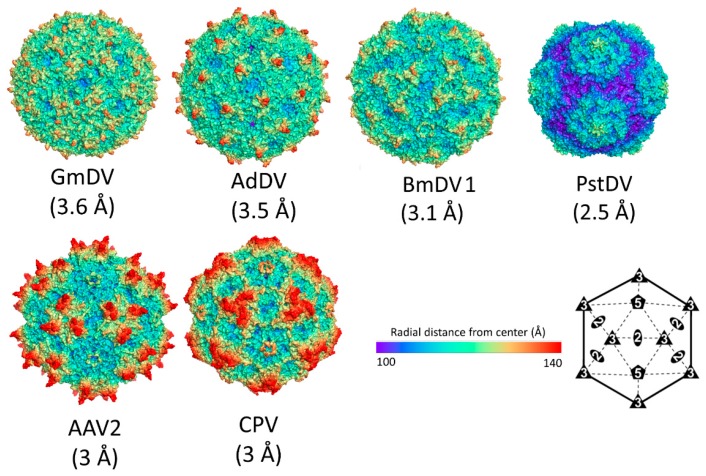
Parvoviruses, infecting vertebrates and invertebrates, are a family of single-stranded DNA viruses with small, non-enveloped capsids with T = 1 icosahedral symmetry. A quarter of a century after the first parvovirus capsid structure was published, approximately 100 additional structures have been analyzed. This first structure was that of Canine Parvovirus, and it initiated the practice of structure-to-function correlation for the family. Despite high diversity in the capsid viral protein (VP) sequence, the structural topologies of all parvoviral capsids are conserved. However, surface loops inserted between the core secondary structure elements vary in conformation that enables the assembly of unique capsid surface morphologies within individual genera. These variations enable each virus to establish host niches by allowing host receptor attachment, specific tissue tropism, and antigenic diversity. This review focuses on the diversity among the parvoviruses with respect to the transcriptional strategy of the encoded VPs, the advances in capsid structure-function annotation, and therapeutic developments facilitated by the available structures.
细小病毒科,感染脊椎动物和无脊椎动物,是一类单链 DNA 病毒,具有小型、无包膜的二十面体 T = 1 对称衣壳。在第一个细小病毒衣壳结构发表四分之一个世纪后,已经分析了大约 100 个额外的结构。第一个结构是犬细小病毒,它开创了家族结构与功能相关性的实践。尽管衣壳病毒蛋白(VP)序列高度多样化,但所有细小病毒衣壳的结构拓扑结构都保守。然而,核心二级结构元件之间插入的表面环构象不同,这使得在单个属内组装独特的衣壳表面形态成为可能。这些变化使每种病毒能够通过允许宿主受体附着、特定组织嗜性和抗原多样性来建立宿主小生境。这篇综述重点讨论了细小病毒之间的多样性,包括编码 VP 的转录策略、衣壳结构-功能注释的进展,以及可用结构带来的治疗发展。