Ostrov Ievgeniia, Paz Tali, Shemesh Moshe
Department of Food Sciences, Institute for Postharvest Technology and Food Sciences, Agricultural Research Organization (ARO), The Volcani Center, 7528809 Rishon LeZion, Israel.
The Hebrew University-Hadassah, 9112001 Jerusalem, Israel.
Foods. 2019 Apr 20;8(4):134. doi: 10.3390/foods8040134.
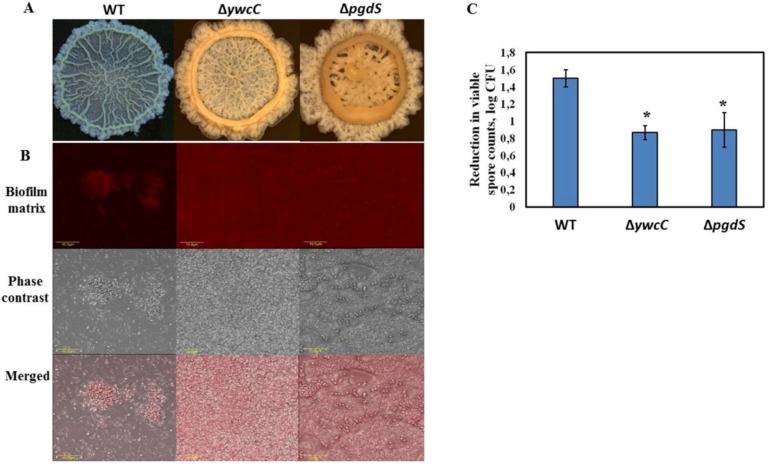
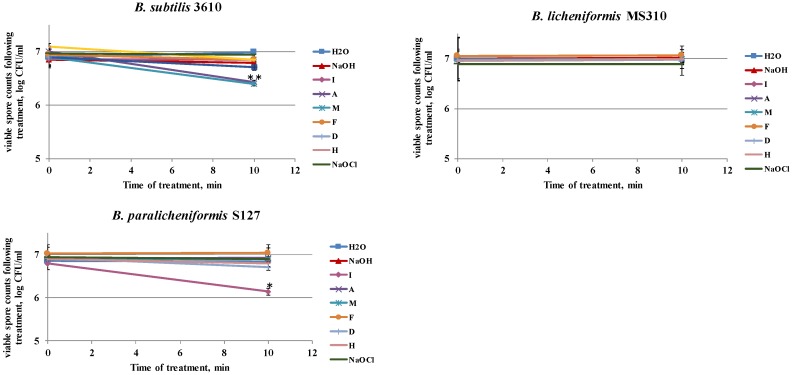
One of the main strategies for maintaining the optimal hygiene level in dairy processing facilities is regular cleaning and disinfection, which is incorporated in the cleaning-in-place (CIP) regimes. However, a frail point of the CIP procedures is their variable efficiency in eliminating biofilm bacteria. In the present study, we evaluated the susceptibility of strong biofilm-forming dairy isolates to industrial cleaning procedures using two differently designed model systems. According to our results, the dairy-associated isolates demonstrate a higher resistance to CIP procedures, compared to the non-dairy strain of . Notably, the tested dairy isolates are highly persistent to different parameters of the CIP operations, including the turbulent flow of liquid (up to 1 log), as well as the cleaning and disinfecting effects of commercial detergents (up to 2.3 log). Moreover, our observations indicate an enhanced resistance of poly-γ-glutamic acid (PGA)-overproducing , which produces high amounts of proteinaceous extracellular matrix, to the CIP procedures (about 0.7 log, compared to the wild-type non-dairy strain of ). We therefore suggest that the enhanced resistance to the CIP procedures by the dairy isolates can be attributed to robust biofilm formation. In addition, this study underlines the importance of evaluating the efficiency of commercial cleaning agents in relation to strong biofilm-forming bacteria, which are relevant to industrial conditions. Consequently, we believe that the findings of this study can facilitate the assessment and refining of the industrial CIP procedures.
维持乳制品加工设施最佳卫生水平的主要策略之一是定期清洁和消毒,这已纳入就地清洗(CIP)制度。然而,CIP程序的一个薄弱环节是其在消除生物膜细菌方面的效率参差不齐。在本研究中,我们使用两种不同设计的模型系统评估了形成强生物膜的乳制品分离株对工业清洁程序的敏感性。根据我们的结果,与非乳制品菌株相比,乳制品相关分离株对CIP程序表现出更高的抗性。值得注意的是,测试的乳制品分离株对CIP操作的不同参数具有高度持久性,包括液体的湍流(高达1个对数)以及商用洗涤剂的清洁和消毒效果(高达2.3个对数)。此外,我们的观察结果表明,过量产生聚γ-谷氨酸(PGA)的菌株对CIP程序具有增强的抗性,该菌株产生大量蛋白质aceous细胞外基质,与野生型非乳制品菌株相比(约0.7个对数)。因此,我们认为乳制品分离株对CIP程序的抗性增强可归因于强大的生物膜形成。此外,本研究强调了评估商用清洁剂对与工业条件相关的强生物膜形成细菌的效率的重要性。因此,我们相信本研究的结果可以促进工业CIP程序的评估和改进。