Chalermthai Bushra, Chan Wui Yarn, Bastidas-Oyanedel Juan-Rodrigo, Taher Hanifa, Olsen Bradley D, Schmidt Jens Ejbye
Department of Chemical Engineering, Masdar City Campus, Khalifa University, 54224 Abu Dhabi, UAE.
Department of Chemical Engineering, Massachusetts Institute of Technology, Cambridge, MA 02139, USA.
Polymers (Basel). 2019 Apr 19;11(4):722. doi: 10.3390/polym11040722.
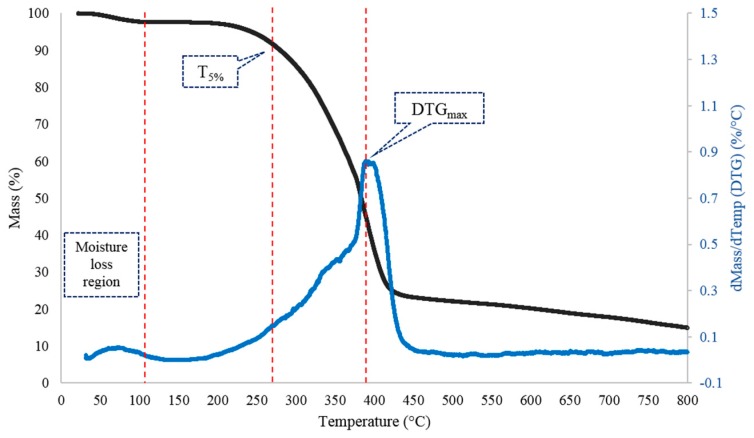
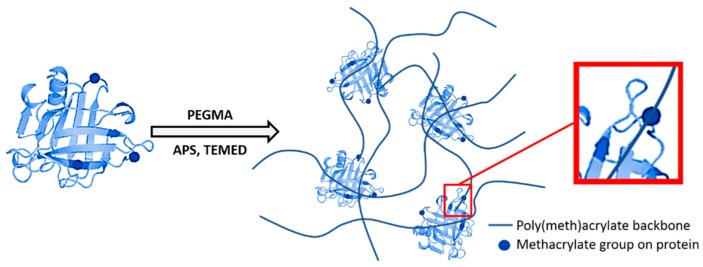
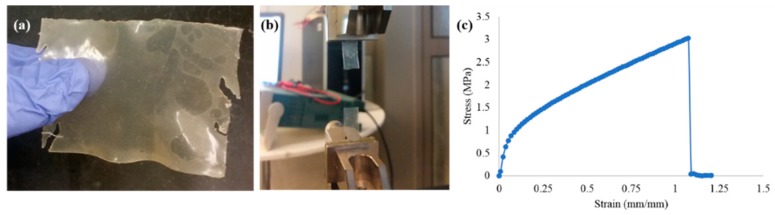
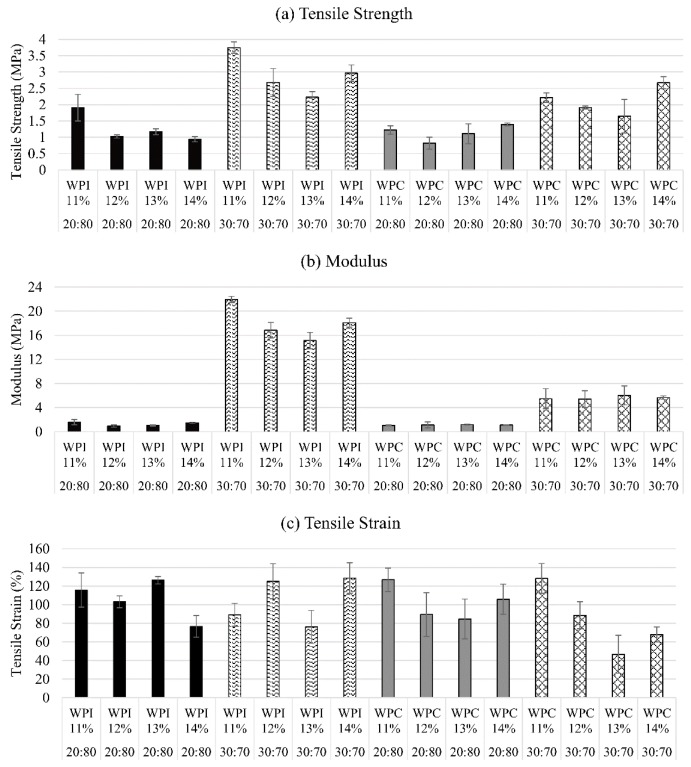
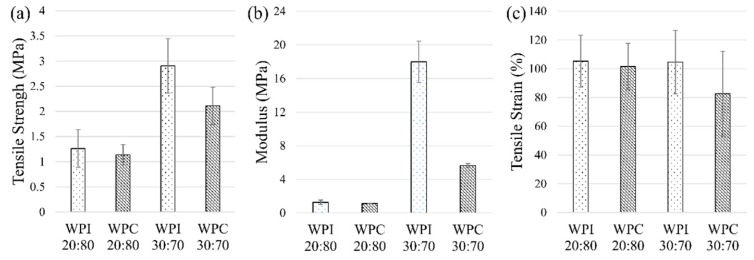
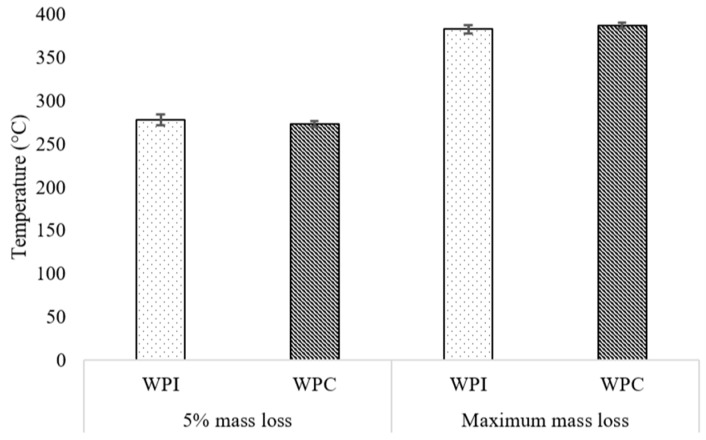
The wide use of non-biodegradable, petroleum-based plastics raises important environmental concerns, which urges finding alternatives. In this study, an alternative way to produce polymers from a renewable source-milk proteins-was investigated with the aim of replacing polyethylene. Whey protein can be obtained from whey residual, which is a by-product in the cheese-making process. Two different sources of whey protein were tested: Whey protein isolate (WPI) containing 91% protein concentration and whey protein concentrate (WPC) containing 77% protein concentration. These were methacrylated, followed by free radical polymerization with co-polymer poly(ethylene glycol) methyl ether methacrylate (PEGMA) to obtain polymer sheets. Different protein concentrations in water (11-14 /%), at two protein/PEGMA mass-ratios, 20:80 and 30:70, were tested. The polymers made from WPI and WPC at a higher protein/PEGMA ratio of 30:70 had significantly better tensile strength than the one with lower protein content, by about 1-2 MPa (the best 30:70 sample exhibited 3.8 ± 0.2 MPa and the best 20:80 sample exhibited 1.9 ± 0.4 MPa). This indicates that the ratio between the hard (protein) and soft (copolymer PEGMA) domains induce significant changes to the tensile strengths of the polymer sheets. Thermally, the WPI-based polymer samples are stable up to 277.8 ± 6.2 °C and the WPC-based samples are stable up to 273.0 ± 3.4 °C.
不可生物降解的石油基塑料的广泛使用引发了重要的环境问题,这促使人们寻找替代品。在本研究中,研究了一种从可再生资源——乳蛋白生产聚合物的替代方法,旨在替代聚乙烯。乳清蛋白可以从乳清残渣中获得,乳清残渣是奶酪制作过程中的副产品。测试了两种不同来源的乳清蛋白:蛋白质浓度为91%的乳清蛋白分离物(WPI)和蛋白质浓度为77%的乳清蛋白浓缩物(WPC)。将它们进行甲基丙烯酸酯化,然后与共聚单体聚(乙二醇)甲基醚甲基丙烯酸酯(PEGMA)进行自由基聚合以获得聚合物片材。测试了在两种蛋白质/PEGMA质量比(20:80和30:70)下,水中不同蛋白质浓度(11 - 14/%)的情况。由WPI和WPC制成的聚合物,在蛋白质/PEGMA比例为30:70时,其拉伸强度明显优于蛋白质含量较低的聚合物(最佳的30:70样品的拉伸强度为3.8±0.2 MPa,最佳的20:80样品的拉伸强度为1.9±0.4 MPa)。这表明硬(蛋白质)域和软(共聚物PEGMA)域之间的比例会对聚合物片材的拉伸强度产生显著影响。在热性能方面,基于WPI的聚合物样品在高达277.8±6.2°C时稳定,基于WPC的样品在高达273.0±3.4°C时稳定。