Earp Brian D, Skorburg Joshua August, Everett Jim A C, Savulescu Julian
a Departments of Philosophy and Psychology, Yale University, New Haven, Connecticut, United States.
b Yale-Hastings Program in Ethics and Health Policy, The Hastings Center, Garrison, New York, United States.
AJOB Empir Bioeth. 2019 Apr-Jun;10(2):136-153. doi: 10.1080/23294515.2019.1590480. Epub 2019 Apr 23.
Recent literature on addiction and judgments about the characteristics of agents has focused on the implications of adopting a "brain disease" versus "moral weakness" model of addiction. Typically, such judgments have to do with what capacities an agent has (e.g., the ability to abstain from substance use). Much less work, however, has been conducted on the relationship between addiction and judgments about an agent's identity, including whether or to what extent an individual is seen as the same person after becoming addicted.
We conducted a series of vignette-based experiments (total N = 3,620) to assess lay attitudes concerning addiction and identity persistence, systematically manipulating key characteristics of agents and their drug of addiction.
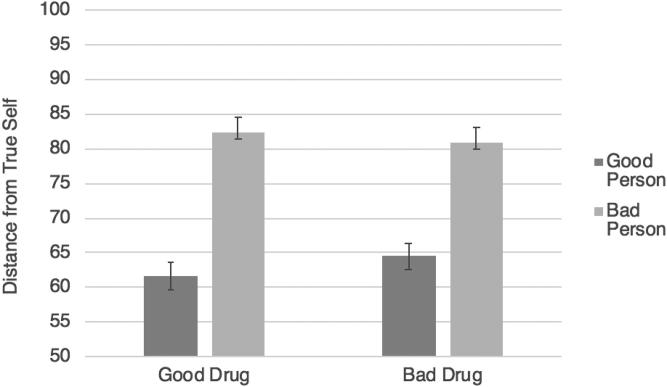
In Study 1, we found that U.S. participants judged an agent who became addicted to drugs as being closer to "a completely different person" than "completely the same person" as the agent who existed prior to the addiction. In Studies 2-6, we investigated the intuitive basis for this result, finding that lay judgments of altered identity as a consequence of drug use and addiction are driven primarily by perceived negative changes in the moral character of drug users, who are seen as having deviated from their good true selves.
近期关于成瘾以及对行为主体特征判断的文献聚焦于采用“脑部疾病”模型还是“道德弱点”模型来解释成瘾所带来的影响。通常,此类判断涉及行为主体具备何种能力(例如,戒除物质使用的能力)。然而,关于成瘾与对行为主体身份判断之间的关系,包括个体成瘾后在多大程度上被视为同一个人,相关研究要少得多。
我们开展了一系列基于 vignette 的实验(样本总量 N = 3620),以评估公众对成瘾与身份持续性的态度,系统地操控行为主体及其成瘾药物的关键特征。
在研究 1 中,我们发现美国参与者认为,与成瘾前的行为主体相比,成瘾的行为主体更接近“完全不同的人”而非“完全相同的人”。在研究 2 - 6 中,我们探究了这一结果的直观依据,发现公众认为吸毒和成瘾导致身份改变的判断主要是由对吸毒者道德品质的负面认知驱动的,吸毒者被视为背离了其原本善良的自我。