Department of Immunology and Infectious Diseases, Harvard T. H. Chan School of Public Health, Boston, Massachusetts, USA.
Department of Pathology, Massachusetts General Hospital, Boston, Massachusetts, USA.
mBio. 2019 Apr 23;10(2):e00616-19. doi: 10.1128/mBio.00616-19.
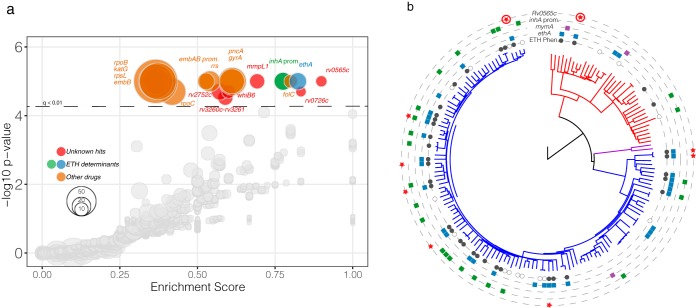
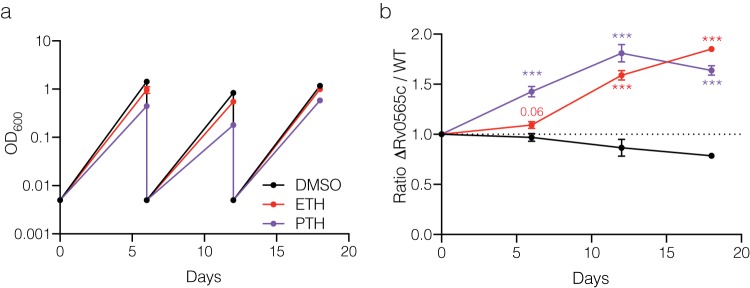
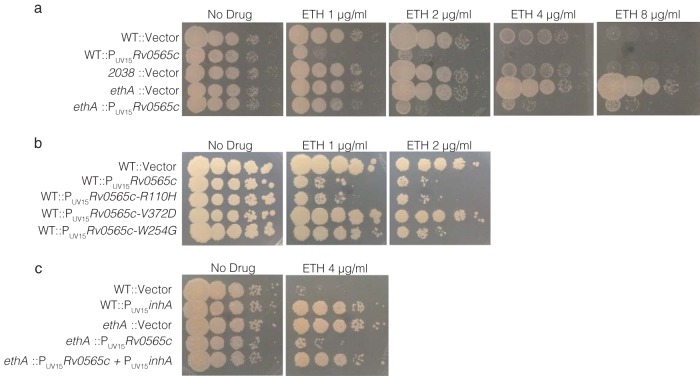
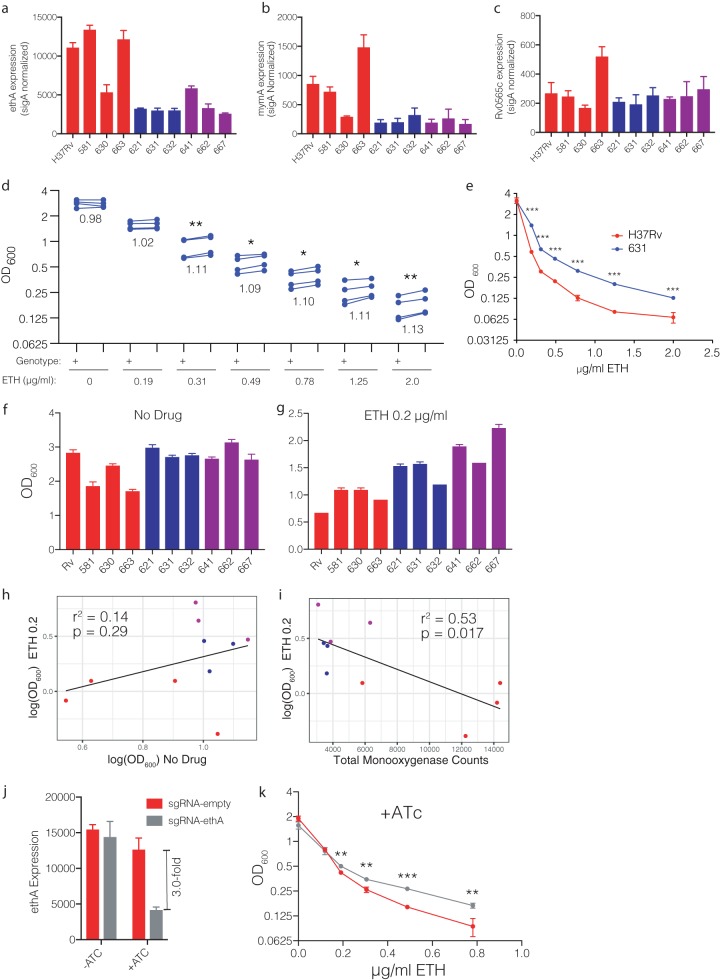
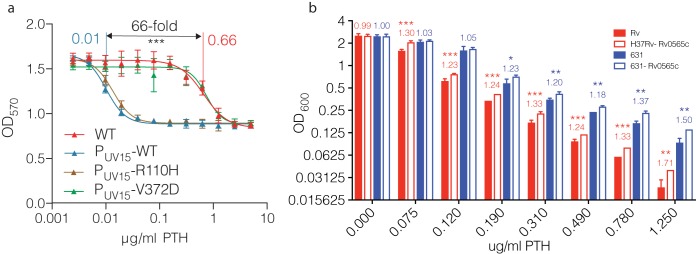
In , recent genome-wide association studies have identified a novel constellation of mutations that are correlated with high-level drug resistances. Interpreting the functional importance of the new resistance-associated mutations has been complicated, however, by a lack of experimental validation and a poor understanding of the epistatic factors influencing these correlations, including strain background and programmatic variation in treatment regimens. Here we perform a genome-wide association analysis in a panel of strains from China to identify variants correlated with resistance to the second-line prodrug ethionamide (ETH). Mutations in a bacterial monooxygenase, Rv0565c, are significantly associated with ETH resistance. We demonstrate that Rv0565c is a novel activator of ETH, independent of the two known activators, EthA and MymA. Clinically prevalent mutations abrogate Rv0565c function, and deletion of Rv0565c confers a consistent fitness benefit on in the presence of partially inhibitory doses of ETH. Interestingly, Rv0565c activity affects susceptibility to prothionamide (PTH), the ETH analog used in China, to a greater degree. Further, clinical isolates vary in their susceptibility to both ETH and PTH, to an extent that correlates with the total expression of ETH/PTH activators (EthA, MymA, and Rv0565c). These results suggest that clinical strains considered susceptible to ETH/PTH are not equally fit during treatment due to both Rv0565c mutations and more global variation in the expression of the prodrug activators. Phenotypic antibiotic susceptibility testing in is slow and cumbersome. Rapid molecular diagnostics promise to help guide therapy, but such assays rely on complete knowledge of the molecular determinants of altered antibiotic susceptibility. Recent genomic studies of antibiotic-resistant have identified several candidate loci beyond those already known to contribute to antibiotic resistance; however, efforts to provide experimental validation have lagged. Our study identifies a gene (Rv0565c) that is associated with resistance to the second-line antibiotic ethionamide at a population level. We then use bacterial genetics to show that the variants found in clinical strains of improve bacterial survival after ethionamide exposure.
在中国,最近的全基因组关联研究确定了与高水平耐药性相关的新突变组合。然而,由于缺乏实验验证以及对影响这些相关性的上位因子(包括菌株背景和治疗方案的程序性变化)的理解不足,解释新的耐药相关突变的功能重要性变得复杂起来。在这里,我们在中国的一组菌株中进行了全基因组关联分析,以鉴定与二线前药乙硫异烟胺(ETH)耐药性相关的变体。细菌单加氧酶 Rv0565c 中的突变与 ETH 耐药性显著相关。我们证明 Rv0565c 是 ETH 的一种新型激活剂,独立于已知的两种激活剂 EthA 和 MymA。临床上常见的突变使 Rv0565c 失活,并且在部分抑制剂量的 ETH 存在下,Rv0565c 的缺失赋予 一致的适应性优势。有趣的是,Rv0565c 的活性对丙硫异烟胺(PTH)的敏感性影响更大,PTH 是中国使用的 ETH 类似物。此外,临床分离株对 ETH 和 PTH 的敏感性存在差异,这种差异的程度与 ETH/PTH 激活剂(EthA、MymA 和 Rv0565c)的总表达相关。这些结果表明,由于 Rv0565c 突变和前药激活剂表达的更广泛变化,被认为对 ETH/PTH 敏感的临床菌株在治疗过程中并不具有相同的适应性。在 中进行表型抗生素药敏试验既缓慢又繁琐。快速分子诊断有望有助于指导治疗,但此类检测依赖于对抗生素敏感性改变的分子决定因素的完整了解。最近对耐抗生素 的基因组研究除了已经确定有助于抗生素耐药性的那些以外,还确定了几个候选基因座;然而,提供实验验证的努力却滞后了。我们的研究确定了一个基因(Rv0565c),它与二线抗生素乙硫异烟胺在人群水平上的耐药性相关。然后,我们使用细菌遗传学表明,在 的临床菌株中发现的变体可改善乙硫异烟胺暴露后的细菌存活。