Stanley Sydney, Wang Xin, Liu Qingyun, Kwon Young Yon, Frey Abigail M, Hicks Nathan D, Vickers Andrew J, Hui Sheng, Fortune Sarah M
Department of Immunology and Infectious Diseases, Harvard T.H. Chan School of Public Health, Boston, Massachusetts, United States of America.
Department of Molecular Metabolism, Harvard T. H. Chan School of Public Health, Boston, Massachusetts, United States of America.
PLoS Pathog. 2024 Feb 29;20(2):e1012050. doi: 10.1371/journal.ppat.1012050. eCollection 2024 Feb.
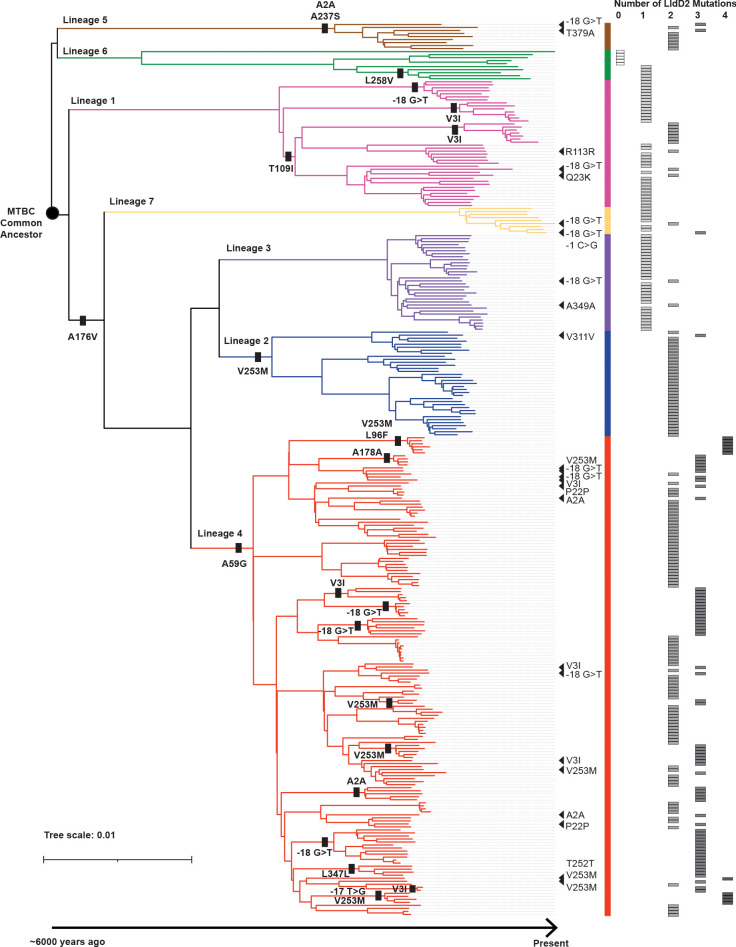
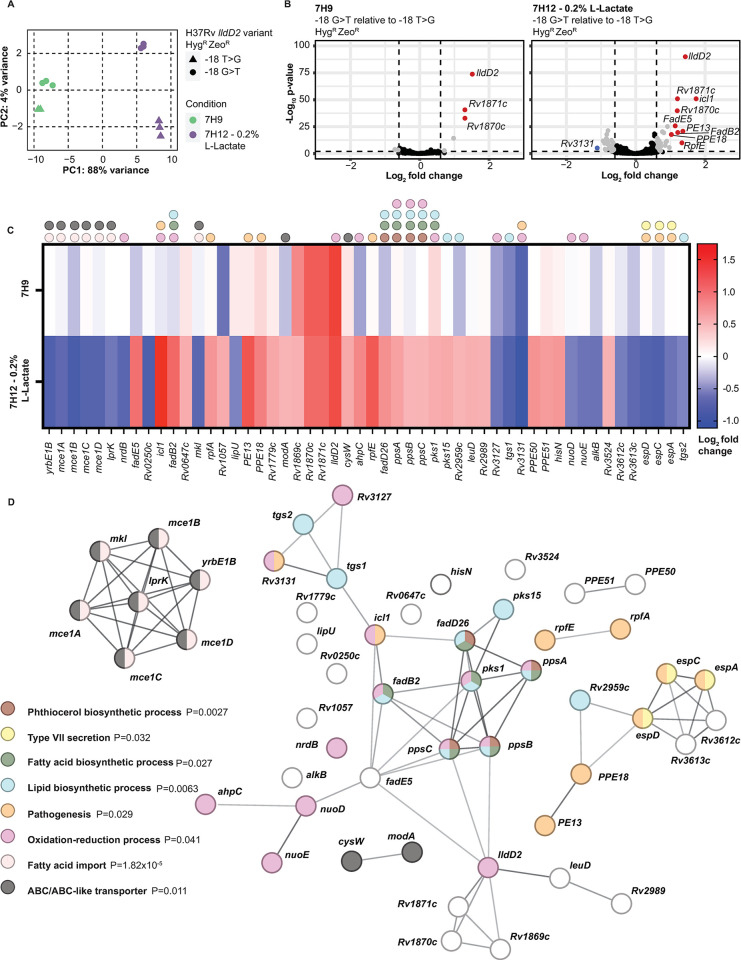
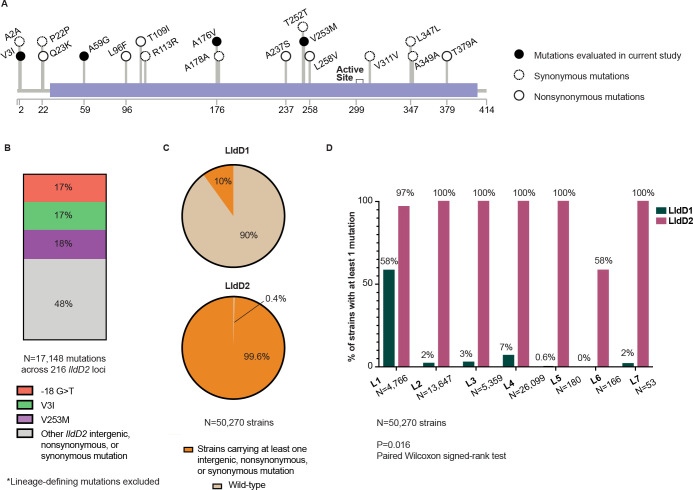
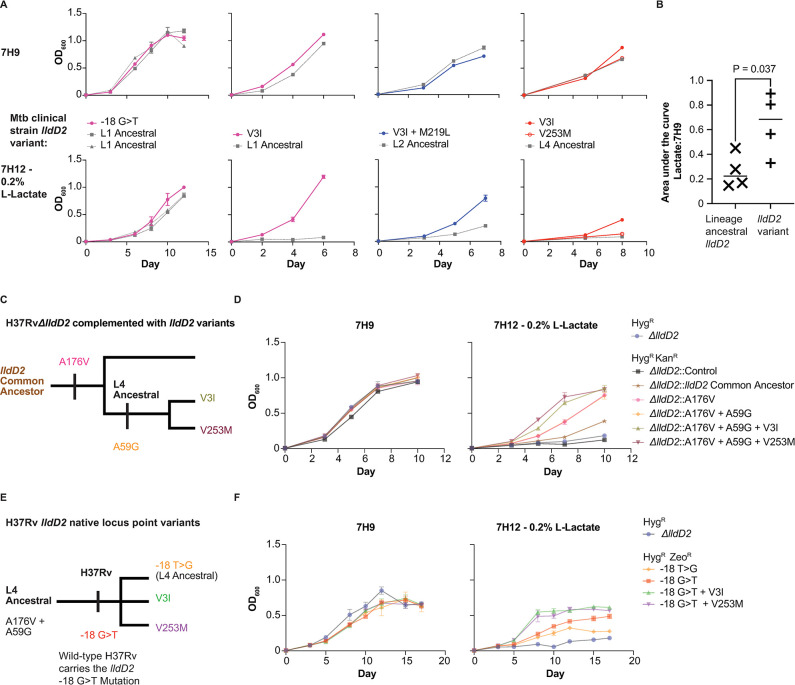
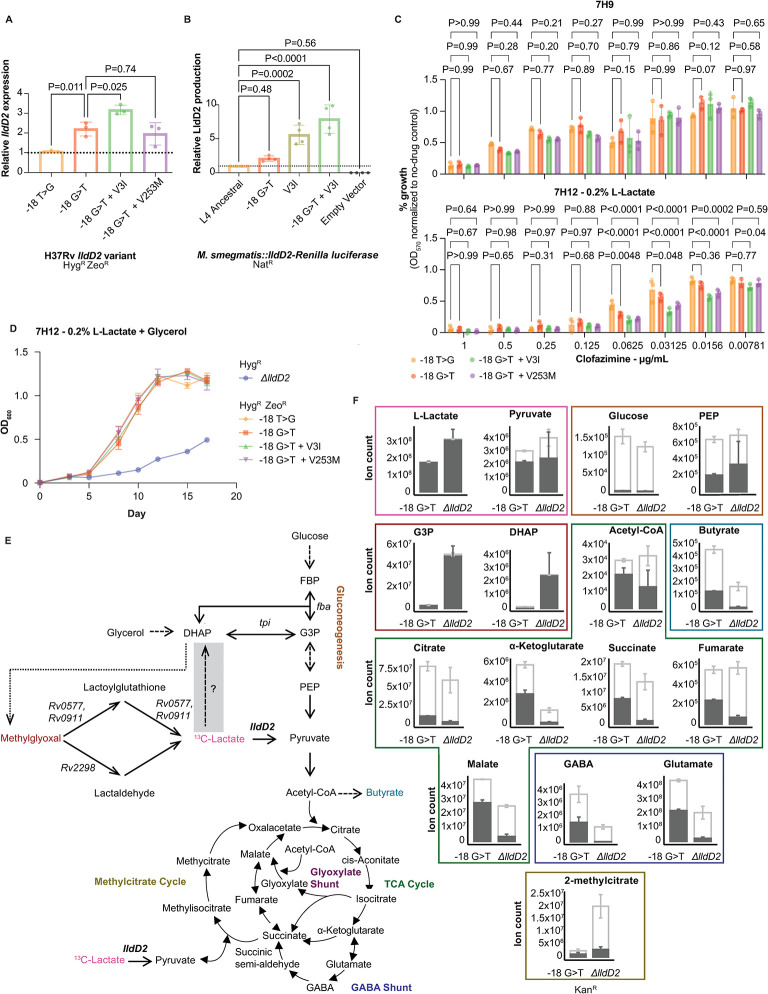
The bacterial determinants that facilitate Mycobacterium tuberculosis (Mtb) adaptation to the human host environment are poorly characterized. We have sought to decipher the pressures facing the bacterium in vivo by assessing Mtb genes that are under positive selection in clinical isolates. One of the strongest targets of selection in the Mtb genome is lldD2, which encodes a quinone-dependent L-lactate dehydrogenase (LldD2) that catalyzes the oxidation of lactate to pyruvate. Lactate accumulation is a salient feature of the intracellular environment during infection and lldD2 is essential for Mtb growth in macrophages. We determined the extent of lldD2 variation across a set of global clinical isolates and defined how prevalent mutations modulate Mtb fitness. We show the stepwise nature of lldD2 evolution that occurs as a result of ongoing lldD2 selection in the background of ancestral lineage-defining mutations and demonstrate that the genetic evolution of lldD2 additively augments Mtb growth in lactate. Using quinone-dependent antibiotic susceptibility as a functional reporter, we also find that the evolved lldD2 mutations functionally increase the quinone-dependent activity of LldD2. Using 13C-lactate metabolic flux tracing, we find that lldD2 is necessary for robust incorporation of lactate into central carbon metabolism. In the absence of lldD2, label preferentially accumulates in dihydroxyacetone phosphate (DHAP) and glyceraldehyde-3-phosphate (G3P) and is associated with a discernible growth defect, providing experimental evidence for accrued lactate toxicity via the deleterious buildup of sugar phosphates. The evolved lldD2 variants increase lactate incorporation to pyruvate while altering triose phosphate flux, suggesting both an anaplerotic and detoxification benefit to lldD2 evolution. We further show that the mycobacterial cell is transcriptionally sensitive to the changes associated with altered lldD2 activity which affect the expression of genes involved in cell wall lipid metabolism and the ESX- 1 virulence system. Together, these data illustrate a multifunctional role of LldD2 that provides context for the selective advantage of lldD2 mutations in adapting to host stress.
促进结核分枝杆菌(Mtb)适应人类宿主环境的细菌决定因素目前仍知之甚少。我们试图通过评估临床分离株中受到正选择的Mtb基因来解读该细菌在体内所面临的压力。Mtb基因组中最强的选择靶点之一是lldD2,它编码一种醌依赖性L-乳酸脱氢酶(LldD2),催化乳酸氧化为丙酮酸。乳酸积累是感染期间细胞内环境的一个显著特征,而lldD2对于Mtb在巨噬细胞中的生长至关重要。我们确定了一组全球临床分离株中lldD2的变异程度,并明确了常见突变如何调节Mtb的适应性。我们展示了lldD2进化的逐步性质,这是在祖先谱系定义突变的背景下持续进行的lldD2选择的结果,并证明lldD2的遗传进化可累加增强Mtb在乳酸中的生长。使用醌依赖性抗生素敏感性作为功能报告指标,我们还发现进化后的lldD2突变在功能上增加了LldD2的醌依赖性活性。使用13C-乳酸代谢通量追踪,我们发现lldD2对于将乳酸有力地整合到中心碳代谢中是必需的。在没有lldD2的情况下,标记物优先积累在磷酸二羟丙酮(DHAP)和3-磷酸甘油醛(G3P)中,并与明显的生长缺陷相关,这为通过糖磷酸的有害积累导致的乳酸毒性增加提供了实验证据。进化后的lldD2变体增加了乳酸向丙酮酸的转化,同时改变了磷酸丙糖通量,这表明lldD2进化在补充代谢和解毒方面都有好处。我们进一步表明,分枝杆菌细胞对与lldD2活性改变相关的变化具有转录敏感性,这些变化会影响参与细胞壁脂质代谢和ESX-1毒力系统的基因的表达。总之,这些数据说明了LldD2的多功能作用,为lldD2突变在适应宿主压力方面的选择优势提供了背景信息。