Department of Cardiology, Chengdu Military General Hospital, Chengdu, Sichuan 610083, P.R. China.
Department of Cardiology, Daping Hospital, The Third Military Medical University, Chongqing 400042, P.R. China.
Clin Sci (Lond). 2019 May 9;133(9):1097-1113. doi: 10.1042/CS20190254. Print 2019 May 31.
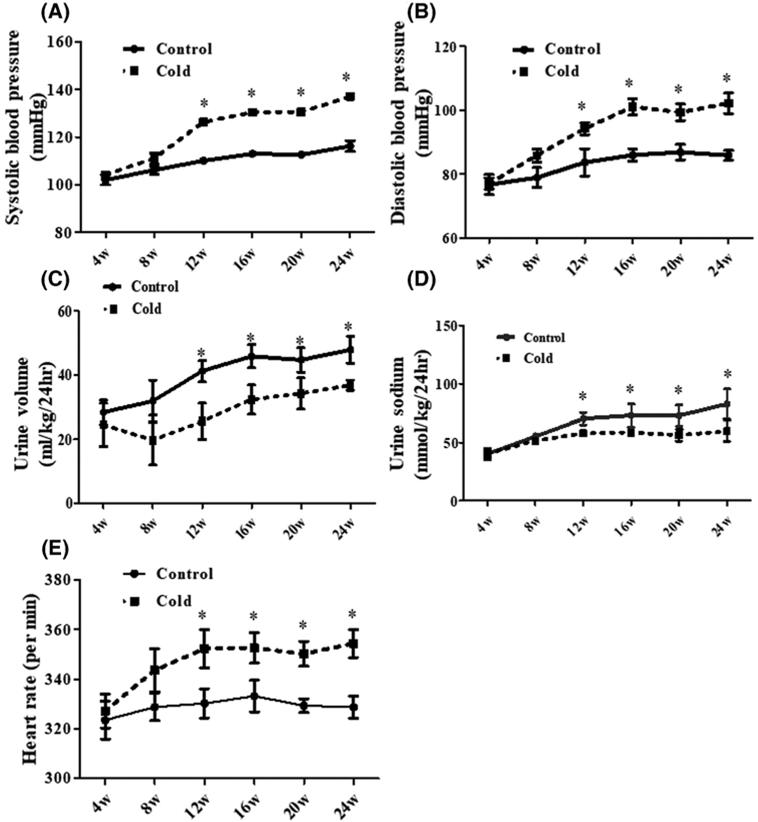
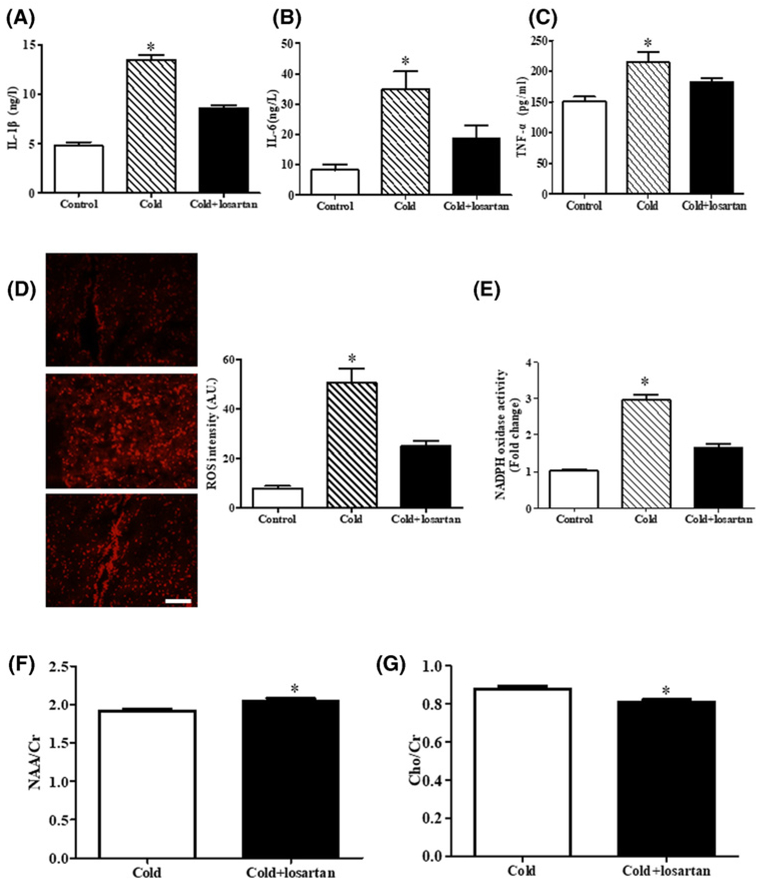
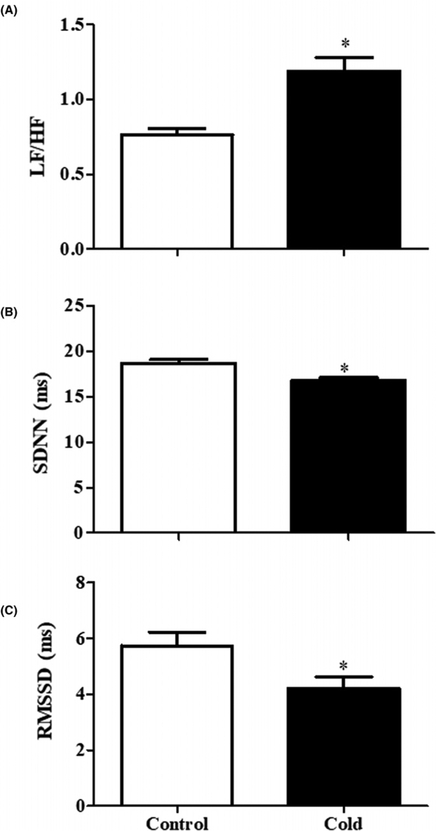
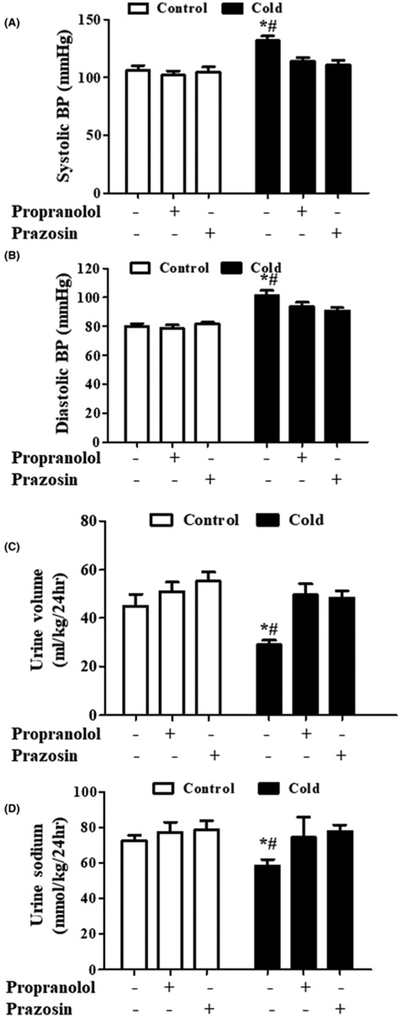
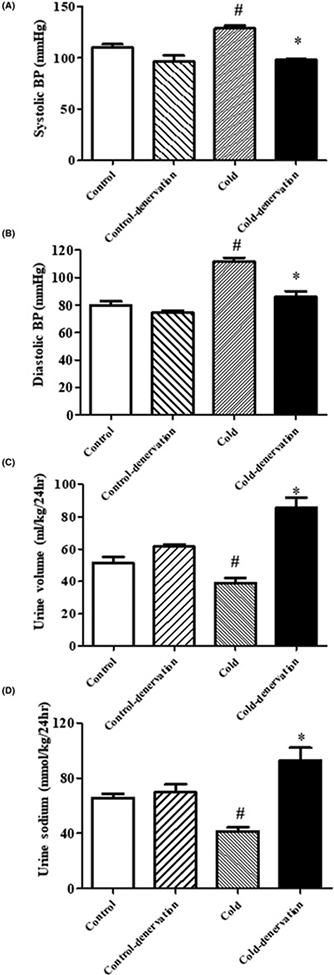
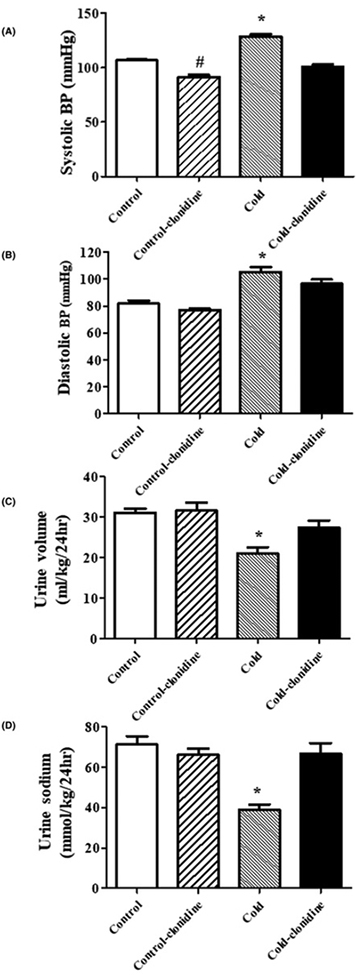
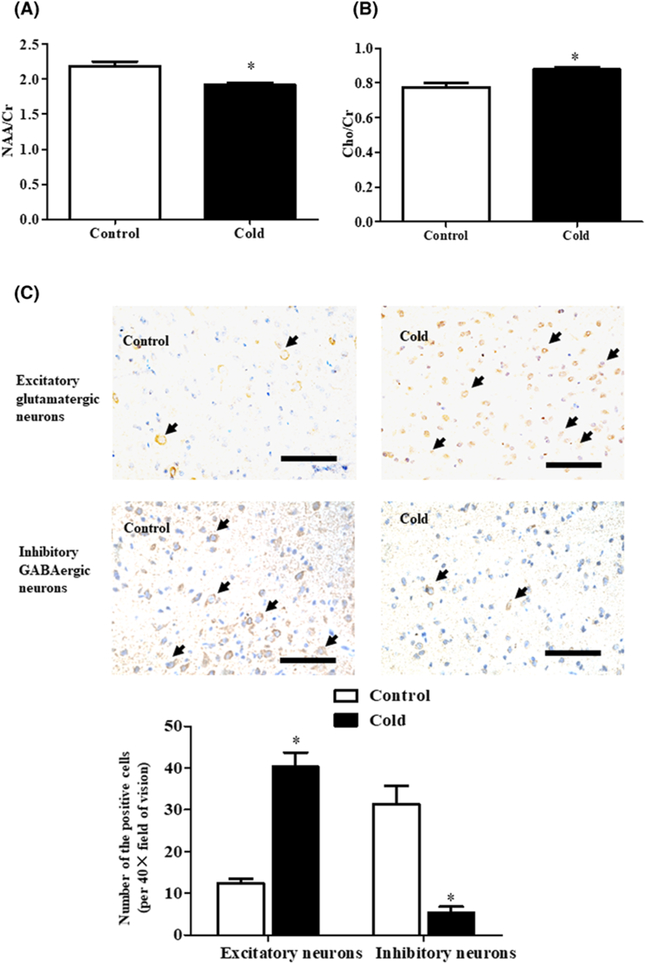
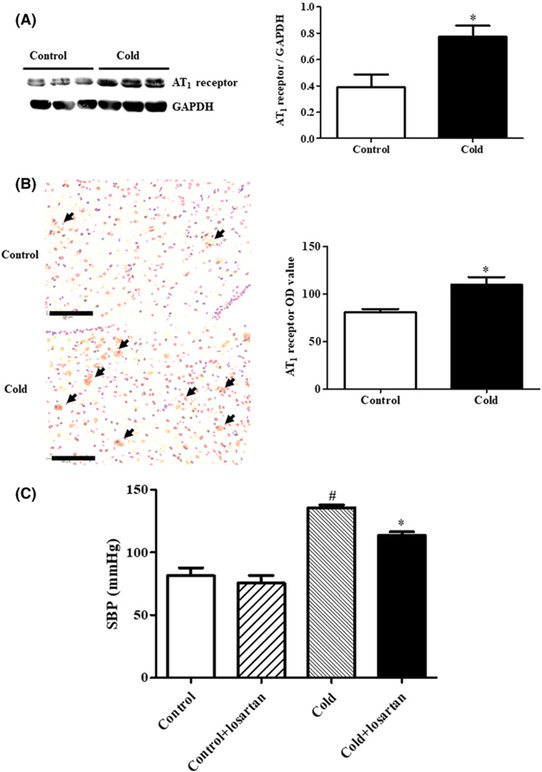
Environmental temperature plays a role in the variation of blood pressure. Maternal cold stress could affect the physiological phenotype of the offspring, including blood pressure elevation. In the present study, we found that adult offspring of dams exposed to cold have increased systolic and diastolic blood pressure, and decreased urine volume and sodium excretion, accompanied by increased heart rate and heart rate variability, secondary to increased activity of the sympathetic nervous system. Renal denervation or adrenergic receptor blockade decreased blood pressure and increased sodium excretion. The increase in peripheral sympathetic nerve activity can be ascribed to the central nervous system because administration of clonidine, a centrally acting α adrenergic receptor agonist, lowered blood pressure to a greater degree in the prenatal cold-exposed than control offspring. Moreover, these prenatal cold-exposed offspring had hypothalamic paraventricular nucleus (PVN) disorder because magnetic resonance spectroscopy showed decreased N-acetylaspartate and increased choline and creatine ratios in the PVN. Additional studies found that prenatal cold exposure impaired the balance between inhibitory and excitatory neurons. This led to PVN overactivation that was related to enhanced PVN-angiotensin II type 1 (AT) receptor expression and function. Microinjection of the AT receptor antagonist losartan in the PVN lowered blood pressure to a greater extent in prenatal cold-exposed that control offspring. The present study provides evidence for overactive peripheral and central sympathetic nervous systems in the pathogenesis of prenatal cold-induced hypertension. Central AT receptor blockade in the PVN may be a key step for treatment of this type hypertension.
环境温度在血压变化中起着作用。母体冷应激可能会影响后代的生理表型,包括血压升高。在本研究中,我们发现,暴露于寒冷环境中的母鼠的成年后代收缩压和舒张压升高,尿量和钠排泄量减少,心率和心率变异性增加,这是由于交感神经系统活性增加所致。肾去神经或肾上腺素能受体阻断可降低血压并增加钠排泄。外周交感神经活性的增加可归因于中枢神经系统,因为给予中枢作用的α肾上腺素能受体激动剂可乐定可使产前寒冷暴露的后代血压降低程度大于对照组。此外,这些产前寒冷暴露的后代下丘脑室旁核(PVN)出现障碍,因为磁共振波谱显示 PVN 中的 N-乙酰天门冬氨酸减少,胆碱和肌酸比值增加。进一步的研究发现,产前寒冷暴露会损害抑制性和兴奋性神经元之间的平衡。这导致 PVN 过度激活,与增强的 PVN-血管紧张素 II 型 1(AT)受体表达和功能有关。在 PVN 中微注射 AT 受体拮抗剂 losartan 可使产前寒冷暴露的后代血压降低程度大于对照组。本研究为产前寒冷引起的高血压发病机制中过度活跃的外周和中枢交感神经系统提供了证据。PVN 中的中枢 AT 受体阻断可能是治疗这种类型高血压的关键步骤。