
孕期获得性真性1型糖尿病发病率增加。
Increased incidence of true type I diabetes acquired during pregnancy.
作者信息
Buschard K, Buch I, Mølsted-Pedersen L, Hougaard P, Kühl C
出版信息
Br Med J (Clin Res Ed). 1987 Jan 31;294(6567):275-9. doi: 10.1136/bmj.294.6567.275.
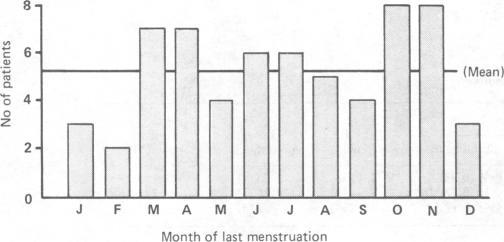
A longitudinal study was carried out of all patients with newly acquired insulin dependent diabetes during pregnancy (as distinct from non-insulin-dependent gestational diabetes) seen at the Copenhagen Centre for Diabetes and Pregnancy during 1966 to 1980. The series comprised 63 patients with a mean age of 27 (SEM 1) years. At diagnosis the mean fasting blood glucose concentration was 15.6 (1.3) mmol/l and mean maximal insulin dose 49 (3) IU/day. At a prospective follow up examination a mean of 8 (SEM 1) years after diagnosis 46 of 60 patients (77%) were being treated with insulin (35 (2) IU/day) and had a very low mean stimulated plasma C peptide value (0.12 (0.02) nmol/l) suggesting absent or nearly absent beta cell function. The remaining 14 patients (23%), not currently receiving insulin, appeared to be severely glucose intolerant, having a mean fasting blood glucose concentration of 13.4 (1.2) mmol/l. Thus most of these patients developing insulin dependent diabetes during pregnancy had true type I disease. Compared with the age specific incidence of type I diabetes in the background population of women the incidence was at least 70% higher in pregnant than non-pregnant women (p less than 0.001; chi 2 = 11.6; f = 1). This increased incidence occurred in the third trimester when the risk of developing type I diabetes was 3.8 times that of non-pregnant women (p less than 0.000001; chi 2 = 35.6; f = 1). Finally, the risk of developing insulin dependent diabetes during pregnancy was lower when conception occurred in the winter (p less than 0.05; chi 2 = 4.18; f = 1).
对1966年至1980年期间在哥本哈根糖尿病与妊娠中心就诊的所有孕期新患胰岛素依赖型糖尿病患者(与非胰岛素依赖型妊娠糖尿病相区别)进行了一项纵向研究。该系列包括63名患者,平均年龄为27(标准误1)岁。诊断时平均空腹血糖浓度为15.6(1.3)mmol/l,平均最大胰岛素剂量为49(3)IU/天。在诊断后平均8(标准误1)年的前瞻性随访检查中,60名患者中有46名(77%)正在接受胰岛素治疗(35(2)IU/天),且刺激后血浆C肽平均水平极低(0.12(0.02)nmol/l),提示β细胞功能缺失或几乎缺失。其余14名患者(23%)目前未接受胰岛素治疗,似乎存在严重的葡萄糖不耐受,平均空腹血糖浓度为13.4(1.2)mmol/l。因此,这些孕期发生胰岛素依赖型糖尿病的患者大多患有真正的I型疾病。与背景女性人群中I型糖尿病的年龄特异性发病率相比,孕妇中的发病率比非孕妇至少高70%(p<0.001;卡方=11.6;自由度=1)。这种发病率的增加发生在孕晚期,此时患I型糖尿病的风险是非孕妇的3.8倍(p<0.000001;卡方=35.6;自由度=1)。最后,冬季受孕时孕期发生胰岛素依赖型糖尿病的风险较低(p<0.05;卡方=4.18;自由度=1)。
 Zotero 插件