La Trobe Institute for Molecular Science, La Trobe University, Melbourne, VIC, 3086, Australia.
Olivia Newton-John Cancer Research Institute, Heidelberg, VIC, 3084, Australia.
Cell Death Dis. 2019 Apr 24;10(5):342. doi: 10.1038/s41419-019-1568-3.
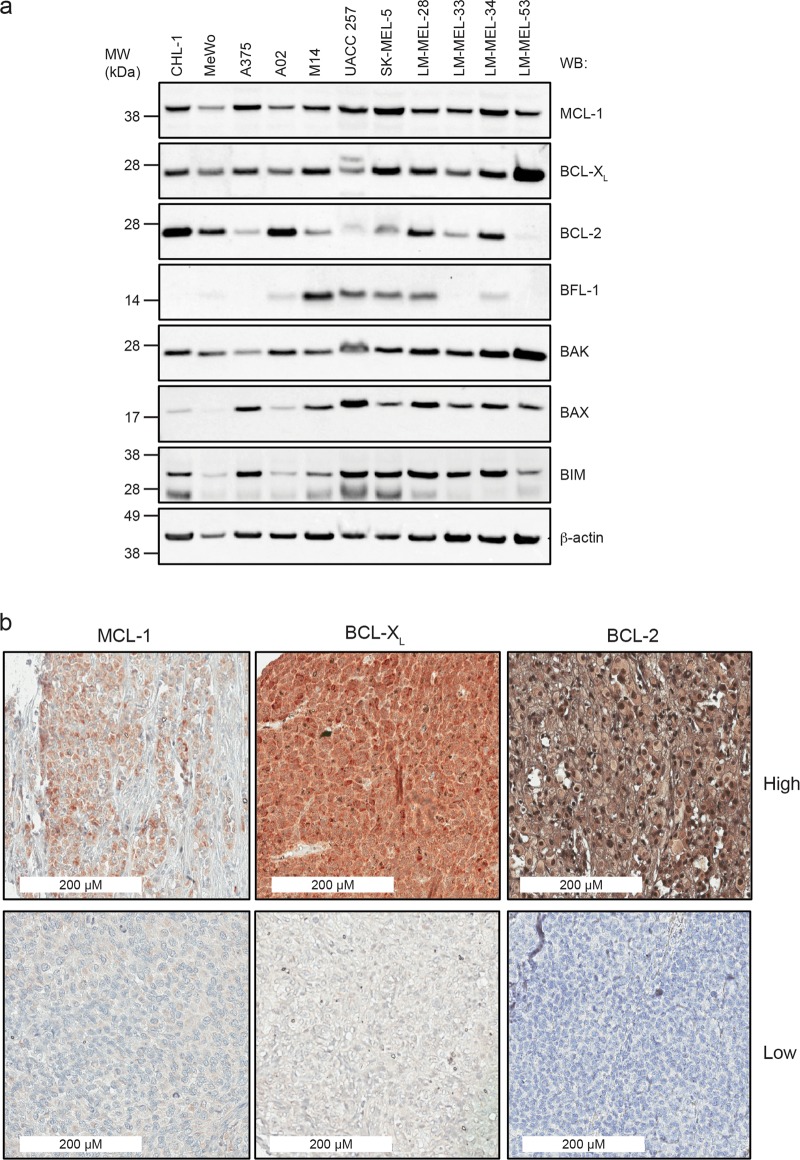
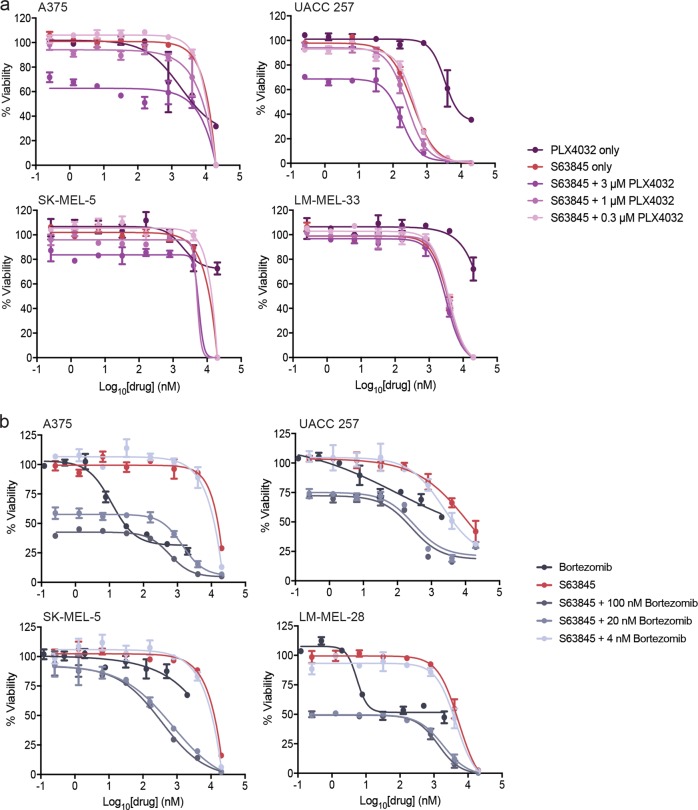
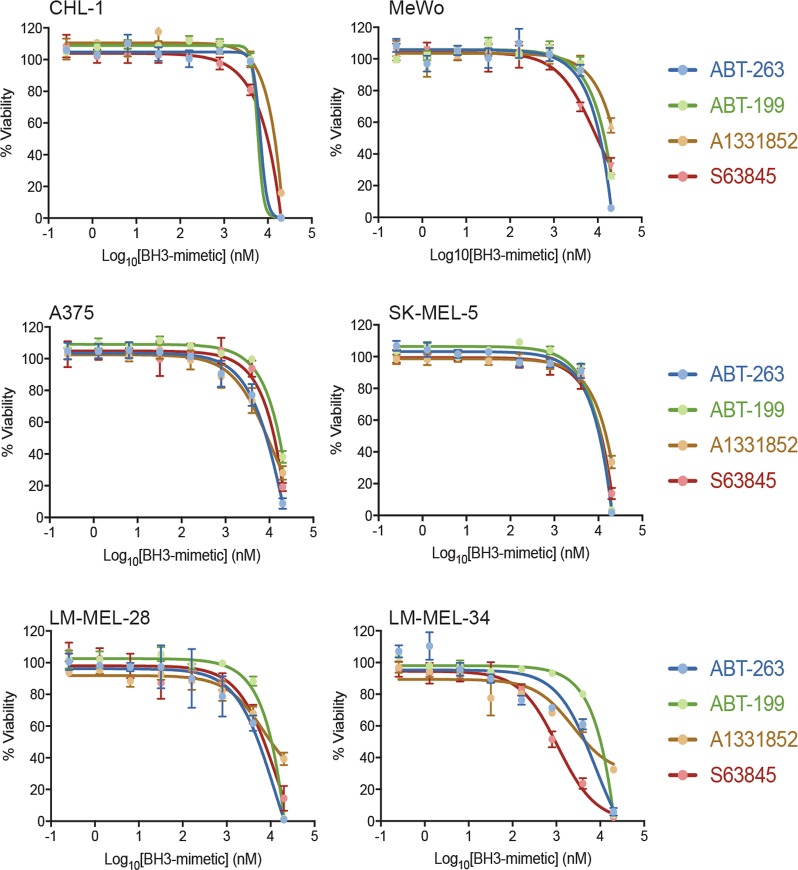
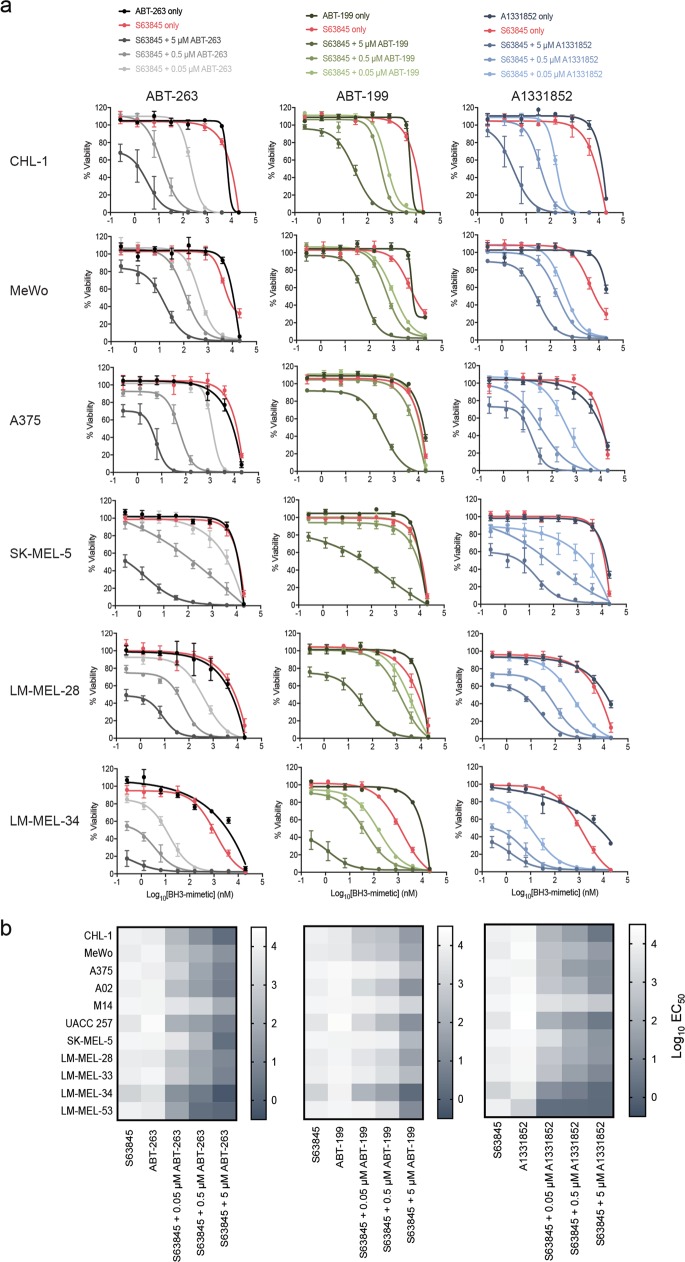
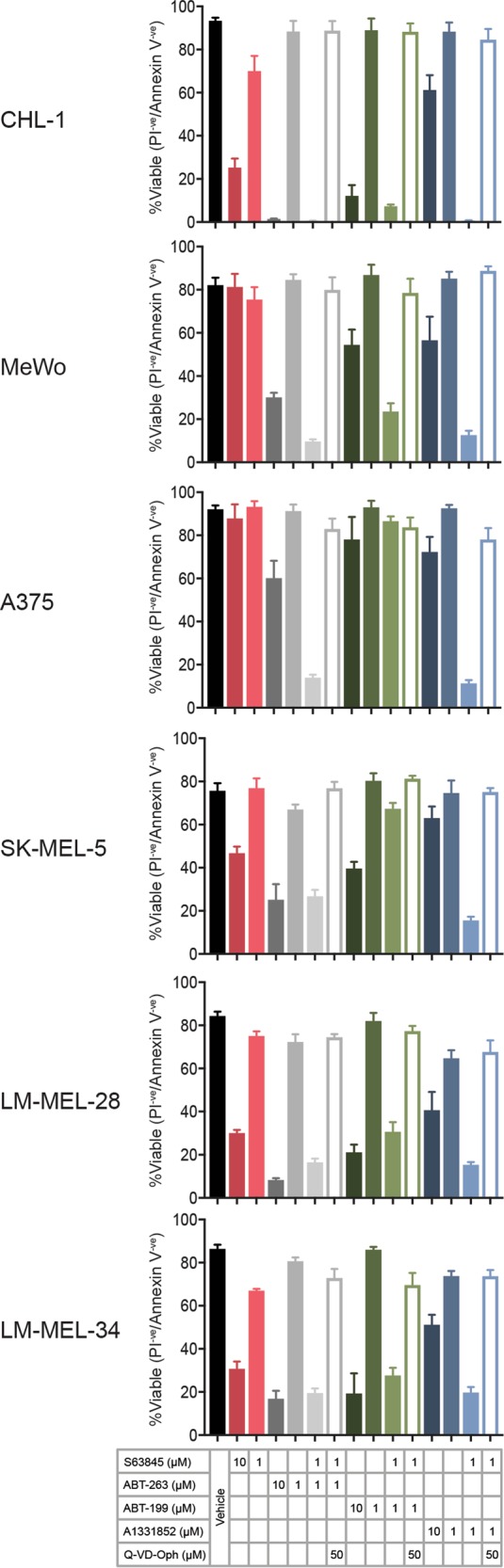
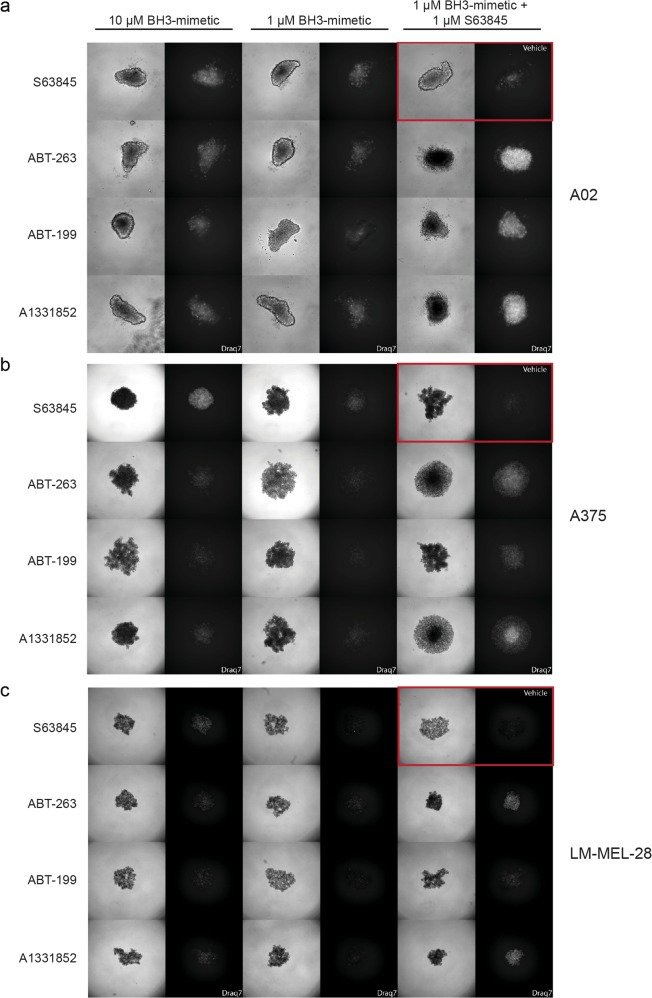
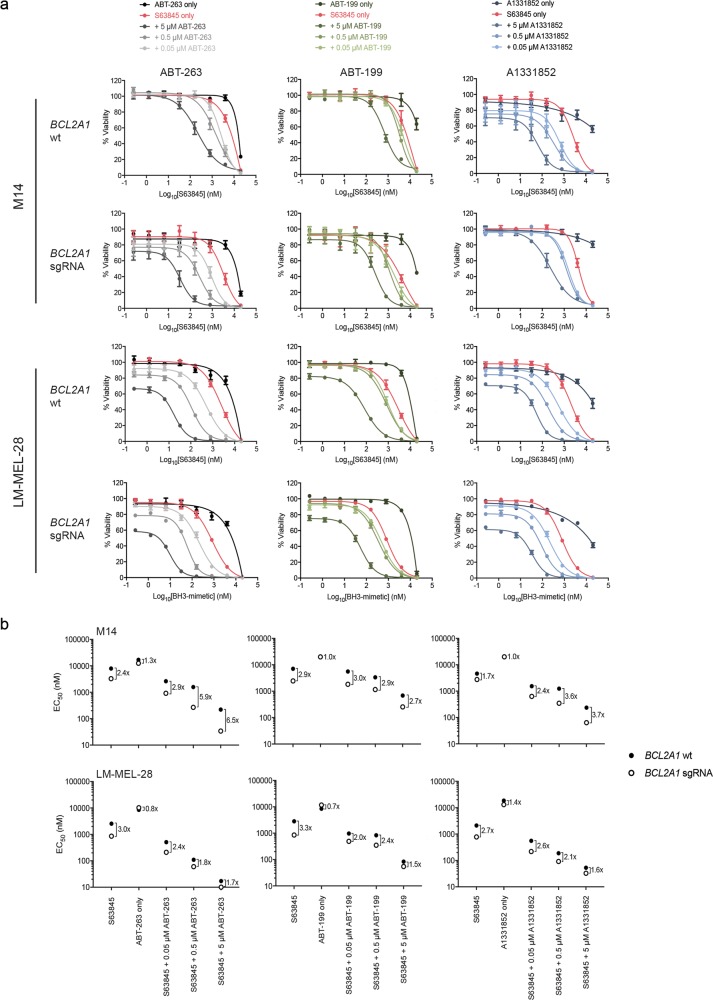
Malignant melanoma is one of the most difficult cancers to treat due to its resistance to chemotherapy. Despite recent successes with BRAF inhibitors and immune checkpoint inhibitors, many patients do not respond or become resistant to these drugs. Hence, alternative treatments are still required. Due to the importance of the BCL-2-regulated apoptosis pathway in cancer development and drug resistance, it is of interest to establish which proteins are most important for melanoma cell survival, though the outcomes of previous studies have been conflicting. To conclusively address this question, we tested a panel of established and early passage patient-derived cell lines against several BH3-mimetic drugs designed to target individual or subsets of pro-survival BCL-2 proteins, alone and in combination, in both 2D and 3D cell cultures. None of the drugs demonstrated significant activity as single agents, though combinations targeting MCL-1 plus BCL-XL, and to a lesser extent BCL-2, showed considerable synergistic killing activity that was elicited via both BAX and BAK. Genetic deletion of BFL-1 in cell lines that express it at relatively high levels only had minor impact on BH3-mimetic drug sensitivity, suggesting it is not a critical pro-survival protein in melanoma. Combinations of MCL-1 inhibitors with BRAF inhibitors also caused only minimal additional melanoma cell killing over each drug alone, whilst combinations with the proteasome inhibitor bortezomib was more effective in multiple cell lines. Our data show for the first time that therapies targeting specific combinations of BCL-2 pro-survival proteins, namely MCL-1 plus BCL-XL and MCL-1 plus BCL-2, could have significant benefit for the treatment of melanoma.
恶性黑色素瘤是最难治疗的癌症之一,因为它对化疗有抵抗力。尽管最近在 BRAF 抑制剂和免疫检查点抑制剂方面取得了成功,但许多患者对这些药物没有反应或产生耐药性。因此,仍需要替代治疗方法。由于 BCL-2 调节的细胞凋亡途径在癌症发展和耐药性中非常重要,因此确定哪些蛋白质对黑色素瘤细胞的存活最重要是很有趣的,尽管之前的研究结果存在冲突。为了明确解决这个问题,我们使用一组已建立的和早期传代的患者来源细胞系,针对几种 BH3 模拟药物进行了测试,这些药物旨在单独或联合靶向单个或多个存活的 BCL-2 蛋白亚群,在 2D 和 3D 细胞培养物中进行测试。尽管针对 MCL-1 加 BCL-XL 的组合以及在较小程度上针对 BCL-2 的组合显示出相当大的协同杀伤活性,但这些药物作为单一药物均未显示出显著的活性,这种协同杀伤活性是通过 BAX 和 BAK 引发的。在相对高水平表达 BFL-1 的细胞系中,基因删除 BFL-1 仅对 BH3 模拟药物的敏感性产生较小的影响,这表明它不是黑色素瘤中关键的存活蛋白。MCL-1 抑制剂与 BRAF 抑制剂的组合也仅导致每种药物单独使用时黑色素瘤细胞杀伤的最小额外增加,而与蛋白酶体抑制剂硼替佐米的组合在多种细胞系中更有效。我们的数据首次表明,针对特定的 BCL-2 存活蛋白组合(即 MCL-1 加 BCL-XL 和 MCL-1 加 BCL-2)的治疗方法可能对黑色素瘤的治疗有显著的益处。