Molecular Neurobiology Laboratory, Immunobiology and Microbial Pathogenesis Laboratory, The Salk Institute for Biological Studies, La Jolla, CA, USA.
Nat Rev Immunol. 2019 Sep;19(9):539-549. doi: 10.1038/s41577-019-0167-y.
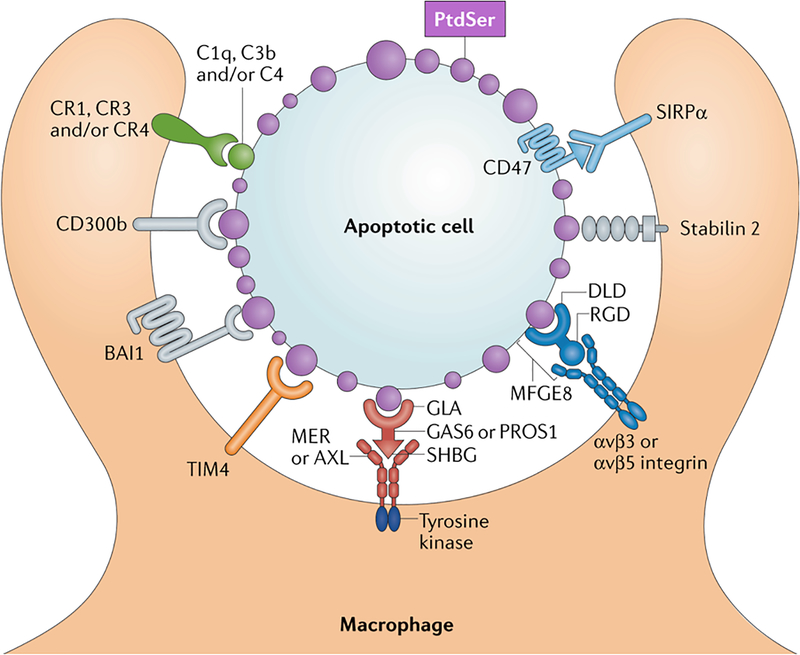
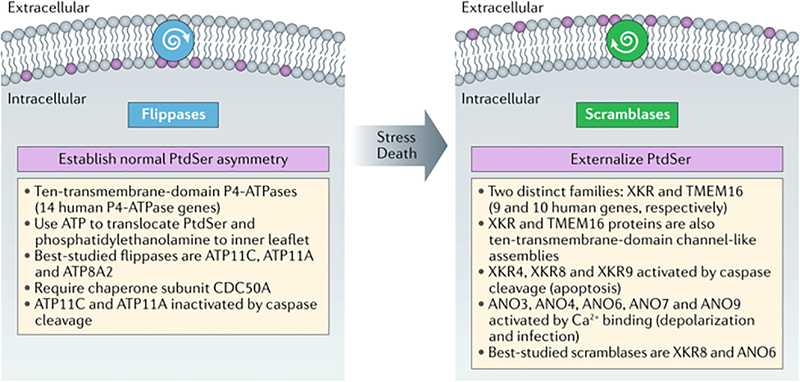
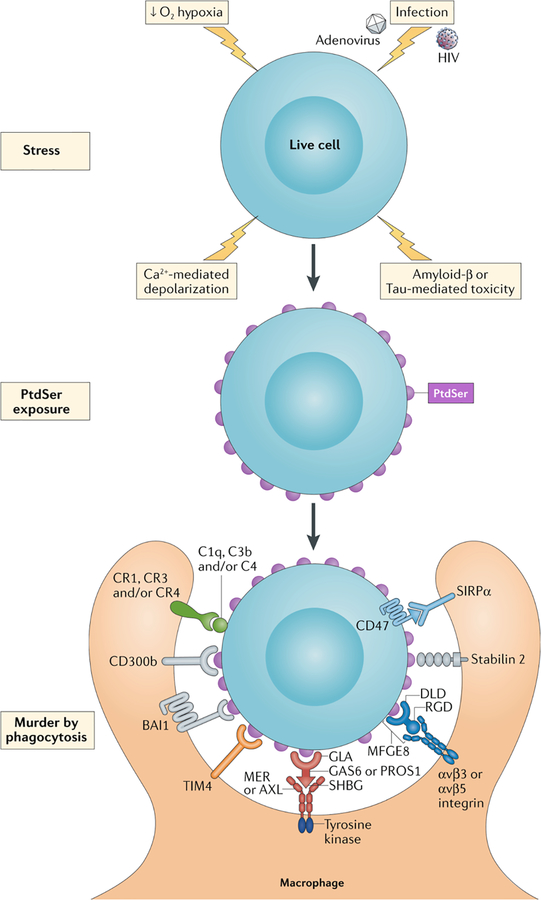
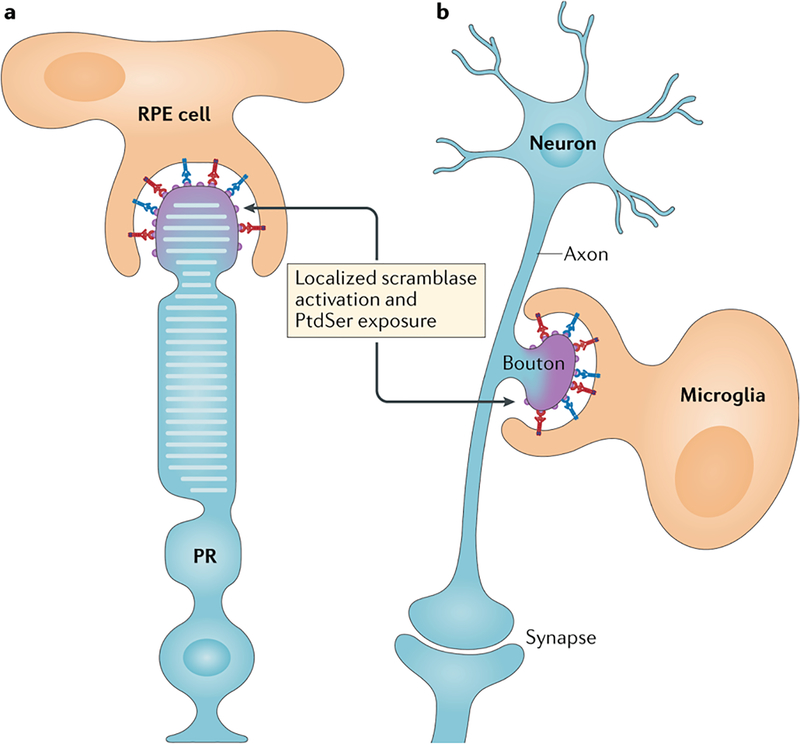
Tissue macrophages rapidly recognize and engulf apoptotic cells. These events require the display of so-called eat-me signals on the apoptotic cell surface, the most fundamental of which is phosphatidylserine (PtdSer). Externalization of this phospholipid is catalysed by scramblase enzymes, several of which are activated by caspase cleavage. PtdSer is detected both by macrophage receptors that bind to this phospholipid directly and by receptors that bind to a soluble bridging protein that is independently bound to PtdSer. Prominent among the latter receptors are the MER and AXL receptor tyrosine kinases. Eat-me signals also trigger macrophages to engulf virus-infected or metabolically traumatized, but still living, cells, and this 'murder by phagocytosis' may be a common phenomenon. Finally, the localized presentation of PtdSer and other eat-me signals on delimited cell surface domains may enable the phagocytic pruning of these 'locally dead' domains by macrophages, most notably by microglia of the central nervous system.
组织巨噬细胞能迅速识别并吞噬凋亡细胞。这些事件需要在凋亡细胞表面展示所谓的“吃我”信号,其中最基本的是磷脂酰丝氨酸(PtdSer)。这种磷脂的外翻由 scramblase 酶催化,其中几种酶被 caspase 切割激活。巨噬细胞受体可以直接结合这种磷脂,也可以结合一种独立结合 PtdSer 的可溶性桥接蛋白来检测 PtdSer。后者的受体中,突出的是 MER 和 AXL 受体酪氨酸激酶。“吃我”信号还会触发巨噬细胞吞噬病毒感染或代谢性损伤但仍存活的细胞,这种“吞噬性谋杀”可能是一种常见现象。最后,PtdSer 和其他“吃我”信号在限定的细胞表面区域的局部呈现,可能使巨噬细胞能够吞噬这些“局部死亡”的区域,这在中枢神经系统的小胶质细胞中尤为明显。