Department of Neurology Seoul National University Hospital Seoul Republic of Korea.
Department of Neurosurgery Seoul National University Hospital Seoul Republic of Korea.
Ann Clin Transl Neurol. 2019 Mar 7;6(4):716-722. doi: 10.1002/acn3.753. eCollection 2019 Apr.
We investigated the effects of prolonged-release melatonin (PRM) on idiopathic rapid eye movement (REM) sleep behavior disorder (iRBD).
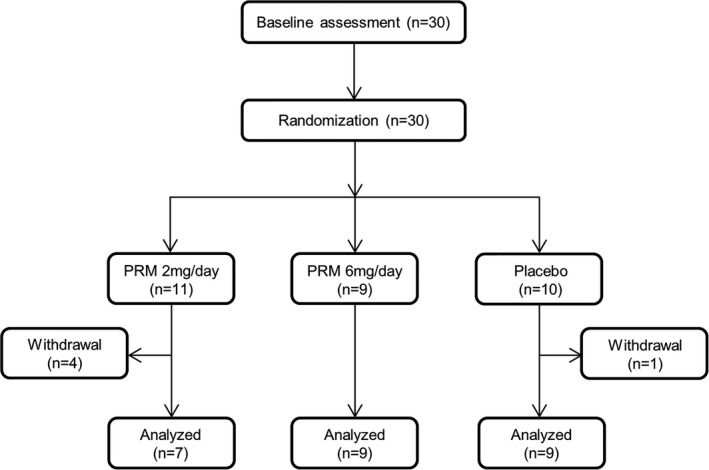
In this 4-week, randomized, double-blind, placebo-controlled pilot study, 30 participants with polysomnography-confirmed iRBD were assigned to receive PRM 2 mg per day, PRM 6 mg per day, or placebo. Medication was administered orally 30 min before bedtime. Primary outcomes included scores from the Clinical Global Impression-Improvement (CGI-I) and the Korean version of the RBD questionnaire-Hong Kong (RBDQ-KR). The secondary outcomes included RBDQ-KR factor 1 and factor 2 subscores, the Pittsburgh Sleep Quality Index score, the Epworth Sleepiness Scale score, the Short Form Health Survey version 2 score, and the frequency of dream-enacting behaviors assessed using a sleep diary.
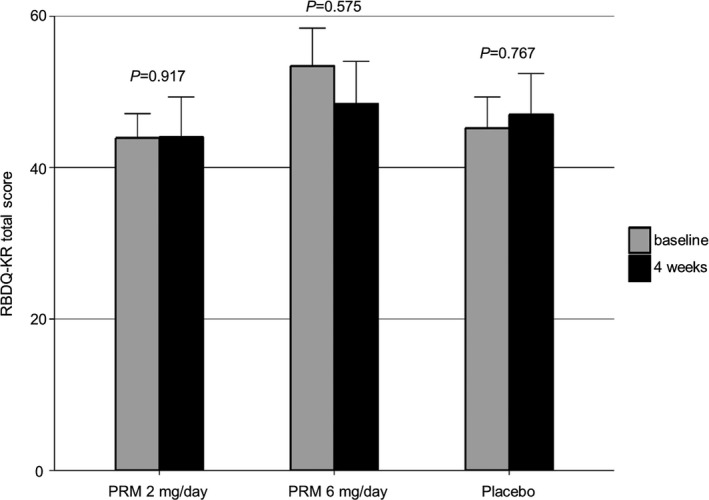
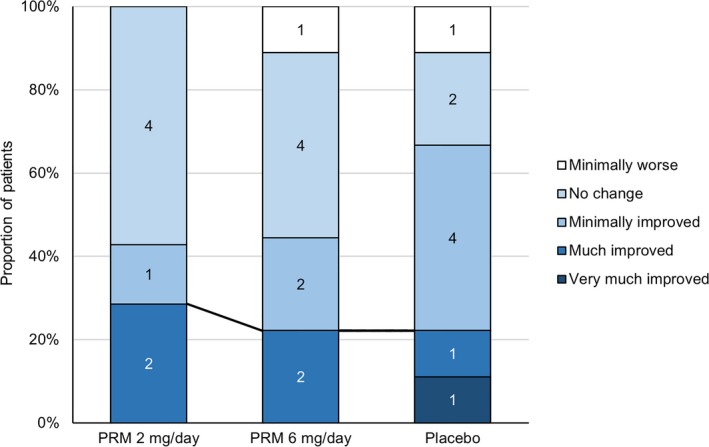
After 4 weeks, there were no differences in the proportions of patients with a CGI-I score of much improved or very much improved among the study groups. In addition, RBDQ-KR scores and secondary outcomes were not improved in all groups at 4 weeks, and there were no differences between the groups.
Our findings suggest that PRM may not be effective in treating RBD-related symptoms within the dose range used in this study. Further studies using doses higher than 6 mg per day are warranted.
我们研究了褪黑素缓释剂(PRM)对特发性快速眼动(REM)睡眠行为障碍(iRBD)的影响。
在这项为期 4 周、随机、双盲、安慰剂对照的初步研究中,30 名经多导睡眠图确认的 iRBD 患者被分为每天接受 PRM 2mg、PRM 6mg 或安慰剂治疗。药物在睡前 30 分钟口服。主要结局包括临床总体印象改善量表(CGI-I)和韩国版 REM 睡眠行为障碍问卷-香港版(RBDQ-KR)的评分。次要结局包括 RBDQ-KR 因子 1 和因子 2 子评分、匹兹堡睡眠质量指数评分、爱泼沃斯嗜睡量表评分、健康调查简表 2 版本评分,以及使用睡眠日记评估的梦境行为发作频率。
4 周后,各组的 CGI-I 评分有很大改善或非常大改善的患者比例没有差异。此外,4 周时所有组的 RBDQ-KR 评分和次要结局均未改善,各组之间无差异。
我们的发现表明,在本研究使用的剂量范围内,PRM 可能对治疗 RBD 相关症状无效。需要进一步研究使用剂量高于 6mg/天的 PRM。