Division of Immunology, Department of Biology, University of Konstanz, Konstanz, Germany.
Biotechnology Institute Thurgau at the University of Konstanz, Kreuzlingen, Switzerland.
Front Immunol. 2019 Apr 5;10:707. doi: 10.3389/fimmu.2019.00707. eCollection 2019.
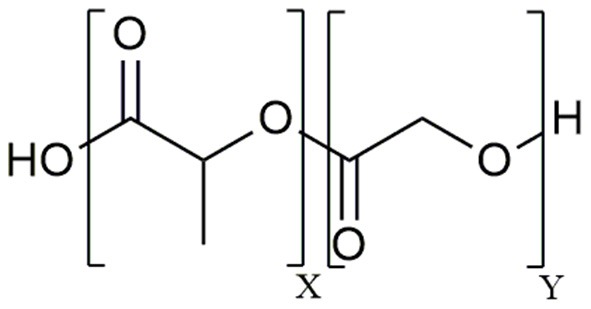
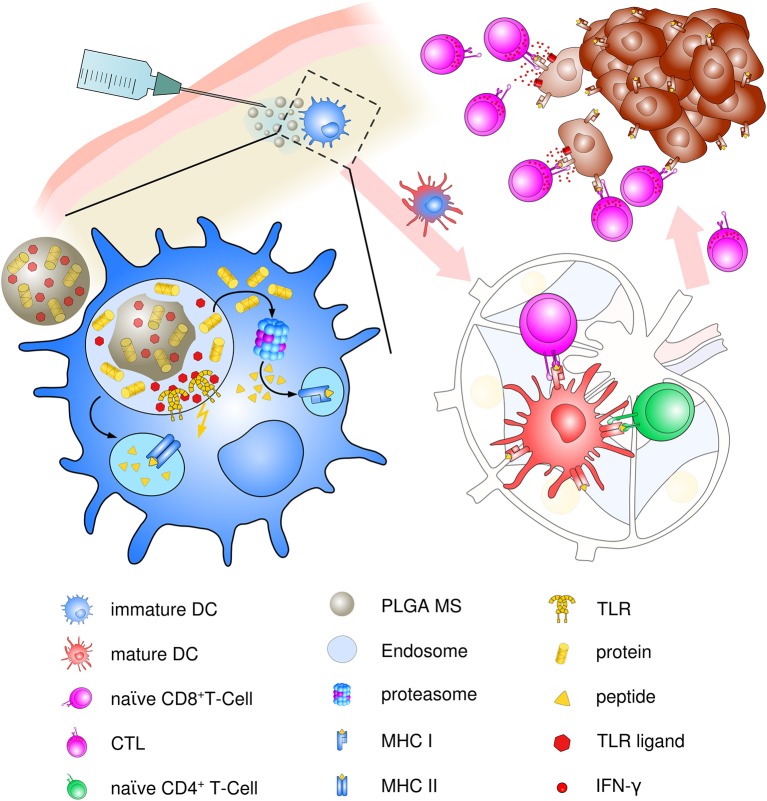
With emerging success in fighting off cancer, chronic infections, and autoimmune diseases, immunotherapy has become a promising therapeutic approach compared to conventional therapies such as surgery, chemotherapy, radiation therapy, or immunosuppressive medication. Despite the advancement of monoclonal antibody therapy against immune checkpoints, the development of safe and efficient cancer vaccine formulations still remains a pressing medical need. Anti-tumor immunotherapy requires the induction of antigen-specific CD8+ cytotoxic T lymphocyte (CTL) responses which recognize and specifically destroy tumor cells. Due to the crucial role of dendritic cells (DCs) in initiating anti-tumor immunity, targeting tumor antigens to DCs has become auspicious in modern vaccine research. Over the last two decades, micron- or nanometer-sized particulate delivery systems encapsulating tumor antigens and immunostimulatory molecules into biodegradable polymers have shown great promise for the induction of potent, specific and long-lasting anti-tumor responses . Enhanced vaccine efficiency of the polymeric micro/nanoparticles has been attributed to controlled and continuous release of encapsulated antigens, efficient targeting of antigen presenting cells (APCs) such as DCs and subsequent induction of CTL immunity. Poly (D, L-lactide--glycolide) (PLGA), as one of these polymers, has been extensively studied for the design and development of particulate antigen delivery systems in cancer therapy. This review provides an overview of the current state of research on the application of PLGA microspheres (PLGA MS) as anti-tumor cancer vaccines in activating and potentiating immune responses attempting to highlight their potential in the development of cancer therapeutics.
在抗击癌症、慢性感染和自身免疫性疾病方面取得了新的成功,与手术、化疗、放疗或免疫抑制药物等传统疗法相比,免疫疗法已成为一种很有前途的治疗方法。尽管针对免疫检查点的单克隆抗体疗法取得了进展,但开发安全有效的癌症疫苗制剂仍然是一个紧迫的医疗需求。抗肿瘤免疫疗法需要诱导抗原特异性 CD8+细胞毒性 T 淋巴细胞(CTL)反应,这些反应识别并特异性破坏肿瘤细胞。由于树突状细胞(DCs)在启动抗肿瘤免疫中的关键作用,将肿瘤抗原靶向 DCs 已成为现代疫苗研究中的一个有希望的方向。在过去的二十年中,微米或纳米级的颗粒输送系统将肿瘤抗原和免疫刺激分子封装在可生物降解的聚合物中,已经显示出在诱导有效、特异和持久的抗肿瘤反应方面的巨大潜力。增强聚合物微/纳米颗粒的疫苗效率归因于封装抗原的受控和持续释放、对抗原呈递细胞(APCs)如 DCs 的有效靶向以及随后诱导 CTL 免疫。聚(D,L-丙交酯-乙交酯)(PLGA)作为这些聚合物之一,已被广泛研究用于设计和开发用于癌症治疗的颗粒抗原传递系统。本文综述了 PLGA 微球(PLGA MS)作为抗肿瘤癌症疫苗在激活和增强免疫反应方面的研究现状,试图突出其在癌症治疗开发中的潜力。