Cui Weiwei, Zhang Wenxin, Yuan Xiaofeng, Liu Shanshan, Li Meng, Niu Junqi, Zhang Peng, Li Dong
Department of Nutrition and Food Hygiene, School of Public Health Jilin University Changchun China.
Department of Pathology The First Hospital of Jilin University Changchun China.
Food Sci Nutr. 2019 Feb 10;7(4):1288-1294. doi: 10.1002/fsn3.961. eCollection 2019 Apr.
Lung carcinoma is still associated with high rates of morbidity and mortality despite the advances in cancer therapy achieved in last decades. Recent studies showed that immune responses played a crucial role in the developments of cancers including lung cancer. Type 1 immune response could promote classical activated macrophages (CAMs) with antitumor properties. On the contrast, type 2 immune response could lead to the polarization of alternatively activated macrophages (AAMs) which could promote the growth and metastasis of tumor. Our previous research showed that vitamin A deficiency could promote the type 2 immune response but not the type 1 immune response. Whether vitamin A deficiency has detrimental effect for lung carcinoma need further investigate.
To investigate the effect of vitamin A deficiency in lung cancer and the potential mechanisms.
Mice were fed with normal diet or vitamin A deficiency diet for 2 weeks, and then, Lewis lung cancer (LLC) cells dissolved in Matrigel Matrix were planted on the left lower lope of lungs. Mice were sacrificed 28 days after the plantation of tumor cells, the tumor size, cytokine profile in bronchoalveolar lavage fluid (BALF), numbers of type 2 innate lymphoid cells (ILC2s), and macrophage phenotypes in the lung were measured. The overall survival rate was also monitored throughout the experiments.
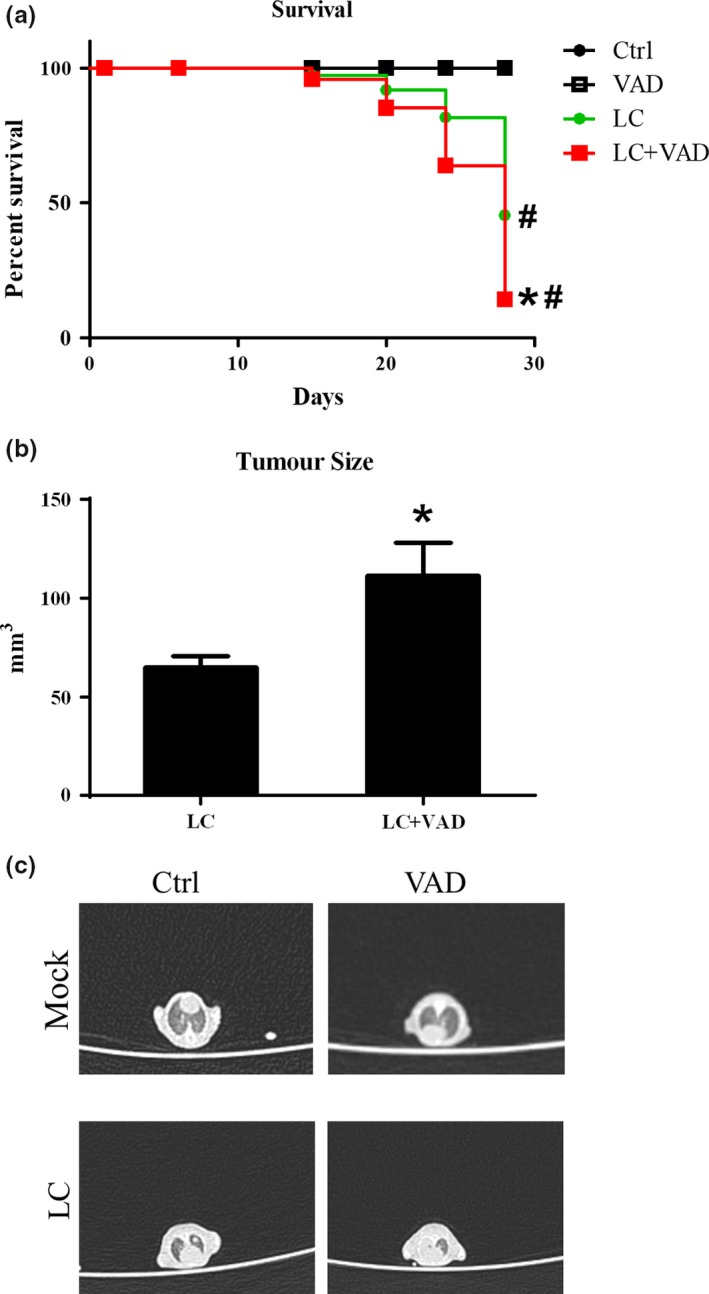
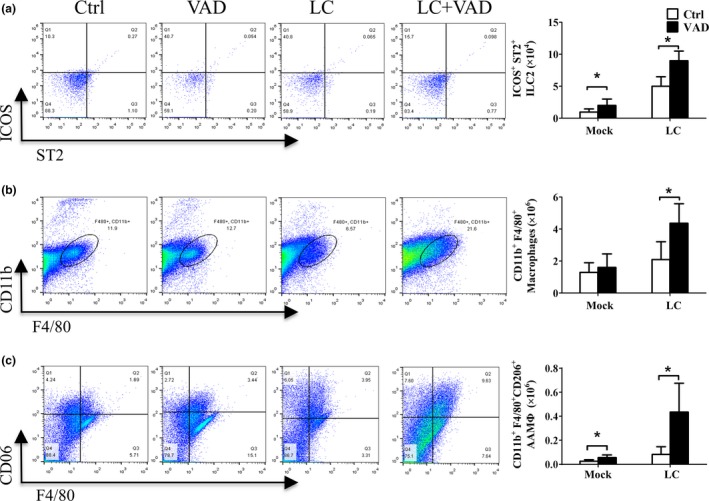
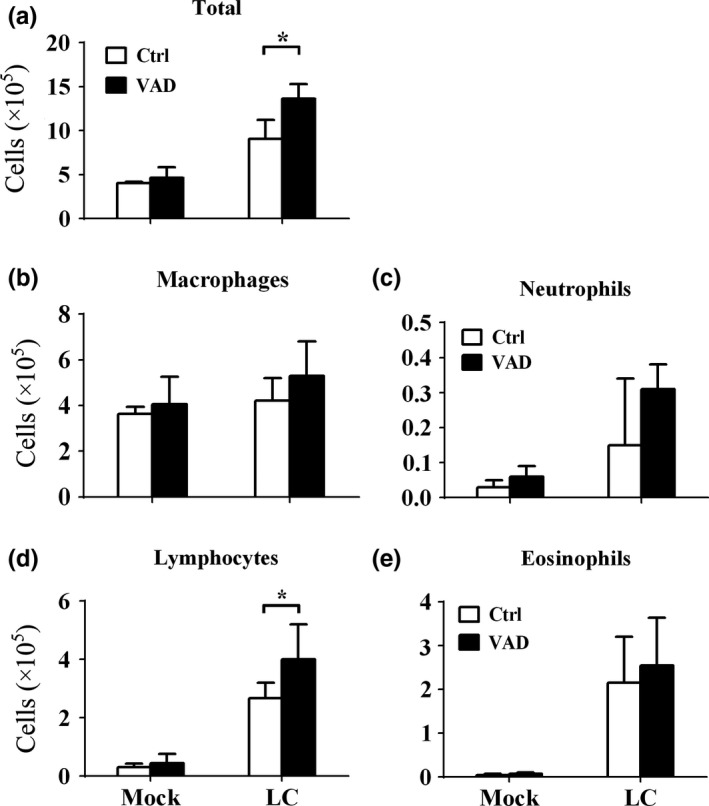
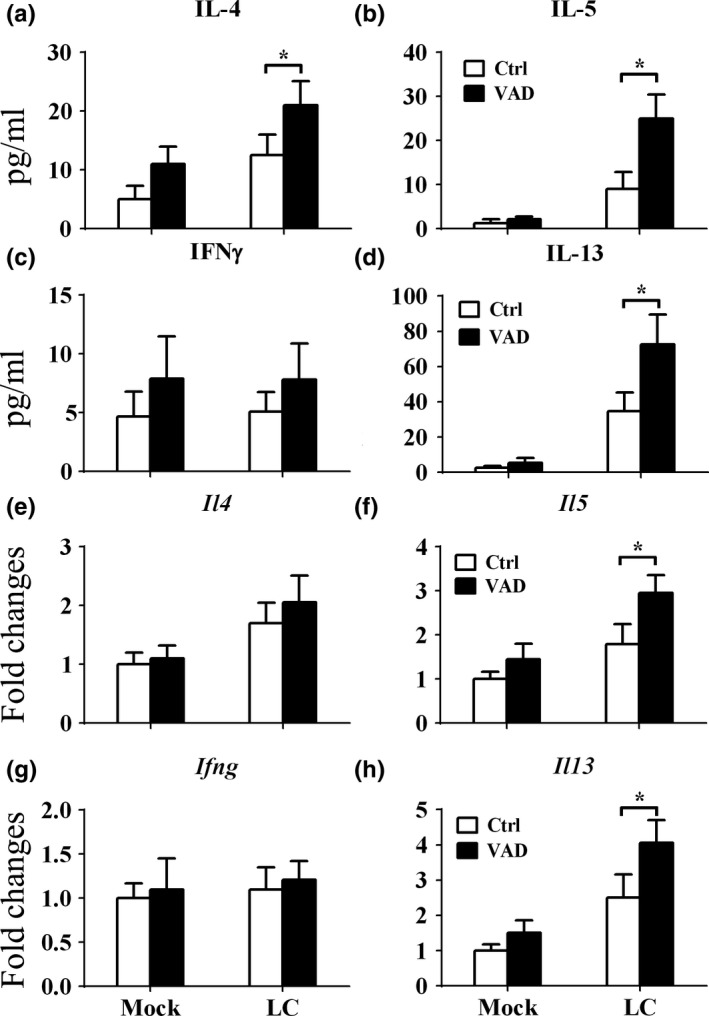
Vitamin A deficiency diet fed tumor-bearing mice have lower survival rate ( = 6.862, < 0.001), larger tumor size ( = 2.651, < 0.05), more ILC2s ( = 7.680, < 0.001), and AAMs ( = 6.315, < 0.001) in the lung tissue; also, type 2 cytokines concentrations in the BALF were higher compared to normal diet fed ones.
Vitamin A deficiency could promote the pathogeneses of lung carcinoma via induction of ILC2s and polarizing AAMs.
尽管在过去几十年癌症治疗方面取得了进展,但肺癌的发病率和死亡率仍然很高。最近的研究表明,免疫反应在包括肺癌在内的癌症发展中起着关键作用。1型免疫反应可促进具有抗肿瘤特性的经典活化巨噬细胞(CAMs)。相反,2型免疫反应可导致交替活化巨噬细胞(AAMs)极化,从而促进肿瘤的生长和转移。我们之前的研究表明,维生素A缺乏可促进2型免疫反应,但不能促进1型免疫反应。维生素A缺乏对肺癌是否有不利影响需要进一步研究。
研究维生素A缺乏对肺癌的影响及其潜在机制。
将小鼠分别用正常饮食或维生素A缺乏饮食喂养2周,然后将溶解在基质胶中的Lewis肺癌(LLC)细胞接种到左肺下叶。肿瘤细胞接种28天后处死小鼠,测量肿瘤大小、支气管肺泡灌洗液(BALF)中的细胞因子谱、2型固有淋巴细胞(ILC2s)数量以及肺中的巨噬细胞表型。在整个实验过程中还监测了总体生存率。
喂食维生素A缺乏饮食的荷瘤小鼠生存率较低(χ² = 6.862,P < 0.001),肿瘤体积较大(t = 2.651,P < 0.05),肺组织中ILC2s(t = 7.680,P < 0.001)和AAMs(t = 6.315,P < 0.001)更多;此外,与喂食正常饮食的小鼠相比,BALF中2型细胞因子浓度更高。
维生素A缺乏可通过诱导ILC2s和使AAMs极化促进肺癌的发病机制。