Badran Hala Mahfouz, Faheem Naglaa, Soliman Mahmood, Hamdy Mohamed, Yacoub Magdi
Cardiology Department, Menoufiya University, Egypt.
The BAHCM National Program, Egypt.
Glob Cardiol Sci Pract. 2019 Mar 31;2019(1):6. doi: 10.21542/gcsp.2019.6.
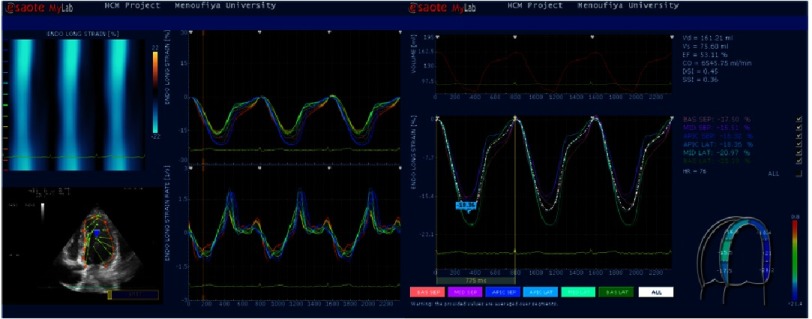
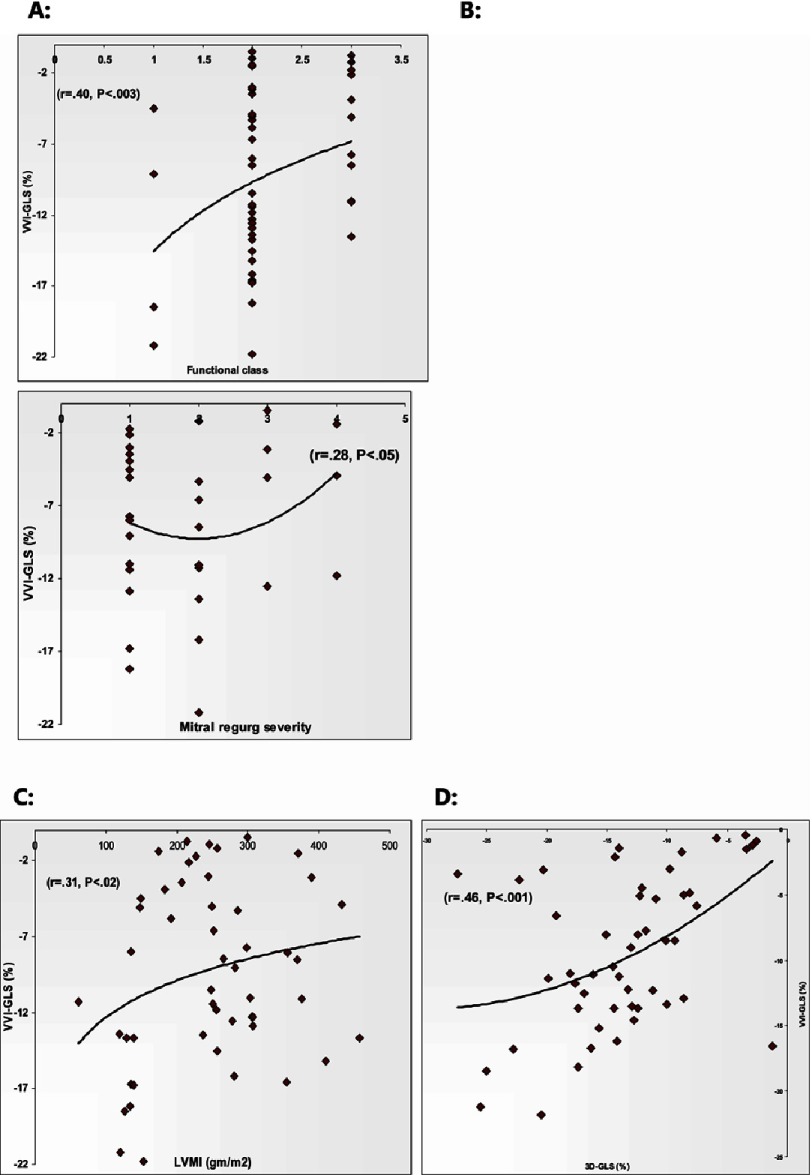
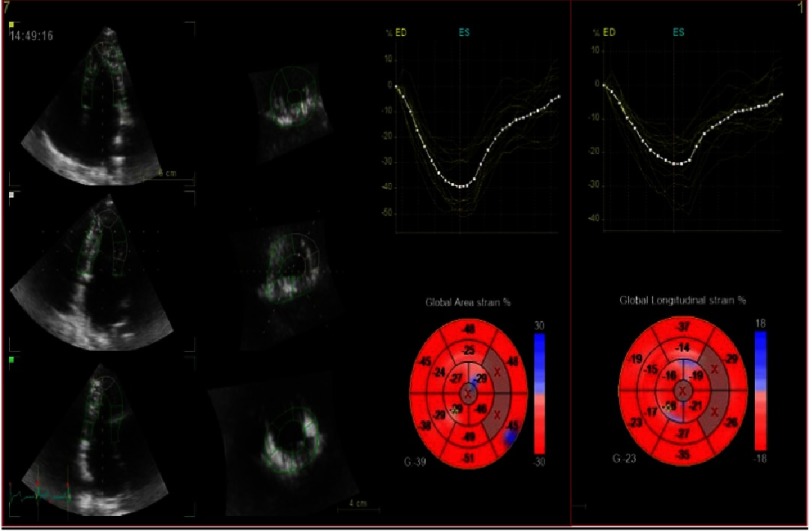
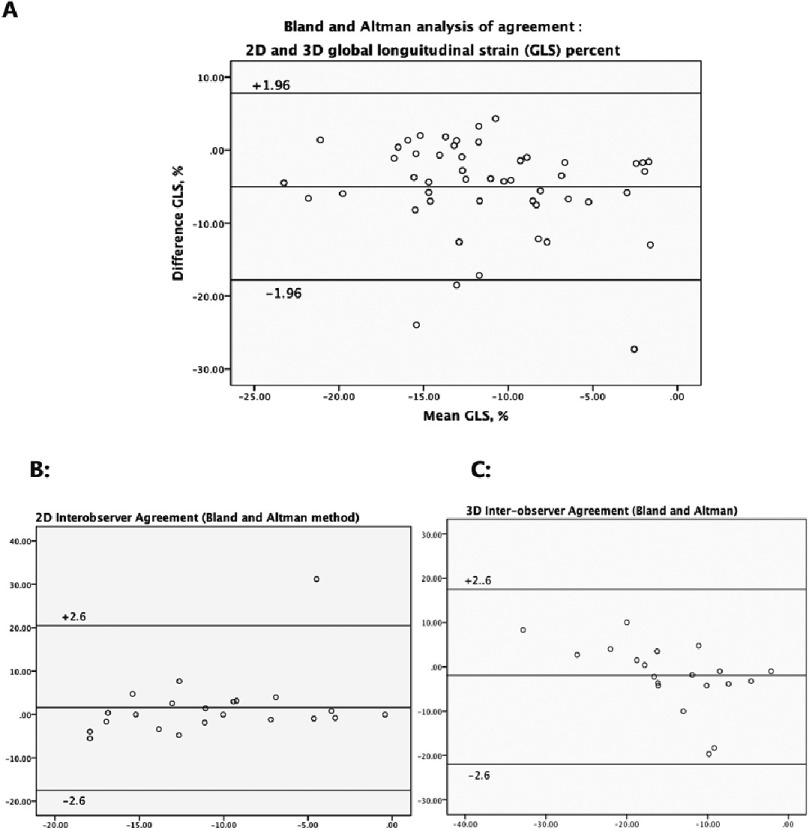
Vector velocity imaging (VVI) is a two-dimensional wall motion tracking method that can measure cardiac mechanics in hypertrophic cardiomyopathy (HCM). 3D-speckle tracking echocardiography (3D-STE) has been proven to be superior to conventional measures in assessment of LV function. The aim of this study was to compare the two technologies in the assessment of LV longitudinal strain (LS) in HCM patients. A total of 50 patients with HCM were investigated using VVI and 3D-STE in same setting. 3D-STE allows obtaining longitudinal, circumferential, radial and area strains (AS). Values of longitudinal strain (LS) and AS by 3D-STE were compared to VVI- derived analyses. Thereafter, VVI-LS values were correlated with LV phenotype. Last, the variability of VVI versus 3DE strain measurements as well as recorded time of analysis was assessed. The absolute value of 3D-STE LS and AS is significantly higher than VVI-LS ( < 0.0001). VVI provided complete longitudinal LV strain information, similar to 3D-STE. There is excellent agreement between the two technologies-derived values, however, a greater number of segments could be analyzed using VVI (94.7%), compared with 3DE (62.1%). Despite VVI being more time consuming, VVI-LS is more correlated to LV mass index, mitral regurgitation severity and functional class when compared with 3D-STE LS and AS. VVI is a feasible modality for assessing LV longitudinal strain. Although VVI agreed well with 3D-STE for most of regional and global LS, a better correlation was found between VVI-LS and HCM phenotype. It is hypothesized that this discrepancy originates from the inferior imaging quality using 3D tracking algorithms.
向量速度成像(VVI)是一种二维壁运动跟踪方法,可用于测量肥厚型心肌病(HCM)的心脏力学。三维斑点追踪超声心动图(3D-STE)已被证明在评估左心室功能方面优于传统方法。本研究的目的是比较这两种技术在评估HCM患者左心室纵向应变(LS)方面的差异。共有50例HCM患者在相同条件下接受了VVI和3D-STE检查。3D-STE可获取纵向、圆周、径向和面积应变(AS)。将3D-STE测得的纵向应变(LS)和AS值与VVI得出的分析结果进行比较。此后,将VVI-LS值与左心室表型进行相关性分析。最后,评估VVI与3DE应变测量值的变异性以及分析记录时间。3D-STE LS和AS的绝对值显著高于VVI-LS(<0.0001)。VVI提供了与3D-STE类似的完整左心室纵向应变信息。两种技术得出的值之间具有良好的一致性,然而,与3DE(62.1%)相比,使用VVI可以分析更多节段(94.7%)。尽管VVI耗时更长,但与3D-STE LS和AS相比,VVI-LS与左心室质量指数、二尖瓣反流严重程度和功能分级的相关性更高。VVI是评估左心室纵向应变的一种可行方法。虽然VVI在大多数局部和整体LS方面与3D-STE一致性良好,但VVI-LS与HCM表型之间的相关性更好。据推测,这种差异源于使用3D跟踪算法时成像质量较差。