Department of Animal Science, Iowa State University, Ames, Iowa, United States of America.
Oak Ridge Institute for Science and Education, Oak Ridge, Tennessee, United States of America.
PLoS One. 2019 Apr 26;14(4):e0216070. doi: 10.1371/journal.pone.0216070. eCollection 2019.
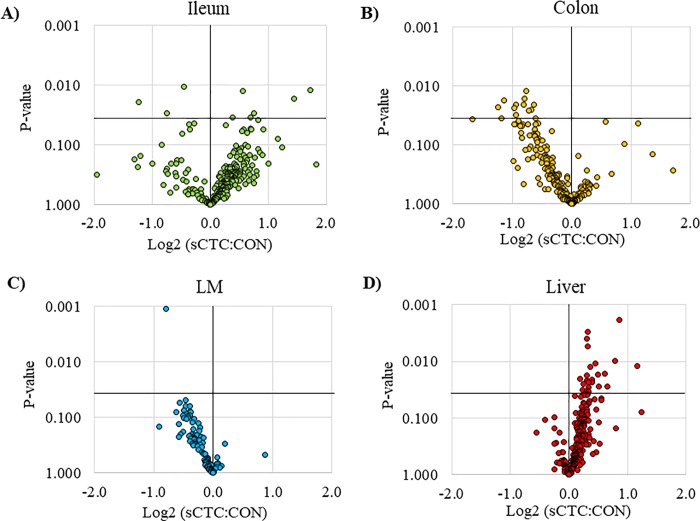
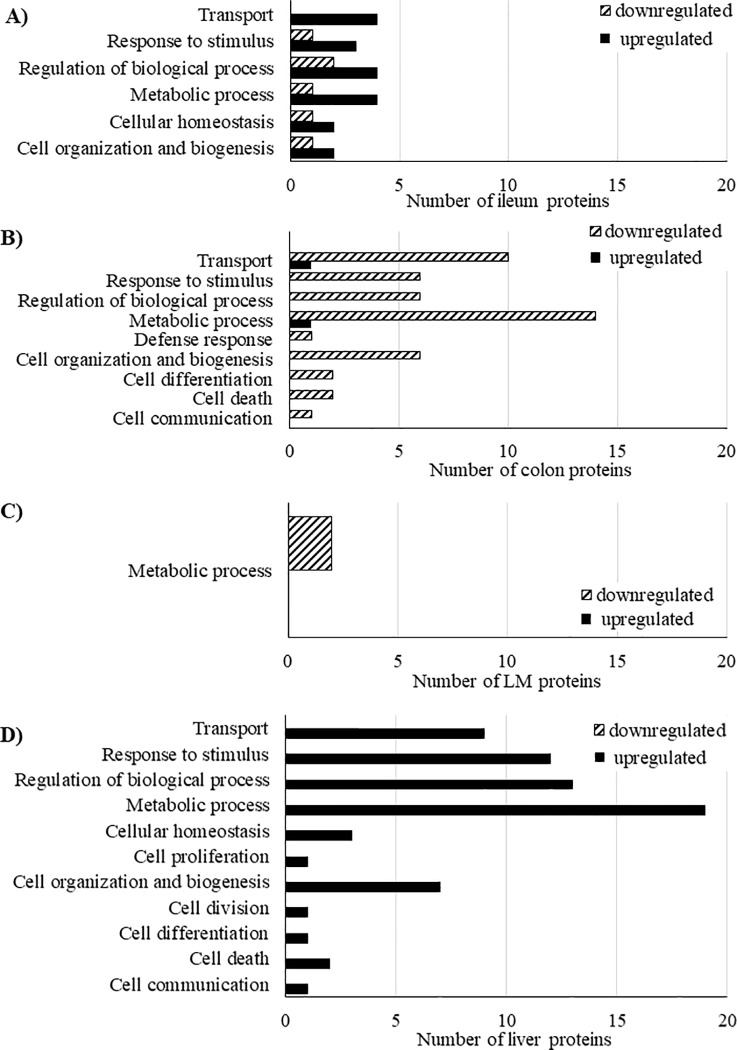
Antibiotics have been used for over 60 years by the swine industry to improve growth performance and feed efficiency. With rising concerns over antimicrobial resistance and government restrictions such as the Veterinary Feed Directive on usage of in-feed antibiotics, alternatives to feeding antibiotic growth promoters (AGPs) to nursery pigs are needed. However, the mechanism of action by which AGPs work is poorly understood. Thus, the objective of this study was to investigate the mechanisms of action by which AGPs increase nursery pig performance. Over two replicates, 24 weaned pigs (6.75 ± 0.75 kg body weight) were randomly allotted to either control (CON, n = 12) or sub-therapeutic antibiotic (sCTC, n = 12) treatments and housed individually. A 2-phase corn-soybean-based nursery diet was fed, with the sCTC diets containing 40 ppm feed-grade chlortetracycline. Individual pig average daily gain (ADG), average daily feed intake (ADFI), and gain to feed ratio (G:F) were calculated weekly for 5 weeks. Thereafter, all pigs were euthanized and necropsied for tissue collection. The overall performance data indicated that sCTC pigs had increased ADG (0.43 vs. 0.32 kg/d, P = 0.001) and ADFI (0.51 vs. 0.37 kg/d, P = 0.002) compared with CON pigs; however, G:F was not different as a result of dietary treatment (0.85 vs. 0.88, P = 0.617). Intestinal barrier permeability, ileal active nutrient transport, and cecal short chain fatty acid concentrations did not differ (P > 0.10) due to dietary treatment, however changes in several ileum mRNA transcripts suggest that inflammation may be reduced in sCTC pigs. Further, the changes observed in the proteomes of the ileum, colon, skeletal muscle, and liver suggest that the sub-therapeutic mode of action of AGPs may include post-absorptive changes and warrants further investigation.
抗生素在猪业中已经使用了 60 多年,以提高生长性能和饲料效率。随着人们对抗生素耐药性的担忧不断增加,以及政府对在饲料中使用抗生素的限制,如兽医饲料指令,需要替代抗生素生长促进剂(AGP)来喂养仔猪。然而,AGP 发挥作用的机制还不太清楚。因此,本研究的目的是研究 AGP 提高仔猪生产性能的作用机制。在两个重复试验中,将 24 头断奶仔猪(6.75±0.75kg 体重)随机分为对照组(CON,n=12)或亚治疗剂量抗生素组(sCTC,n=12),并单独饲养。饲喂基于玉米-大豆的两阶段仔猪日粮,sCTC 日粮中含有 40ppm 饲料级金霉素。每周计算一次 5 周的仔猪平均日增重(ADG)、平均日采食量(ADFI)和饲料增重比(G:F)。此后,所有仔猪被安乐死并进行尸检以收集组织。整体性能数据表明,与 CON 组相比,sCTC 组仔猪 ADG(0.43 比 0.32kg/d,P=0.001)和 ADFI(0.51 比 0.37kg/d,P=0.002)增加;但由于日粮处理,G:F 没有差异(0.85 比 0.88,P=0.617)。由于日粮处理,肠道屏障通透性、回肠主动营养转运和盲肠短链脂肪酸浓度没有差异(P>0.10),但 sCTC 仔猪回肠 mRNA 转录本的变化表明炎症可能减少。此外,回肠、结肠、骨骼肌和肝脏的蛋白质组变化表明,AGP 的亚治疗作用模式可能包括吸收后变化,值得进一步研究。