Greenwood Genetic Center, 106 Gregor Mendel Cir, Greenwood, SC, 29646, USA.
PreventionGenetics, Marshfield, WI, USA.
Clin Epigenetics. 2019 Apr 27;11(1):64. doi: 10.1186/s13148-019-0658-5.
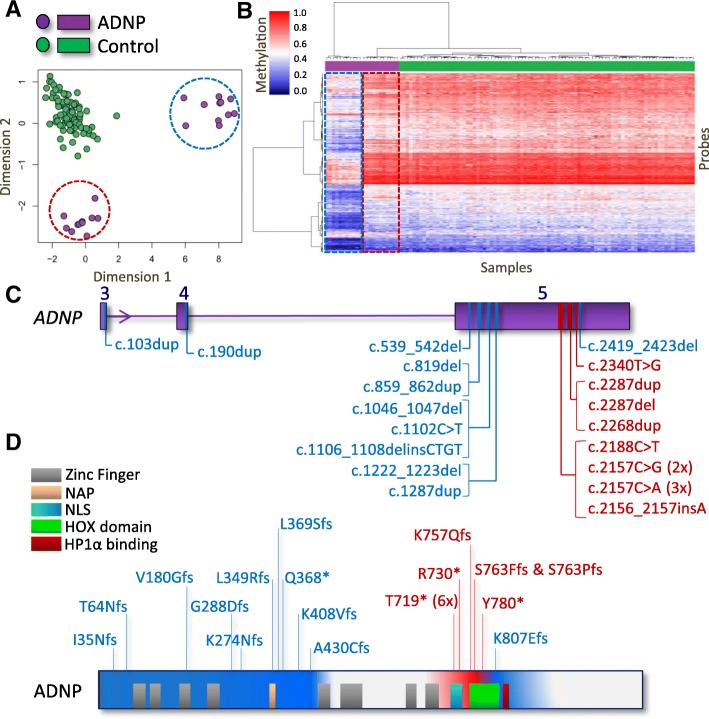
ADNP syndrome is a rare Mendelian disorder characterized by global developmental delay, intellectual disability, and autism. It is caused by truncating mutations in ADNP, which is involved in chromatin regulation. We hypothesized that the disruption of chromatin regulation might result in specific DNA methylation patterns that could be used in the molecular diagnosis of ADNP syndrome.
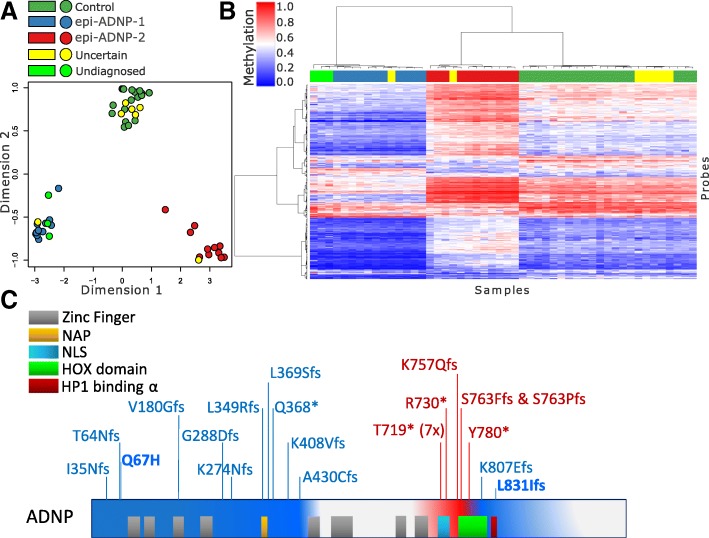
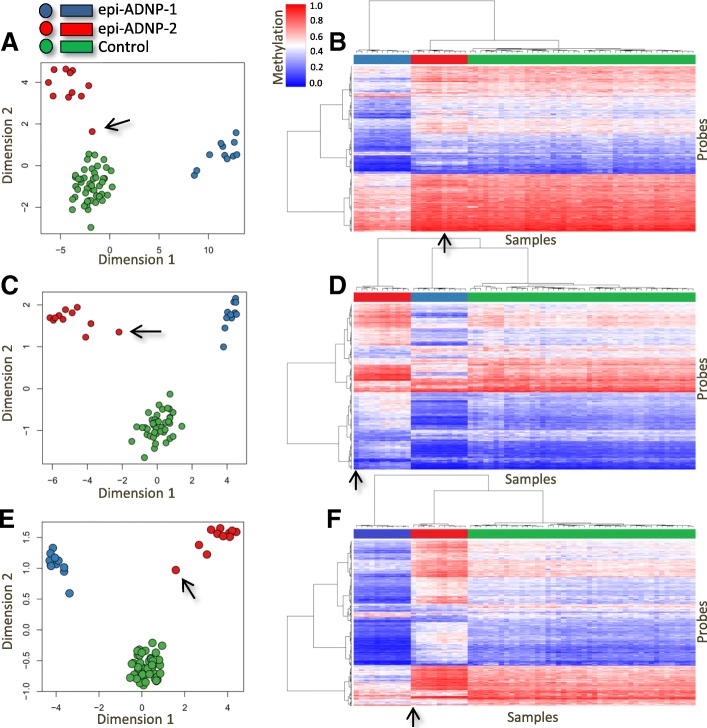
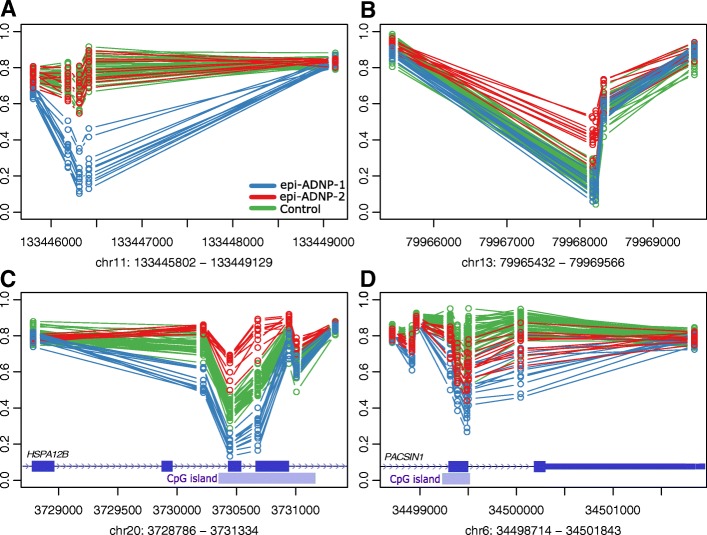
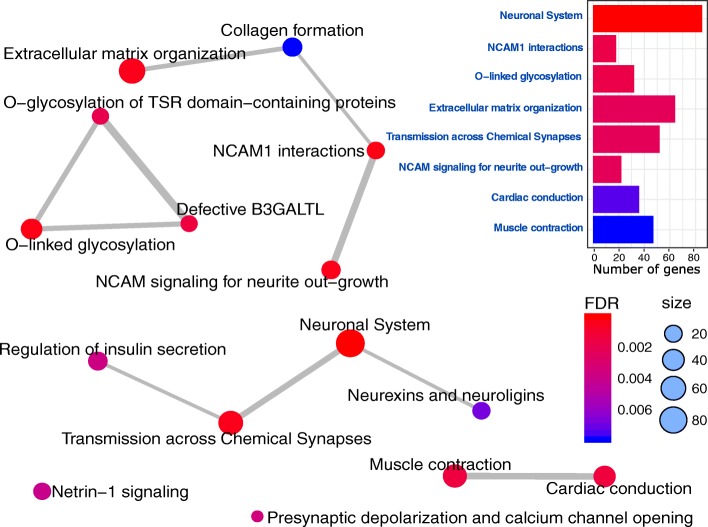
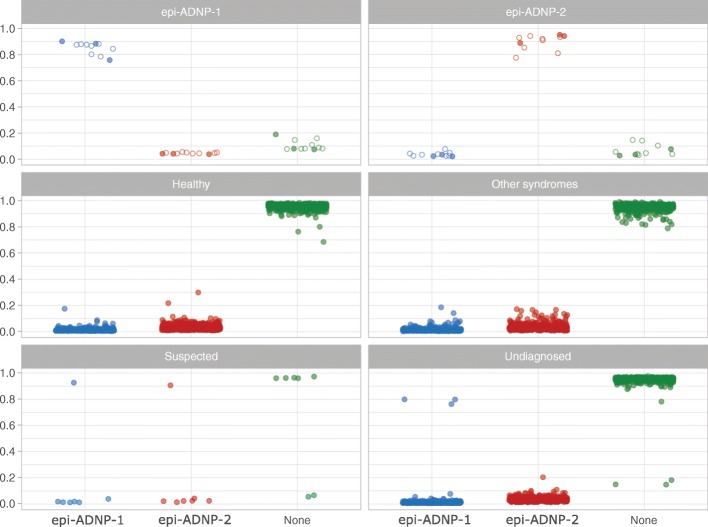
We identified two distinct and partially opposing genomic DNA methylation episignatures in the peripheral blood samples from 22 patients with ADNP syndrome. The "epi-ADNP-1" episignature included ~ 6000 mostly hypomethylated CpGs, and the "epi-ADNP-2" episignature included ~ 1000 predominantly hypermethylated CpGs. The two signatures correlated with the locations of the ADNP mutations. Epi-ADNP-1 mutations occupy the N- and C-terminus, and epi-ADNP-2 mutations are centered on the nuclear localization signal. The episignatures were enriched for genes involved in neuronal system development and function. A classifier trained on these profiles yielded full sensitivity and specificity in detecting patients with either of the two episignatures. Applying this model to seven patients with uncertain clinical diagnosis enabled reclassification of genetic variants of uncertain significance and assigned new diagnosis when the primary clinical suspicion was not correct. When applied to a large cohort of unresolved patients with developmental delay (N = 1150), the model predicted three additional previously undiagnosed patients to have ADNP syndrome. DNA sequencing of these subjects, wherever available, identified pathogenic mutations within the gene domains predicted by the model.
We describe the first Mendelian condition with two distinct episignatures caused by mutations in a single gene. These highly sensitive and specific DNA methylation episignatures enable diagnosis, screening, and genetic variant classifications in ADNP syndrome.
ADNP 综合征是一种罕见的孟德尔疾病,其特征为全面发育迟缓、智力障碍和自闭症。它是由 ADNP 中的截断突变引起的,ADNP 参与染色质调节。我们假设染色质调节的破坏可能导致特定的 DNA 甲基化模式,可用于 ADNP 综合征的分子诊断。
我们在 22 名 ADNP 综合征患者的外周血样本中鉴定出两个截然不同且部分相反的基因组 DNA 甲基化外显子。“epi-ADNP-1”外显子包括约 6000 个主要低甲基化的 CpG,“epi-ADNP-2”外显子包括约 1000 个主要高甲基化的 CpG。这两个特征与 ADNP 突变的位置相关。Epi-ADNP-1 突变位于 N 端和 C 端,而 epi-ADNP-2 突变集中在核定位信号上。外显子富含参与神经元系统发育和功能的基因。基于这些特征训练的分类器在检测具有两种外显子之一的患者时具有 100%的灵敏度和特异性。将该模型应用于 7 名临床诊断不确定的患者,能够重新分类遗传变异的不确定意义,并在主要临床怀疑不正确时分配新的诊断。当应用于一个具有发育迟缓的未解决患者的大队列(N=1150)时,该模型预测了另外 3 名以前未诊断出的患者患有 ADNP 综合征。在模型预测的基因区域内,对这些受试者进行 DNA 测序,只要有条件,均可识别出致病性突变。
我们描述了第一个由单个基因中的突变引起的具有两个不同外显子的孟德尔疾病。这些高度敏感和特异的 DNA 甲基化外显子可用于 ADNP 综合征的诊断、筛查和遗传变异分类。