Panyavaranant Pinyada, Teerapakpinyo Chinachote, Pohthipornthawat Natkrita, Oranratanaphan Shina, Shuangshoti Shanop, Triratanachat Surang
Division of Gynecologic Oncology, Department of Obstetrics and Gynecology, Faculty of Medicine, Chulalongkorn University and King Chulalongkorn Memorial Hospital Bangkok, Thailand. Email:
Chulalongkorn GenePRO Center, Research Affairs, Faculty of Medicine, Chulalongkorn University, Bangkok, Thailand.
Asian Pac J Cancer Prev. 2019 Apr 29;20(4):1127-1132. doi: 10.31557/APJCP.2019.20.4.1127.
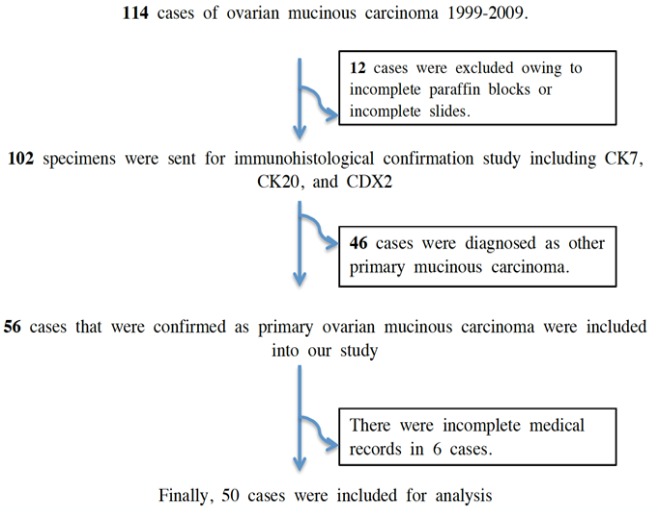
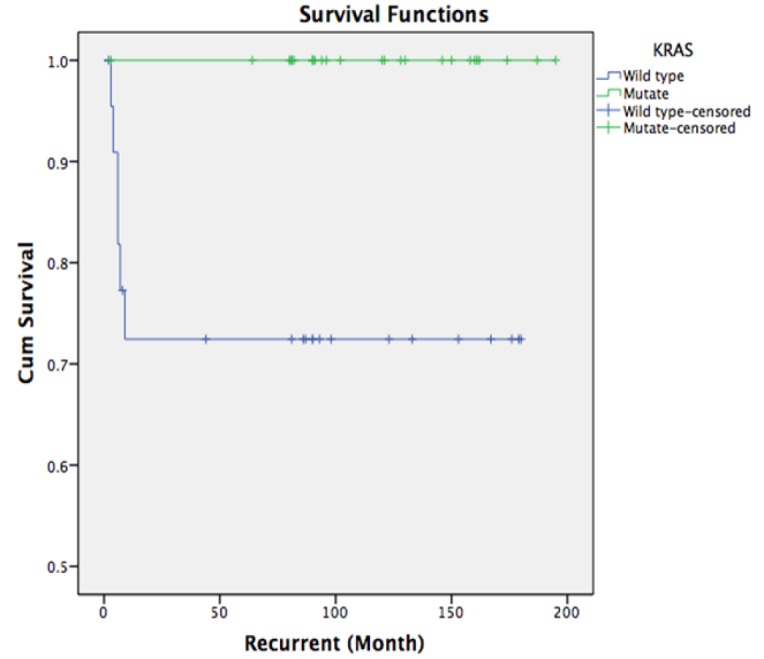
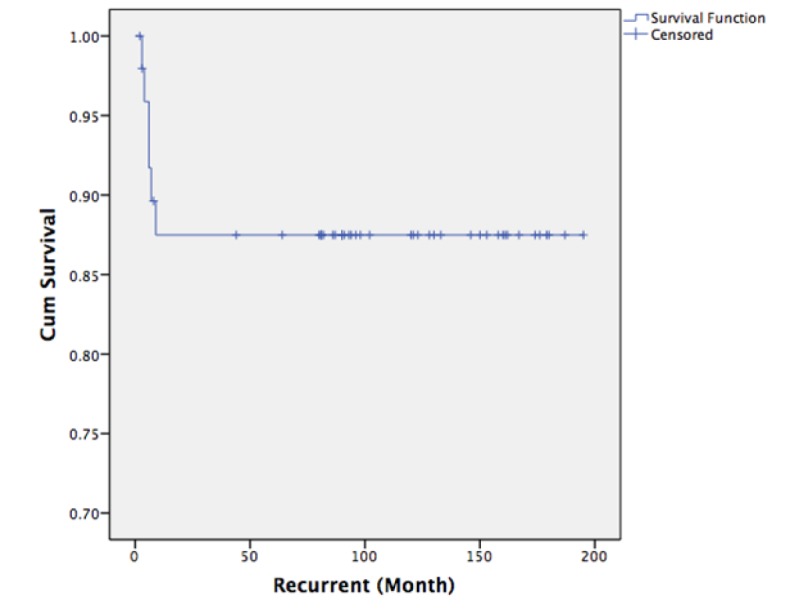
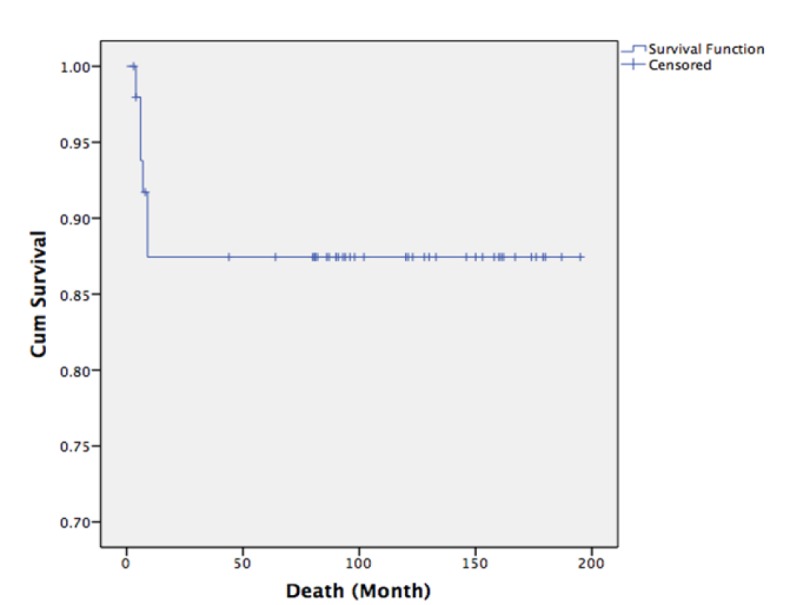
Objective: This study was designed to identify genetic mutation in mucinous carcinoma of the ovary of the patients in King Chulalongkorn Memorial hospital, Bangkok, Thailand and study the relationship between genetic mutation and patients’ prognosis. Methods: Fifty cases of primary mucinous carcinoma of the ovary were selected. DNA was analyzed for genetic mutation using ColoCarta Panel v1.0 and MassArray® System. Demographic data and clinical information of the participants were reviewed from electronic medical records and government data services. Results: Median of disease-free survival is 171.33 +/- 9.04 months and the median overall survival is 171.37 +/- 9.03 months. Twelve percent of the participants had recurrence and all of recurrent cases died from disease or its complication. We found three mutations which were KRAS (27 cases, 54%), PIK3CA (4 cases, 8%) and BRAF (1 case, 2%). Among the KRAS-mutated patients, the majority of the cases (25 cases, 92.6%) were in stage I. Recurrence and disease related mortality were not observed in the KRAS mutated patients. Conclusion: The genetic mutation analysis found three mutations which were KRAS 27 cases (54%), PIK3CA 4 cases (8%) and BRAF 1 case (2%) The ovarian mucinous carcinoma patients with KRAS mutation in our study showed excellent prognosis.
本研究旨在鉴定泰国曼谷朱拉隆功国王纪念医院卵巢黏液性癌患者的基因突变情况,并研究基因突变与患者预后之间的关系。方法:选取50例原发性卵巢黏液性癌病例。使用ColoCarta Panel v1.0和MassArray®系统对DNA进行基因突变分析。从电子病历和政府数据服务中回顾参与者的人口统计学数据和临床信息。结果:无病生存期的中位数为171.33±9.04个月,总生存期的中位数为171.37±9.03个月。12%的参与者出现复发,所有复发病例均死于疾病或其并发症。我们发现了三种突变,即KRAS(27例,54%)、PIK3CA(4例,8%)和BRAF(1例,2%)。在KRAS突变患者中,大多数病例(25例,92.6%)处于I期。KRAS突变患者未观察到复发和疾病相关死亡率。结论:基因突变分析发现三种突变,即KRAS 27例(54%)、PIK3CA 4例(8%)和BRAF 1例(2%)。我们研究中KRAS突变的卵巢黏液性癌患者显示出良好的预后。