Song Zhengshuai, Huang Yu, Zhao Ye, Ruan Hailong, Yang Hongmei, Cao Qi, Liu Di, Zhang Xiaoping, Chen Ke
Department of Urology, Union Hospital, Tongji Medical College, Huazhong University of Science and Technology, Wuhan 430022, China.
Department of Urology, The Central Hospital of Wuhan, Tongji Medical College, Huazhong University of Science and Technology.
J Cancer. 2019 Feb 23;10(6):1398-1408. doi: 10.7150/jca.29571. eCollection 2019.
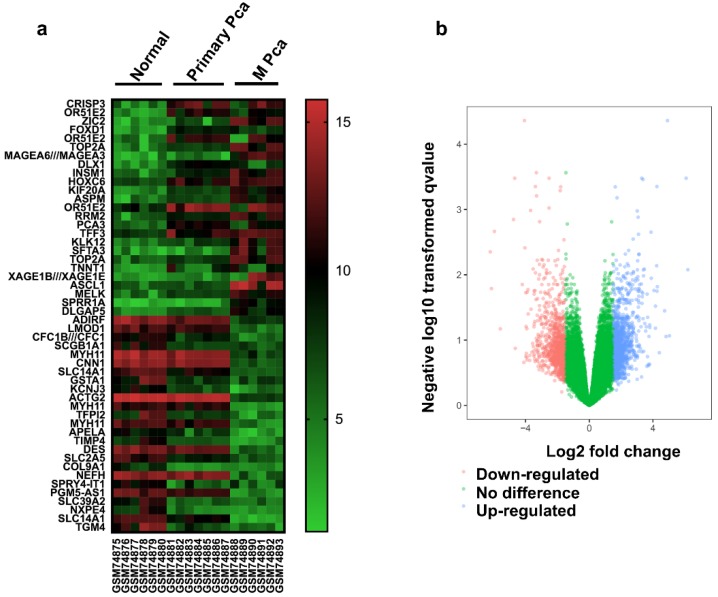
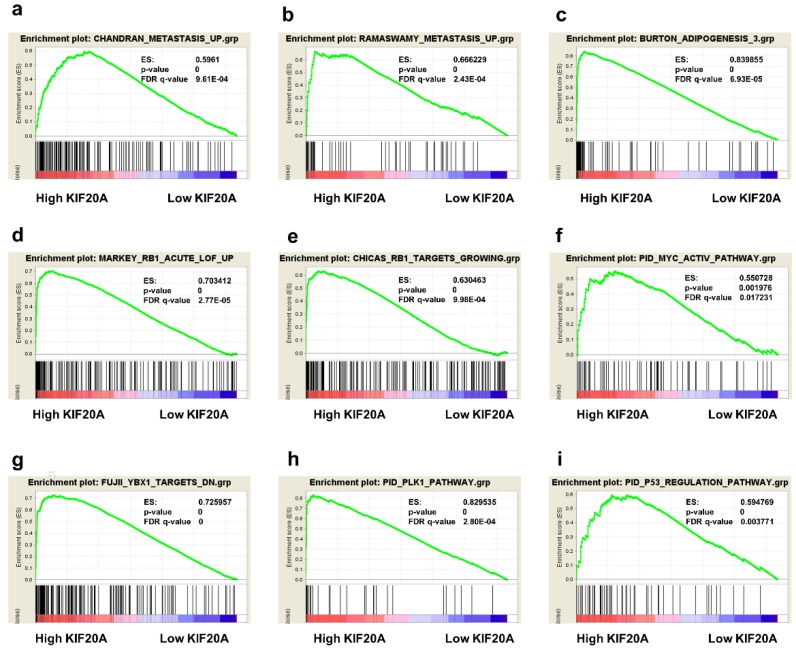
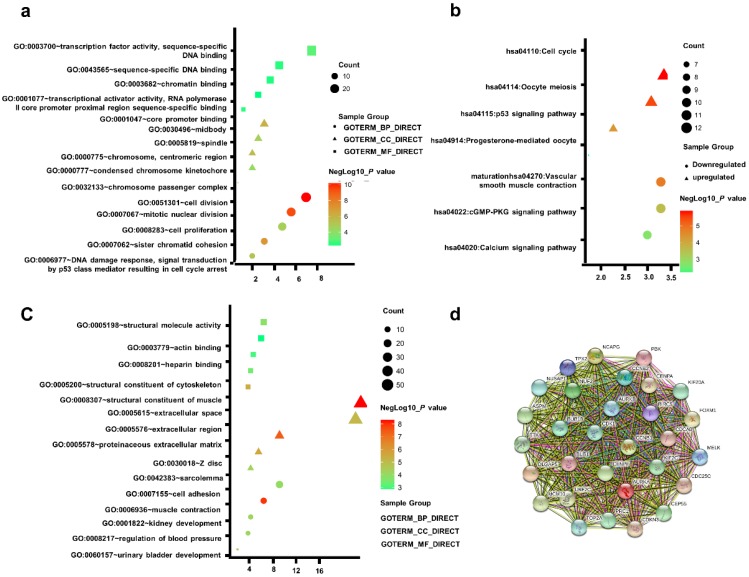
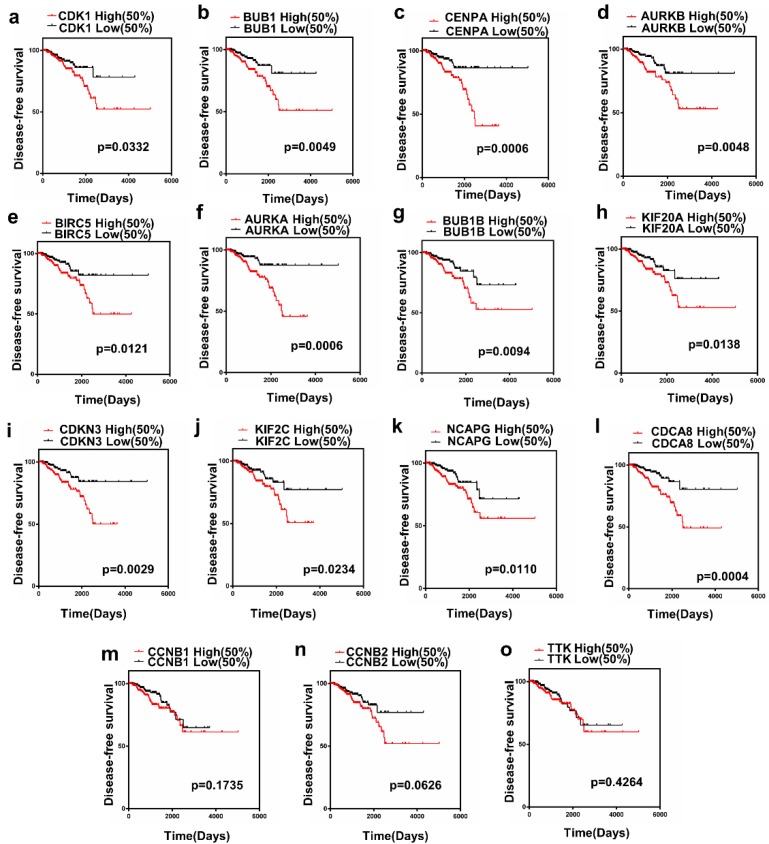
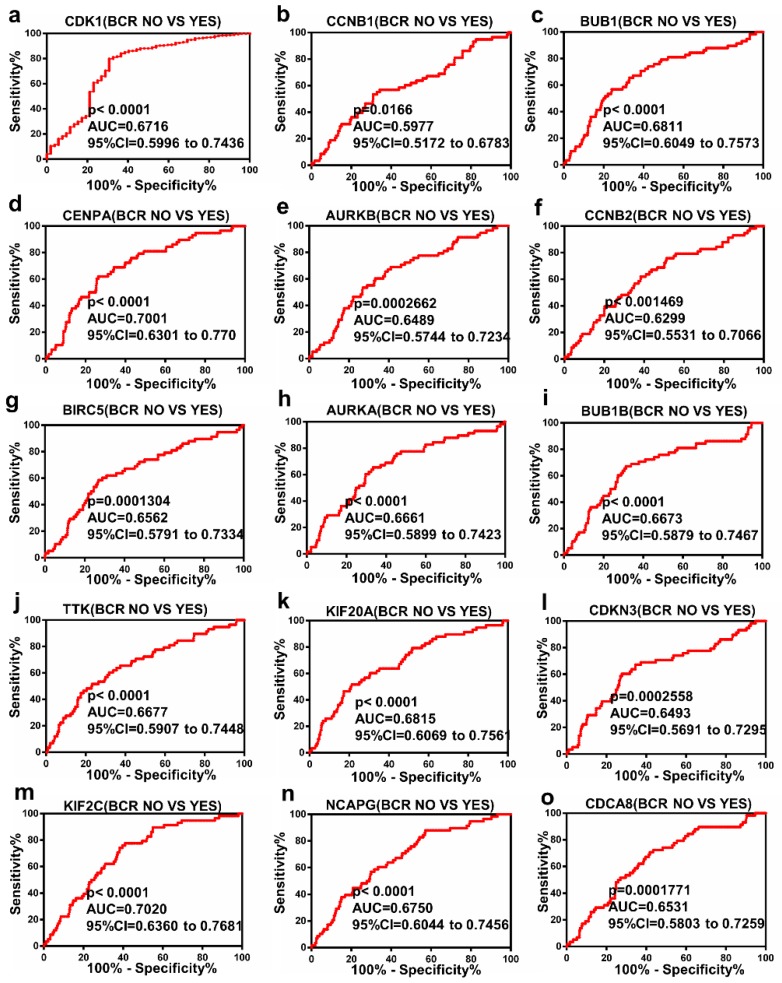
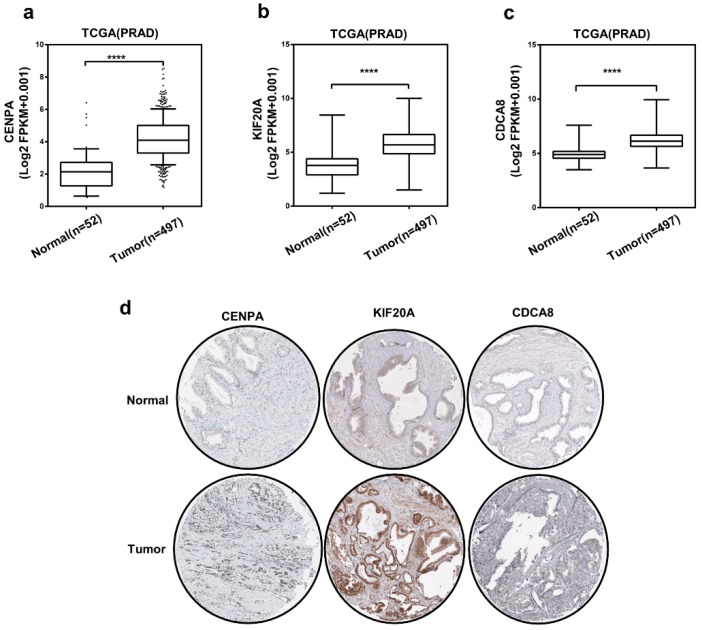
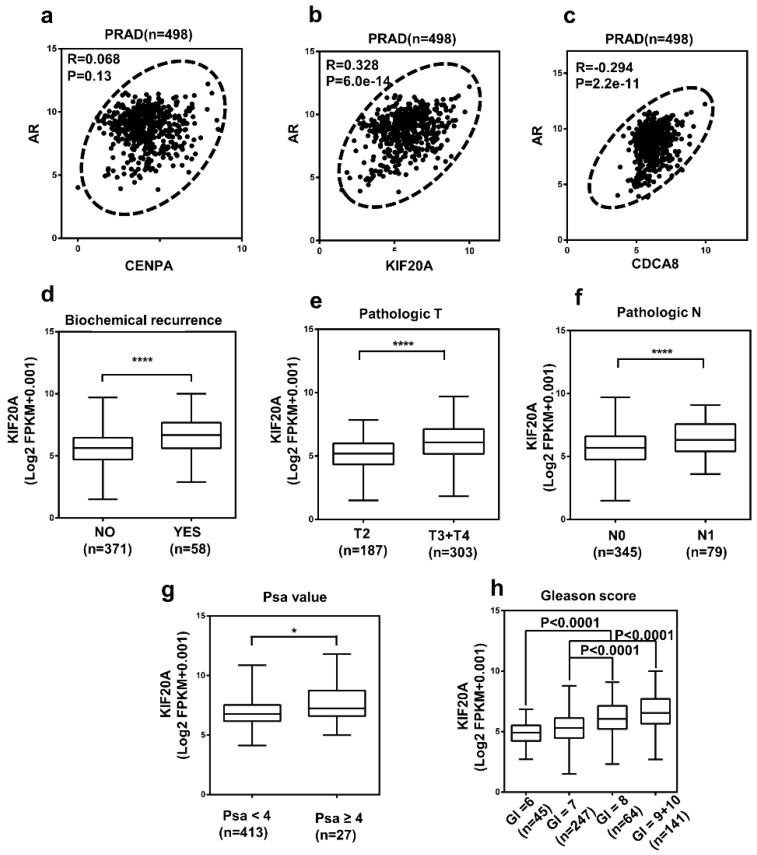
The present study aims to explore the potential mechanisms contributing to prostate cancer (PCa), screen the hub genes, and identify potential biomarkers and correlated pathways of PCa progression. The PCa gene expression profile GSE3325 was operated to analyze the differentially expressed genes (DEGs). DAVID was used to evaluate Gene ontology (GO) and the Kyoto Encyclopedia of Genes and Genomes (KEGG) analyses. A protein-protein interaction (PPI) network was constructed to visualize interactions of the hub genes. The prognostic and diagnostic analysis of these hub genes was carried out to evaluate their potential effects on PCa. A total of 847 DEGs were identified (427 upregulated genes and 420 downregulated genes). Meanwhile, top15 hub genes were showed. GO analysis displayed that the DEGs were mainly enriched in cell cycle, DNA damage response, signal transduction by p53 class mediator resulting in cell cycle arrest and proteinaceous extracellular matrix. KEGG analysis indicated the DEGs were enriched in the p53 signaling pathway and cell cycle pathway. The GO and KEGG enrichment analyses for the DEGs disclosed important biological features of PCa. PPI network showed the interaction of top 15 hub genes. Gene Set Enrichment Analysis (GSEA) revealed that some of the hub genes were associated with biochemical recurrence (BCR) and metastasis of PCa. Some top hub genes were distinctive and new discoveries compared with that of the existing associated researches. Our analysis revealed that the changes of cell cycle and p53 signaling pathway are two major signatures of PCa. CENPA, KIF20A and CDCA8 might promote the tumorigenesis and progression of PCa, especially in BCR and metastasis, which could be novel therapeutic targets and biomarkers for diagnosis, prognosis of PCa.
本研究旨在探索前列腺癌(PCa)的潜在发病机制,筛选核心基因,识别PCa进展的潜在生物标志物及相关通路。运用PCa基因表达谱GSE3325分析差异表达基因(DEGs)。利用DAVID进行基因本体论(GO)和京都基因与基因组百科全书(KEGG)分析。构建蛋白质-蛋白质相互作用(PPI)网络以可视化核心基因的相互作用。对这些核心基因进行预后和诊断分析,以评估它们对PCa的潜在影响。共鉴定出847个DEGs(427个上调基因和420个下调基因)。同时,展示了前15个核心基因。GO分析显示,DEGs主要富集于细胞周期、DNA损伤反应、由p53类介质介导的导致细胞周期停滞和细胞外基质蛋白质的信号转导。KEGG分析表明,DEGs富集于p53信号通路和细胞周期通路。DEGs的GO和KEGG富集分析揭示了PCa的重要生物学特征。PPI网络显示了前15个核心基因的相互作用。基因集富集分析(GSEA)表明,部分核心基因与PCa的生化复发(BCR)和转移相关。与现有相关研究相比,一些顶级核心基因具有独特性和新发现。我们的分析表明,细胞周期和p53信号通路的变化是PCa的两个主要特征。CENPA、KIF20A和CDCA8可能促进PCa的肿瘤发生和进展,尤其是在BCR和转移方面,它们可能是PCa诊断、预后的新型治疗靶点和生物标志物。