De Luca Paul A, Buchmann Stephen, Galen Candace, Mason Andrew C, Vallejo-Marín Mario
School of Chemistry, Environmental & Life Sciences University of the Bahamas Nassau Bahamas.
Department of Ecology & Evolutionary Biology University of Arizona Tucson Arizona.
Ecol Evol. 2019 Mar 21;9(8):4875-4887. doi: 10.1002/ece3.5092. eCollection 2019 Apr.
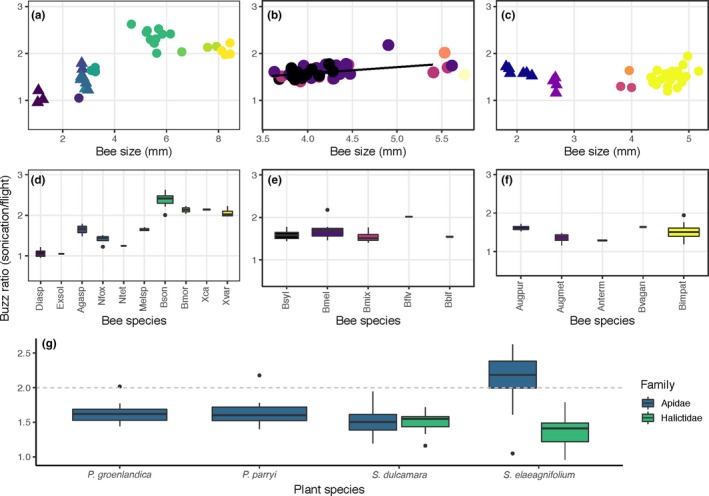
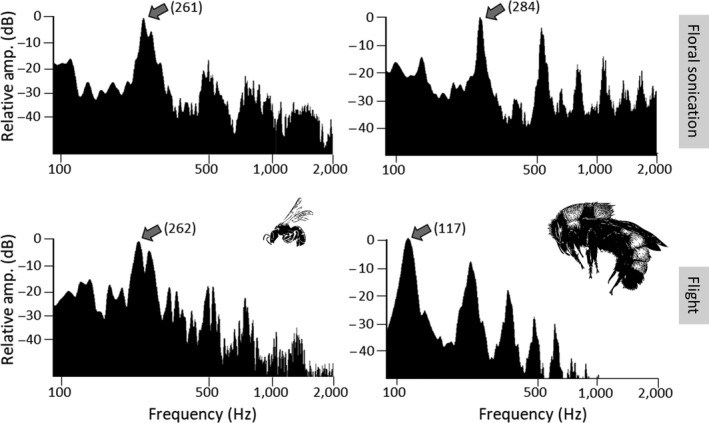
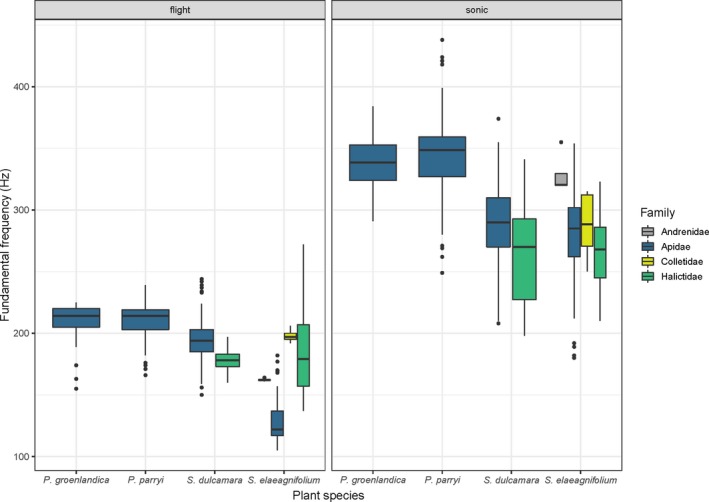
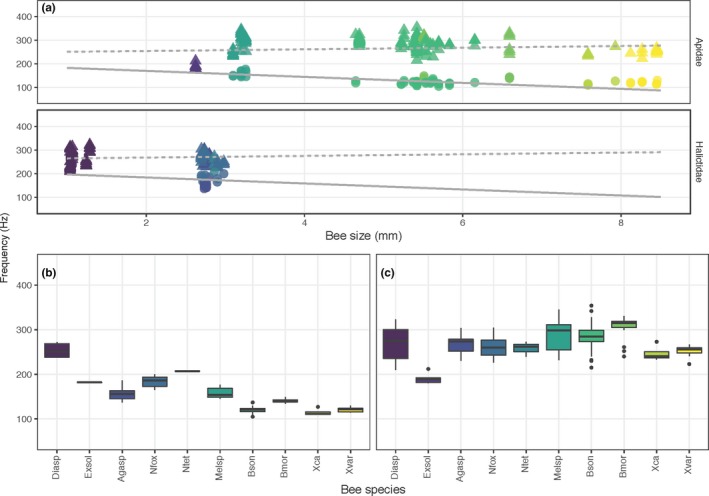
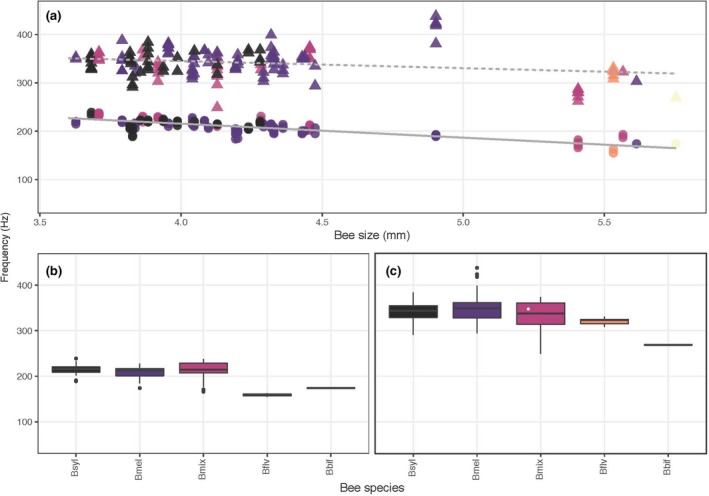
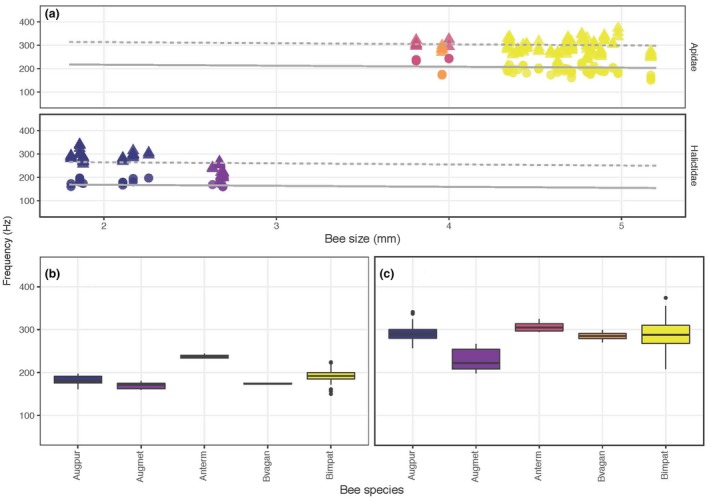
Body size is an important trait linking pollinators and plants. Morphological matching between pollinators and plants is thought to reinforce pollinator fidelity, as the correct fit ensures that both parties benefit from the interaction. We investigated the influence of body size in a specialized pollination system (buzz-pollination) where bees vibrate flowers to release pollen concealed within poricidal stamens. Specifically, we explored how body size influences the frequency of buzz-pollination vibrations. Body size is expected to affect frequency as a result of the physical constraints it places on the indirect flight muscles that control the production of floral vibrations. Larger insects beat their wings less rapidly than smaller-bodied insects when flying, but whether similar scaling relationships exist with floral vibrations has not been widely explored. This is important because the amount of pollen ejected is determined by the frequency of the vibration and the displacement of a bee's thorax. We conducted a field study in three ecogeographic regions (alpine, desert, grassland) and recorded flight and floral vibrations from freely foraging bees from 27 species across four families. We found that floral vibration frequencies were significantly higher than flight frequencies, but never exceeded 400 Hz. Also, only flight frequencies were negatively correlated with body size. As a bee's size increased, its buzz ratio (floral frequency/flight frequency) increased such that only the largest bees were capable of generating floral vibration frequencies that exceeded double that of their flight vibrations. These results indicate size affects the capacity of bees to raise floral vibration frequencies substantially above flight frequencies. This may put smaller bees at a competitive disadvantage because even at the maximum floral vibration frequency of 400 Hz, their inability to achieve comparable thoracic displacements as larger bees would result in generating vibrations with lower amplitudes, and thus less total pollen ejected for the same foraging effort.
体型是连接传粉者与植物的一个重要特征。传粉者与植物之间的形态匹配被认为会增强传粉者的忠诚度,因为恰当的匹配能确保双方从这种相互作用中受益。我们研究了体型在一种特殊传粉系统(震动传粉)中的影响,在这种传粉系统中,蜜蜂通过振动花朵来释放藏在具孔雄蕊内的花粉。具体而言,我们探究了体型如何影响震动传粉振动的频率。由于体型对控制花朵振动产生的间接飞行肌肉施加了物理限制,预计体型会影响频率。飞行时,体型较大的昆虫比体型较小的昆虫扇动翅膀的速度更慢,但与花朵振动是否存在类似的比例关系尚未得到广泛研究。这一点很重要,因为花粉喷出量由振动频率和蜜蜂胸部的位移决定。我们在三个生态地理区域(高山、沙漠、草原)进行了一项实地研究,并记录了来自四个科27个物种的自由觅食蜜蜂的飞行和花朵振动情况。我们发现花朵振动频率显著高于飞行频率,但从未超过400赫兹。此外,只有飞行频率与体型呈负相关。随着蜜蜂体型的增大,其震动比率(花朵频率/飞行频率)增加,以至于只有体型最大的蜜蜂能够产生超过其飞行振动频率两倍的花朵振动频率。这些结果表明,体型影响蜜蜂将花朵振动频率大幅提高到高于飞行频率的能力。这可能会使体型较小的蜜蜂处于竞争劣势,因为即使在400赫兹的最大花朵振动频率下,它们无法像体型较大的蜜蜂那样实现相当的胸部位移,这将导致产生振幅较低的振动,从而在相同的觅食努力下喷出的总花粉量更少。