Nuffield Department of Medicine, University of Oxford, Old Road Campus, Oxford, OX37FZ, UK.
Cancer Commun (Lond). 2019 Apr 29;39(1):23. doi: 10.1186/s40880-019-0369-5.
Tumor hypoxia is associated with metastasis and resistance to chemotherapy and radiotherapy. Genes involved in oxygen-sensing are clinically relevant and have significant implications for prognosis. In this study, we examined the pan-cancer prognostic significance of oxygen-sensing genes from the 2-oxoglutarate-dependent oxygenase family.
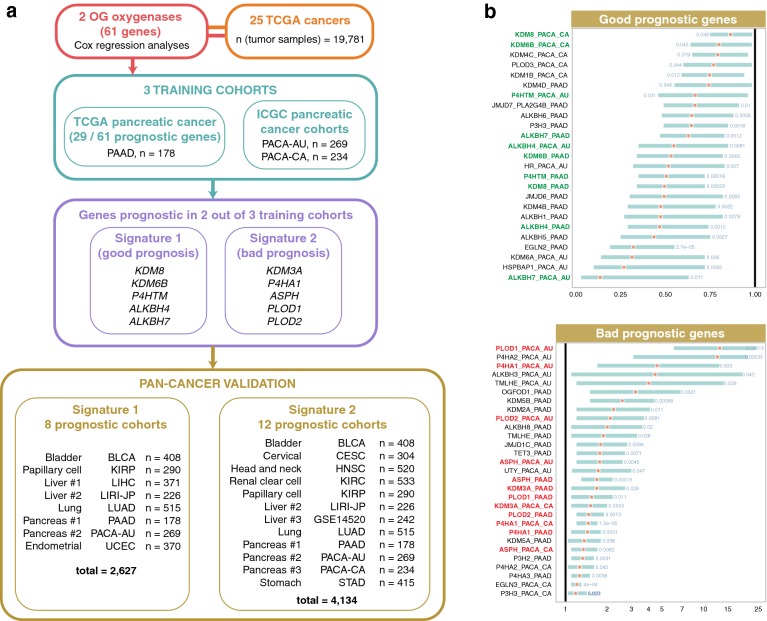
A multi-cohort, retrospective study of transcriptional profiles of 20,752 samples of 25 types of cancer was performed to identify pan-cancer prognostic signatures of 2-oxoglutarate-dependent oxygenase gene family (a family of oxygen-dependent enzymes consisting of 61 genes). We defined minimal prognostic gene sets using three independent pancreatic cancer cohorts (n = 681). We identified two signatures, each consisting of 5 genes. The ability of the signatures in predicting survival was tested using Cox regression and receiver operating characteristic (ROC) curve analyses.
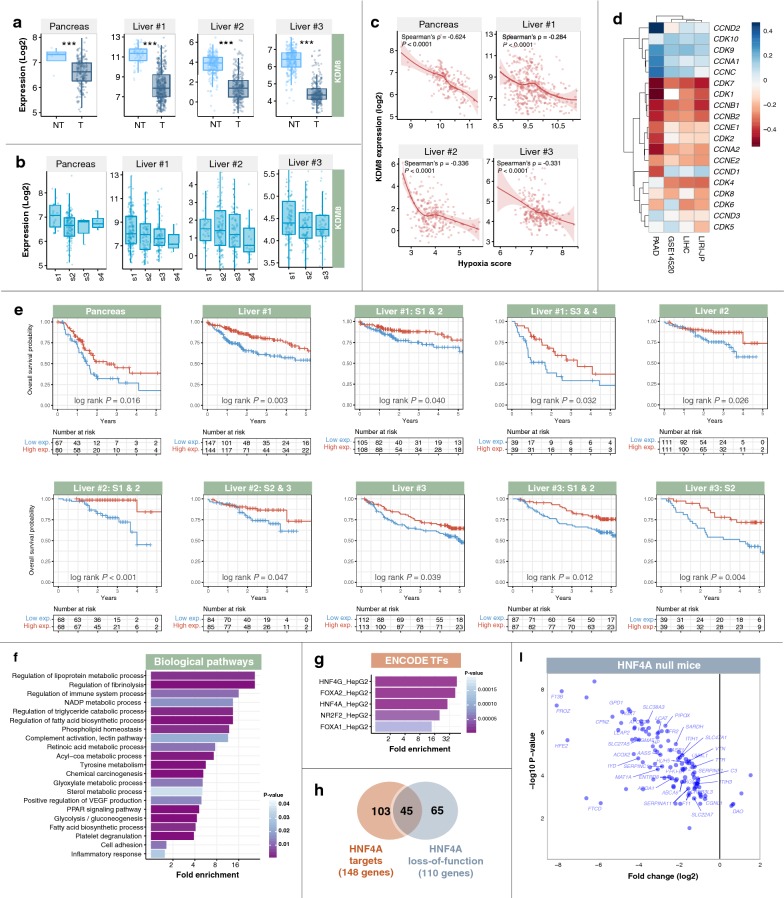
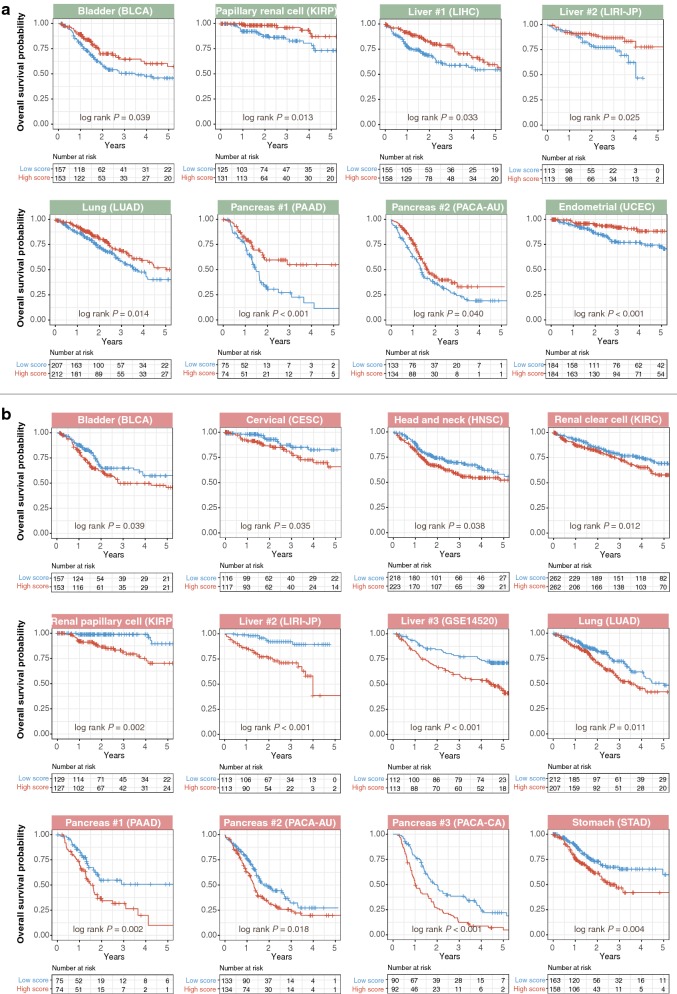
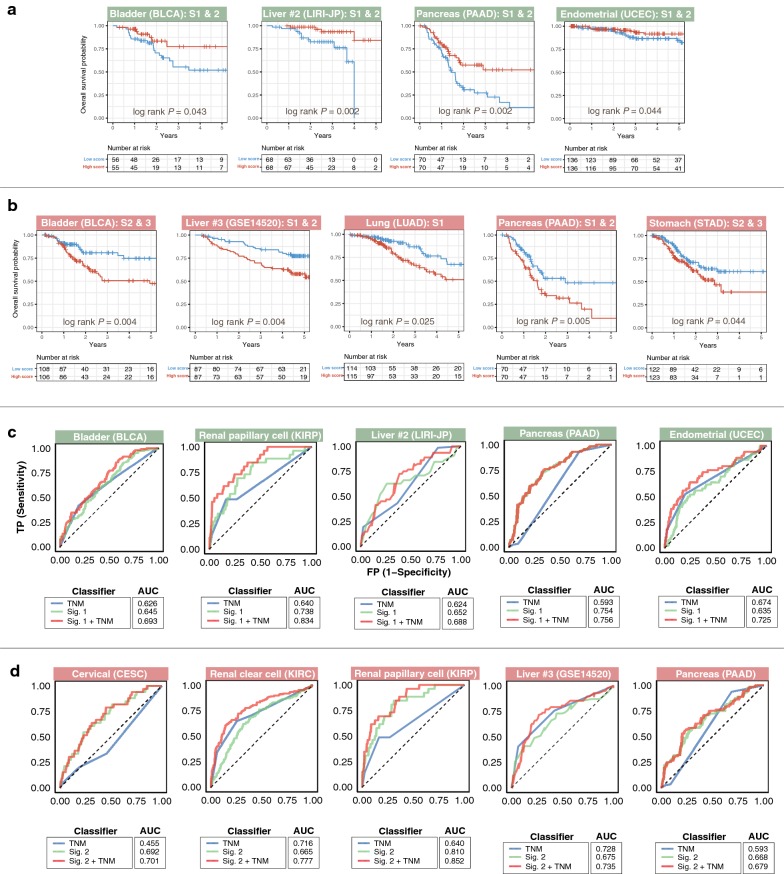
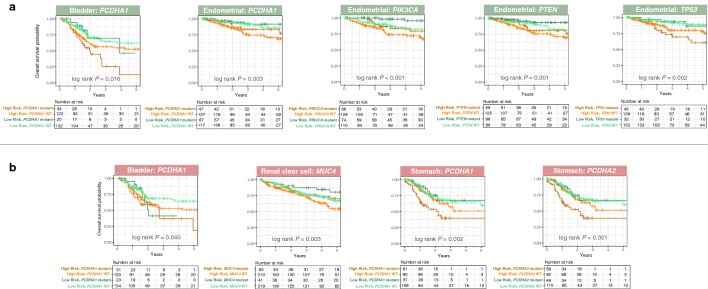
Signature 1 (KDM8, KDM6B, P4HTM, ALKBH4, ALKBH7) and signature 2 (KDM3A, P4HA1, ASPH, PLOD1, PLOD2) were associated with good and poor prognosis. Signature 1 was prognostic in 8 cohorts representing 6 cancer types (n = 2627): bladder urothelial carcinoma (P = 0.039), renal papillary cell carcinoma (P = 0.013), liver cancer (P = 0.033 and P = 0.025), lung adenocarcinoma (P = 0.014), pancreatic adenocarcinoma (P < 0.001 and P = 0.040), and uterine corpus endometrial carcinoma (P < 0.001). Signature 2 was prognostic in 12 cohorts representing 9 cancer types (n = 4134): bladder urothelial carcinoma (P = 0.039), cervical squamous cell carcinoma and endocervical adenocarcinoma (P = 0.035), head and neck squamous cell carcinoma (P = 0.038), renal clear cell carcinoma (P = 0.012), renal papillary cell carcinoma (P = 0.002), liver cancer (P < 0.001, P < 0.001), lung adenocarcinoma (P = 0.011), pancreatic adenocarcinoma (P = 0.002, P = 0.018, P < 0.001), and gastric adenocarcinoma (P = 0.004). Multivariate Cox regression confirmed independent clinical relevance of the signatures in these cancers. ROC curve analyses confirmed superior performance of the signatures to current tumor staging benchmarks. KDM8 was a potential tumor suppressor down-regulated in liver and pancreatic cancers and an independent prognostic factor. KDM8 expression was negatively correlated with that of cell cycle regulators. Low KDM8 expression in tumors was associated with loss of cell adhesion phenotype through HNF4A signaling.
Two pan-cancer prognostic signatures of oxygen-sensing genes were identified. These genes can be used for risk stratification in ten diverse cancer types to reveal aggressive tumor subtypes.
肿瘤缺氧与转移和化疗、放疗耐药有关。参与氧感应的基因具有临床相关性,对预后有重要影响。在这项研究中,我们研究了依赖 2-氧戊二酸的加氧酶家族中的氧感应基因在泛癌中的预后意义。
对 25 种癌症的 20752 个样本的转录谱进行了多队列回顾性研究,以确定依赖 2-氧戊二酸的加氧酶家族(由 61 个基因组成的一组依赖氧的酶)的泛癌预后特征。我们使用三个独立的胰腺癌队列(n=681)定义了最小预后基因集。我们确定了两个特征,每个特征由 5 个基因组成。使用 Cox 回归和接收器操作特征(ROC)曲线分析来测试特征在预测生存方面的能力。
特征 1(KDM8、KDM6B、P4HTM、ALKBH4、ALKBH7)和特征 2(KDM3A、P4HA1、ASPH、PLOD1、PLOD2)与良好和不良预后相关。特征 1 在代表 6 种癌症类型的 8 个队列中具有预后意义(n=2627):膀胱癌(P=0.039)、肾乳头细胞癌(P=0.013)、肝癌(P=0.033 和 P=0.025)、肺腺癌(P=0.014)、胰腺腺癌(P<0.001 和 P=0.040)和子宫体子宫内膜癌(P<0.001)。特征 2 在代表 9 种癌症类型的 12 个队列中具有预后意义(n=4134):膀胱癌(P=0.039)、宫颈鳞状细胞癌和宫颈内膜腺癌(P=0.035)、头颈部鳞状细胞癌(P=0.038)、肾透明细胞癌(P=0.012)、肾乳头细胞癌(P=0.002)、肝癌(P<0.001,P<0.001)、肺腺癌(P=0.011)、胰腺腺癌(P=0.002、P=0.018、P<0.001)和胃腺癌(P=0.004)。多变量 Cox 回归证实了这些癌症中签名的独立临床相关性。ROC 曲线分析证实了签名优于当前的肿瘤分期基准。KDM8 是一种潜在的肿瘤抑制因子,在肝癌和胰腺癌中下调,是一个独立的预后因素。KDM8 的表达与细胞周期调节剂的表达呈负相关。肿瘤中低水平的 KDM8 表达通过 HNF4A 信号导致细胞粘附表型丧失。
鉴定了两个泛癌预后的氧感应基因签名。这些基因可用于十种不同癌症类型的风险分层,以揭示侵袭性肿瘤亚型。