Team Host-Pathogen Interactions and Immunity to Infection, Institute for Advanced Biosciences, INSERM U1209, CNRS UMR5309, Université Grenoble Alpes, Grenoble, France.
Université Grenoble Alpes, CEA, INSERM, Grenoble, France.
Nat Microbiol. 2019 Jul;4(7):1208-1220. doi: 10.1038/s41564-019-0431-8. Epub 2019 Apr 29.
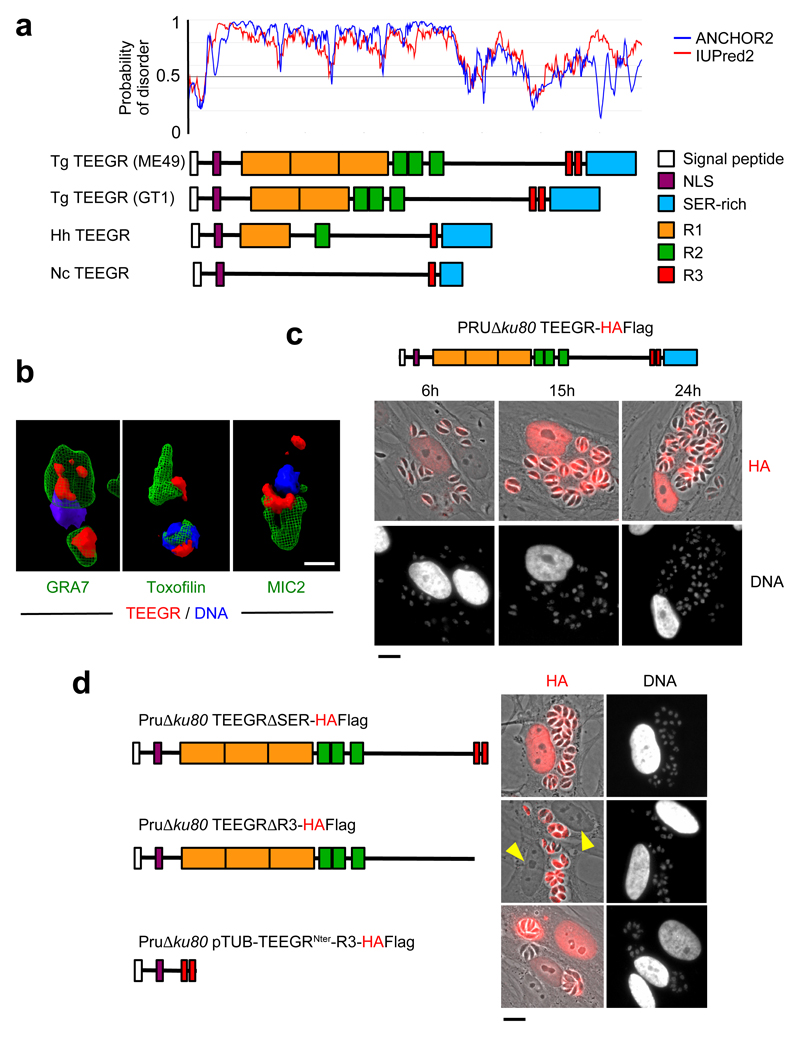
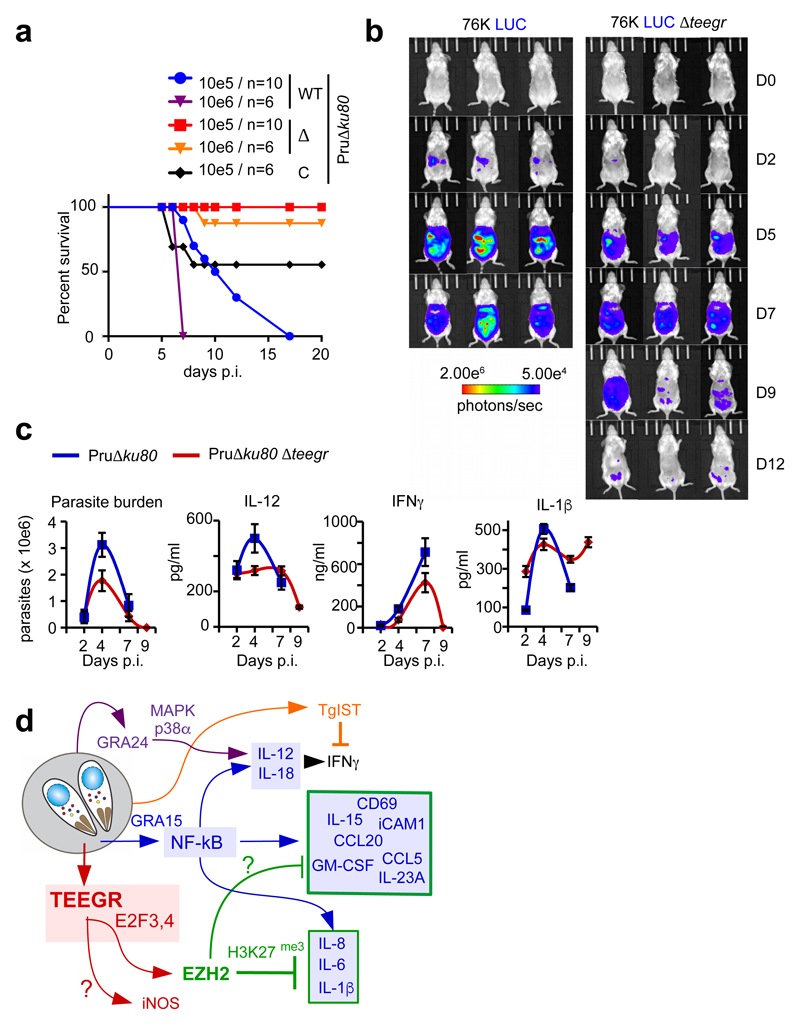
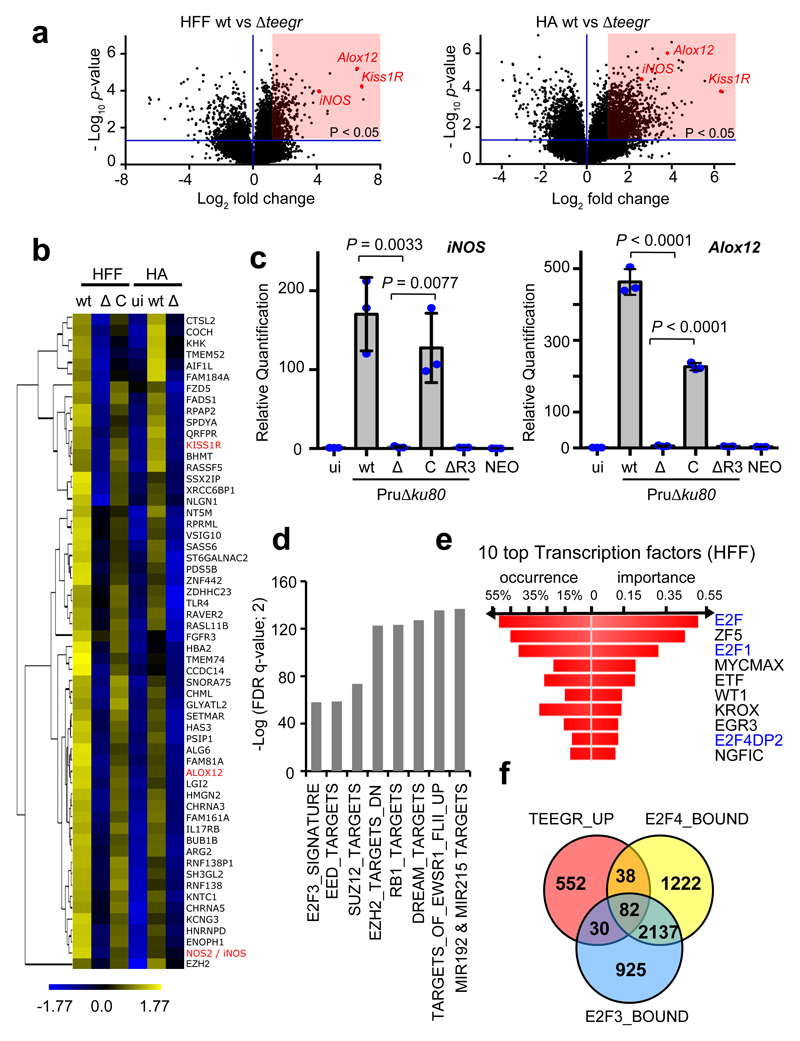
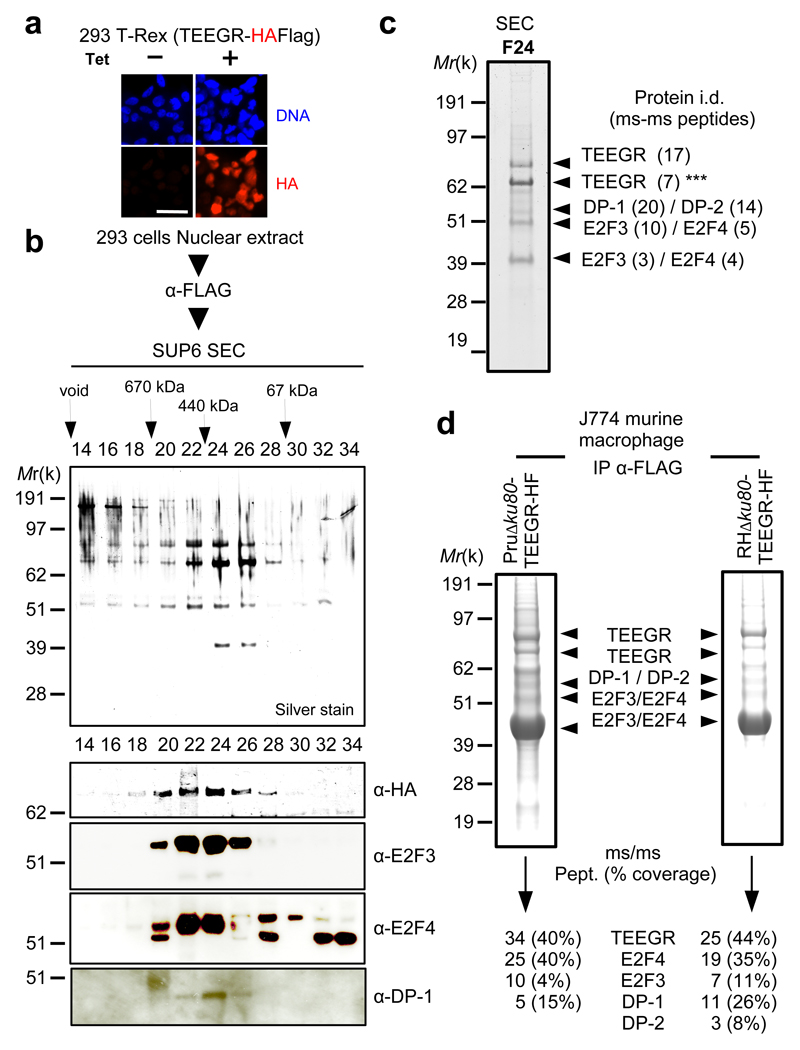
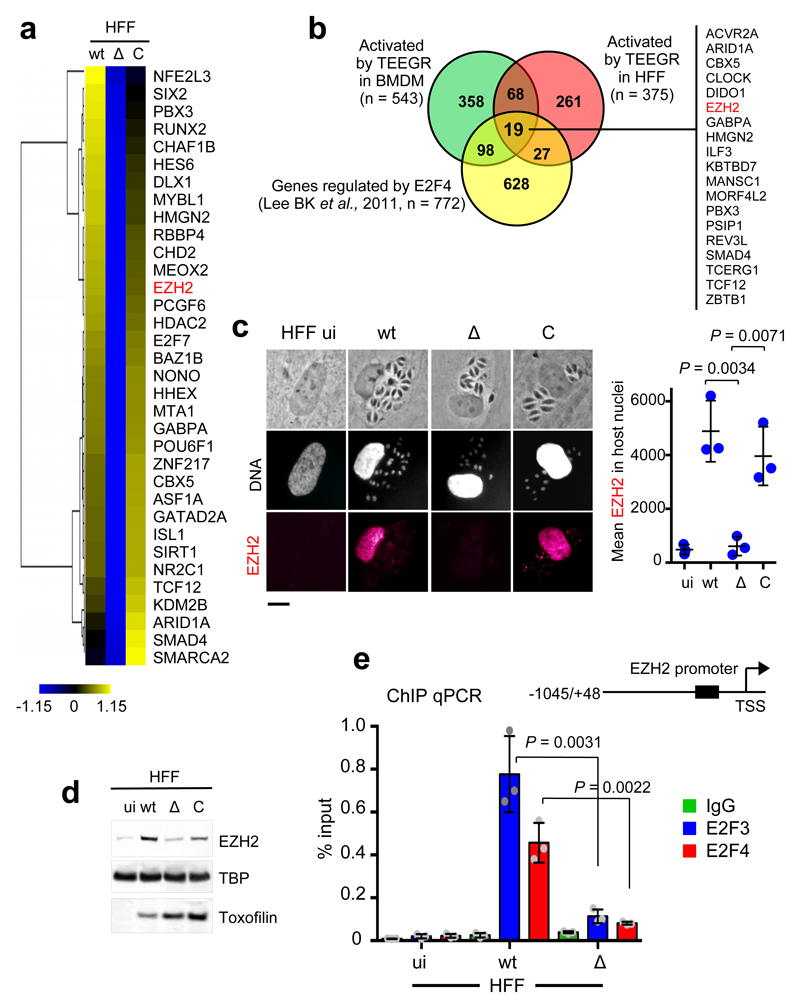
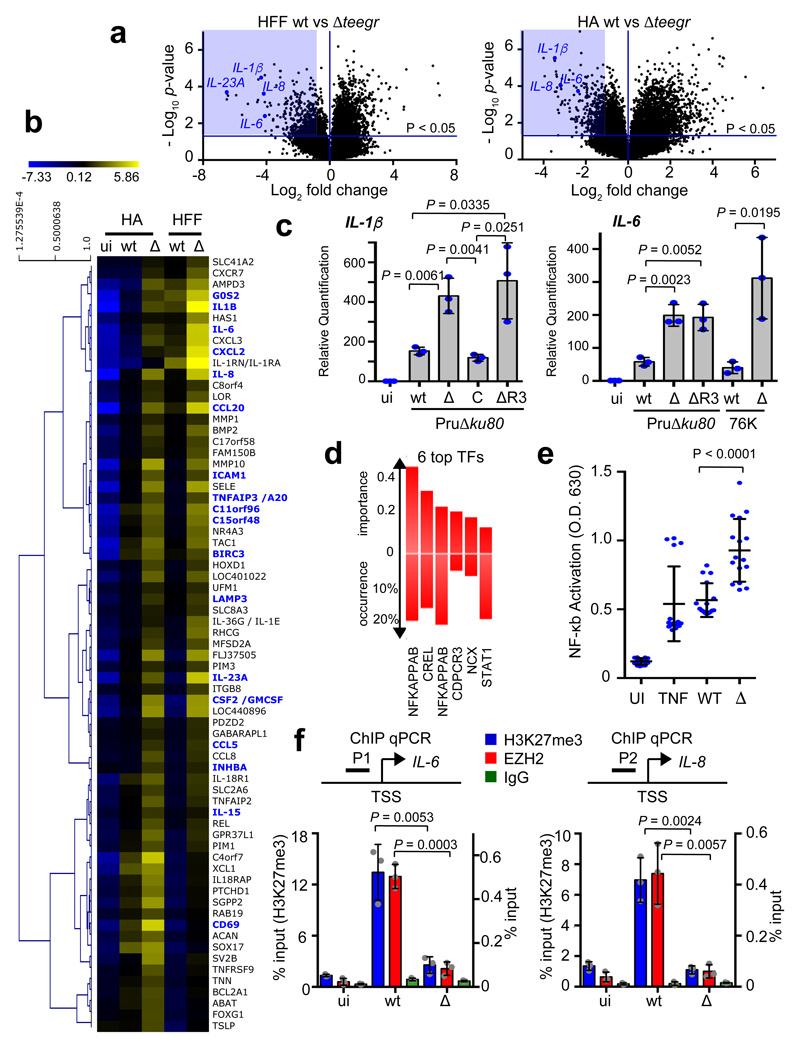
The protozoan parasite Toxoplasma gondii has co-evolved with its homeothermic hosts (humans included) strategies that drive its quasi-asymptomatic persistence in hosts, hence optimizing the chance of transmission to new hosts. Persistence, which starts with a small subset of parasites that escape host immune killing and colonize the so-called immune privileged tissues where they differentiate into a low replicating stage, is driven by the interleukin 12 (IL-12)-interferon-γ (IFN-γ) axis. Recent characterization of a family of Toxoplasma effectors that are delivered into the host cell, in which they rewire the host cell gene expression, has allowed the identification of regulators of the IL-12-IFN-γ axis, including repressors. We now report on the dense granule-resident effector, called TEEGR (Toxoplasma E2F4-associated EZH2-inducing gene regulator) that counteracts the nuclear factor-κB (NF-κB) signalling pathway. Once exported into the host cell, TEEGR ends up in the nucleus where it not only complexes with the E2F3 and E2F4 host transcription factors to induce gene expression, but also promotes shaping of a non-permissive chromatin through its capacity to switch on EZH2. Remarkably, EZH2 fosters the epigenetic silencing of a subset of NF-κB-regulated cytokines, thereby strongly contributing to the host immune equilibrium that influences the host immune response and promotes parasite persistence in mice.
原生动物寄生虫刚地弓形虫与其恒温宿主(包括人类)共同进化出了一些策略,使其在宿主中近乎无症状地持续存在,从而优化了向新宿主传播的机会。寄生虫的持续存在始于一小部分逃避宿主免疫杀伤并定殖于所谓免疫特权组织的寄生虫,在这些组织中,它们分化为低复制阶段,这一过程由白细胞介素 12(IL-12)-干扰素-γ(IFN-γ)轴驱动。最近对刚地弓形虫效应物家族的特征进行了描述,这些效应物被输送到宿主细胞中,重新编程宿主细胞的基因表达,从而鉴定出 IL-12-IFN-γ 轴的调节剂,包括抑制剂。我们现在报告一种致密颗粒驻留效应物,称为 TEEGR(弓形虫 E2F4 相关 EZH2 诱导基因调节剂),它可以拮抗核因子-κB(NF-κB)信号通路。一旦被运送到宿主细胞,TEEGR 最终进入细胞核,在那里它不仅与 E2F3 和 E2F4 宿主转录因子结合诱导基因表达,而且通过激活 EZH2 促进非许可性染色质的形成。值得注意的是,EZH2 促进了一组 NF-κB 调节细胞因子的表观遗传沉默,从而强烈影响宿主免疫平衡,影响宿主免疫反应并促进寄生虫在小鼠中的持续存在。