Alonso J C, Lüder G, Trautner T A
EMBO J. 1986 Dec 20;5(13):3723-8. doi: 10.1002/j.1460-2075.1986.tb04706.x.
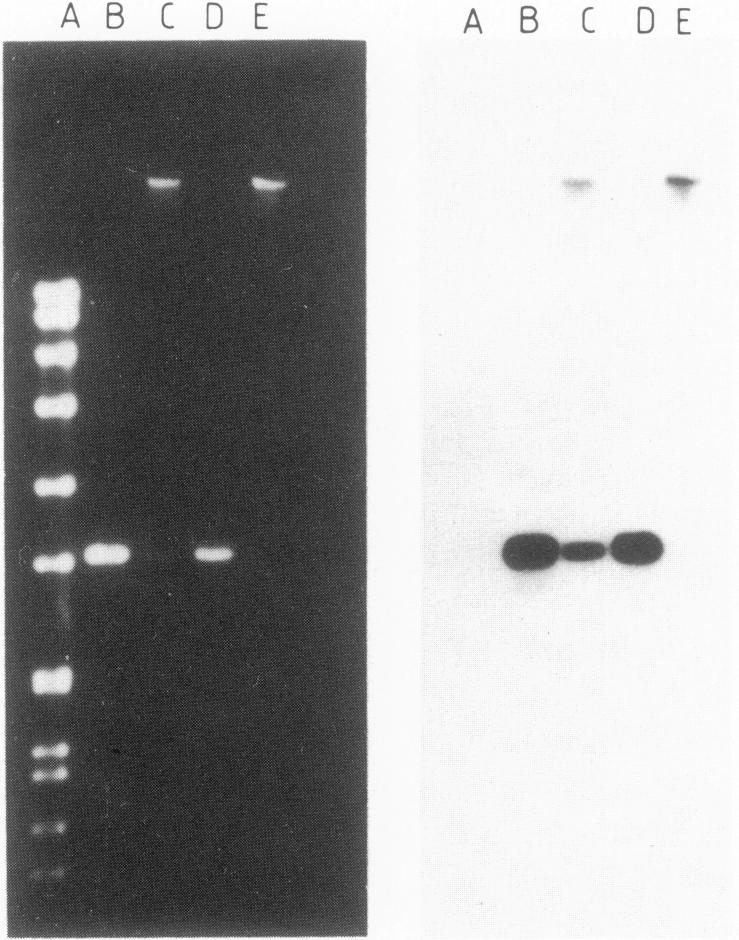
We had previously proposed that the production of concatemeric plasmid DNA in plasmid-transducing SPP1 particles is a consequence of phage-directed rolling-circle-type replication of plasmid DNA. The production of such DNA was greatly enhanced when DNA/DNA homology was provided between phage and plasmid DNAs (facilitation of transduction). Here we present evidence that synthesis of concatemeric plasmid DNA can proceed after phage infection under conditions non-permissive for plasmid replication. We also propose that the naturally occurring homology between plasmid and phage is sufficient to account for the frequency of transduction observed in the absence of facilitating homology. Homology of greater than 47 bp gives the maximal facilitation of plasmid transduction. Recombination is not an essential part in the synthesis of concatemeric plasmid DNA.
我们之前曾提出,在质粒转导的SPP1颗粒中串联质粒DNA的产生是噬菌体指导的质粒DNA滚环型复制的结果。当噬菌体和质粒DNA之间存在DNA/DNA同源性时(转导促进),这种DNA的产生会大大增强。在此我们提供证据表明,在不允许质粒复制的条件下,噬菌体感染后串联质粒DNA的合成仍可进行。我们还提出,质粒和噬菌体之间天然存在的同源性足以解释在不存在促进同源性的情况下观察到的转导频率。大于47 bp的同源性可最大程度地促进质粒转导。重组不是串联质粒DNA合成的必要部分。