Institute of Modern Physics, Chinese Academy of Sciences, Key Laboratory of Heavy Ion Radiation Biology and Medicine of Chinese Academy of Sciences, Key Laboratory of Basic Research on Heavy Ion Radiation Application in Medicine, Gansu Province, Lanzhou 730000, China,
University of Chinese Academy of Sciences, Beijing 100049, China.
Int J Nanomedicine. 2019 Apr 5;14:2415-2431. doi: 10.2147/IJN.S193676. eCollection 2019.
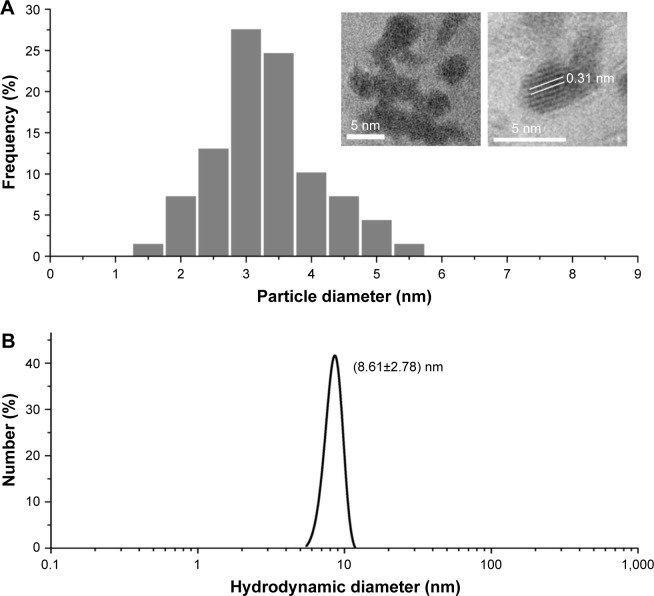
Gadolinium-based nanoparticles (GdNPs) have been used as theranostic sensitizers in clinical radiotherapy studies; however, the biomechanisms underlying the radio-sensitizing effects of GdNPs have yet to be determined. In this study, ultra-small gadolinium oxide nanocrystals (GONs) were employed to investigate their radiosensitizing effects and biological mechanisms in non-small-cell lung cancer (NSCLC) cells under X-ray irradiation.
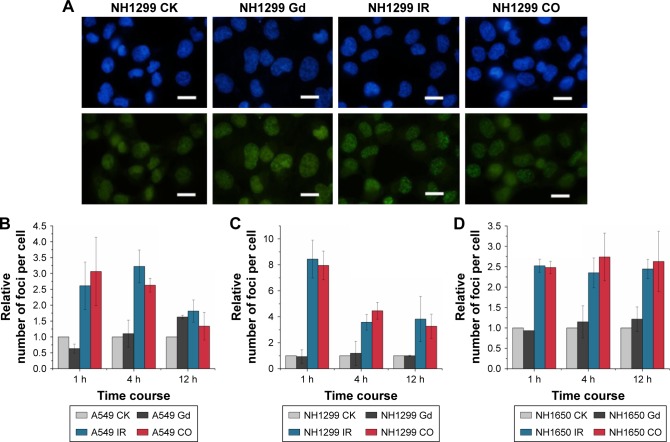
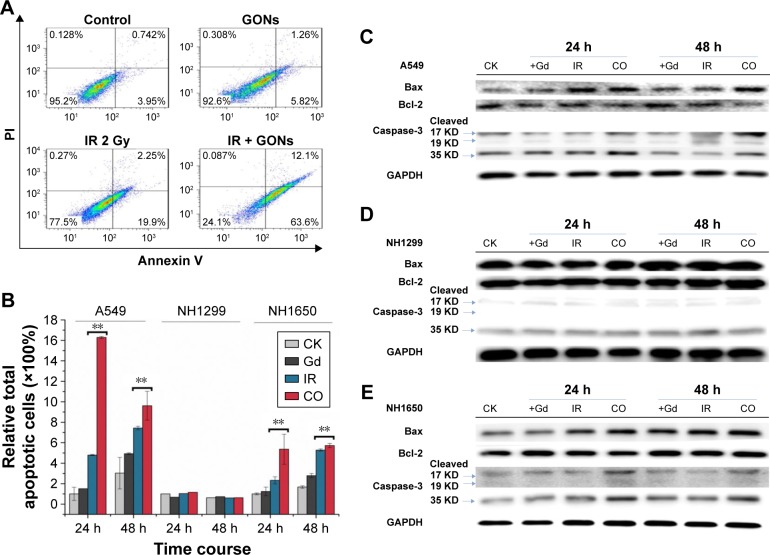
GONs were synthesized using polyol method. Hydroxyl radical production, oxidative stress, and clonogenic survival after X-ray irradiation were used to evaluate the radiosensitizing effects of GONs. DNA double-strand breakage, cell cycle phase, and apoptosis and autophagy incidences were investigated in vitro to determine the radiosensitizing biomechanism of GONs under X-ray irradiation.
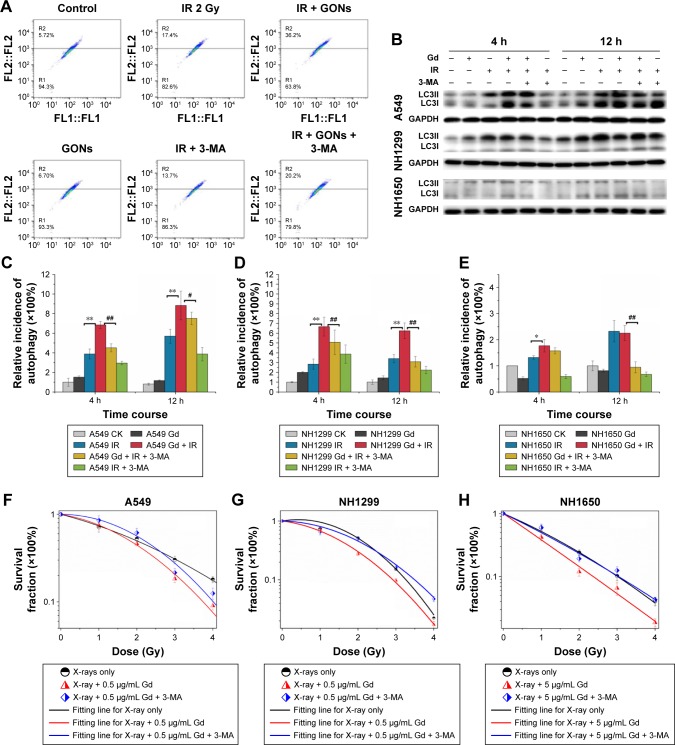
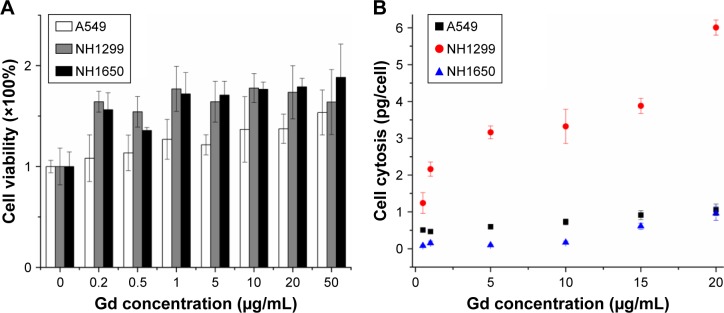
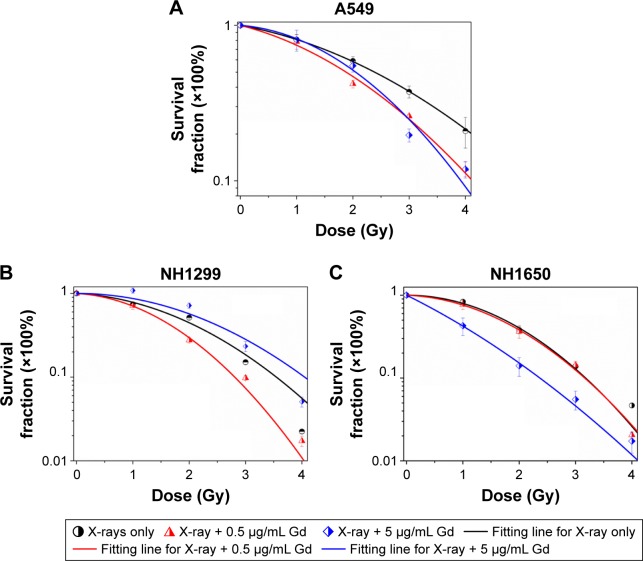
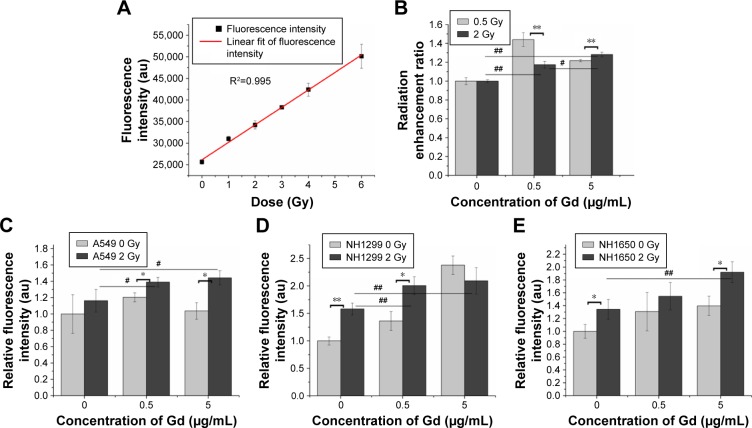
GONs induced hydroxyl radical production and oxidative stress in a dose- and concentration-dependent manner in NSCLC cells after X-ray irradiation. The sensitizer enhancement ratios of GONs ranged between 19.3% and 26.3% for the NSCLC cells under investigation with a 10% survival rate compared with that of the cells treated with irradiation alone. Addition of 3-methyladenine to the cell medium decreased the incidence rate of autophagy and increased cell survival, supporting the idea that the GONs promoted cytostatic autophagy in NSCLC cells under X-ray irradiation.
This study examined the biological mechanisms underlying the radiosensitizing effects of GONs on NSCLC cells and presented the first evidence for the radiosensitizing effects of GONs via activation of cytostatic autophagy pathway following X-ray irradiation.
钆基纳米粒子(GdNPs)已被用作临床放射治疗研究中的治疗性敏化剂;然而,GdNPs 放射增敏作用的生物力学机制尚未确定。在这项研究中,采用超小氧化钆纳米晶(GONs)来研究其在 X 射线照射下对非小细胞肺癌(NSCLC)细胞的放射增敏作用及其生物学机制。
采用多元醇法合成 GONs。采用羟自由基生成、氧化应激和 X 射线照射后集落形成存活能力来评估 GONs 的放射增敏作用。体外研究 DNA 双链断裂、细胞周期相和细胞凋亡与自噬发生率,以确定 GONs 在 X 射线照射下的放射增敏生物力学机制。
GONs 在 X 射线照射后,以剂量和浓度依赖的方式诱导 NSCLC 细胞中羟自由基生成和氧化应激。与单独照射组相比,在研究的 NSCLC 细胞中,GONs 的敏化增强比为 19.3%至 26.3%,当细胞存活率为 10%时。在细胞培养基中添加 3-甲基腺嘌呤可降低自噬发生率并增加细胞存活率,这支持了 GONs 在 X 射线照射下促进 NSCLC 细胞细胞静止自噬的观点。
本研究探讨了 GONs 对 NSCLC 细胞放射增敏作用的生物学机制,并首次提出了 GONs 通过 X 射线照射后激活细胞静止自噬途径发挥放射增敏作用的证据。