Sachs Julia, Döhl Katja, Weber Anja, Bonus Michele, Ehlers Ferdinand, Fleischer Edmond, Klinger Anette, Gohlke Holger, Pietruszka Jörg, Schmitt Lutz, Teusch Nicole
Bio-Pharmaceutical Chemistry and Molecular Pharmacology, Faculty of Applied Natural Sciences, Technische Hochschule Köln, Leverkusen, Germany.
Institute of Biochemistry, Heinrich-Heine-Universität Düsseldorf, Düsseldorf, Germany.
Front Pharmacol. 2019 Apr 16;10:400. doi: 10.3389/fphar.2019.00400. eCollection 2019.
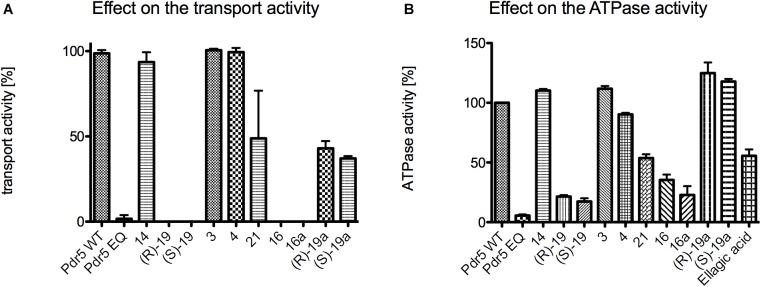
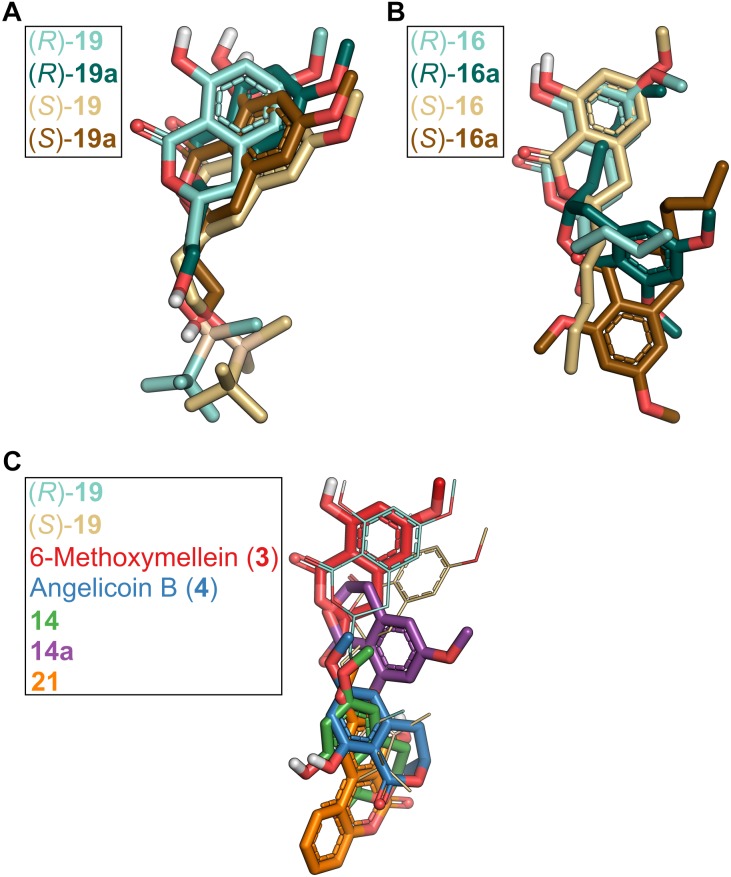
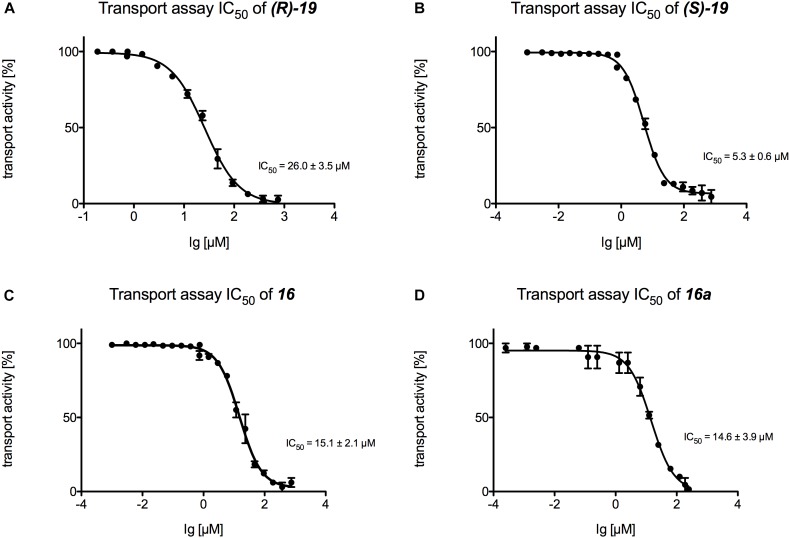
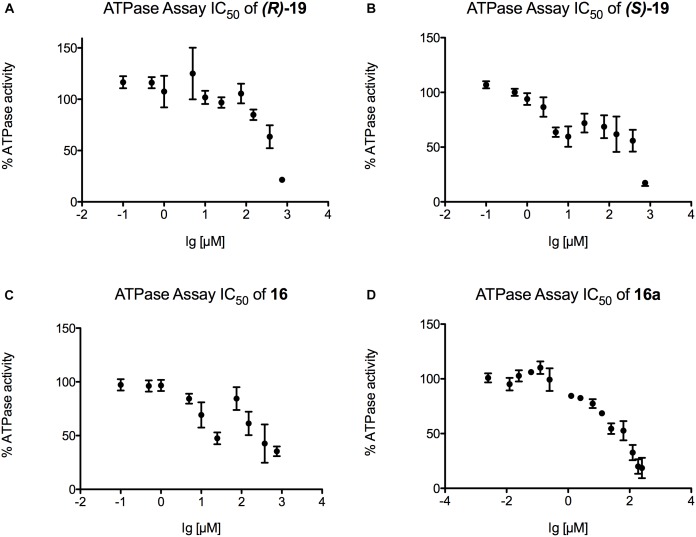
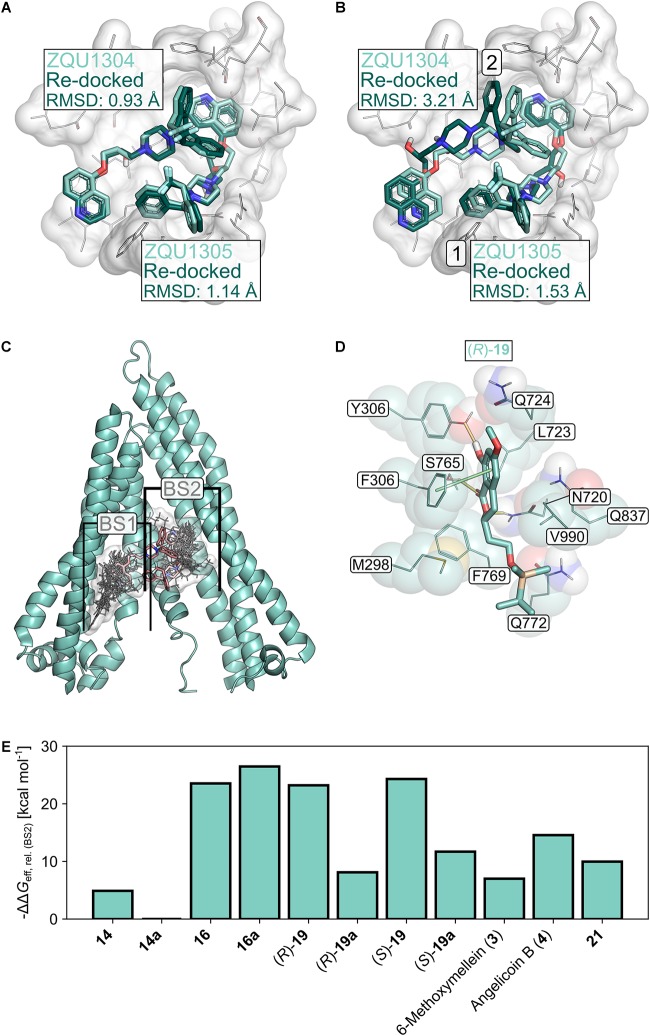
Multidrug resistance (MDR) in tumors and pathogens remains a major problem in the efficacious treatment of patients by reduction of therapy options and subsequent treatment failure. Various mechanisms are described to be involved in the development of MDR with overexpression of ATP-binding cassette (ABC) transporters reflecting the most extensively studied. These membrane transporters translocate a wide variety of substrates utilizing energy from ATP hydrolysis leading to decreased intracellular drug accumulation and impaired drug efficacy. One treatment strategy might be inhibition of transporter-mediated efflux by small molecules. Isocoumarins and 3,4-dihydroisocoumarins are a large group of natural products derived from various sources with great structural and functional variety, but have so far not been in the focus as potential MDR reversing agents. Thus, three natural products and nine novel 3,4-dihydroisocoumarins were designed and analyzed regarding cytotoxicity induction and inhibition of human ABC transporters P-glycoprotein (P-gp), multidrug resistance-associated protein 1 (MRP1) and breast cancer resistance protein (BCRP) in a variety of human cancer cell lines as well as the yeast ABC transporter Pdr5 in . Dual inhibitors of P-gp and BCRP and inhibitors of Pdr5 were identified, and distinct structure-activity relationships for transporter inhibition were revealed. The strongest inhibitor of P-gp and BCRP, which inhibited the transporters up to 80 to 90% compared to the respective positive controls, demonstrated the ability to reverse chemotherapy resistance in resistant cancer cell lines up to 5.6-fold. In the case of Pdr5, inhibitors were identified that prevented substrate transport and/or ATPase activity with IC values in the low micromolar range. However, cell toxicity was not observed. Molecular docking of the test compounds to P-gp revealed that differences in inhibition capacity were based on different binding affinities to the transporter. Thus, these small molecules provide novel lead structures for further optimization.
肿瘤和病原体中的多药耐药性(MDR)仍然是有效治疗患者的主要问题,因为它会减少治疗选择并导致后续治疗失败。多种机制被认为与MDR的发生有关,其中ATP结合盒(ABC)转运蛋白的过表达是研究最为广泛的。这些膜转运蛋白利用ATP水解产生的能量转运多种底物,导致细胞内药物积累减少和药物疗效受损。一种治疗策略可能是通过小分子抑制转运蛋白介导的外排。异香豆素和3,4-二氢异香豆素是一大类源自各种来源的天然产物,具有极大的结构和功能多样性,但迄今为止尚未成为潜在的MDR逆转剂的研究重点。因此,设计并分析了三种天然产物和九种新型3,4-二氢异香豆素在多种人类癌细胞系中诱导细胞毒性以及抑制人类ABC转运蛋白P-糖蛋白(P-gp)、多药耐药相关蛋白1(MRP1)和乳腺癌耐药蛋白(BCRP)的能力,以及在酿酒酵母中对ABC转运蛋白Pdr5的抑制能力。鉴定出了P-gp和BCRP的双重抑制剂以及Pdr5的抑制剂,并揭示了转运蛋白抑制的明显构效关系。最强的P-gp和BCRP抑制剂与各自的阳性对照相比,对转运蛋白的抑制率高达80%至90%,显示出在耐药癌细胞系中逆转化疗耐药性高达5.6倍的能力。对于Pdr5,鉴定出了能够阻止底物转运和/或ATP酶活性的抑制剂,其IC值在低微摩尔范围内。然而,未观察到细胞毒性。测试化合物与P-gp的分子对接表明,抑制能力的差异基于对转运蛋白的不同结合亲和力。因此,这些小分子为进一步优化提供了新的先导结构。