Jenner Institute, University of Oxford, Roosevelt Drive, Oxford OX3 7BN, UK.
Clinical Biomanufacturing Facility, University of Oxford, Roosevelt Drive, Oxford OX3 7JT, UK.
Vaccine. 2019 Nov 8;37(47):6951-6961. doi: 10.1016/j.vaccine.2019.04.056. Epub 2019 Apr 30.
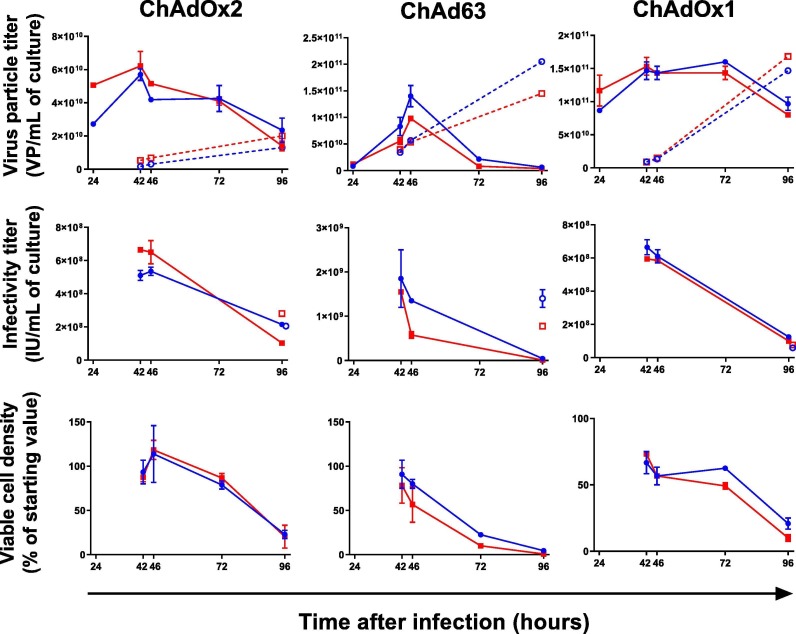
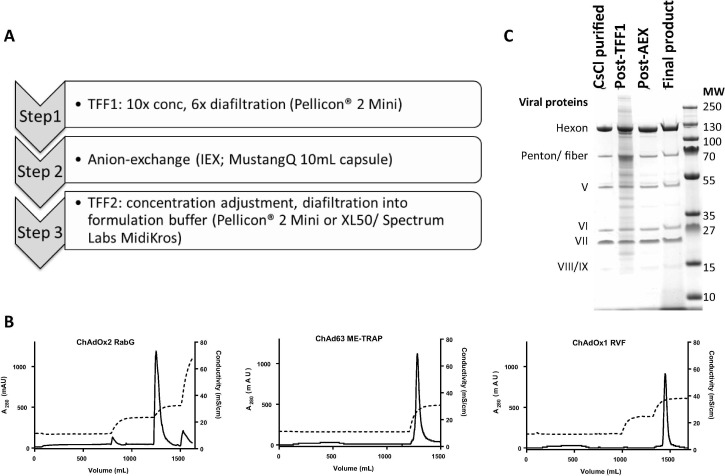
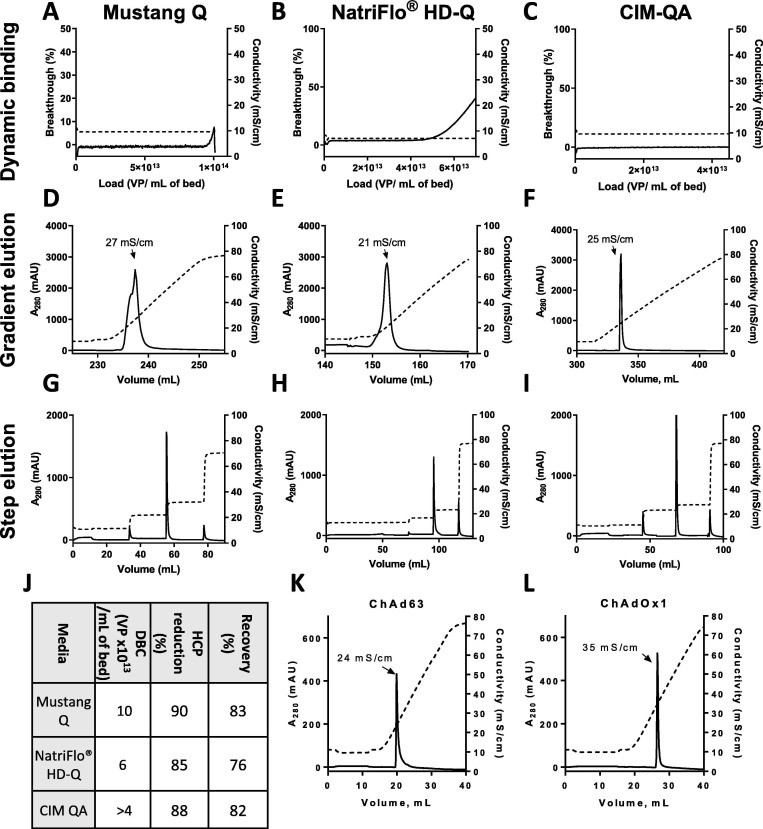
A variety of Good Manufacturing Practice (GMP) compliant processes have been reported for production of non-replicating adenovirus vectors, but important challenges remain. Most clinical development of adenovirus vectors now uses simian adenoviruses or rare human serotypes, whereas reported manufacturing processes mainly use serotypes such as AdHu5 which are of questionable relevance for clinical vaccine development. Many clinically relevant vaccine transgenes interfere with adenovirus replication, whereas most reported process development uses selected antigens or even model transgenes such as fluorescent proteins which cause little such interference. Processes are typically developed for a single adenovirus serotype - transgene combination, requiring extensive further optimization for each new vaccine. There is a need for rapid production platforms for small GMP batches of non-replicating adenovirus vectors for early-phase vaccine trials, particularly in preparation for response to emerging pathogen outbreaks. Such platforms must be robust to variation in the transgene, and ideally also capable of producing adenoviruses of more than one serotype. It is also highly desirable for such processes to be readily implemented in new facilities using commercially available single-use materials, avoiding the need for development of bespoke tools or cleaning validation, and for them to be readily scalable for later-stage studies. Here we report the development of such a process, using single-use stirred-tank bioreactors, a transgene-repressing HEK293 cell - promoter combination, and fully single-use filtration and ion exchange components. We demonstrate applicability of the process to candidate vaccines against rabies, malaria and Rift Valley fever, each based on a different adenovirus serotype. We compare performance of a range of commercially available ion exchange media, including what we believe to be the first published use of a novel media for adenovirus purification (NatriFlo® HD-Q, Merck). We demonstrate the need for minimal process individualization for each vaccine, and that the product fulfils regulatory quality expectations. Cell-specific yields are at the upper end of those previously reported in the literature, and volumetric yields are in the range 1 × 10 - 5 × 10 purified virus particles per litre of culture, such that a 2-4 L process is comfortably adequate to produce vaccine for early-phase trials. The process is readily transferable to any GMP facility with the capability for mammalian cell culture and aseptic filling of sterile products.
已经报道了多种符合良好生产规范(GMP)的工艺,用于生产非复制型腺病毒载体,但仍存在重要挑战。目前,大多数腺病毒载体的临床开发都使用猿猴腺病毒或罕见的人类血清型,而报道的生产工艺主要使用血清型如 AdHu5,其与临床疫苗开发的相关性值得怀疑。许多临床相关的疫苗转基因会干扰腺病毒的复制,而大多数报道的工艺开发都使用选定的抗原,甚至是荧光蛋白等模型转基因,这些转基因很少会造成这种干扰。这些工艺通常是针对单一的腺病毒血清型-转基因组合开发的,因此需要对每种新疫苗进行广泛的进一步优化。对于用于早期疫苗试验的非复制型腺病毒载体的小 GMP 批次,需要快速生产平台,特别是为应对新兴病原体爆发做好准备。这种平台必须对转基因的变化具有鲁棒性,并且理想情况下还能够生产出多种血清型的腺病毒。这种工艺能够在使用商业上可获得的即用型材料的新设施中轻松实现,避免了对定制工具或清洁验证的需求,并且易于在后期研究中扩展,也是非常理想的。在这里,我们报告了一种使用一次性搅拌罐生物反应器、一种抑制转基因的 HEK293 细胞-启动子组合以及完全一次性过滤和离子交换组件的此类工艺的开发。我们证明了该工艺对狂犬病、疟疾和裂谷热候选疫苗的适用性,每种疫苗都基于不同的腺病毒血清型。我们比较了一系列市售的离子交换介质的性能,包括我们认为是首次用于腺病毒纯化的新型介质(NatriFlo® HD-Q,默克)的首次使用。我们证明了每种疫苗都需要最小的个体化处理,并且产品符合监管质量要求。细胞特异性产率处于文献报道的较高水平,体积产率范围为每升培养物 1×10 - 5×10 纯化病毒颗粒,因此 2-4L 的工艺足以生产早期试验用的疫苗。该工艺可轻松转移到任何具有哺乳动物细胞培养和无菌产品无菌灌装能力的 GMP 设施。