Department of Biochemistry, University of Colorado Boulder, Boulder, Colorado 80309, USA.
BioFrontiers Institute and Howard Hughes Medical Institute, University of Colorado Boulder, Boulder, Colorado 80309, USA.
RNA. 2019 Aug;25(8):935-947. doi: 10.1261/rna.071191.119. Epub 2019 May 2.
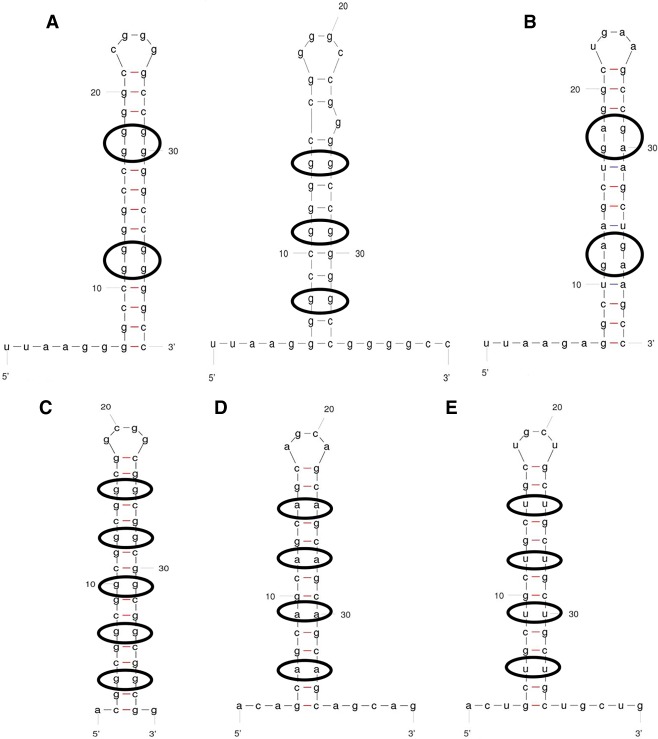
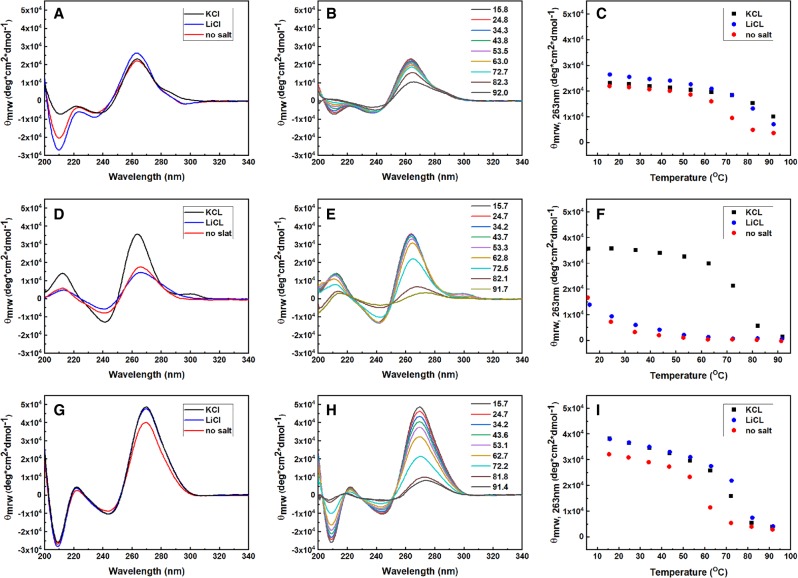
Some neurological disorders, including amyotrophic lateral sclerosis (ALS), frontotemporal dementia (FTD), fragile X syndrome, Huntington's disease, myotonic dystrophy, and various ataxias, can be caused by expansions of short nucleic acid sequence repeats in specific genes. A possible disease mechanism involves the transcribed repeat RNA binding an RNA-binding protein (RBP), resulting in its sequestration and thus dysfunction. Polycomb repressive complex 2 (PRC2), the histone methyltransferase that deposits the H3K27me3 mark of epigenetically silenced chromatin, binds G-rich RNAs and has especially high affinity for G-quadruplex (G-Q) structures. Here, we find that PRC2 target genes are derepressed and the RNA binding subunit EZH2 largely insoluble in postmortem brain samples from ALS/FTD patients with (C9) repeat expansions, leading to the hypothesis that the (GC) repeat RNA might be sequestering PRC2. Contrary to this expectation, we found that C9 repeat RNAs ( = 6 or 10) bind weakly to purified PRC2, and studies with the G-Q specific BG4 antibody and circular dichroism studies both indicated that these C9 RNAs have little propensity to form G-Qs in vitro. Several GC-rich triplet-repeat expansion RNAs also have low affinity for PRC2 and do not appreciably form G-Qs in vitro. The results are consistent with these sequences forming hairpin structures that outcompete G-Q folding when the repeat length is sufficiently large. We suggest that binding of PRC2 to these GC-rich RNAs is fundamentally weak but may be modulated in vivo by protein factors that affect secondary structure, such as helicases and other RBPs.
一些神经紊乱疾病,包括肌萎缩性侧索硬化症(ALS)、额颞叶痴呆症(FTD)、脆性 X 综合征、亨廷顿病、肌强直性营养不良症和各种共济失调症,可能是由特定基因中短核酸序列重复扩展引起的。一种可能的疾病机制涉及转录重复 RNA 与 RNA 结合蛋白(RBP)结合,导致其隔离和功能障碍。多梳抑制复合物 2(PRC2)是一种组蛋白甲基转移酶,可沉积表观遗传沉默染色质的 H3K27me3 标记,结合富含 G 的 RNA,对 G-四链体(G-Q)结构具有特别高的亲和力。在这里,我们发现 PRC2 靶基因被去抑制,并且 RNA 结合亚基 EZH2 在 ALS/FTD 患者的死后大脑样本中大部分不溶,导致(GC)重复 RNA 可能隔离 PRC2 的假说。与这一预期相反,我们发现 C9 重复 RNA(= 6 或 10)与纯化的 PRC2 结合较弱,并且使用 G-Q 特异性 BG4 抗体和圆二色性研究都表明这些 C9 RNA 体外很少形成 G-Q。几种富含 GC 的三核苷酸重复扩展 RNA 对 PRC2 的亲和力也较低,并且在体外不会明显形成 G-Q。这些结果与这些序列形成发夹结构一致,当重复长度足够大时,这些发夹结构会与 G-Q 折叠竞争。我们认为,这些富含 GC 的 RNA 与 PRC2 的结合本质上较弱,但可能在体内受到影响二级结构的蛋白质因子(如解旋酶和其他 RBP)的调节。