Department of Oral Biology, Faculty of Dentistry, Semmelweis University, Budapest, Hungary.
Institute for Translational Medicine, Medical School, University of Pécs, Pécs, Hungary.
PLoS One. 2019 May 3;14(5):e0216428. doi: 10.1371/journal.pone.0216428. eCollection 2019.
Sandblasting is one of the oldest implant surface modifications to enhance osseointegration. Regarding its superiority over machined surface controversies still exist. Our objective was to compare implant failures (IF) and marginal bone level (MBL) changes between sandblasted and machined dental implants by a meta-analysis utilizing the available data. The PROSPERO registration number of the meta-analysis is CRD42018084190.
The systematic search was performed in Cochrane, Embase and Pubmed. Inclusion criteria included participants with neither systemic diseases, nor excessive alcohol consumption, nor heavy smoking. We calculated pooled Risk Ratio (RRs) with confidence intervals of 95% (CIs) for dichotomous outcomes (implant failure) and weighted mean difference (WMD) CIs of 95% for continuous outcomes (marginal bone level change). We applied the random effect model with DerSimonian-Laird estimation. I2 and chi2 tests were used to quantify statistical heterogeneity and gain probability-values, respectively.
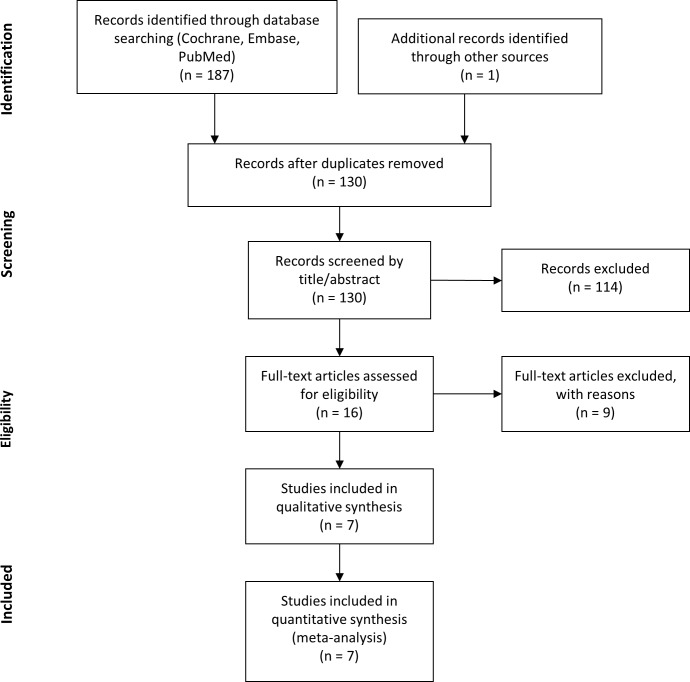
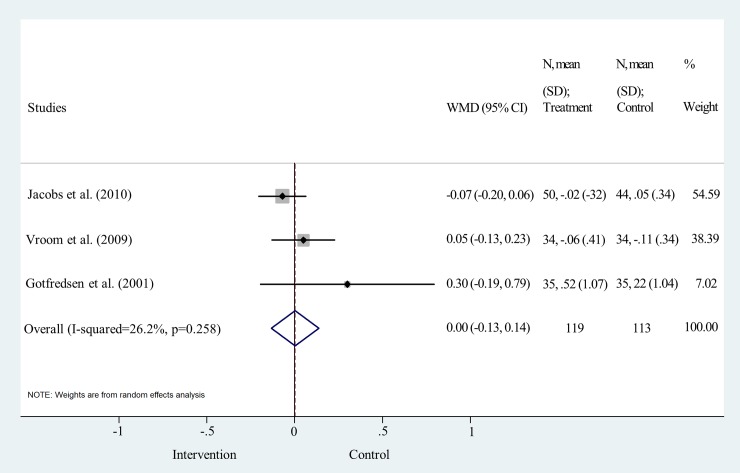
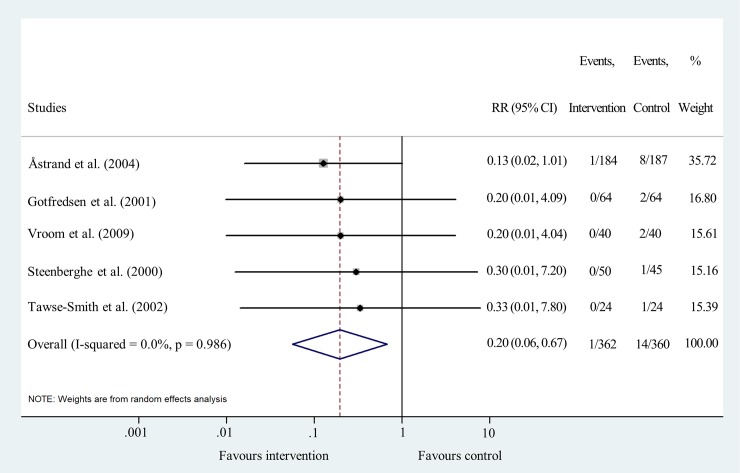
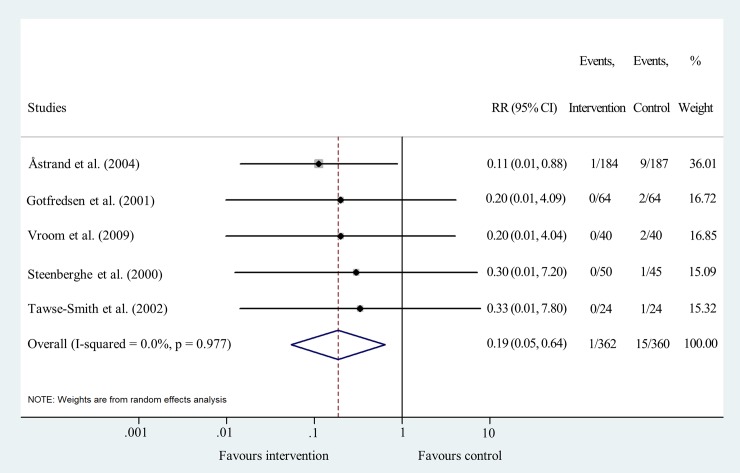
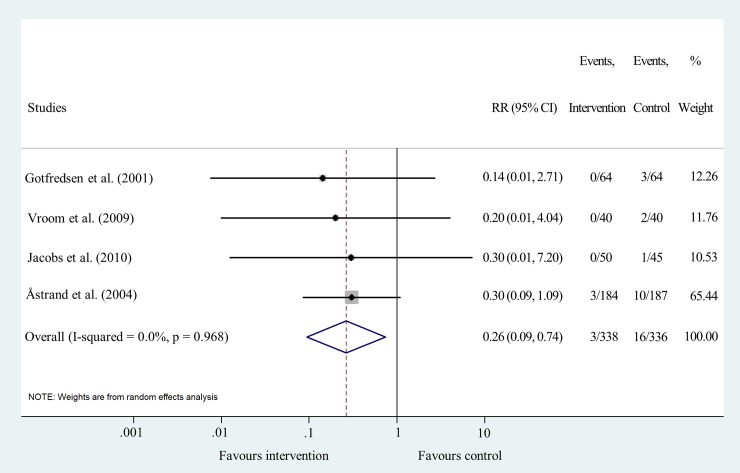
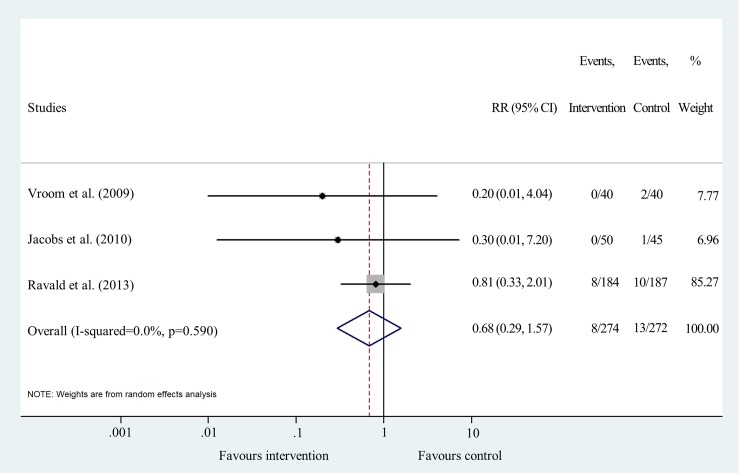
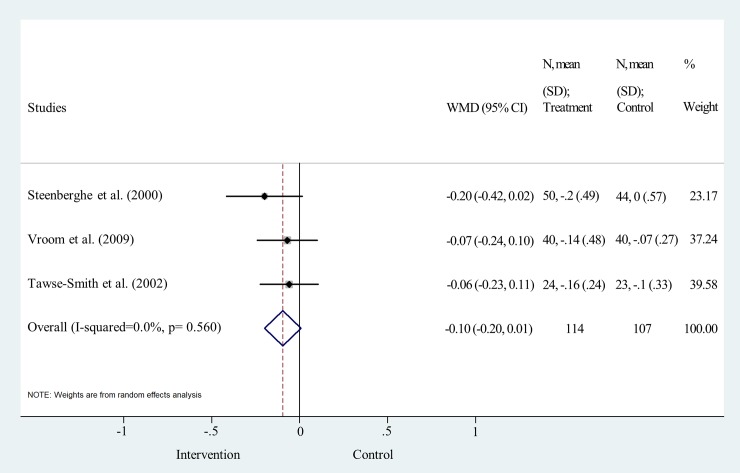
Literature search revealed 130 records without duplicates. Out of these, seven studies met the inclusion criteria and all were included in data synthesis, involving 362 sand-blasted and 360 machined implants. The results indicate that there is an 80% (RR = 0.2 95% CI:0.06-0.67; I2 = 0.0% p = 0.986) lower among sandblasted compared to machined implants after one year of use and 74% (RR = 0.26 95% CI:0.09-0.74; I2 = 0.0% p = 0.968) five years of use, respectively. In contrast, there is no significant difference in MBL (WMD:-0.10mm, 95% CI:-0.20, 0.01; p>0.05; I2 = 0.0%, p = 0.560 and WMD:-0.01mm, 95% CI:-0.12, 0.09; p>0.05; I2 = 26.2%, p = 0.258) between the two implant surfaces after one and five years of use.
This meta-analysis reveals that sandblasting is superior over machined surface in implant failure but not in marginal bone level in healthy subjects. It also points out the need for further randomized clinical trials with large sample size for objective determination of the clinical benefits of certain implant surface modifications.
喷砂处理是增强骨整合的最古老的植入物表面改性方法之一。关于其优于机械加工表面的说法仍然存在争议。我们的目的是通过利用现有数据的荟萃分析比较喷砂和机械加工牙科植入物的植入物失败(IF)和边缘骨水平(MBL)变化。荟萃分析的 PROSPERO 注册号为 CRD42018084190。
系统检索 Cochrane、Embase 和 Pubmed。纳入标准包括参与者既没有系统性疾病,也没有过度饮酒,也没有大量吸烟。我们计算了二项结局(植入物失败)的汇总风险比(RR)和 95%置信区间(CI),以及连续结局(边缘骨水平变化)的加权均数差值(WMD)和 95%CI。我们应用具有 DerSimonian-Laird 估计的随机效应模型。I2 和 chi2 检验分别用于量化统计异质性和获得概率值。
文献检索显示无重复记录 130 条。其中,7 项研究符合纳入标准,均纳入数据综合分析,共涉及 362 例喷砂和 360 例机械加工植入物。结果表明,与机械加工植入物相比,喷砂植入物在使用一年后失败的风险降低了 80%(RR=0.2,95%CI:0.06-0.67;I2=0.0%,p=0.986),在使用五年后失败的风险降低了 74%(RR=0.26,95%CI:0.09-0.74;I2=0.0%,p=0.968)。相比之下,在使用一年和五年后,两种植入物表面之间的边缘骨水平没有显著差异(WMD:-0.10mm,95%CI:-0.20,0.01;p>0.05;I2=0.0%,p=0.560 和 WMD:-0.01mm,95%CI:-0.12,0.09;p>0.05;I2=26.2%,p=0.258)。
这项荟萃分析表明,喷砂处理在植入物失败方面优于机械加工表面,但在健康受试者的边缘骨水平方面没有优势。它还指出,需要进一步进行具有大样本量的随机临床试验,以客观确定某些植入物表面改性的临床获益。