Friedl Nina K, Muensterer Oliver J
Department of Pediatric Surgery, University Medical Center of the Johannes Gutenberg University Mainz, Langenbeckstrasse 1, 55131 Mainz, Germany.
Children (Basel). 2019 Apr 30;6(5):62. doi: 10.3390/children6050062.
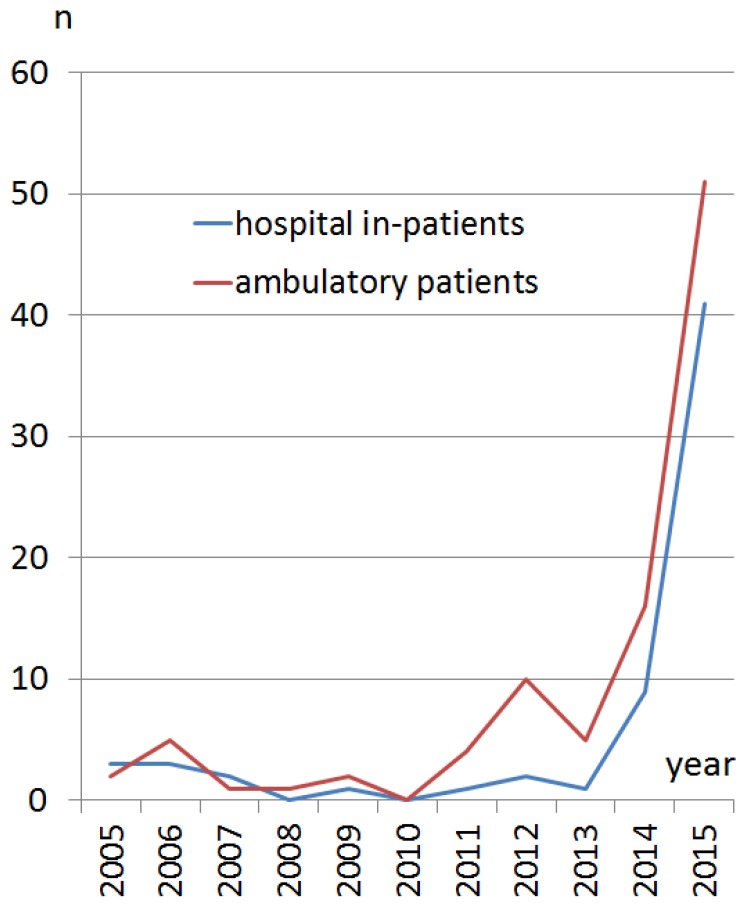
Recently, the number of refugees in Germany has skyrocketed, leading to a marked increase in refugee children admitted to hospitals. This study describes the special characteristics encountered in pediatric surgical inpatient refugees compared to locally residing patients.
Hospital records of minor refugees admitted to our department from 2005 up to and including 2015 were retrospectively reviewed. Demographic data, diagnoses, comorbidities, body mass indexes, hemoglobin values, and lengths of stay were extracted and statistically compared to local patients.
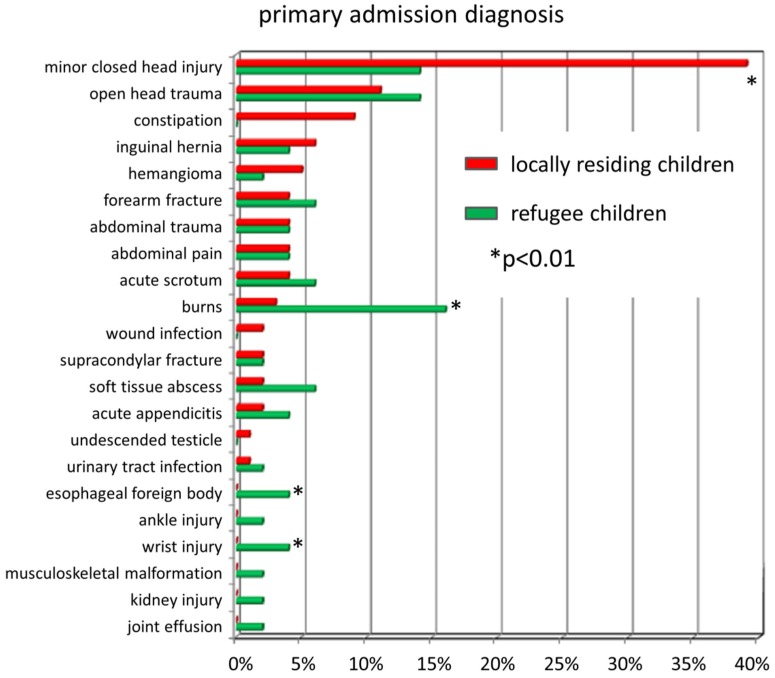
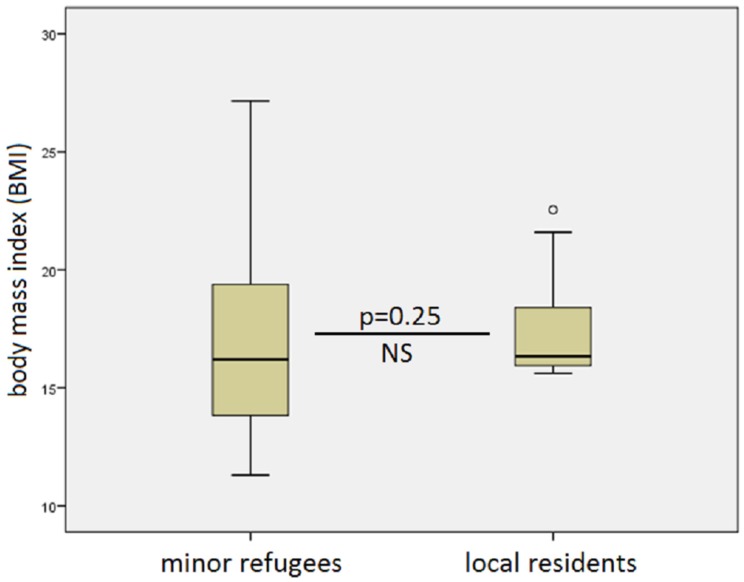
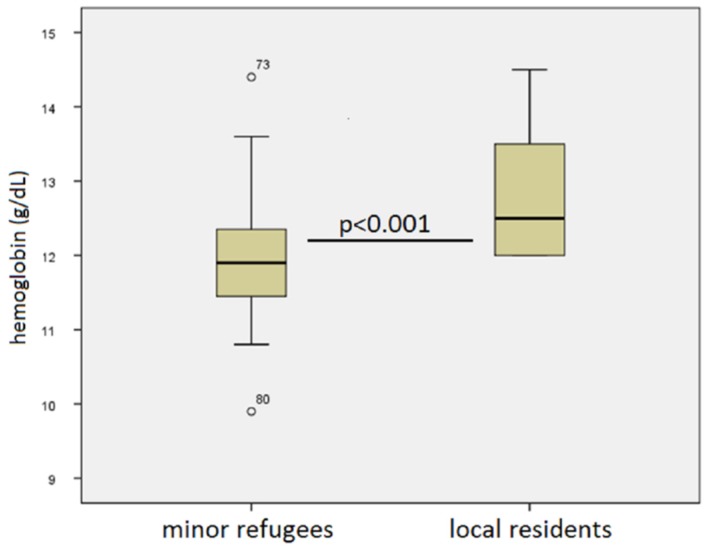
A total of 63 refugee children were analyzed and compared to 24,983 locally residing children. There was no difference in median body mass index (16.2 vs. 16.3, respectively, = 0.26). However, refugee children had significantly lower hemoglobin values (11.95 vs. 12.79 g/dL, < 0.0001) and were more likely to be colonized with methicillin-resistant (8% vs. 0.04%, < 0.01). Refugees were much more likely to present with burn injuries (16% versus 3% of admissions, < 0.001), esophageal foreign bodies (4% vs. 0.5%, < 0.001), as well as trauma, except for closed head injury.
The cohort of refugee children in this study was found to be at a particular risk for suffering from burn injuries, trauma, foreign body aspirations, and anemia. Appropriate preventive measures and screening programs should be implemented accordingly.
最近,德国难民数量急剧上升,导致入院的难民儿童显著增加。本研究描述了儿科外科住院难民与当地住院患者相比所具有的特殊特征。
回顾性分析了2005年至2015年期间(含2015年)入住我科的未成年难民的医院记录。提取了人口统计学数据、诊断结果、合并症、体重指数、血红蛋白值和住院时间,并与当地患者进行了统计学比较。
共分析了63名难民儿童,并与24983名当地儿童进行了比较。中位体重指数无差异(分别为16.2和16.3,P = 0.26)。然而,难民儿童的血红蛋白值显著较低(11.95 vs. 12.79 g/dL,P < 0.0001),且更有可能感染耐甲氧西林金黄色葡萄球菌(8% vs. 0.04%,P < 0.01)。难民更有可能出现烧伤(占入院人数的16% 对3%,P < 0.001)、食管异物(4% 对0.5%,P < 0.001)以及创伤,但不包括闭合性颅脑损伤。
本研究中的难民儿童群体被发现特别容易遭受烧伤、创伤、异物吸入和贫血。应相应地实施适当的预防措施和筛查项目。