1 Institute of Clinical Immunology, Leipzig University, Germany.
2 Department of Molecular Oncology, Leipzig University, Germany.
Innate Immun. 2019 Jul;25(5):280-293. doi: 10.1177/1753425919844587. Epub 2019 May 3.
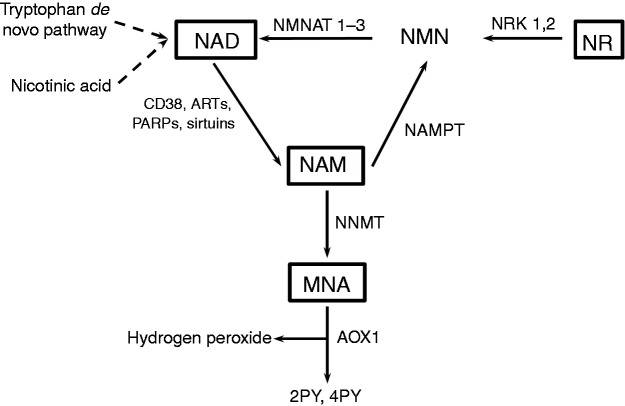
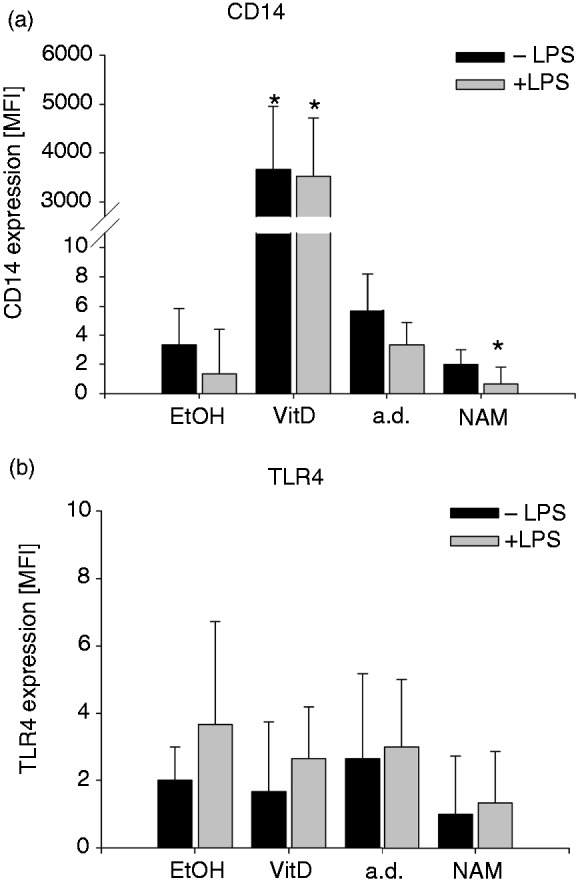
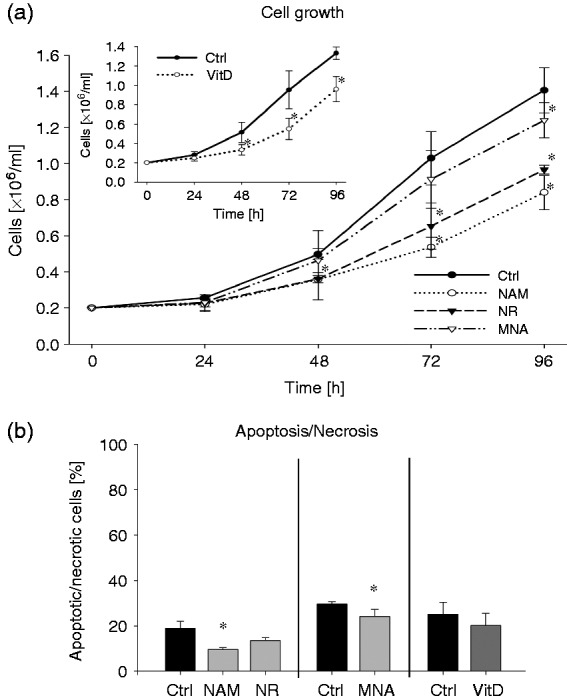
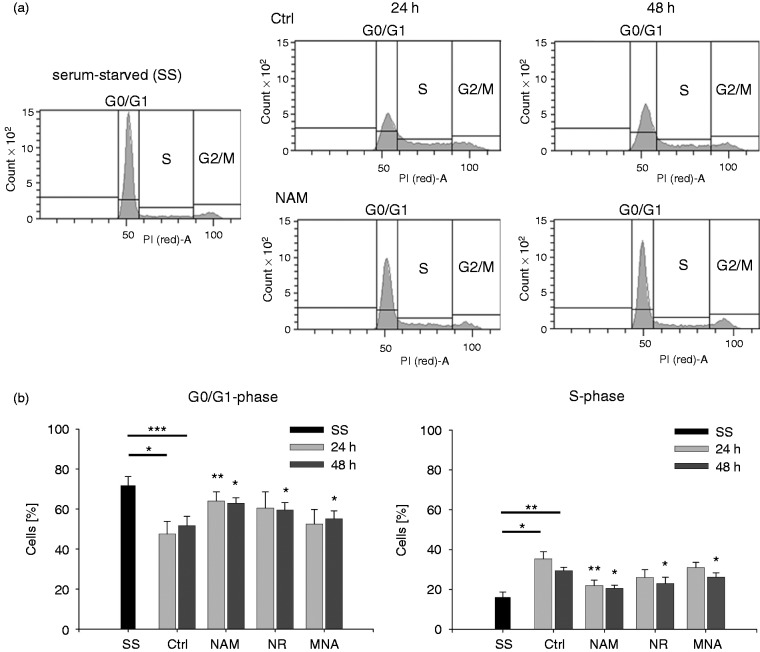
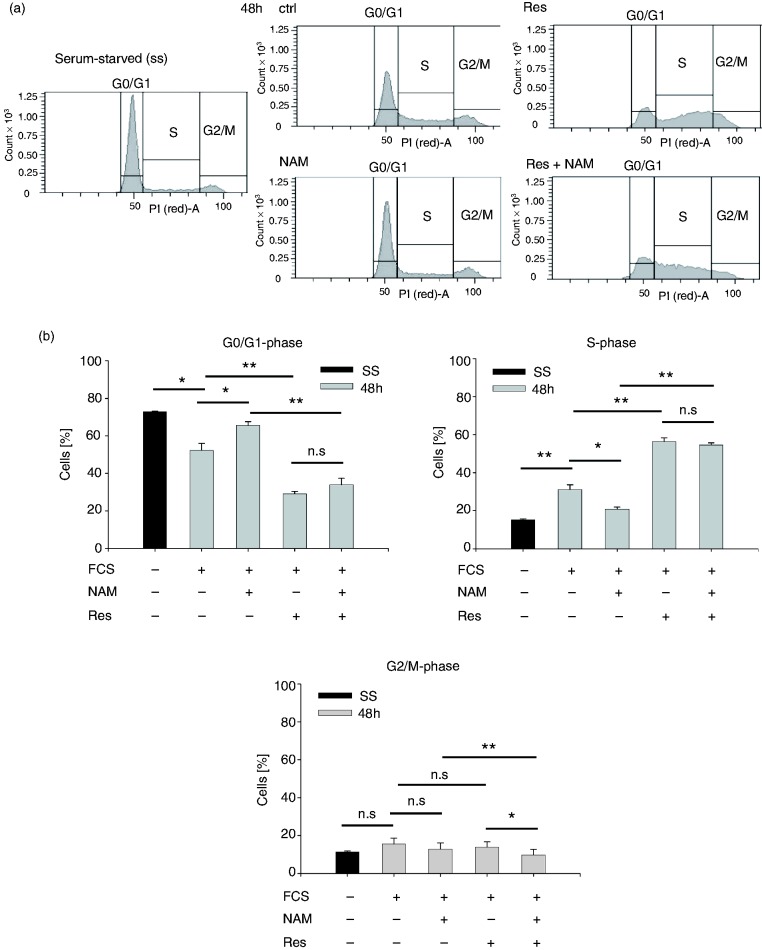
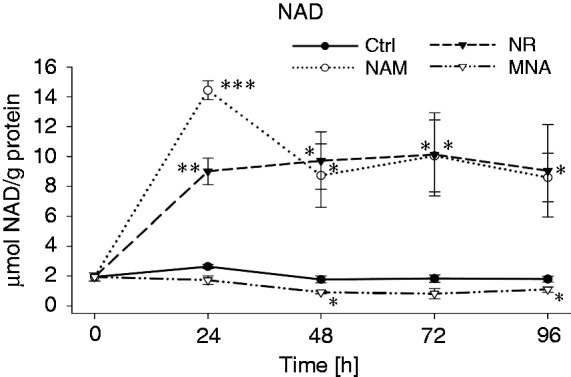
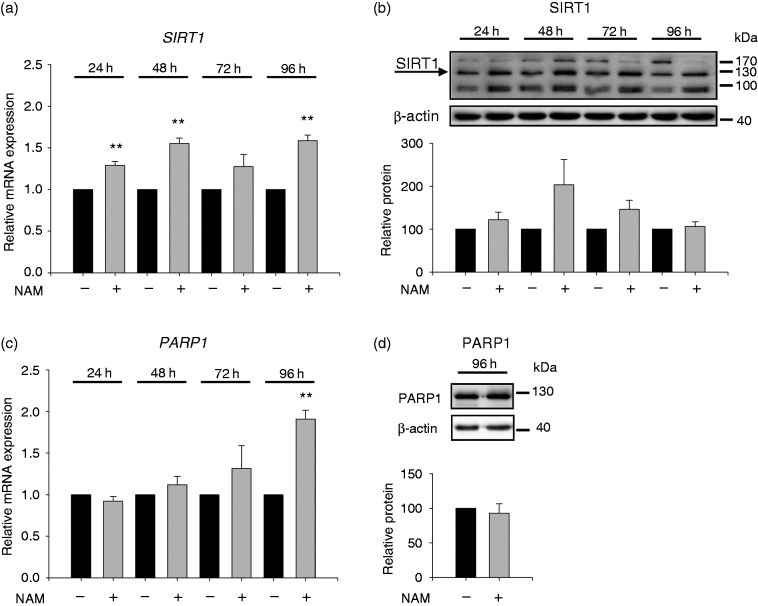
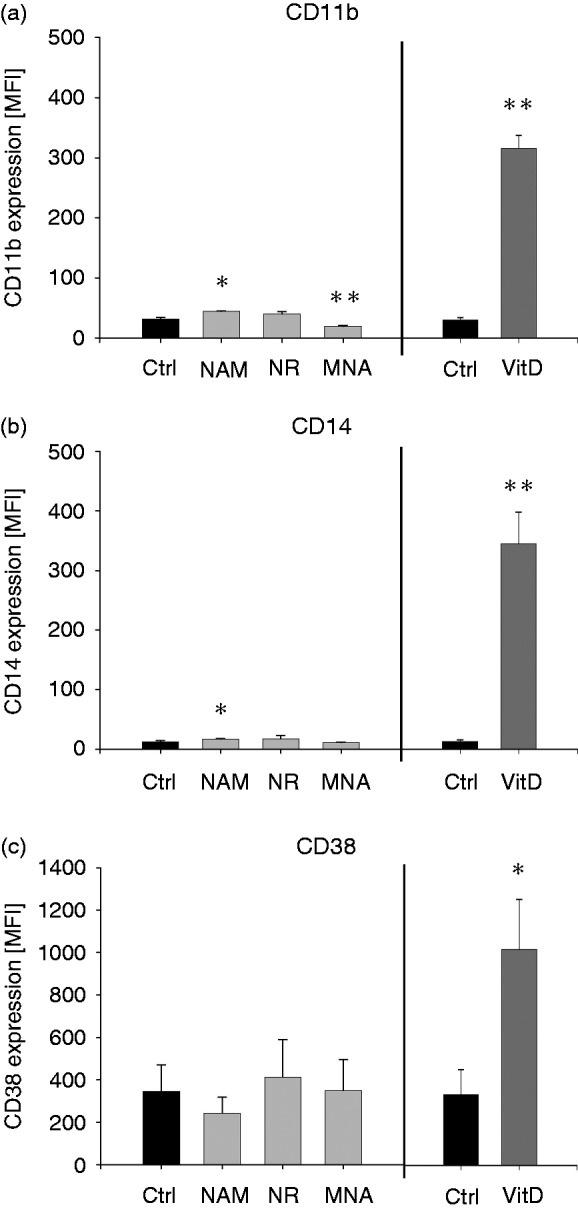
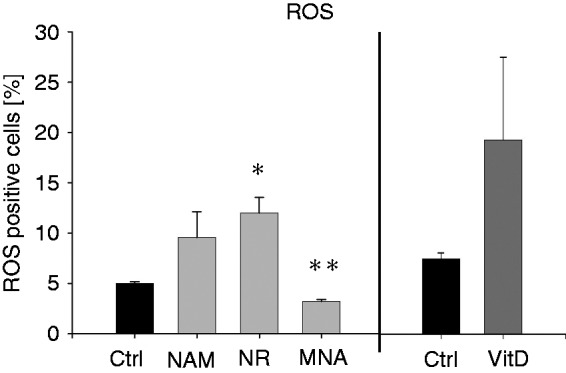
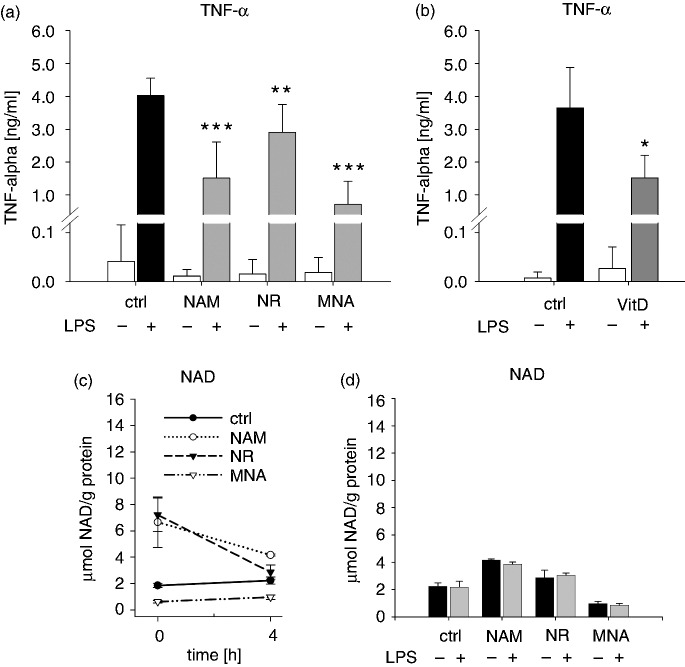
Over the past few years the NAD-related compounds nicotinamide (NAM), nicotinamide riboside (NR) and 1-methylnicotinamide (MNA) have been established as important molecules in signalling pathways that contribute to metabolic functions of many cells, including those of the immune system. Among immune cells, monocytes/macrophages, which are the major players of inflammatory processes, are especially susceptible to the anti-inflammatory action of NAM. Here we asked whether NAM and the two other compounds have the potential to regulate differentiation and LPS-induced biological answers of the monocytic cell line THP-1. We show that treatment of THP-1 cells with NAM, NR and MNA resulted in growth retardation accompanied by enrichment of cells in the G0/G1-phase independent of p21 and p53. NAM and NR caused an increase in intracellular NAD concentrations and SIRT1 and PARP1 mRNA expression was found to be enhanced. The compounds failed to up-regulate the expression of the cell surface differentiation markers CD38, CD11b and CD14. They modulated the reactive oxygen species production and primed the cells to respond less effectively to the LPS induced TNF-α production. Our data show that the NAD metabolites interfere with early events associated with differentiation of THP-1 cells along the monocytic path and that they affect LPS-induced biological responses of the cell line.
在过去的几年中,NAD 相关化合物烟酰胺(NAM)、烟酰胺核苷(NR)和 1-甲基烟酰胺(MNA)已被确定为参与许多细胞代谢功能信号通路的重要分子,包括免疫系统细胞。在免疫细胞中,单核细胞/巨噬细胞是炎症过程的主要参与者,对 NAM 的抗炎作用特别敏感。在这里,我们询问 NAM 和另外两种化合物是否有可能调节单核细胞系 THP-1 的分化和 LPS 诱导的生物学反应。我们表明,用 NAM、NR 和 MNA 处理 THP-1 细胞会导致细胞生长停滞,同时细胞在 G0/G1 期富集,与 p21 和 p53 无关。NAM 和 NR 导致细胞内 NAD 浓度增加,并且发现 SIRT1 和 PARP1 mRNA 的表达增强。这些化合物未能上调细胞表面分化标志物 CD38、CD11b 和 CD14 的表达。它们调节活性氧的产生,并使细胞对 LPS 诱导的 TNF-α产生的反应不那么有效。我们的数据表明,NAD 代谢物干扰与 THP-1 细胞沿着单核细胞途径分化相关的早期事件,并影响细胞系的 LPS 诱导的生物学反应。