Al-Shabany Abbas Jawad, Moody Alan John, Foey Andrew David, Billington Richard Andrew
School of Biological Sciences, University of Plymouth, Drake Circus, Plymouth, PL4 8AA, U.K.
School of Biomedical and Healthcare Sciences, University of Plymouth, Drake Circus, Plymouth, PL4 8AA, U.K.
Biosci Rep. 2016 Jan 13;36(1):e00301. doi: 10.1042/BSR20150247.
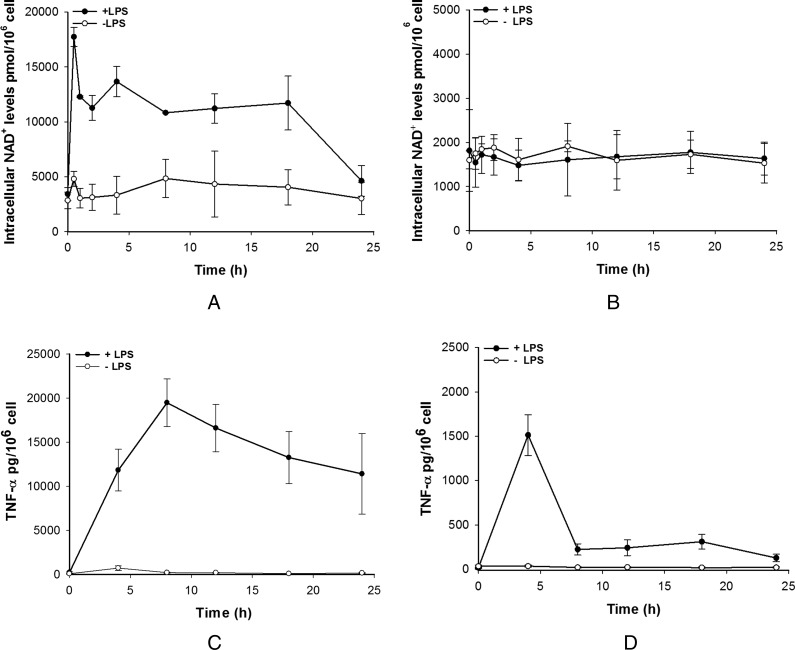
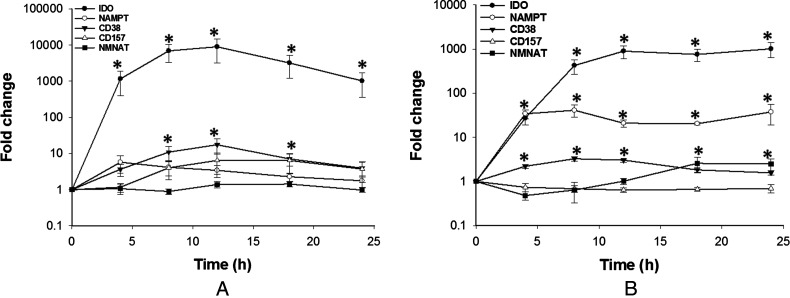
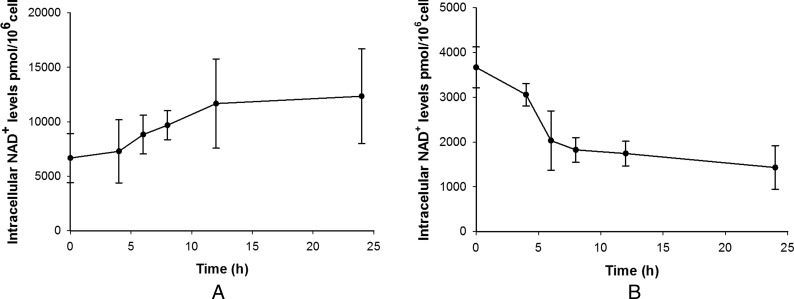
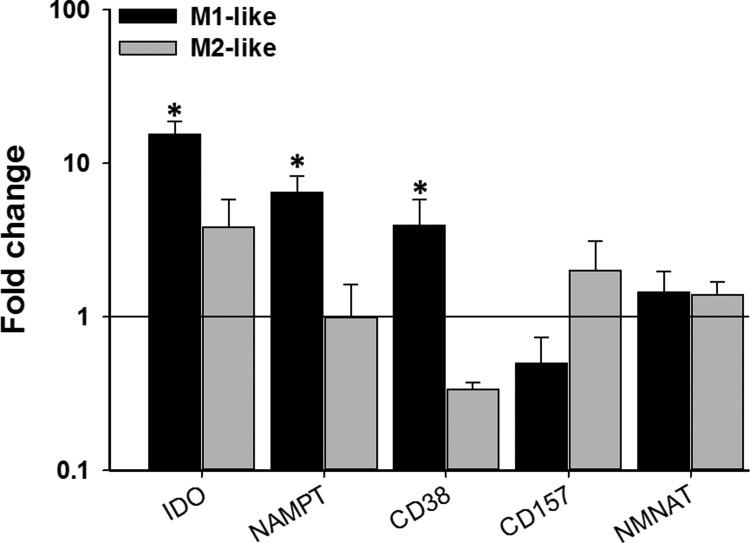
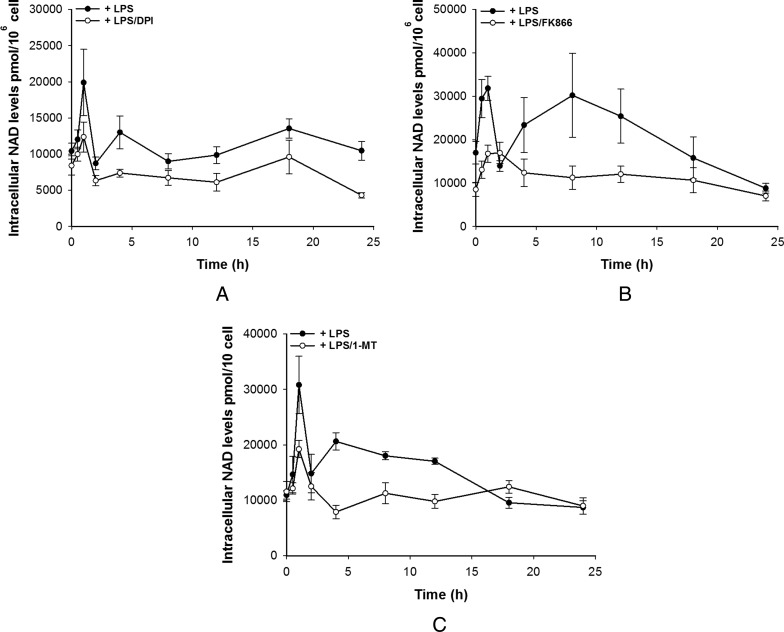
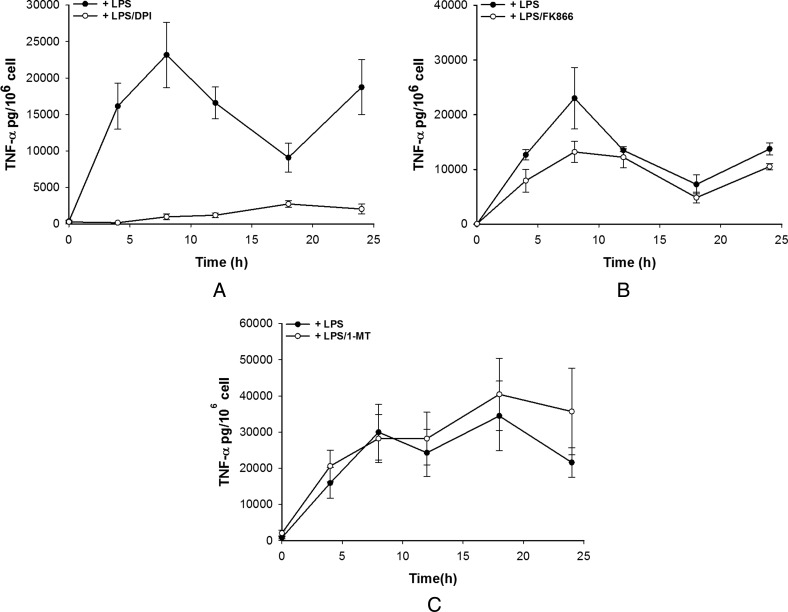
Metabolism and immune responses have been shown to be closely linked and as our understanding increases, so do the intricacies of the level of linkage. NAD(+) has previously been shown to regulate tumour necrosis factor-α (TNF-α) synthesis and TNF-α has been shown to regulate NAD(+) homoeostasis providing a link between a pro-inflammatory response and redox status. In the present study, we have used THP-1 differentiation into pro- (M1-like) and anti- (M2-like) inflammatory macrophage subset models to investigate this link further. Pro- and anti-inflammatory macrophages showed different resting NAD(+) levels and expression levels of NAD(+) homoeostasis enzymes. Challenge with bacterial lipopolysaccharide, a pro-inflammatory stimulus for macrophages, caused a large, biphasic and transient increase in NAD(+) levels in pro- but not anti-inflammatory macrophages that were correlated with TNF-α release and inhibition of certain NAD(+) synthesis pathways blocked TNF-α release. Lipopolysaccharide stimulation also caused changes in mRNA levels of some NAD(+) homoeostasis enzymes in M1-like cells. Surprisingly, despite M2-like cells not releasing TNF-α or changing NAD(+) levels in response to lipopolysaccharide, they showed similar mRNA changes compared with M1-like cells. These data further strengthen the link between pro-inflammatory responses in macrophages and NAD(+). The agonist-induced rise in NAD(+) shows striking parallels to well-known second messengers and raises the possibility that NAD(+) is acting in a similar manner in this model.
代谢与免疫反应已被证明紧密相连,随着我们认识的加深,两者间联系的复杂性也日益凸显。此前研究表明,烟酰胺腺嘌呤二核苷酸(NAD⁺)可调节肿瘤坏死因子-α(TNF-α)的合成,而TNF-α也能调节NAD⁺的稳态,这为促炎反应与氧化还原状态之间建立了联系。在本研究中,我们利用人单核细胞白血病细胞系THP-1分化为促炎(M1样)和抗炎(M2样)巨噬细胞亚群的模型,进一步探究这种联系。促炎和抗炎巨噬细胞表现出不同的基础NAD⁺水平以及NAD⁺稳态酶的表达水平。用细菌脂多糖刺激巨噬细胞,脂多糖是巨噬细胞的促炎刺激物,可导致促炎而非抗炎巨噬细胞中NAD⁺水平大幅、双相且短暂升高,这与TNF-α释放相关,且抑制某些NAD⁺合成途径可阻断TNF-α释放。脂多糖刺激还导致M1样细胞中一些NAD⁺稳态酶的mRNA水平发生变化。令人惊讶的是,尽管M2样细胞在脂多糖刺激下不释放TNF-α或改变NAD⁺水平,但与M1样细胞相比,它们表现出相似的mRNA变化。这些数据进一步强化了巨噬细胞促炎反应与NAD⁺之间的联系。激动剂诱导的NAD⁺升高与著名的第二信使有显著相似之处,这增加了NAD⁺在此模型中以类似方式发挥作用的可能性。