Bjelobaba Ivana, Janjic Marija M, Prévide Rafael Maso, Abebe Daniel, Kucka Marek, Stojilkovic Stanko S
Eunice Kennedy Shriver National Institute of Child Health and Human Development, National Institutes of Health (NIH), Bethesda, MD, United States.
Institute for Biological Research Sinisa Stankovic, University of Belgrade, Belgrade, Serbia.
Front Endocrinol (Lausanne). 2019 Apr 17;10:248. doi: 10.3389/fendo.2019.00248. eCollection 2019.
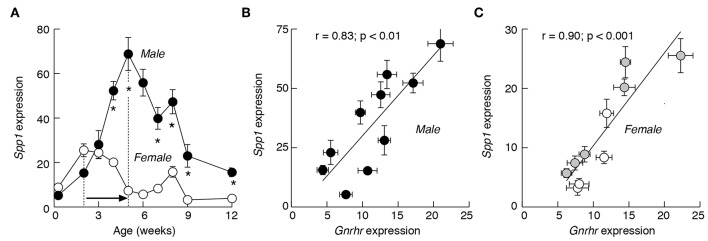
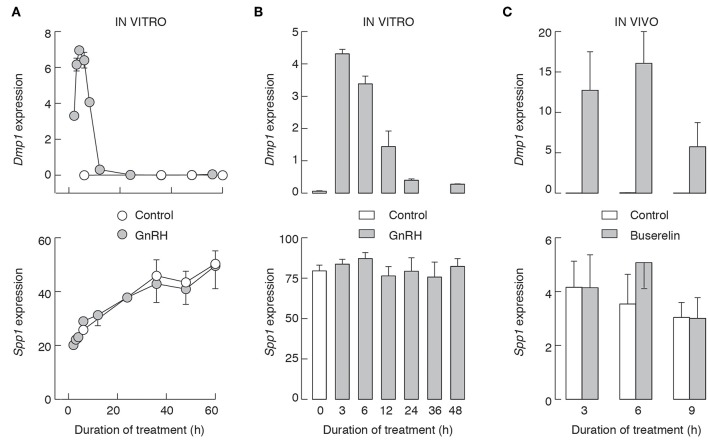
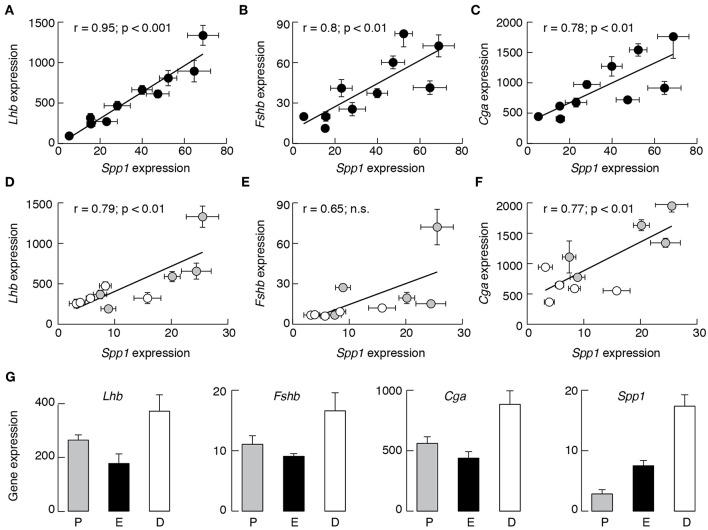
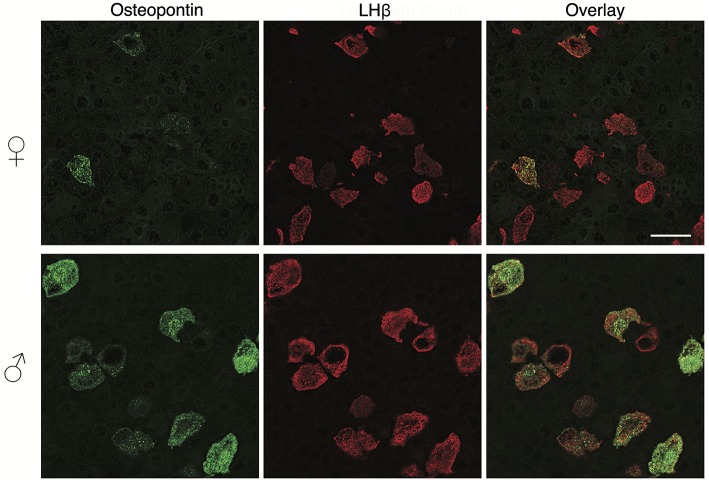
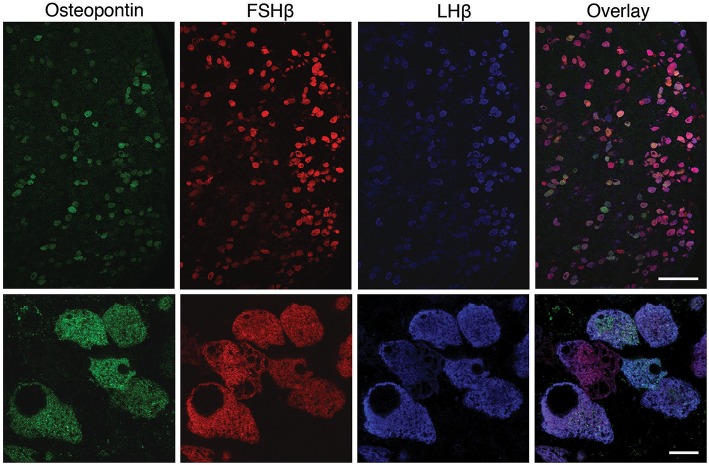
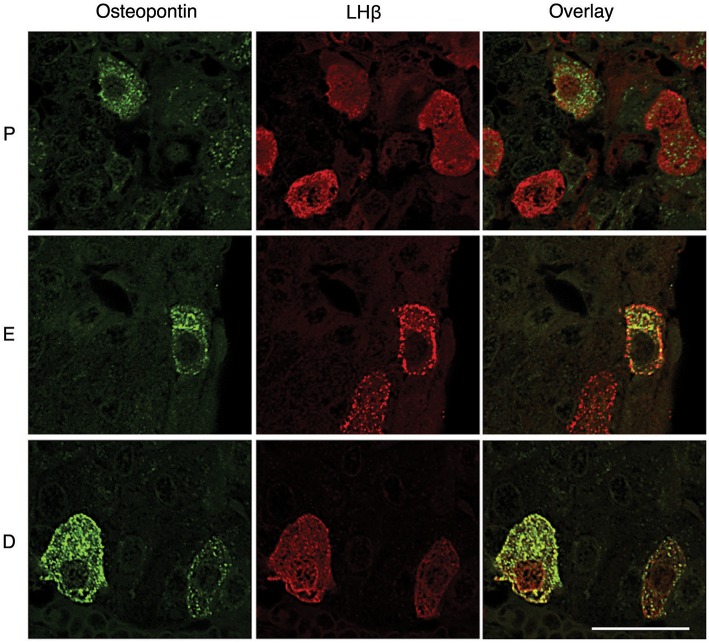
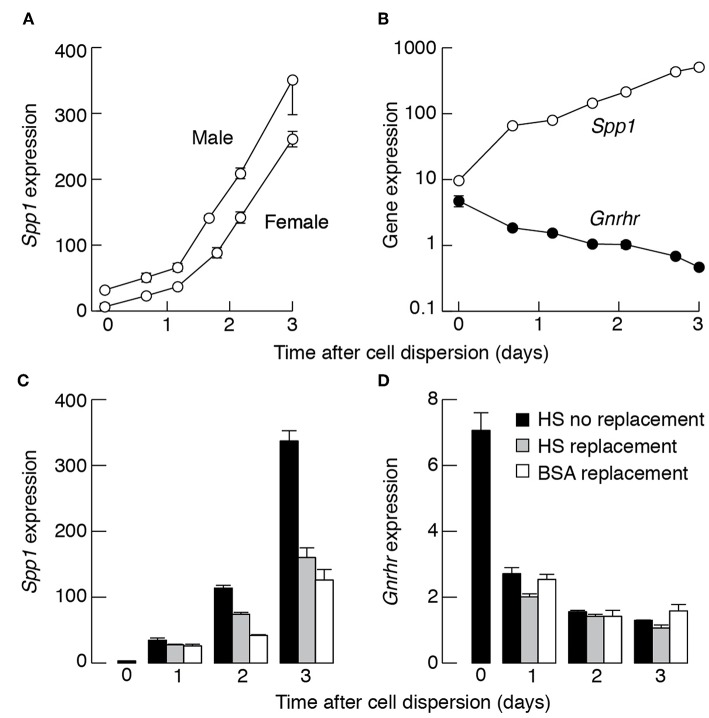
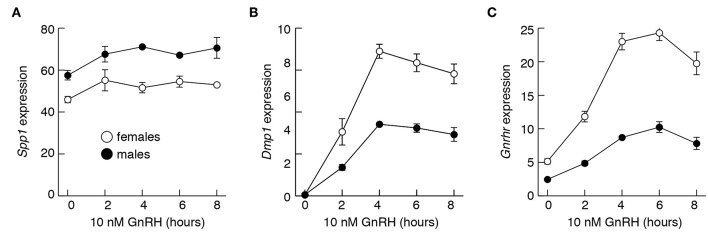
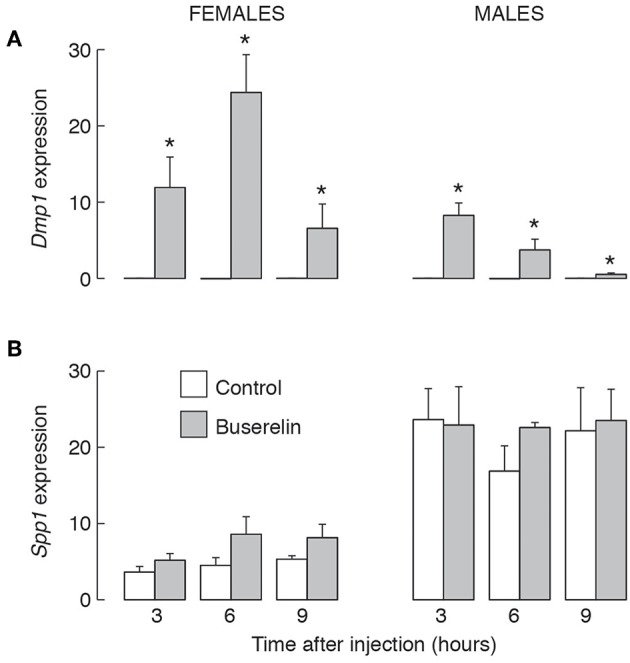
Cell-matrix interactions play important roles in pituitary development, physiology, and pathogenesis. In other tissues, a family of non-collagenous proteins, termed SIBLINGs, are known to contribute to cell-matrix interactions. Anterior pituitary gland expresses two SIBLING genes, (dentin matrix protein-1) and (secreted phosphoprotein-1) encoding DMP1 and osteopontin proteins, respectively, but their expression pattern and roles in pituitary functions have not been clarified. Here we provide novel evidence supporting the conclusion that osteopontin, like /DMP1, are expressed in gonadotrophs in a sex- and age-specific manner. Other anterior pituitary cell types do not express these genes. In contrast to expression is higher in males; in females, the expression reaches the peak during the diestrus phase of estrous cycle. In further contrast to and marker genes for gonadotrophs, the expression of is not regulated by gonadotropin-releasing hormone and . However, expression increases progressively after pituitary cell dispersion in both female and male cultures. We may speculate that gonadotrophs signal to other pituitary cell types about changes in the structure of pituitary cell-matrix network by osteopontin, a function consistent with the role of this secretory protein in postnatal tissue remodeling, extracellular matrix reorganization after injury, and tumorigenesis.
细胞与基质的相互作用在垂体发育、生理功能及发病机制中发挥着重要作用。在其他组织中,一类被称为SIBLINGs的非胶原蛋白家族已知对细胞与基质的相互作用有贡献。垂体前叶表达两个SIBLING基因,分别编码牙本质基质蛋白-1(DMP1)和骨桥蛋白的(牙本质基质蛋白-1)和(分泌性磷蛋白-1),但它们在垂体功能中的表达模式和作用尚未阐明。在此,我们提供了新的证据支持以下结论:骨桥蛋白与DMP1一样,在促性腺激素细胞中以性别和年龄特异性方式表达。垂体前叶的其他细胞类型不表达这些基因。与DMP1相反,骨桥蛋白的表达在男性中更高;在女性中,其表达在发情周期的间情期达到峰值。与促性腺激素细胞的DMP1和标记基因进一步不同的是,骨桥蛋白的表达不受促性腺激素释放激素和的调节。然而,在雌性和雄性培养物中,垂体细胞分散后骨桥蛋白的表达逐渐增加。我们可以推测,促性腺激素细胞通过骨桥蛋白向垂体前叶的其他细胞类型传递有关垂体细胞-基质网络结构变化的信号,这一功能与这种分泌蛋白在出生后组织重塑、损伤后细胞外基质重组及肿瘤发生中的作用一致。