Department of Dermatology, Duke University, Durham, NC, United States of America.
Duke Center for Genomic and Computational Biology, Duke University, Durham, NC, United States of America.
PLoS One. 2019 May 6;14(5):e0216249. doi: 10.1371/journal.pone.0216249. eCollection 2019.
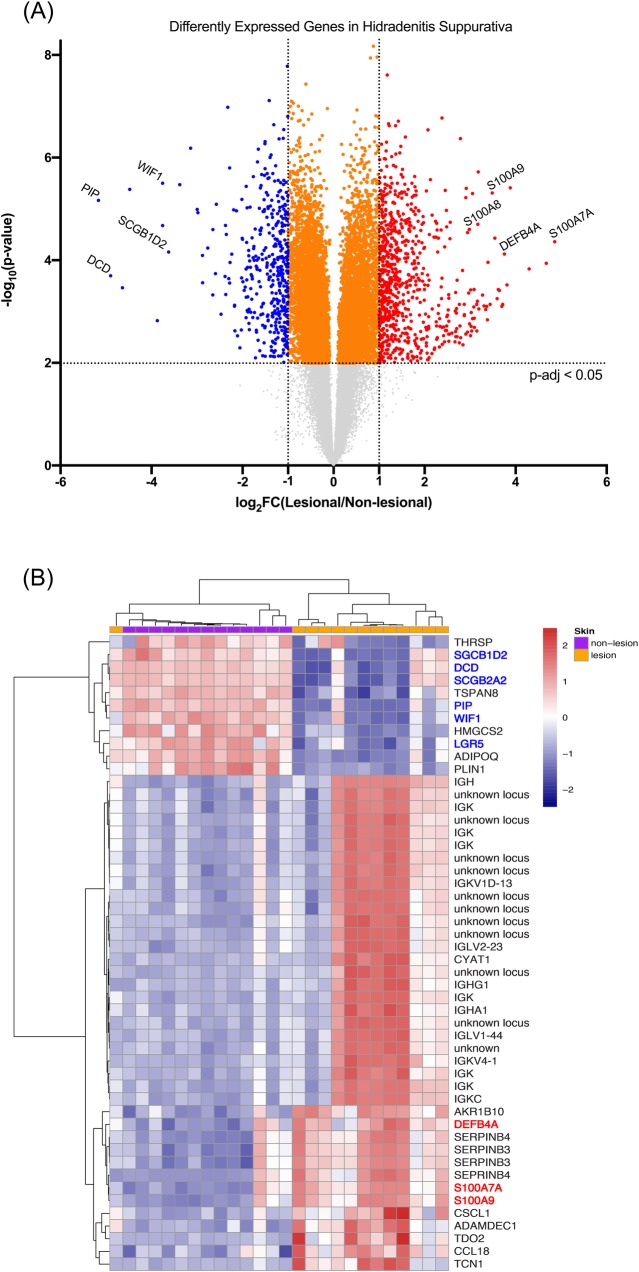
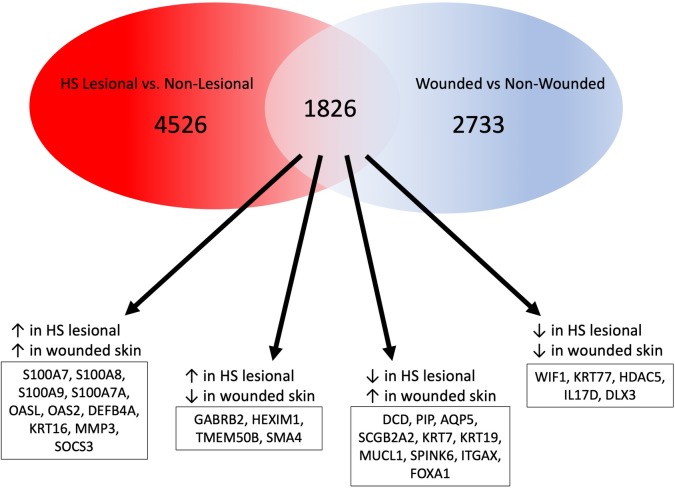
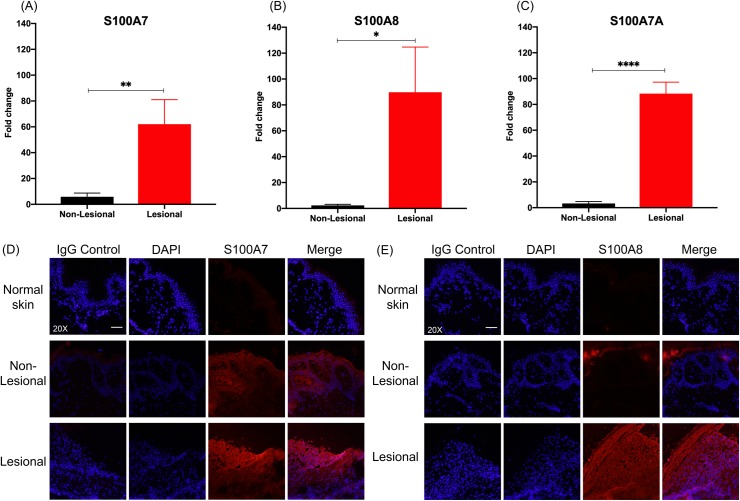
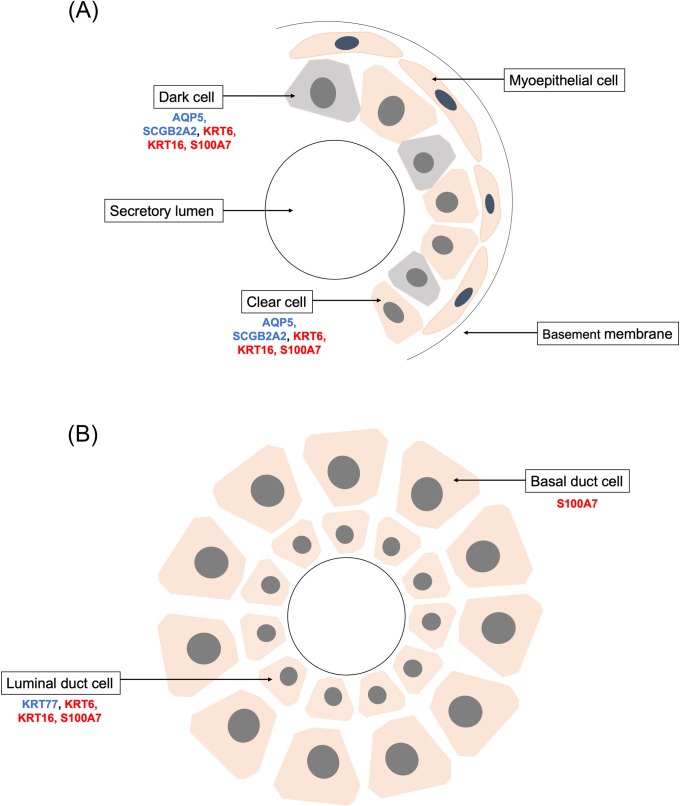
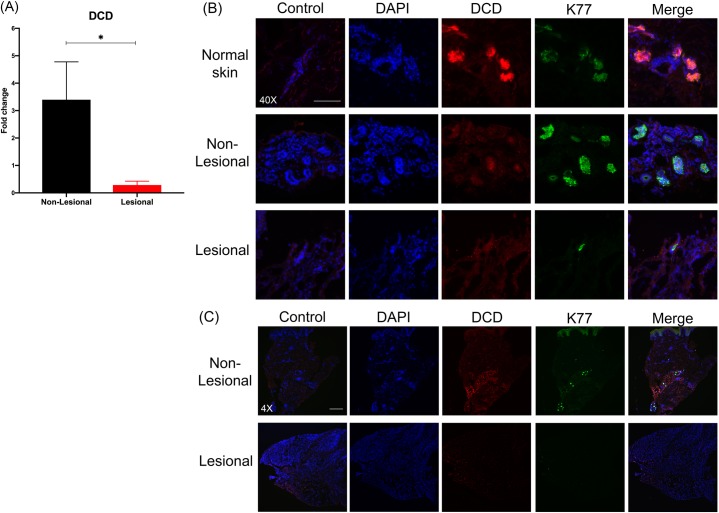
Hidradenitis suppurativa (HS) is a debilitating chronic inflammatory skin disease resulting in non-healing wounds affecting body areas of high hair follicle and sweat gland density. The pathogenesis of HS is not well understood but appears to involve dysbiosis-driven aberrant activation of the innate immune system leading to excessive inflammation. Marked dysregulation of antimicrobial peptides and proteins (AMPs) in HS is observed, which may contribute to this sustained inflammation. Here, we analyzed HS skin transcriptomes from previously published studies and integrated these findings through a comparative analysis with a published wound healing data set and with immunofluorescence and qPCR analysis from new HS patient samples. Among the top differently expressed genes between lesional and non-lesional HS skin were members of the S100 family as well as dermcidin, the latter known as a sweat gland-associated AMP and one of the most downregulated genes in HS lesions. Interestingly, many genes associated with sweat gland function, such as secretoglobins and aquaporin 5, were decreased in HS lesional skin and we discovered that these genes demonstrated opposite expression profiles in healing skin. Conversely, HS lesional and wounded skin shared a common gene signature including genes encoding for S100 proteins, defensins, and genes encoding antiviral proteins. Overall, our results suggest that the pathogenesis of HS may be driven by changes in AMP expression and altered sweat gland function, and may share a similar pathology with chronic wounds.
化脓性汗腺炎(HS)是一种使人衰弱的慢性炎症性皮肤病,导致无法愈合的伤口,影响到高毛囊和汗腺密度的身体部位。HS 的发病机制尚不清楚,但似乎涉及到由微生物失调驱动的先天免疫系统异常激活,导致过度炎症。在 HS 中观察到明显的抗菌肽和蛋白质(AMPs)失调,这可能导致这种持续的炎症。在这里,我们分析了先前发表的研究中的 HS 皮肤转录组,并通过与已发表的伤口愈合数据集的比较分析以及来自新的 HS 患者样本的免疫荧光和 qPCR 分析整合了这些发现。在病变和非病变 HS 皮肤之间差异表达的基因中,S100 家族成员以及 dermcidin 是排在前列的,后者是一种与汗腺相关的 AMP,也是 HS 病变中下调最明显的基因之一。有趣的是,许多与汗腺功能相关的基因,如分泌球蛋白和水通道蛋白 5,在 HS 病变皮肤中减少,我们发现这些基因在愈合皮肤中的表达模式相反。相反,HS 病变和创伤皮肤共享一个共同的基因特征,包括编码 S100 蛋白、防御素和编码抗病毒蛋白的基因。总的来说,我们的结果表明,HS 的发病机制可能是由 AMP 表达的变化和汗腺功能的改变驱动的,并且可能与慢性伤口具有相似的病理学。