Cytogenetic Biodosimetry Laboratory, Radiation Emergency Assistance Center/Training site, Oak Ridge Institute for Science and Education, Oak Ridge Associated Universities, Oak Ridge, Tennessee, United States of America.
Health Physics, Radiobiology & Cytogenetics Laboratory, Institute of Nuclear & Radiological Sciences & Technology, Energy & Safety, National Centre for Scientific Research "Demokritos", Ag. Paraskevi, Athens, Greece.
PLoS One. 2019 May 6;14(5):e0216081. doi: 10.1371/journal.pone.0216081. eCollection 2019.
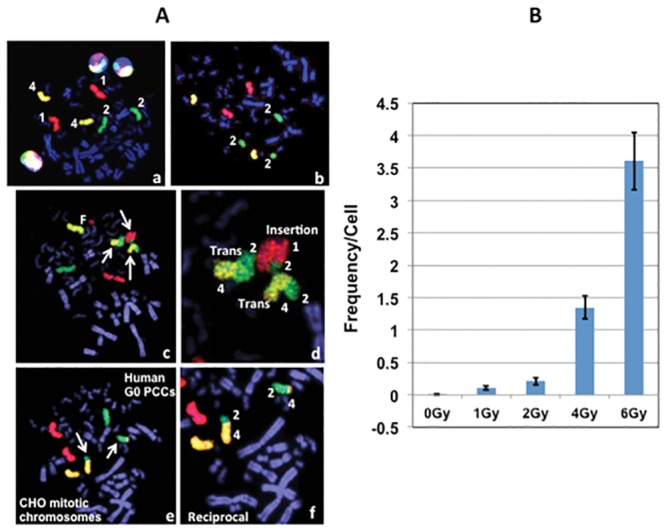
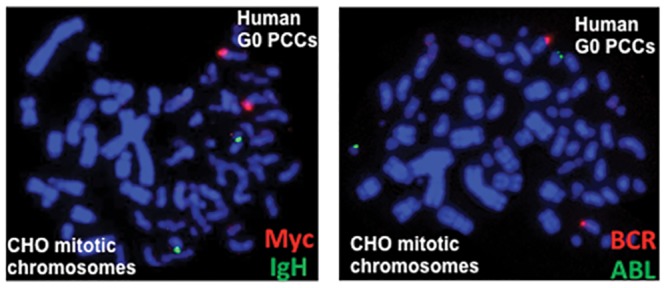
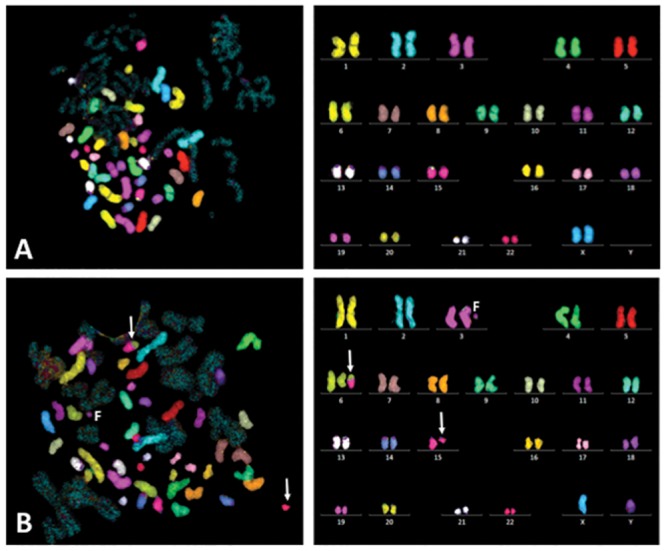
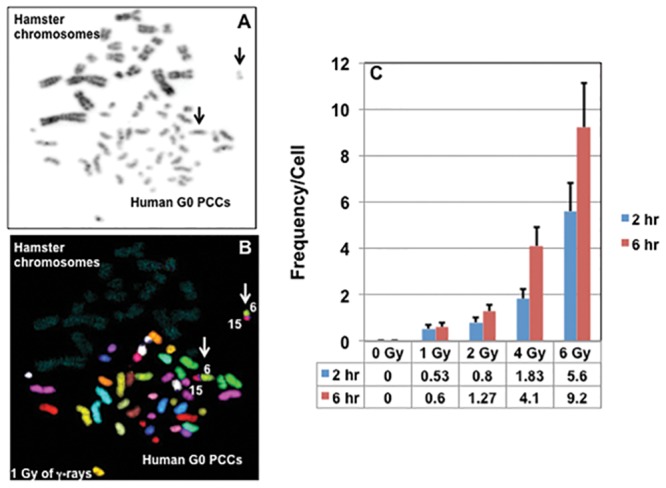
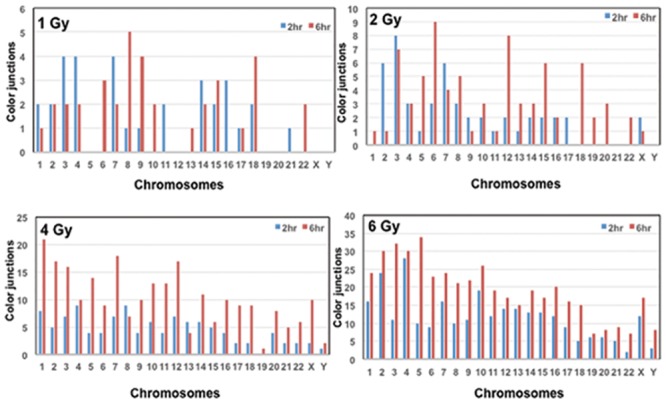
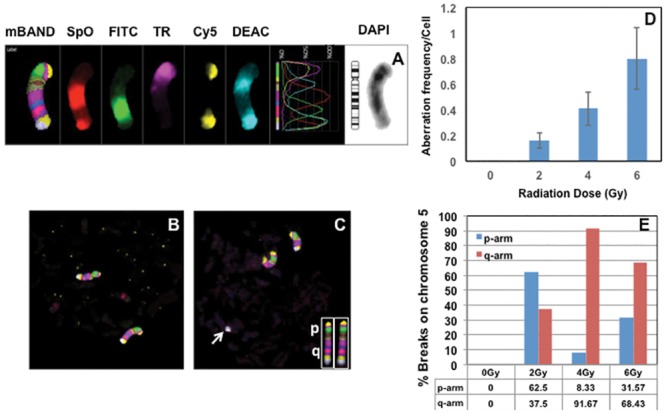
A sensitive biodosimetry tool is required for rapid individualized dose estimation and risk assessment in the case of radiological or nuclear mass casualty scenarios to prioritize exposed humans for immediate medical countermeasures to reduce radiation related injuries or morbidity risks. Unlike the conventional Dicentric Chromosome Assay (DCA), which takes about 3-4 days for radiation dose estimation, cell fusion mediated Premature Chromosome Condensation (PCC) technique in G0 lymphocytes can be rapidly performed for radiation dose assessment within 6-8 hrs of sample receipt by alleviating the need for ex vivo lymphocyte proliferation for 48 hrs. Despite this advantage, the PCC technique has not yet been fully exploited for radiation biodosimetry. Realizing the advantage of G0 PCC technique that can be instantaneously applied to unstimulated lymphocytes, we evaluated the utility of G0 PCC technique in detecting ionizing radiation (IR) induced stable and unstable chromosomal aberrations for biodosimetry purposes. Our study demonstrates that PCC coupled with mFISH and mBAND techniques can efficiently detect both numerical and structural chromosome aberrations at the intra- and inter-chromosomal levels in unstimulated T- and B-lymphocytes. Collectively, we demonstrate that the G0 PCC technique has the potential for development as a biodosimetry tool for detecting unstable chromosome aberrations (chromosome fragments and dicentric chromosomes) for early radiation dose estimation and stable chromosome exchange events (translocations) for retrospective monitoring of individualized health risks in unstimulated lymphocytes.
需要一种敏感的生物剂量学工具,以便在放射学或核突发事件情况下快速进行个体化剂量估算和风险评估,从而优先对暴露的人类进行即时医疗对策,以降低辐射相关伤害或发病风险。与传统的双着丝粒染色体分析(DCA)相比,DCA 大约需要 3-4 天进行辐射剂量估算,而 G0 淋巴细胞中的细胞融合介导的早熟染色体凝聚(PCC)技术可以在样本接收后 6-8 小时内快速进行辐射剂量评估,无需进行 48 小时的体外淋巴细胞增殖。尽管有这个优势,但 PCC 技术尚未在辐射生物剂量学中得到充分利用。为了充分利用 G0 PCC 技术的优势,可以即时应用于未刺激的淋巴细胞,我们评估了 G0 PCC 技术在检测电离辐射(IR)诱导的稳定和不稳定染色体畸变用于生物剂量学目的的效用。我们的研究表明,PCC 与 mFISH 和 mBAND 技术相结合,可以有效地检测未刺激的 T 和 B 淋巴细胞中染色体水平和染色体间水平的数量和结构染色体畸变。总的来说,我们证明 G0 PCC 技术具有发展为生物剂量学工具的潜力,用于检测不稳定的染色体畸变(染色体片段和双着丝粒染色体),以便早期进行辐射剂量估算,以及稳定的染色体交换事件(易位),用于对未刺激淋巴细胞中个体健康风险的回顾性监测。