• 文献检索
  • 文档翻译
  • 深度研究
  • 学术资讯
  • Suppr Zotero 插件Zotero 插件
  • 邀请有礼
  • 套餐&价格
  • 历史记录
应用&插件
Suppr Zotero 插件Zotero 插件浏览器插件Mac 客户端Windows 客户端微信小程序
定价
高级版会员购买积分包购买API积分包
服务
文献检索文档翻译深度研究API 文档MCP 服务
关于我们
关于 Suppr公司介绍联系我们用户协议隐私条款
关注我们

Suppr 超能文献

核心技术专利:CN118964589B侵权必究
粤ICP备2023148730 号-1Suppr @ 2026

文献检索

告别复杂PubMed语法,用中文像聊天一样搜索,搜遍4000万医学文献。AI智能推荐,让科研检索更轻松。

立即免费搜索

文件翻译

保留排版,准确专业,支持PDF/Word/PPT等文件格式,支持 12+语言互译。

免费翻译文档

深度研究

AI帮你快速写综述,25分钟生成高质量综述,智能提取关键信息,辅助科研写作。

立即免费体验

难溶性低(细胞)毒性颗粒的分组:以15种选定的纳米颗粒和A549人肺细胞为例

Grouping of Poorly Soluble Low (Cyto)Toxic Particles: Example with 15 Selected Nanoparticles and A549 Human Lung Cells.

作者信息

Kononenko Veno, Warheit David B, Drobne Damjana

机构信息

Department of Biology, Biotechnical Faculty, University of Ljubljana, Večna pot 111, 1000 Ljubljana, Slovenia.

Warheit Scientific LLC, Wilmington, DE 19801, USA.

出版信息

Nanomaterials (Basel). 2019 May 6;9(5):704. doi: 10.3390/nano9050704.

DOI:10.3390/nano9050704
PMID:31064102
原文链接:https://pmc.ncbi.nlm.nih.gov/articles/PMC6566622/
Abstract

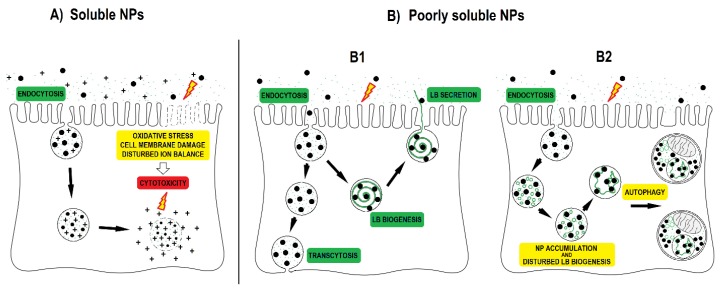
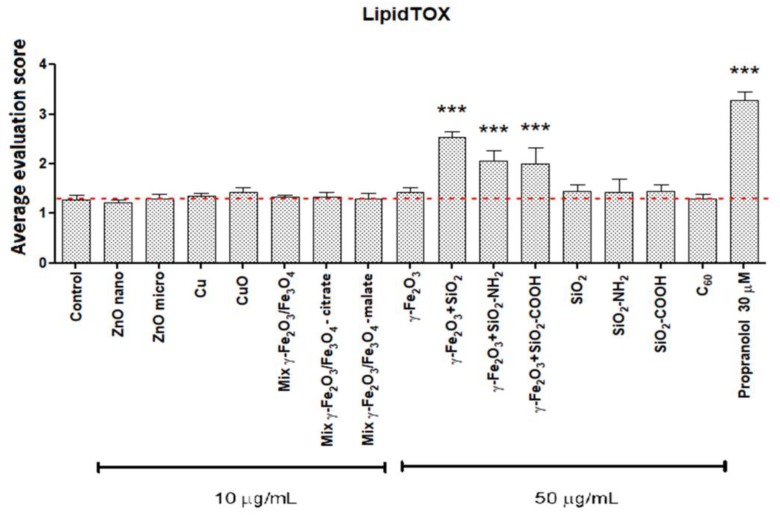
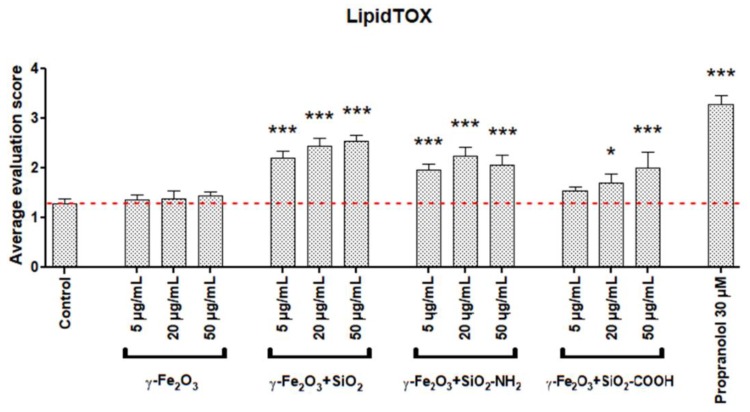
Poorly soluble, low (cyto)toxic particles (PSLTs) are often regarded as one group, but it is important that these particles can be further differentiated based on their bioactivity. Currently, there are no biological endpoint based groupings for inhaled nanoparticles (NPs) that would allow us to subgroup PSLTs based on their mode of action. The aim of this study was to group NPs based on their cytotoxicity and by using the in vitro response of the endo-lysosomal system as a biological endpoint. The endo-lysosomal system is a main cellular loading site for NPs. An impaired endo-lysosomal system in alveolar type II cells may have serious adverse effects on the maintenance of pulmonary surfactant homeostasis. The 15 different NPs were tested with human lung adenocarcinoma (A549) cells. The highly soluble NPs were most cytotoxic. With respect to PSLTs, only three NPs increased the cellular load of acid and phospholipid rich organelles indicating particle biopersistence. All the rest PSLTs could be regarded as low hazardous. The presented in vitro test system could serve as a fast screening tool to group particles according to their ability to interfere with lung surfactant metabolism. We discuss the applicability of the suggested test system for bringing together substances with similar modes-of-action on lung epithelium. In addition, we discuss this approach as a benchmark test for the comparative assessment of biopersistence of PSLTs.

摘要

难溶性低(细胞)毒性颗粒(PSLTs)通常被视为一类,但重要的是,这些颗粒可根据其生物活性进一步区分。目前,对于吸入纳米颗粒(NPs),尚无基于生物学终点的分组方法,无法让我们根据其作用方式对PSLTs进行亚组划分。本研究的目的是根据NPs的细胞毒性,并以内吞溶酶体系统的体外反应作为生物学终点对其进行分组。内吞溶酶体系统是NPs的主要细胞内摄取位点。肺泡II型细胞内吞溶酶体系统受损可能对肺表面活性物质稳态的维持产生严重不利影响。用人类肺腺癌(A549)细胞对15种不同的NPs进行了测试。高溶解性NPs的细胞毒性最大。对于PSLTs,只有三种NPs增加了富含酸性物质和磷脂的细胞器的细胞内摄取量,表明颗粒具有生物持久性。其余所有PSLTs均可视为低危险性。所提出的体外测试系统可作为一种快速筛选工具,根据颗粒干扰肺表面活性物质代谢的能力对其进行分组。我们讨论了所建议的测试系统在将对肺上皮具有相似作用方式的物质归为一类方面的适用性。此外,我们还讨论了这种方法作为PSLTs生物持久性比较评估的基准测试。
https://cdn.ncbi.nlm.nih.gov/pmc/blobs/1666/6566622/5dd7a98dfbd1/nanomaterials-09-00704-g006.jpg
https://cdn.ncbi.nlm.nih.gov/pmc/blobs/1666/6566622/68ae077ae973/nanomaterials-09-00704-g001.jpg
https://cdn.ncbi.nlm.nih.gov/pmc/blobs/1666/6566622/a37756503a9c/nanomaterials-09-00704-g002.jpg
https://cdn.ncbi.nlm.nih.gov/pmc/blobs/1666/6566622/cd43d985739c/nanomaterials-09-00704-g003.jpg
https://cdn.ncbi.nlm.nih.gov/pmc/blobs/1666/6566622/d30a5c9c9146/nanomaterials-09-00704-g004.jpg
https://cdn.ncbi.nlm.nih.gov/pmc/blobs/1666/6566622/09b0ab9701fa/nanomaterials-09-00704-g005.jpg
https://cdn.ncbi.nlm.nih.gov/pmc/blobs/1666/6566622/5dd7a98dfbd1/nanomaterials-09-00704-g006.jpg
https://cdn.ncbi.nlm.nih.gov/pmc/blobs/1666/6566622/68ae077ae973/nanomaterials-09-00704-g001.jpg
https://cdn.ncbi.nlm.nih.gov/pmc/blobs/1666/6566622/a37756503a9c/nanomaterials-09-00704-g002.jpg
https://cdn.ncbi.nlm.nih.gov/pmc/blobs/1666/6566622/cd43d985739c/nanomaterials-09-00704-g003.jpg
https://cdn.ncbi.nlm.nih.gov/pmc/blobs/1666/6566622/d30a5c9c9146/nanomaterials-09-00704-g004.jpg
https://cdn.ncbi.nlm.nih.gov/pmc/blobs/1666/6566622/09b0ab9701fa/nanomaterials-09-00704-g005.jpg
https://cdn.ncbi.nlm.nih.gov/pmc/blobs/1666/6566622/5dd7a98dfbd1/nanomaterials-09-00704-g006.jpg

相似文献

1
Grouping of Poorly Soluble Low (Cyto)Toxic Particles: Example with 15 Selected Nanoparticles and A549 Human Lung Cells.难溶性低(细胞)毒性颗粒的分组:以15种选定的纳米颗粒和A549人肺细胞为例
Nanomaterials (Basel). 2019 May 6;9(5):704. doi: 10.3390/nano9050704.
2
Re-defining kinetic lung overload: Time for new paradigms.重新定义动力学性肺过度充气:新范式的时代。
Toxicol Lett. 2018 Oct 1;295:212-219. doi: 10.1016/j.toxlet.2018.06.1222. Epub 2018 Jun 30.
3
The hazards and risks of inhaled poorly soluble particles - where do we stand after 30 years of research?吸入难溶性颗粒的危害和风险——经过 30 年的研究,我们现在处于什么位置?
Part Fibre Toxicol. 2019 Feb 21;16(1):11. doi: 10.1186/s12989-019-0294-4.
4
Toxicokinetics and effects of fibrous and nonfibrous particles.纤维状和非纤维状颗粒的毒代动力学及效应
Inhal Toxicol. 2002 Jan;14(1):29-56. doi: 10.1080/089583701753338622.
5
Harmful at non-cytotoxic concentrations: SiO-SPIONs affect surfactant metabolism and lamellar body biogenesis in A549 human alveolar epithelial cells.在非细胞毒性浓度下具有危害性:二氧化硅-超顺磁性氧化铁纳米颗粒影响A549人肺泡上皮细胞中的表面活性剂代谢和板层小体生物发生。
Nanotoxicology. 2017 Apr;11(3):419-429. doi: 10.1080/17435390.2017.1309704.
6
Commentary: the chronic inhalation study in rats for assessing lung cancer risk may be better than its reputation.述评:评估肺癌风险的大鼠慢性吸入研究可能比其名声更好。
Part Fibre Toxicol. 2019 Nov 21;16(1):44. doi: 10.1186/s12989-019-0330-4.
7
Comparative study of cyto- and genotoxic potential with mechanistic insights of tungsten oxide nano- and microparticles in lung carcinoma cells.钨氧化物纳米和微米颗粒的细胞和遗传毒性潜力比较研究及其在肺癌细胞中的机制探讨。
J Appl Toxicol. 2018 Jun;38(6):896-913. doi: 10.1002/jat.3598. Epub 2018 Feb 6.
8
Significance of particle parameters in the evaluation of exposure-dose-response relationships of inhaled particles.颗粒参数在评估吸入颗粒暴露-剂量-反应关系中的意义
Inhal Toxicol. 1996;8 Suppl:73-89.
9
Differences in the biokinetics of inhaled nano- versus micrometer-sized particles.吸入纳米与微米级颗粒的生物动力学差异。
Acc Chem Res. 2013 Mar 19;46(3):714-22. doi: 10.1021/ar300043r. Epub 2012 Sep 17.
10
Pulmonary surfactant augments cytotoxicity of silica nanoparticles: Studies on an in vitro air-blood barrier model.肺表面活性剂增强二氧化硅纳米颗粒的细胞毒性:体外气血屏障模型研究
Beilstein J Nanotechnol. 2015 Feb 20;6:517-28. doi: 10.3762/bjnano.6.54. eCollection 2015.

引用本文的文献

1
Cutaneous Evaluation of FeO Nanoparticles: An Assessment Based on 2D and 3D Human Epidermis Models Under Standard and UV Conditions.FeO纳米颗粒的皮肤评估:基于标准条件和紫外线条件下的二维和三维人类表皮模型的评估
Int J Nanomedicine. 2025 Mar 20;20:3653-3670. doi: 10.2147/IJN.S513423. eCollection 2025.
2
Experimental and Computational Nanotoxicology-Complementary Approaches for Nanomaterial Hazard Assessment.实验与计算纳米毒理学——纳米材料危害评估的互补方法
Nanomaterials (Basel). 2022 Apr 14;12(8):1346. doi: 10.3390/nano12081346.

本文引用的文献

1
The hazards and risks of inhaled poorly soluble particles - where do we stand after 30 years of research?吸入难溶性颗粒的危害和风险——经过 30 年的研究,我们现在处于什么位置?
Part Fibre Toxicol. 2019 Feb 21;16(1):11. doi: 10.1186/s12989-019-0294-4.
2
In Vitro Cytotoxicity Evaluation of the Magnéli Phase Titanium Suboxides (TiO) on A549 Human Lung Cells.体外细胞毒性评估 Magnéli 相钛次氧化物 (TiO) 对 A549 人肺细胞的影响。
Int J Mol Sci. 2019 Jan 8;20(1):196. doi: 10.3390/ijms20010196.
3
What is the impact of surface modifications and particle size on commercial titanium dioxide particle samples? - A review of in vivo pulmonary and oral toxicity studies - Revised 11-6-2018.
表面改性和粒径对商业二氧化钛颗粒样品有什么影响?——体内肺和口腔毒性研究综述——2018 年 11 月 6 日修订。
Toxicol Lett. 2019 Mar 1;302:42-59. doi: 10.1016/j.toxlet.2018.11.008. Epub 2018 Nov 20.
4
Toxicity testing of poorly soluble particles, lung overload and lung cancer.难溶性颗粒的毒性测试、肺过载和肺癌。
Regul Toxicol Pharmacol. 2018 Dec;100:80-91. doi: 10.1016/j.yrtph.2018.10.006. Epub 2018 Oct 23.
5
Hazard and risk assessment strategies for nanoparticle exposures: how far have we come in the past 10 years?纳米颗粒暴露的危害与风险评估策略:在过去十年里我们取得了多大进展?
F1000Res. 2018 Mar 26;7:376. doi: 10.12688/f1000research.12691.1. eCollection 2018.
6
Criteria for grouping of manufactured nanomaterials to facilitate hazard and risk assessment, a systematic review of expert opinions.分组制造纳米材料以促进危害和风险评估的标准:专家意见的系统综述。
Regul Toxicol Pharmacol. 2018 Jun;95:270-279. doi: 10.1016/j.yrtph.2018.03.027. Epub 2018 Mar 31.
7
Mechanisms of Uptake and Translocation of Nanomaterials in the Lung.纳米材料在肺部的摄取和转移机制。
Adv Exp Med Biol. 2018;1048:21-36. doi: 10.1007/978-3-319-72041-8_2.
8
Differential Contribution of Constituent Metal Ions to the Cytotoxic Effects of Fast-Dissolving Metal-Oxide Nanoparticles.组成金属离子对速溶金属氧化物纳米颗粒细胞毒性作用的差异贡献
Front Pharmacol. 2018 Jan 22;9:15. doi: 10.3389/fphar.2018.00015. eCollection 2018.
9
Emerging Roles for the Lysosome in Lipid Metabolism.溶酶体在脂质代谢中的新兴作用。
Trends Cell Biol. 2017 Nov;27(11):833-850. doi: 10.1016/j.tcb.2017.07.006. Epub 2017 Aug 30.
10
Overview on biological implications of metal oxide nanoparticle exposure to human alveolar A549 cell line.金属氧化物纳米颗粒暴露于人类肺泡A549细胞系的生物学影响概述。
Nanotoxicology. 2017 Aug;11(6):713-724. doi: 10.1080/17435390.2017.1366574. Epub 2017 Aug 23.