Department of Biochemistry, Institute of Science, Banaras Hindu University, Varanasi, 221005, India.
Behav Brain Funct. 2019 May 7;15(1):9. doi: 10.1186/s12993-019-0160-4.
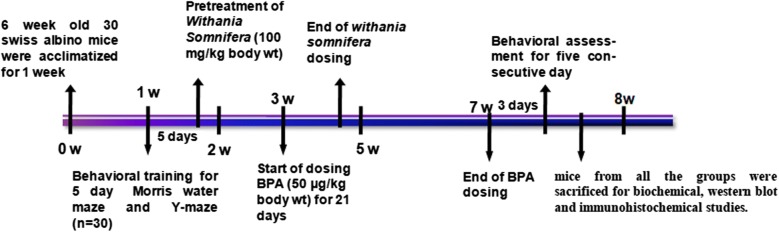
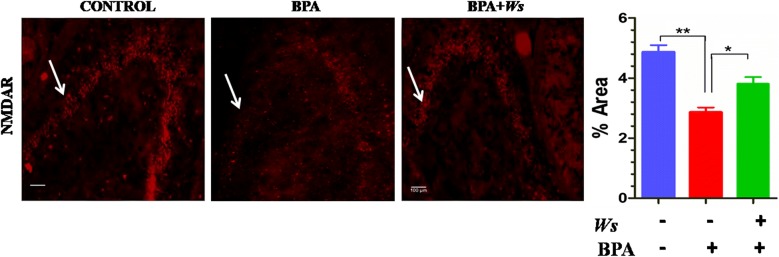
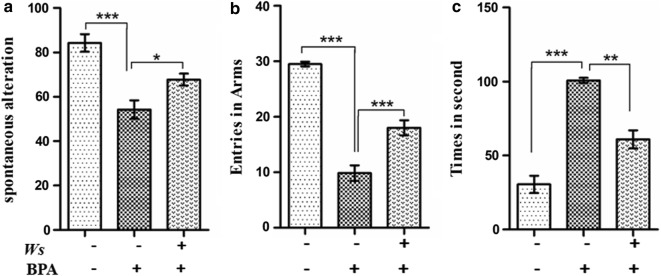
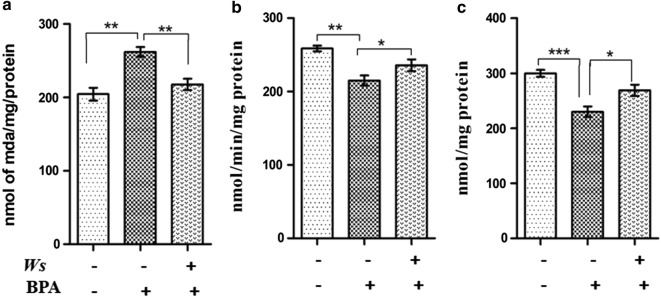
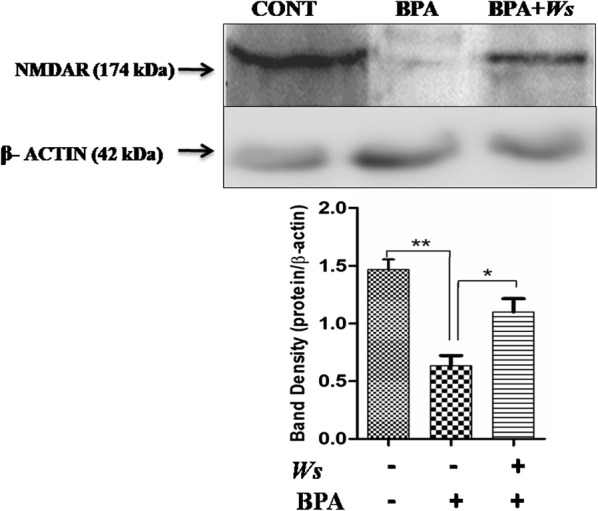
Bisphenol A (BPA), a major endocrine disruptor and a xenobiotic compound is used abundantly in the production of polycarbonate plastics and epoxy resins. Human exposure to this compound is primarily via its leaching from the protective internal epoxy resin coatings of containers into the food and beverages. In addition, the plastics used in dental prostheses and sealants also contain considerable amount of BPA and have a high risk of human exposure. Since it is a well-known endocrine disruptor and closely mimics the molecular structure of human estrogen thereby impairing learning and memory. Withania somnifera (Ws), commonly known as Ashwagandha is known for its varied therapeutic uses in Ayurvedic system of medicine. The present study was undertaken to demonstrate the impairment induced by BPA on the spatial learning, working memory and its alleviation by Ws in Swiss albino mice. The study was conducted on thirty Swiss albino mice, randomly distributed among three groups: control, BPA and BPA + Ws. The behavioral recovery after treatment with Ws was investigated using the Y-maize and Morris water maize test. Whereas, for the estimation of recovery of NMDA receptor which is related to learning and memory in hippocampus region by western blot and immunohistochemistry. Furthermore, the oxidative stress and antioxidant level was assessed by biochemical tests like MDA, SOD and catalase.
The study revealed that administration of Ws alleviated the behavioral deficits induced by BPA. Alongside, Ws treatment reinstated the number of NMDA receptors in hippocampus region and showed anti-oxidative property while ameliorating the endogenous anti-oxidant level in the brain.
These findings suggest that Ws significantly ameliorates the level of BPA intoxicated oxidative stress thereby potentially treating cognitive dysfunction which acts as the primary symptom in a number of neurodegenerative diseases.
双酚 A(BPA)是一种主要的内分泌干扰物和外源性化合物,广泛用于生产聚碳酸酯塑料和环氧树脂。人类主要通过容器内环氧树脂涂层的溶出将其暴露于该化合物中,进入食品和饮料。此外,用于牙修复体和密封剂的塑料也含有相当数量的 BPA,并且存在很高的人类暴露风险。由于它是一种众所周知的内分泌干扰物,并且与人类雌激素的分子结构非常相似,从而损害学习和记忆。睡茄(Ws),通常被称为 Ashwagandha,因其在阿育吠陀医学系统中的多种治疗用途而闻名。本研究旨在证明 BPA 对空间学习、工作记忆的损害,以及 Ws 对其的缓解作用。该研究在 30 只瑞士白化病小鼠中进行,随机分为三组:对照组、BPA 组和 BPA+Ws 组。通过 Y-玉米和 Morris 水迷宫测试研究 Ws 治疗后的行为恢复情况。此外,通过 Western blot 和免疫组织化学评估海马区与学习和记忆相关的 NMDA 受体的恢复情况。此外,通过 MDA、SOD 和过氧化氢酶等生化测试评估氧化应激和抗氧化水平。
研究表明,Ws 的给药缓解了 BPA 引起的行为缺陷。同时,Ws 治疗恢复了海马区 NMDA 受体的数量,并表现出抗氧化特性,同时改善了大脑中的内源性抗氧化水平。
这些发现表明,Ws 显著改善了 BPA 中毒氧化应激的水平,从而可能治疗作为许多神经退行性疾病主要症状的认知功能障碍。