Geng Yiyun, Zhao Xiaoying, Xu Jiajia, Zhang Xudong, Hu Guoli, Fu Sai-Chuen, Dai Kerong, Chen Xiaodong, Patrick Yung Shu-Huang, Zhang Xiaoling
Department of Orthopedic Surgery, Xinhua Hospital, School of Medicine, Shanghai Jiao Tong University, Shanghai 200092, China.
Shenzhen Key Laboratory of Tissue Engineering, Shenzhen Second People's Hospital (The First Hospital Affiliated to Shenzhen University), Shenzhen 518035, China.
J Mol Cell Biol. 2020 May 18;12(4):305-317. doi: 10.1093/jmcb/mjz030.
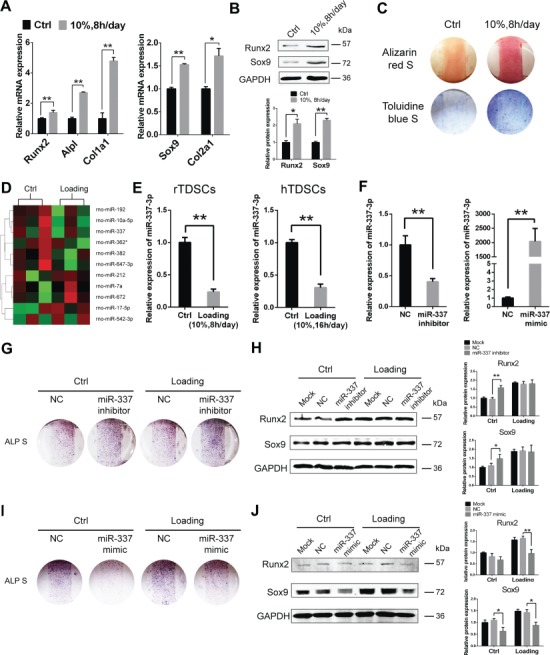
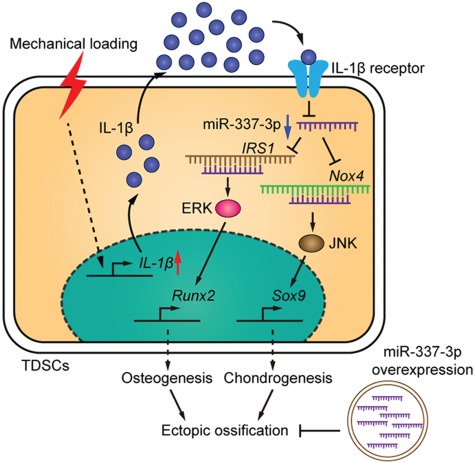
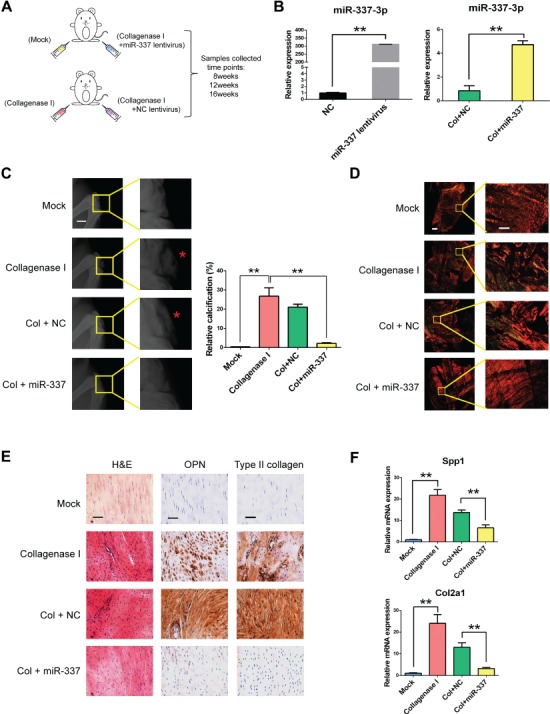
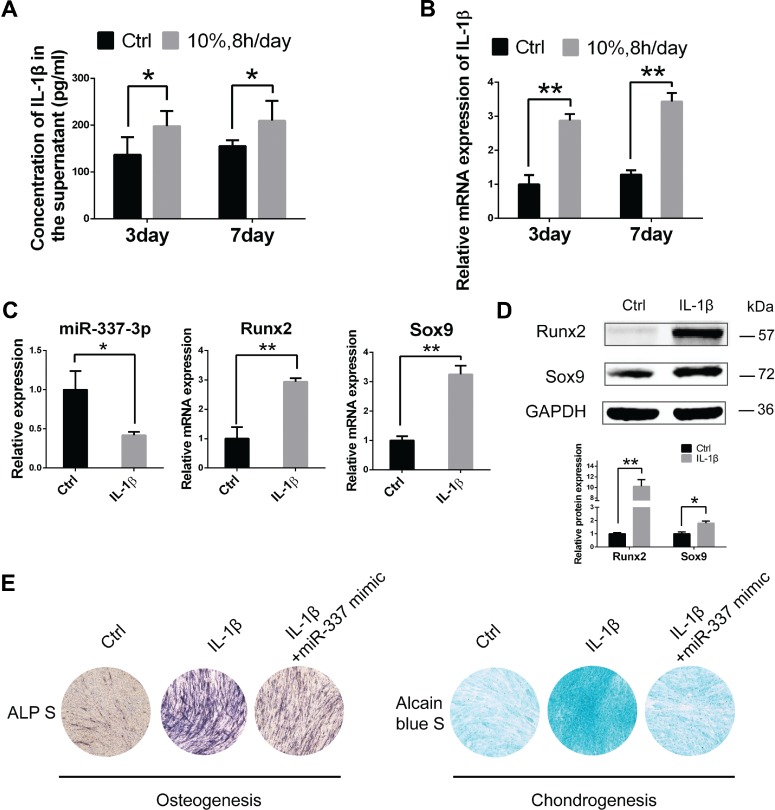
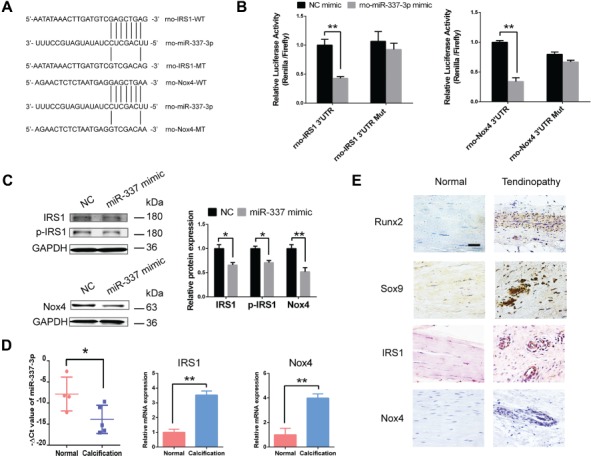
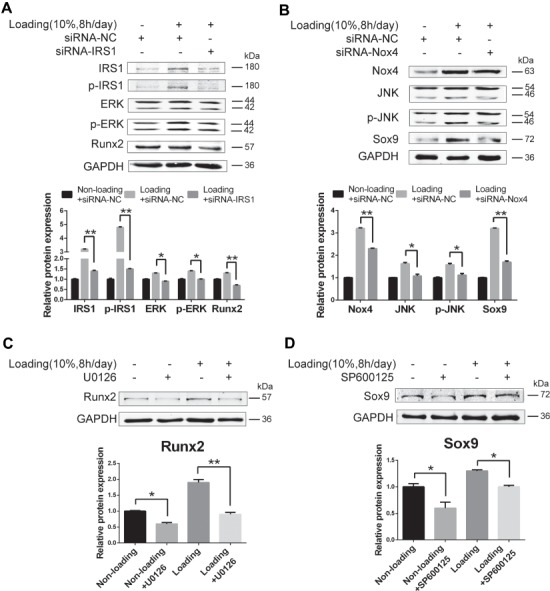
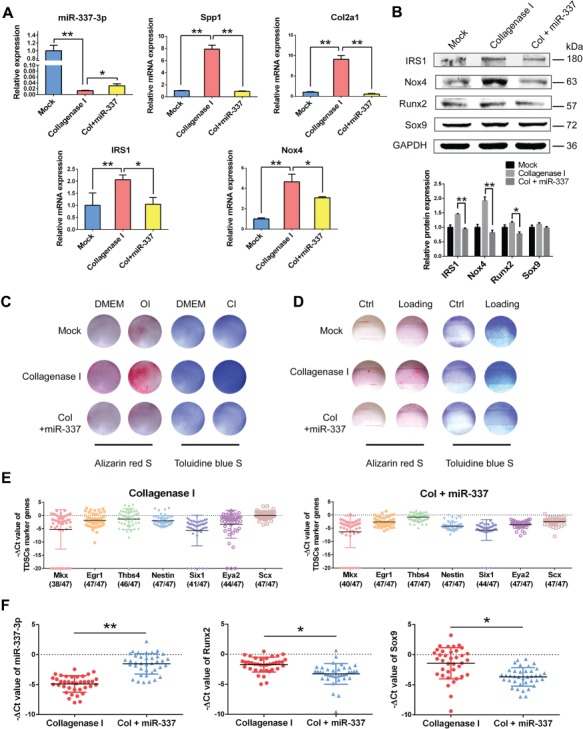
Tendinopathy, which is characterized by the ectopic ossification of tendon, is a common disease occurring in certain population, such as athletes that suffer from repetitive tendon strains. However, the molecular mechanism underlying the pathogenesis of tendinopathy caused by the overuse of tendon is still lacking. Here, we found that the mechanosensitive miRNA, miR-337-3p, had lower expression under uniaxial cyclical mechanical loading in tendon-derived stem cells (TDSCs) and negatively controlled chondro-osteogenic differentiation of TDSCs. Importantly, downregulation of miR-337-3p expression was also observed in both rat and human calcified tendons, and overexpressing miR-337-3p in patellar tendons of rat tendinopathy model displayed a robust therapeutic efficiency. Mechanistically, we found that the proinflammatory cytokine interleukin-1β was the upstream factor of miR-337-3p that bridges the mechanical loading with its downregulation. Furthermore, the target genes of miR-337-3p, NADPH oxidase 4, and insulin receptor substrate 1, activated chondro-osteogenic differentiation of TDSCs through JNK and ERK signaling, respectively. Thus, these findings not only provide novel insight into the molecular mechanisms underlying ectopic ossification in tendinopathy but also highlight the significance of miR-337-3p as a putative therapeutic target for clinic treatment of tendinopathy.
肌腱病以肌腱异位骨化为特征,是一种在特定人群中常见的疾病,比如遭受重复性肌腱劳损的运动员。然而,肌腱过度使用所致肌腱病发病机制的分子机制仍不清楚。在此,我们发现机械敏感的微小RNA(miR-337-3p)在肌腱来源干细胞(TDSCs)的单轴循环机械加载下表达降低,并对TDSCs的软骨成骨分化起负调控作用。重要的是,在大鼠和人类钙化肌腱中均观察到miR-337-3p表达下调,在大鼠肌腱病模型的髌腱中过表达miR-337-3p显示出强大的治疗效果。机制上,我们发现促炎细胞因子白细胞介素-1β是miR-337-3p的上游因子,它将机械负荷与其下调联系起来。此外,miR-337-3p的靶基因NADPH氧化酶4和胰岛素受体底物1分别通过JNK和ERK信号通路激活TDSCs的软骨成骨分化。因此,这些发现不仅为肌腱病异位骨化的分子机制提供了新的见解,也突出了miR-337-3p作为肌腱病临床治疗潜在靶点的重要性。