Key Laboratory of Reproductive Genetics (Ministry of Education) and Department of Reproductive Endocrinology, Women's Hospital, Zhejiang University School of Medicine, Hangzhou 310006, China.
International Peace Maternal and Child Health Hospital, Shanghai Jiao Tong University, Shanghai 200030, China.
J Mol Cell Biol. 2020 Jan 22;12(1):71-83. doi: 10.1093/jmcb/mjz035.
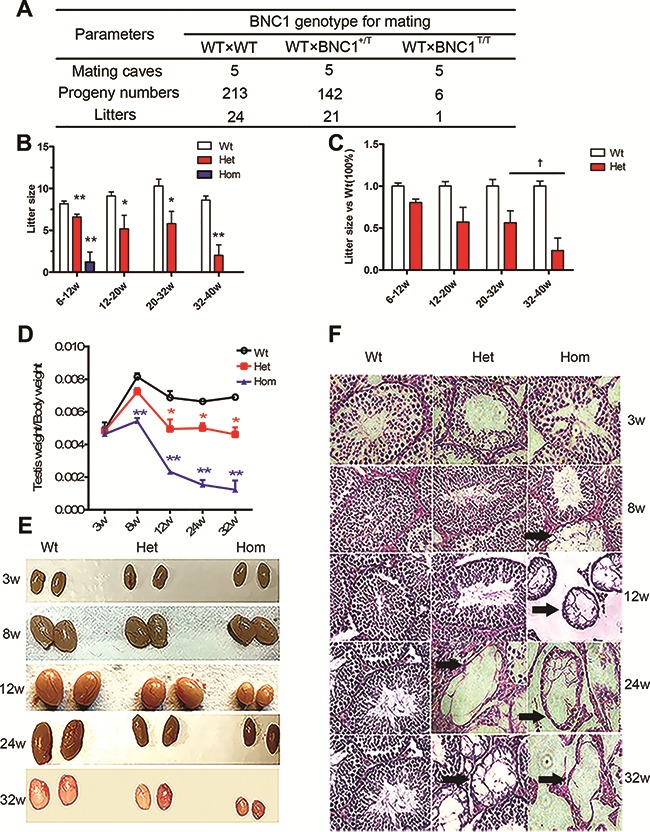
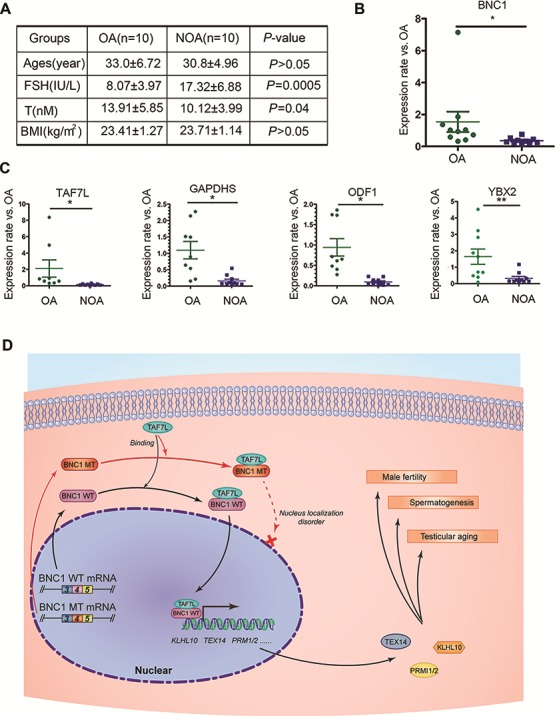
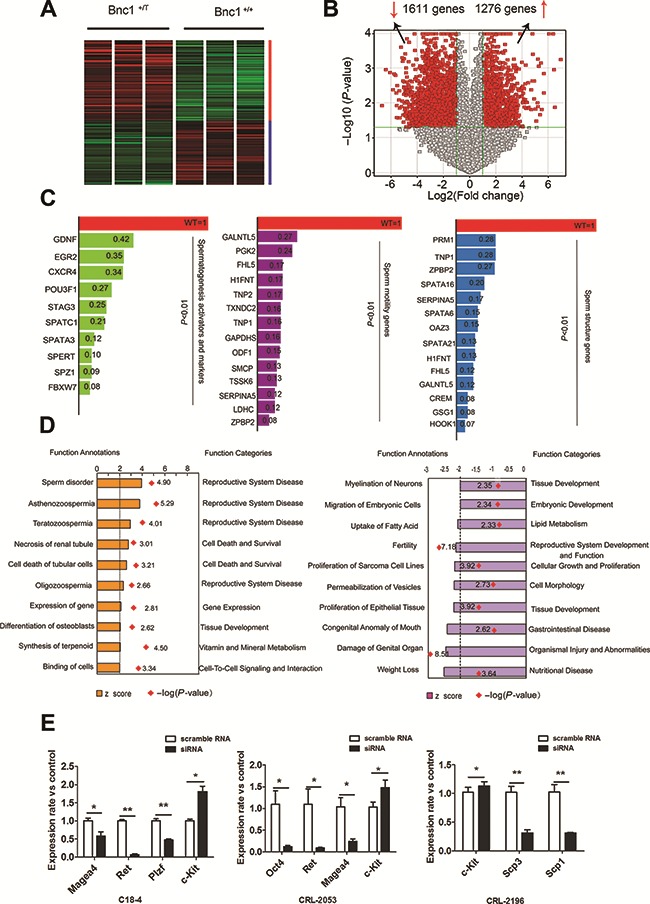
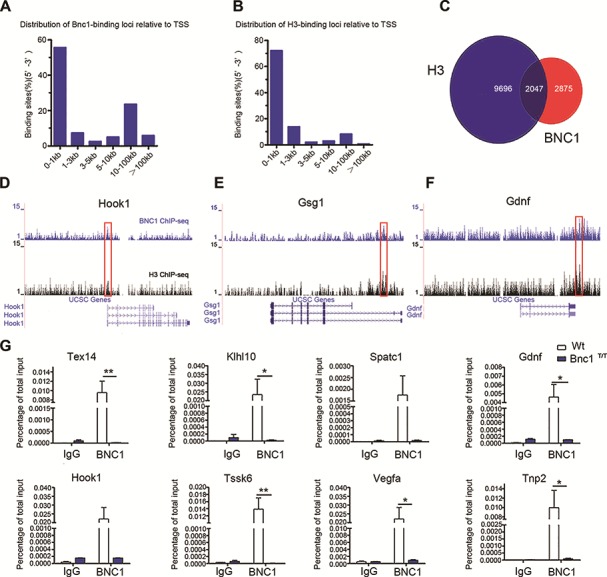
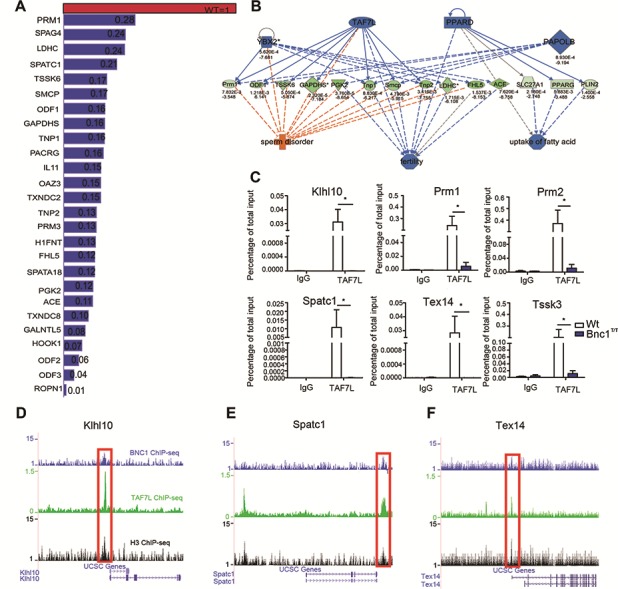
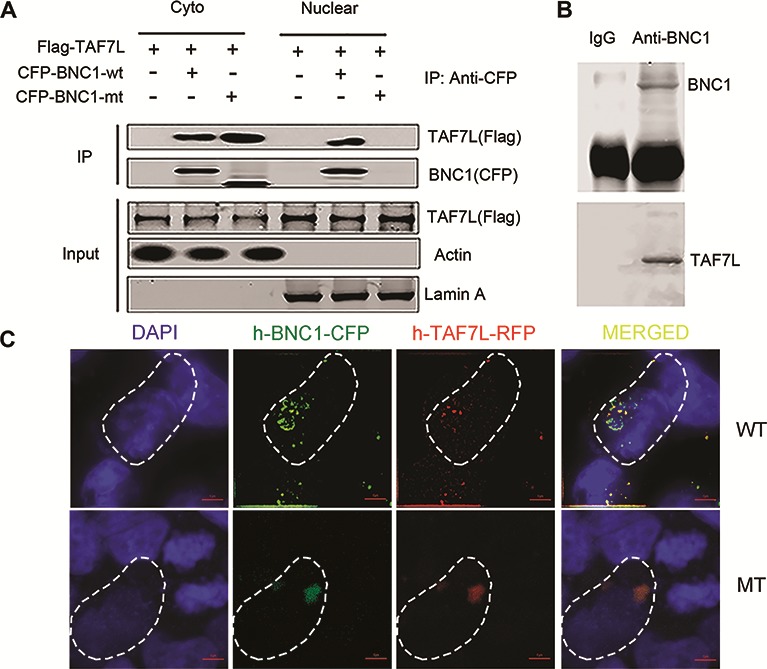
Basonuclin (BNC1) is expressed primarily in proliferative keratinocytes and gametogenic cells. However, its roles in spermatogenesis and testicular aging were not clear. Previously we discovered a heterozygous BNC1 truncation mutation in a premature ovarian insufficiency pedigree. In this study, we found that male mice carrying the truncation mutation exhibited progressively fertility loss and testicular premature aging. Genome-wide expression profiling and direct binding studies (by chromatin immunoprecipitation sequencing) with BNC1 in mouse testis identified several spermatogenesis-specific gene promoters targeted by BNC1 including kelch-like family member 10 (Klhl10), testis expressed 14 (Tex14), and spermatogenesis and centriole associated 1 (Spatc1). Moreover, biochemical analysis showed that BNC1 was associated with TATA-box binding protein-associated factor 7 like (TAF7L), a germ cell-specific paralogue of the transcription factor IID subunit TAF7, both in vitro and in testis, suggesting that BNC1 might directly cooperate with TAF7L to regulate spermatogenesis. The truncation mutation disabled nuclear translocation of the BNC1/TAF7L complex, thus, disturbing expression of related genes and leading to testicular premature aging. Similarly, expressions of BNC1, TAF7L, Y-box-binding protein 2 (YBX2), outer dense fiber of sperm tails 1 (ODF1), and glyceraldehyde-3-phosphate dehydrogenase, spermatogenic (GAPDHS) were significantly decreased in the testis of men with non-obstructive azoospermia. The present study adds to the understanding of the physiology of male reproductive aging and the mechanism of spermatogenic failure in infertile men.
巴斯努克林 (BNC1) 主要在增殖性角质形成细胞和配子细胞中表达。然而,其在精子发生和睾丸老化中的作用尚不清楚。此前,我们在一个卵巢早衰家系中发现了一个杂合的 BNC1 截断突变。在这项研究中,我们发现携带截断突变的雄性小鼠表现出进行性生育力丧失和睾丸早衰。对携带截断突变的雄性小鼠睾丸进行全基因组表达谱分析和直接与 BNC1 结合研究(通过染色质免疫沉淀测序),鉴定了几个精子发生特异性基因启动子,这些启动子被 BNC1 靶向,包括 Kelch 样家族成员 10 (Klhl10)、睾丸表达 14 (Tex14) 和精子发生和中心粒相关 1 (Spatc1)。此外,生化分析表明,BNC1 与 TATA 盒结合蛋白相关因子 7 样 (TAF7L) 相关,TAF7L 是转录因子 IID 亚基 TAF7 的一种生殖细胞特异性同源物,无论是在体外还是在睾丸中,这表明 BNC1 可能直接与 TAF7L 合作调节精子发生。该截断突变使 BNC1/TAF7L 复合物的核易位失活,从而扰乱相关基因的表达,导致睾丸早衰。同样,非梗阻性无精子症男性睾丸中 BNC1、TAF7L、Y 框结合蛋白 2 (YBX2)、精子尾部外致密纤维 1 (ODF1) 和甘油醛-3-磷酸脱氢酶,生殖型 (GAPDHS) 的表达均显著降低。本研究增加了对男性生殖衰老生理学和不育男性精子发生失败机制的理解。