WISSDOM Center, Medical University of South Carolina, Charleston, SC, United States of America.
Department of Neurology, Medical University of South Carolina, Charleston, SC, United States of America.
PLoS One. 2019 May 8;14(5):e0216213. doi: 10.1371/journal.pone.0216213. eCollection 2019.
Population-wide reductions in cardiovascular disease (CVD) have not been equally shared in the African American community due to a higher burden of CVD risk factors such as metabolic disorders and obesity. Differential concentrations of sphingolipids such as ceramide, sphingosine, and sphingosine 1-phosphate (S1P) has been associated with the development of CVD, metabolic disorders (MetD), and obesity. Whether African Americans have disparate expression levels of sphingolipids that explain higher burdens of CVD remains unknown.
A cross sectional analysis of plasma concentrations of ceramides, sphingosine, and S1P were measured from 8 whites and 7 African Americans without metabolic disorders and 7 whites and 8 African Americans with metabolic disorders using high performance liquid chromatography/tandem mass spectrometry methodology (HPLC/MS-MS). Subjects were stratified by both race and metabolic status. Subjects with one or more of the following physician confirmed diagnosis: diabetes, hypertension, hypercholesterolemia, or dyslipidemia were classified as having metabolic disease (MetD). Data was analyzed using a Two-Way ANOVA and Tukey's post hoc test.
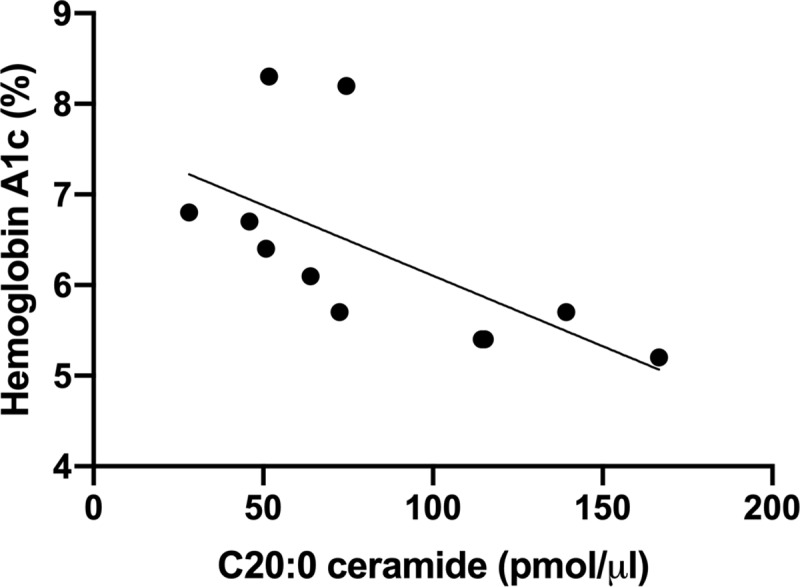
Total ceramide levels were increased in African Americans compared to African Americans with MetD. Ceramide C16 levels were higher in whites with MetD compared to African Americans with MetD (p<0.05). Ceramide C20 levels were higher in whites with MetD compared to whites. Ceramide C20 levels were higher in African Americans compared to African Americans with MetD. Furthermore, whites with MetD had higher levels of C20 compared to African Americans with MetD (p<0.0001). Ceramide C24:0 and C24:1 in African Americans was higher compared to African Americans with MetD (p<0.05). The plasma concentration of Sph-1P ceramide was higher in African Americans vs whites (p = 0.01). Lastly, ceramide C20 negatively correlated with hemoglobin A1c (HbA1c) levels in our study cohort.
Plasma ceramide concentration patterns are distinct in African Americans with MetD. Further research with larger samples sizes are needed to confirm these findings and to understand whether racial disparities in sphingolipid concentrations have potential therapeutic implications for CVD-related health outcomes.
由于心血管疾病(CVD)风险因素(如代谢紊乱和肥胖)的负担较高,非洲裔美国人社区并未平等享有人口范围内 CVD 减少的益处。神经酰胺、鞘氨醇和鞘氨醇 1-磷酸(S1P)等鞘脂的浓度差异与 CVD、代谢紊乱(MetD)和肥胖的发展有关。非洲裔美国人是否存在解释 CVD 负担较高的鞘脂表达水平差异尚不清楚。
使用高效液相色谱/串联质谱法(HPLC/MS-MS),对 8 名无代谢紊乱的白人和 7 名有代谢紊乱的白人和 8 名无代谢紊乱的非洲裔美国人和 7 名有代谢紊乱的非洲裔美国人的血浆神经酰胺、鞘氨醇和 S1P 浓度进行了横断面分析。根据种族和代谢状态对受试者进行分层。有以下一种或多种医生确诊诊断的受试者:糖尿病、高血压、高胆固醇血症或血脂异常,被归类为患有代谢疾病(MetD)。使用双因素方差分析和 Tukey 事后检验分析数据。
与有 MetD 的非洲裔美国人相比,非洲裔美国人的总神经酰胺水平升高。有 MetD 的白人与有 MetD 的非洲裔美国人相比,神经酰胺 C16 水平更高(p<0.05)。有 MetD 的白人的神经酰胺 C20 水平高于白人。与有 MetD 的非洲裔美国人相比,非洲裔美国人的神经酰胺 C20 水平更高。此外,有 MetD 的白人的 C20 水平高于有 MetD 的非洲裔美国人(p<0.0001)。与有 MetD 的非洲裔美国人相比,非洲裔美国人的神经酰胺 C24:0 和 C24:1 水平更高(p<0.05)。与白人相比,非洲裔美国人的 Sph-1P 神经酰胺血浆浓度更高(p=0.01)。最后,在我们的研究队列中,神经酰胺 C20 与血红蛋白 A1c(HbA1c)水平呈负相关。
有 MetD 的非洲裔美国人的血浆神经酰胺浓度模式明显不同。需要更大样本量的进一步研究来证实这些发现,并了解鞘脂浓度的种族差异是否对与 CVD 相关的健康结果有潜在的治疗意义。