Cambridge Institute for Medical Research, University of Cambridge, Hills Road, Cambridge CB2 0XY, UK.
Department of Pathology, University of Cambridge, Tennis Court Road, Cambridge CB2 1QP, UK.
Cell Rep. 2019 May 7;27(6):1920-1933.e7. doi: 10.1016/j.celrep.2019.04.042.
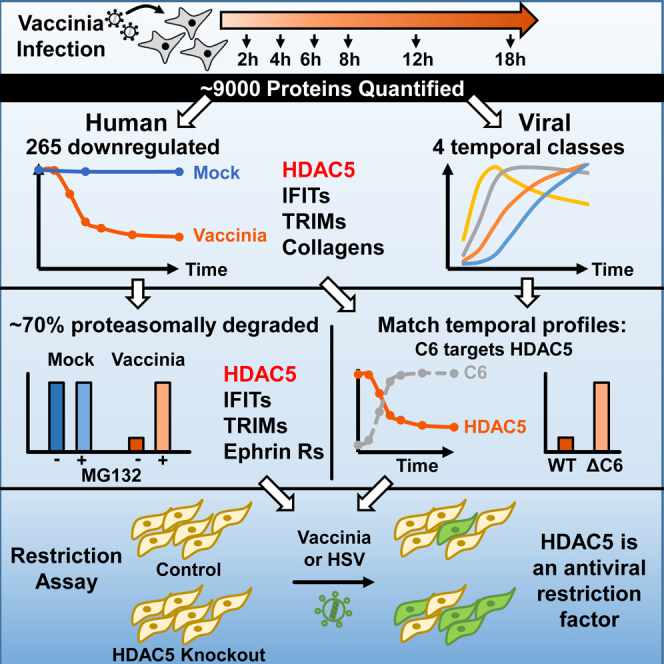
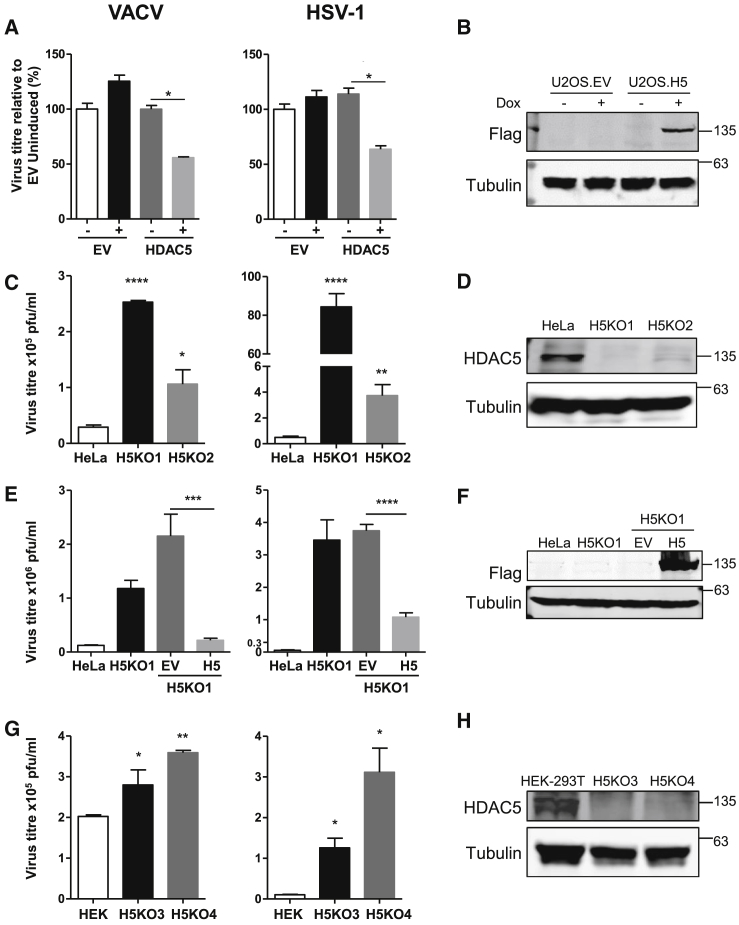
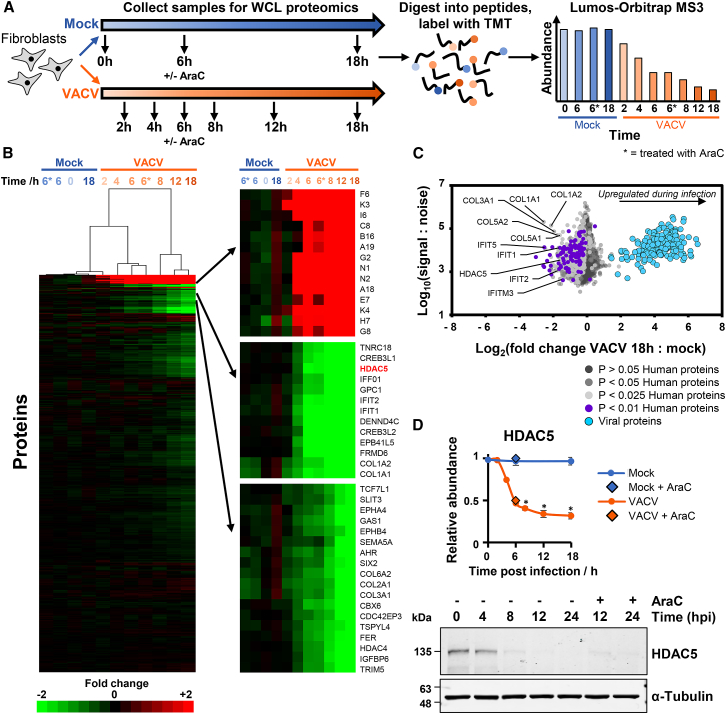
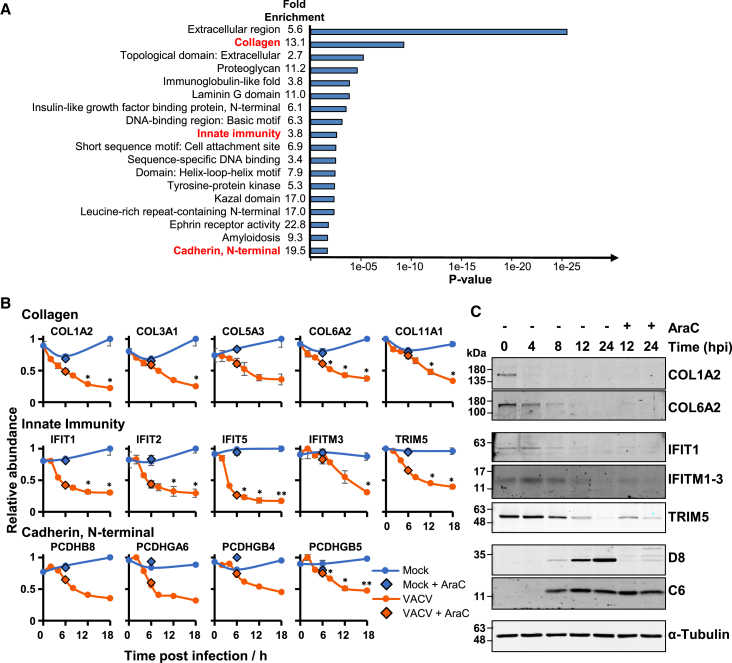
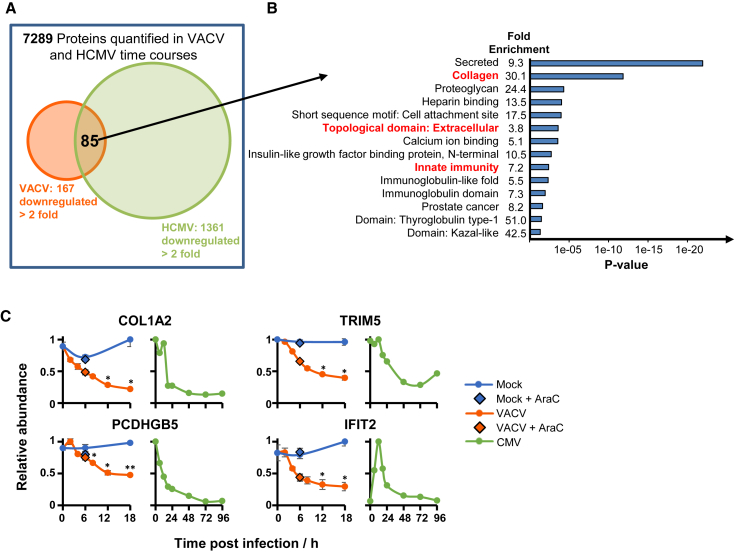
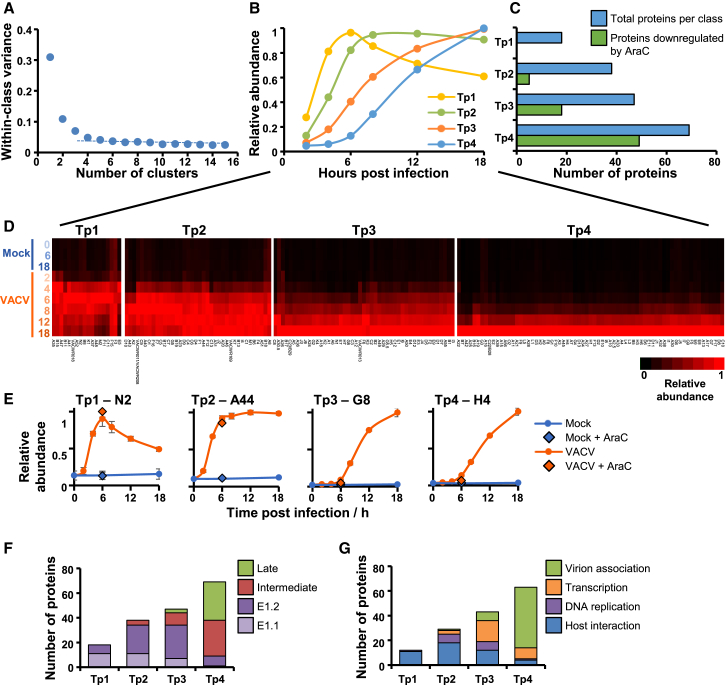
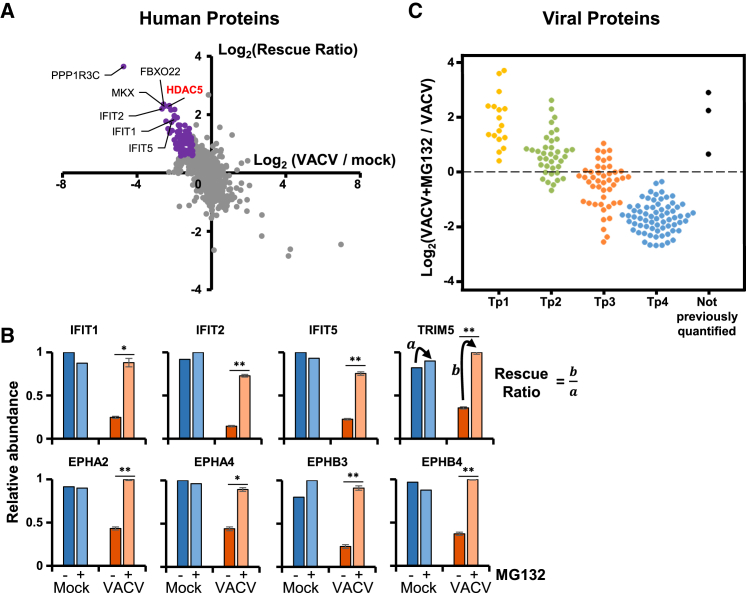
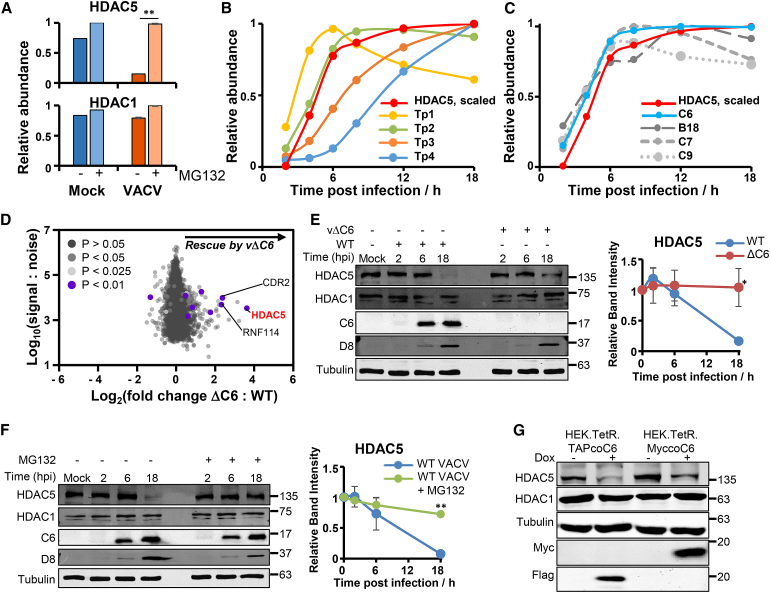
Vaccinia virus (VACV) has numerous immune evasion strategies, including multiple mechanisms of inhibition of interferon regulatory factor 3 (IRF-3), nuclear factor κB (NF-κB), and type I interferon (IFN) signaling. Here, we use highly multiplexed proteomics to quantify ∼9,000 cellular proteins and ∼80% of viral proteins at seven time points throughout VACV infection. A total of 265 cellular proteins are downregulated >2-fold by VACV, including putative natural killer cell ligands and IFN-stimulated genes. Two-thirds of these viral targets, including class II histone deacetylase 5 (HDAC5), are degraded proteolytically during infection. In follow-up analysis, we demonstrate that HDAC5 restricts replication of both VACV and herpes simplex virus type 1. By generating a protein-based temporal classification of VACV gene expression, we identify protein C6, a multifunctional IFN antagonist, as being necessary and sufficient for proteasomal degradation of HDAC5. Our approach thus identifies both a host antiviral factor and a viral mechanism of innate immune evasion.
痘苗病毒(VACV)有许多免疫逃避策略,包括多种抑制干扰素调节因子 3(IRF-3)、核因子 κB(NF-κB)和 I 型干扰素(IFN)信号的机制。在这里,我们使用高度多重化的蛋白质组学技术,在 VACV 感染的七个时间点定量了约 9000 种细胞蛋白和约 80%的病毒蛋白。VACV 使 265 种细胞蛋白下调超过 2 倍,包括潜在的自然杀伤细胞配体和 IFN 刺激基因。这些病毒靶标中有三分之二,包括 II 类组蛋白去乙酰化酶 5(HDAC5),在感染过程中被蛋白水解降解。在后续分析中,我们证明 HDAC5 限制了 VACV 和单纯疱疹病毒 1 的复制。通过生成 VACV 基因表达的基于蛋白质的时间分类,我们确定多功能 IFN 拮抗剂蛋白 C6 是 HDAC5 蛋白酶体降解所必需和充分的。因此,我们的方法既鉴定了宿主抗病毒因子,也鉴定了病毒先天免疫逃避的机制。