Department of Physiology and Pharmacology, Karolinska Institutet, 171 77, Stockholm, Sweden.
Department of Immunology, Genetics and Pathology, Uppsala University, 751 85, Uppsala, Sweden.
Nat Commun. 2019 May 8;10(1):2110. doi: 10.1038/s41467-019-10100-8.
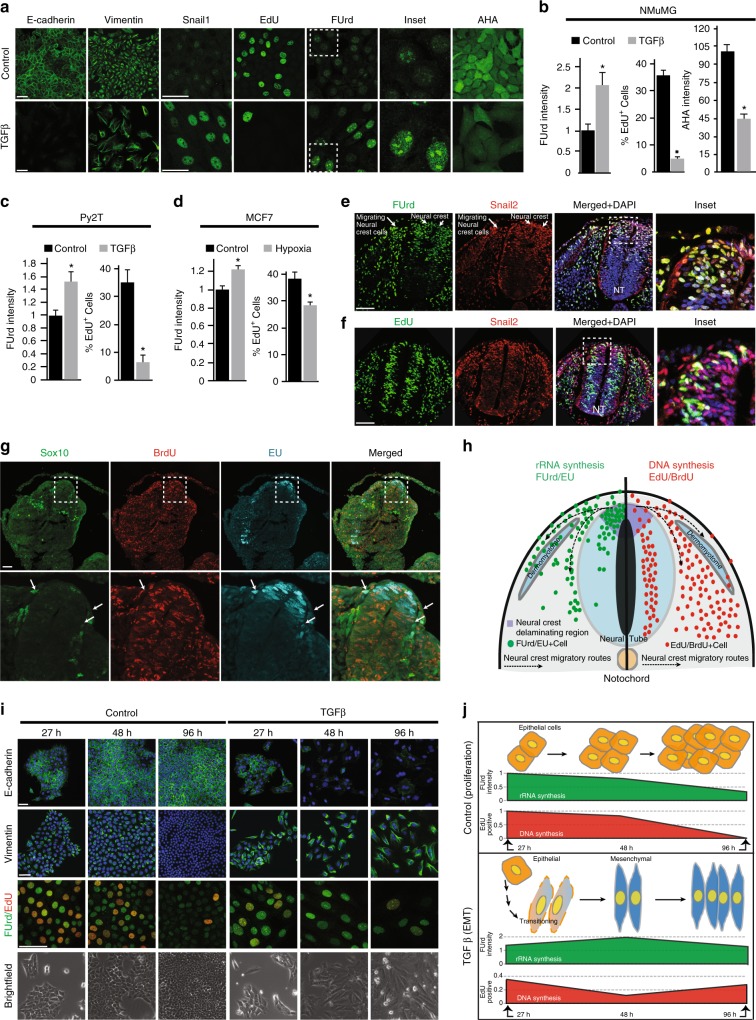
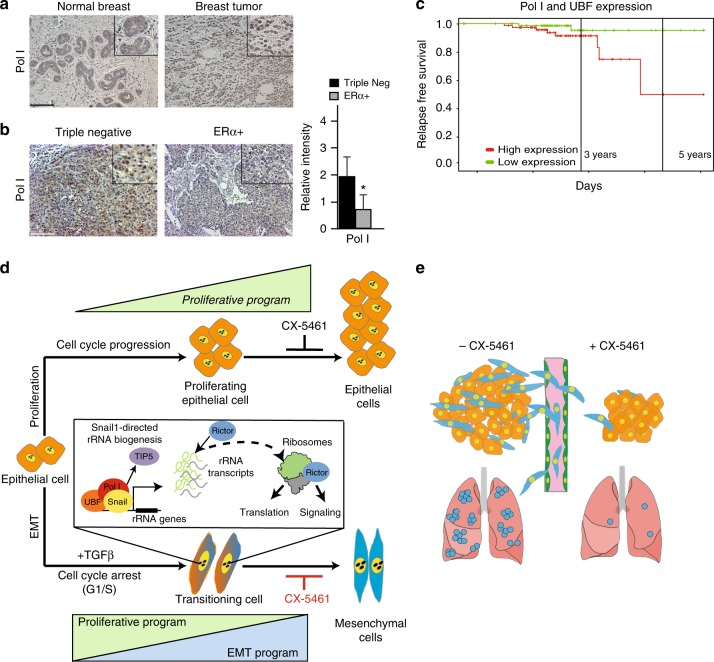
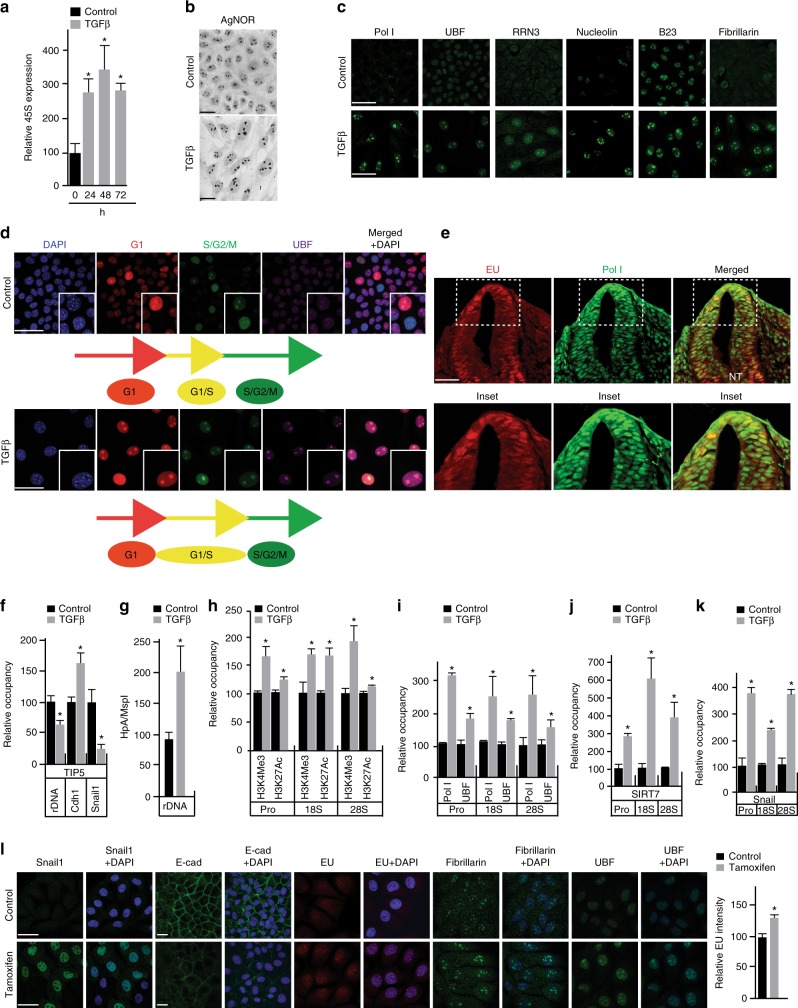
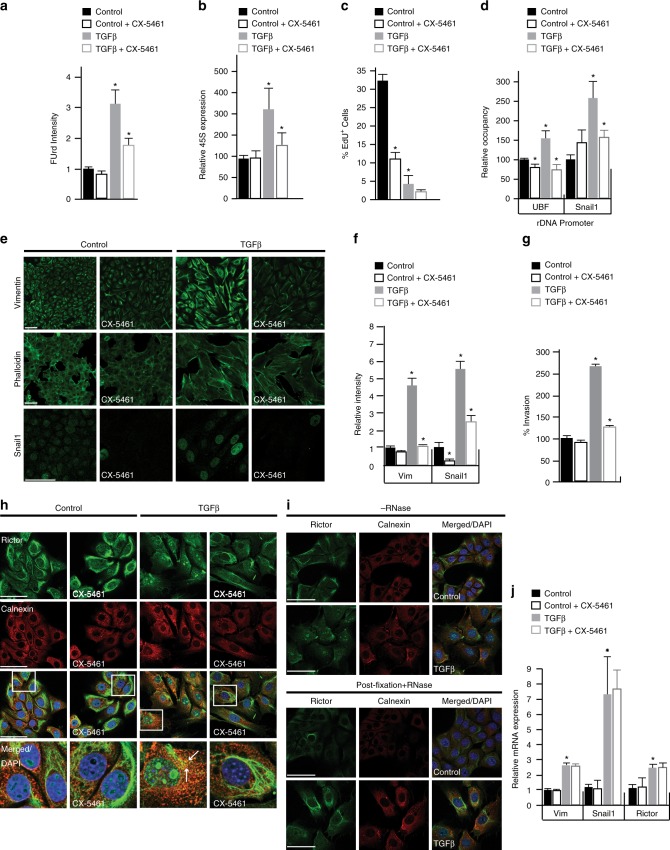
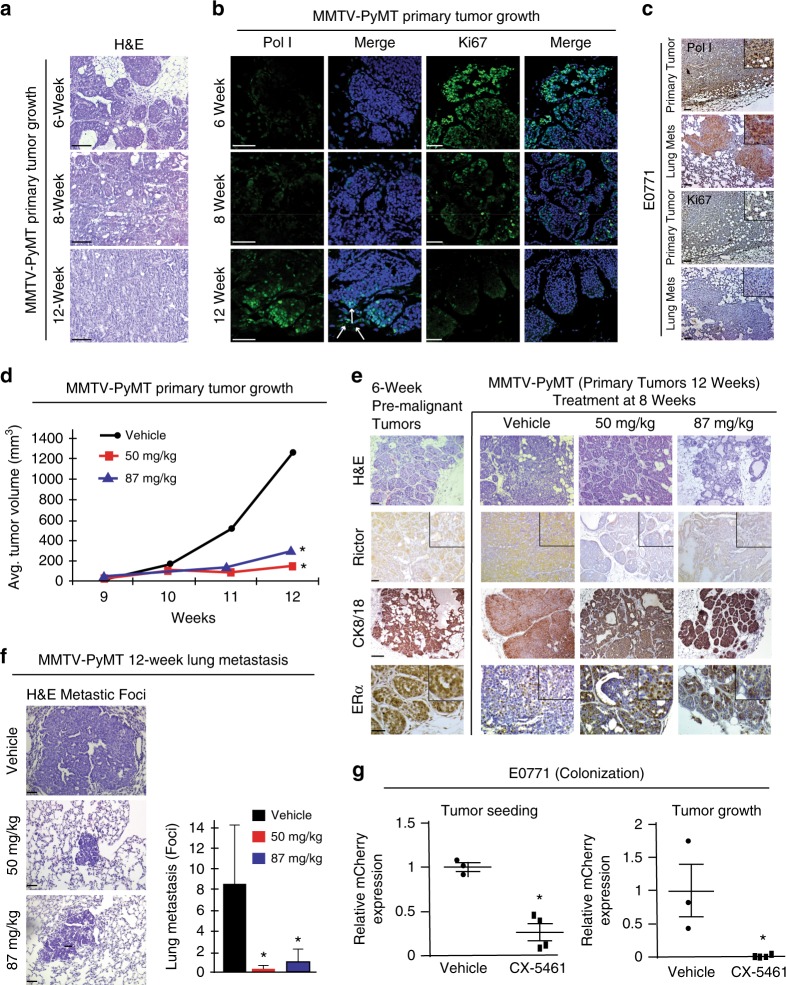
Ribosome biogenesis is a canonical hallmark of cell growth and proliferation. Here we show that execution of Epithelial-to-Mesenchymal Transition (EMT), a migratory cellular program associated with development and tumor metastasis, is fueled by upregulation of ribosome biogenesis during G1/S arrest. This unexpected EMT feature is independent of species and initiating signal, and is accompanied by release of the repressive nucleolar chromatin remodeling complex (NoRC) from rDNA, together with recruitment of the EMT-driving transcription factor Snai1 (Snail1), RNA Polymerase I (Pol I) and the Upstream Binding Factor (UBF). EMT-associated ribosome biogenesis is also coincident with increased nucleolar recruitment of Rictor, an essential component of the EMT-promoting mammalian target of rapamycin complex 2 (mTORC2). Inhibition of rRNA synthesis in vivo differentiates primary tumors to a benign, Estrogen Receptor-alpha (ERα) positive, Rictor-negative phenotype and reduces metastasis. These findings implicate the EMT-associated ribosome biogenesis program with cellular plasticity, de-differentiation, cancer progression and metastatic disease.
核糖体生物发生是细胞生长和增殖的典型标志。在这里,我们表明上皮-间充质转化(EMT)的执行,这是一种与发育和肿瘤转移相关的迁移性细胞程序,是由 G1/S 期阻滞期间核糖体生物发生的上调所驱动的。这种出乎意料的 EMT 特征独立于物种和起始信号,并且伴随着抑制性核仁染色质重塑复合物(NoRC)从 rDNA 上的释放,以及 EMT 驱动转录因子 Snai1(Snail1)、RNA 聚合酶 I(Pol I)和上游结合因子(UBF)的募集。与 EMT 相关的核糖体生物发生也与核仁募集的增加有关,Rictor 是 EMT 促进的哺乳动物雷帕霉素靶蛋白复合物 2(mTORC2)的必需组成部分。体内抑制 rRNA 合成可将原发性肿瘤分化为良性、雌激素受体-α(ERα)阳性、Rictor 阴性表型,并减少转移。这些发现表明 EMT 相关的核糖体生物发生程序与细胞可塑性、去分化、癌症进展和转移疾病有关。