Ueno Yoko, Mori Masamichi, Kamiyama Yoshiteru, Saito Rika, Kaneko Naoki, Isshiki Eriko, Kuromitsu Sadao, Takeuchi Masahiro
Drug Discovery Research, Astellas Pharma, Inc., Ibaraki, Japan.
Biological Research Division, Astellas Research Technologies Co., Ltd., Ibaraki, Japan.
Oncotarget. 2019 Apr 2;10(26):2530-2545. doi: 10.18632/oncotarget.26811.
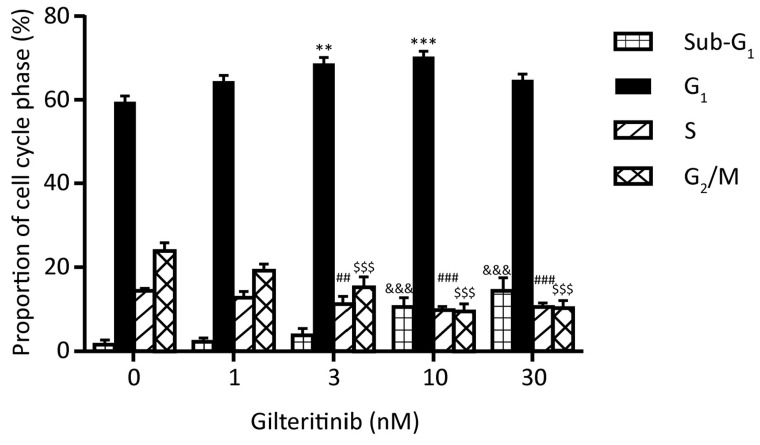
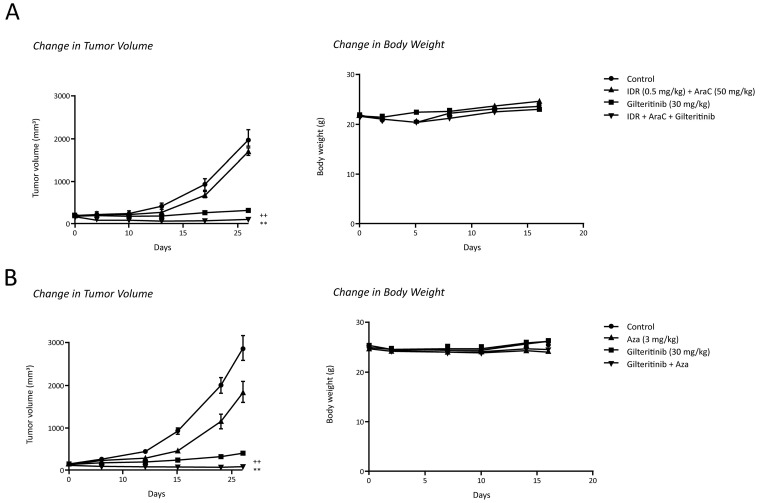
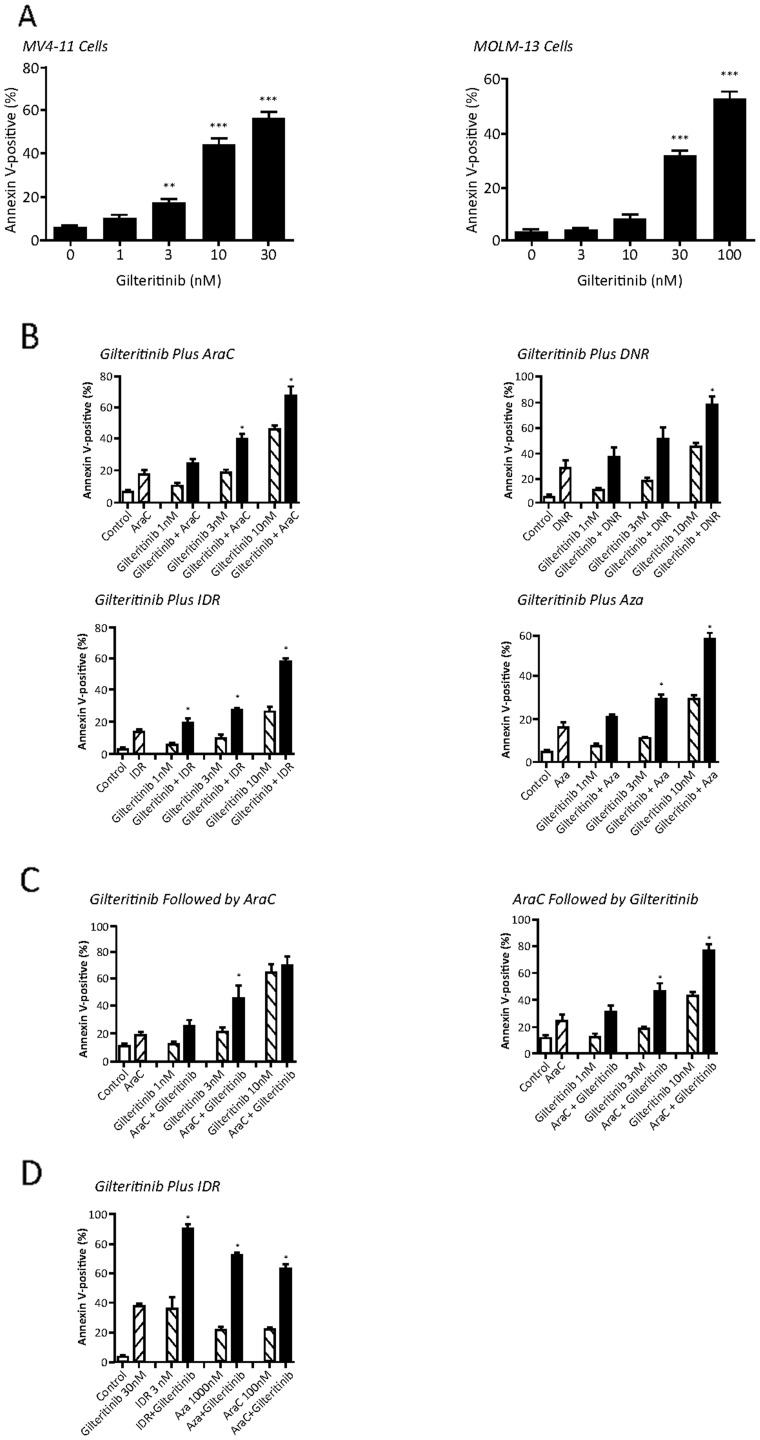
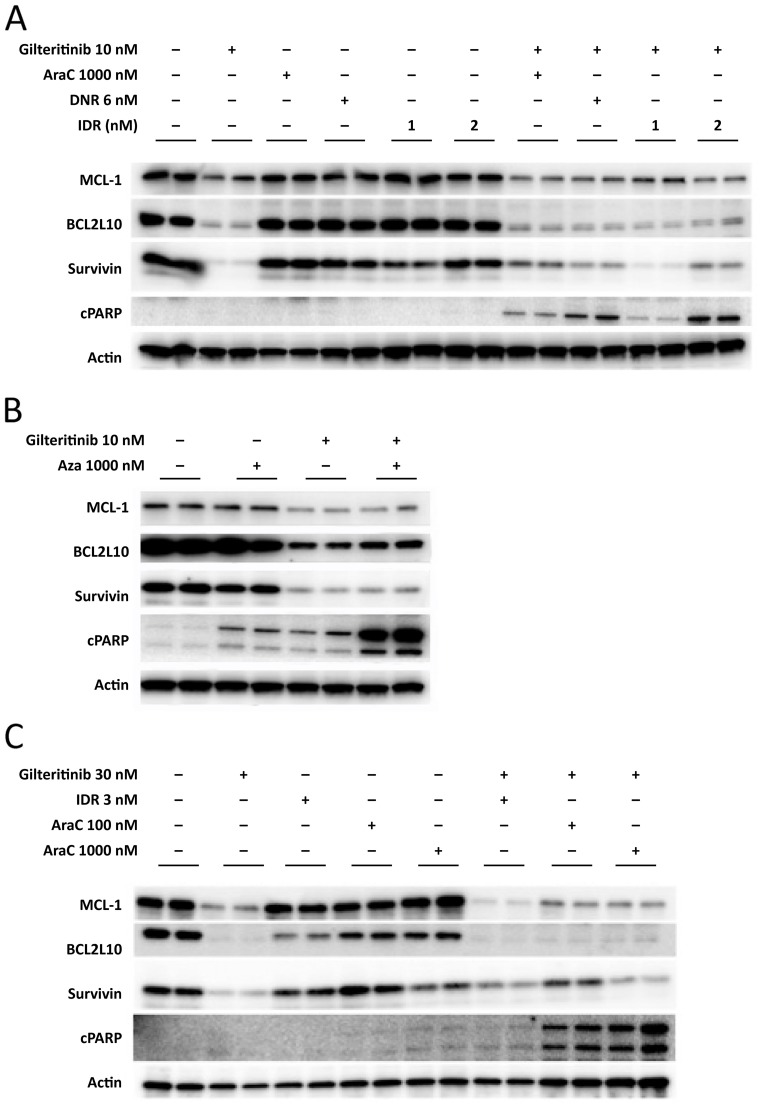
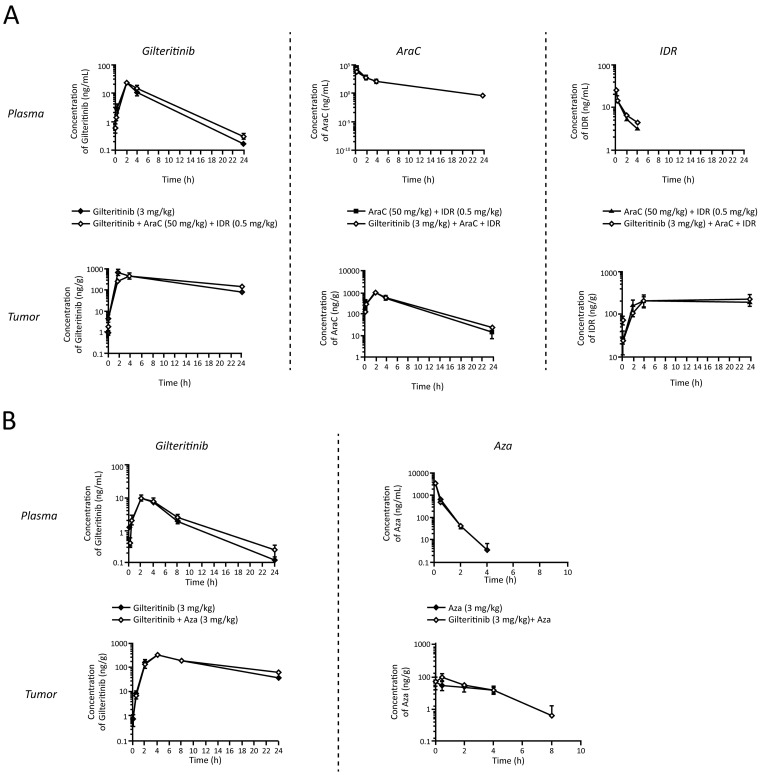
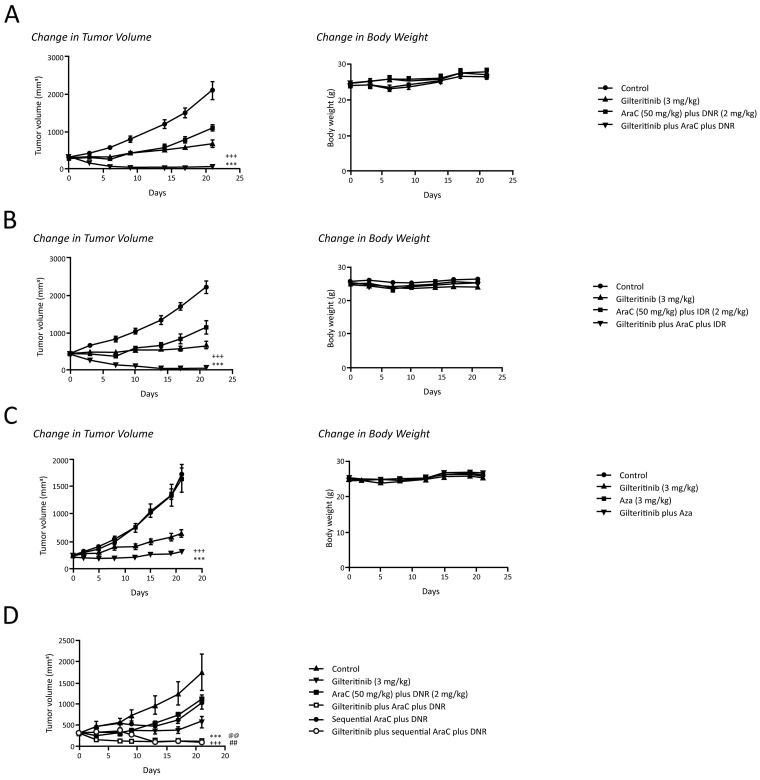
Activating and point mutations in () occur in approximately 30% of patients with acute myeloid leukemia (AML), and confer a poor prognosis with standard cytarabine/anthracycline or azacitidine-based chemotherapy regimens. Gilteritinib is a highly-specific, potent FLT3/AXL inhibitor with demonstrated activity against and mutations. Compared with salvage chemotherapy, treatment with once-daily oral gilteritinib demonstrated a clinical benefit in patients with -mutated relapsed/refractory AML, which led to its recent approval in Japan and the United States. We investigated the effects of gilteritinib combined with cytarabine plus daunorubicin/idarubicin, or combined with azacitidine in human -positive ( ) AML cell lines and xenografted mouse models. Gilteritinib induced G arrest and apoptosis in a dose-dependent manner. The addition of cytarabine, daunorubicin, idarubicin, or azacitidine potentiated apoptosis. Gilteritinib alone or combined with cytarabine, daunorubicin, idarubicin, or azacitidine, inhibited anti-apoptotic protein expression in MV4-11 cells. In xenografted mice, administration of cytarabine, idarubicin, or azacitidine in combination with gilteritinib had little impact on plasma or intratumor PK profiles of gilteritinib, cytarabine, idarubicin, or azacitidine. Gilteritinib combined with chemotherapy reduced tumor volume to a greater extent than either gilteritinib or chemotherapy alone. Of note, the addition of cytarabine plus daunorubicin/idarubicin led to tumor regression in mice, with complete regression observed in six out of eight mice in both triple combination groups. These findings support the investigation of gilteritinib combined with chemotherapy in patients with AML, including those who are ineligible for intensive chemotherapy.
(某种基因)的激活和点突变发生在约30%的急性髓系白血病(AML)患者中,并且在基于阿糖胞苷/蒽环类药物或阿扎胞苷的标准化疗方案下预后较差。吉瑞替尼是一种高度特异性、强效的FLT3/AXL抑制剂,对(该基因)的激活和点突变具有已证实的活性。与挽救性化疗相比,每日一次口服吉瑞替尼治疗对携带该基因突变的复发/难治性AML患者显示出临床获益,这导致其最近在日本和美国获批。我们研究了吉瑞替尼与阿糖胞苷加柔红霉素/伊达比星联合,或与阿扎胞苷联合,在人该基因阳性()AML细胞系和异种移植小鼠模型中的作用。吉瑞替尼以剂量依赖的方式诱导G期阻滞和凋亡。加入阿糖胞苷、柔红霉素、伊达比星或阿扎胞苷可增强凋亡作用。单独使用吉瑞替尼或与阿糖胞苷、柔红霉素、伊达比星或阿扎胞苷联合使用,均可抑制MV4-11细胞中抗凋亡蛋白的表达。在异种移植小鼠中,阿糖胞苷、伊达比星或阿扎胞苷与吉瑞替尼联合给药对吉瑞替尼、阿糖胞苷、伊达比星或阿扎胞苷的血浆或肿瘤内药代动力学特征影响很小。吉瑞替尼与化疗联合使用比单独使用吉瑞替尼或化疗更能显著减小肿瘤体积。值得注意的是,加入阿糖胞苷加柔红霉素/伊达比星可导致小鼠肿瘤消退,在两个三联组合组的八只小鼠中有六只观察到完全消退。这些发现支持对吉瑞替尼与化疗联合用于该基因AML患者进行研究,包括那些不符合强化化疗条件的患者。